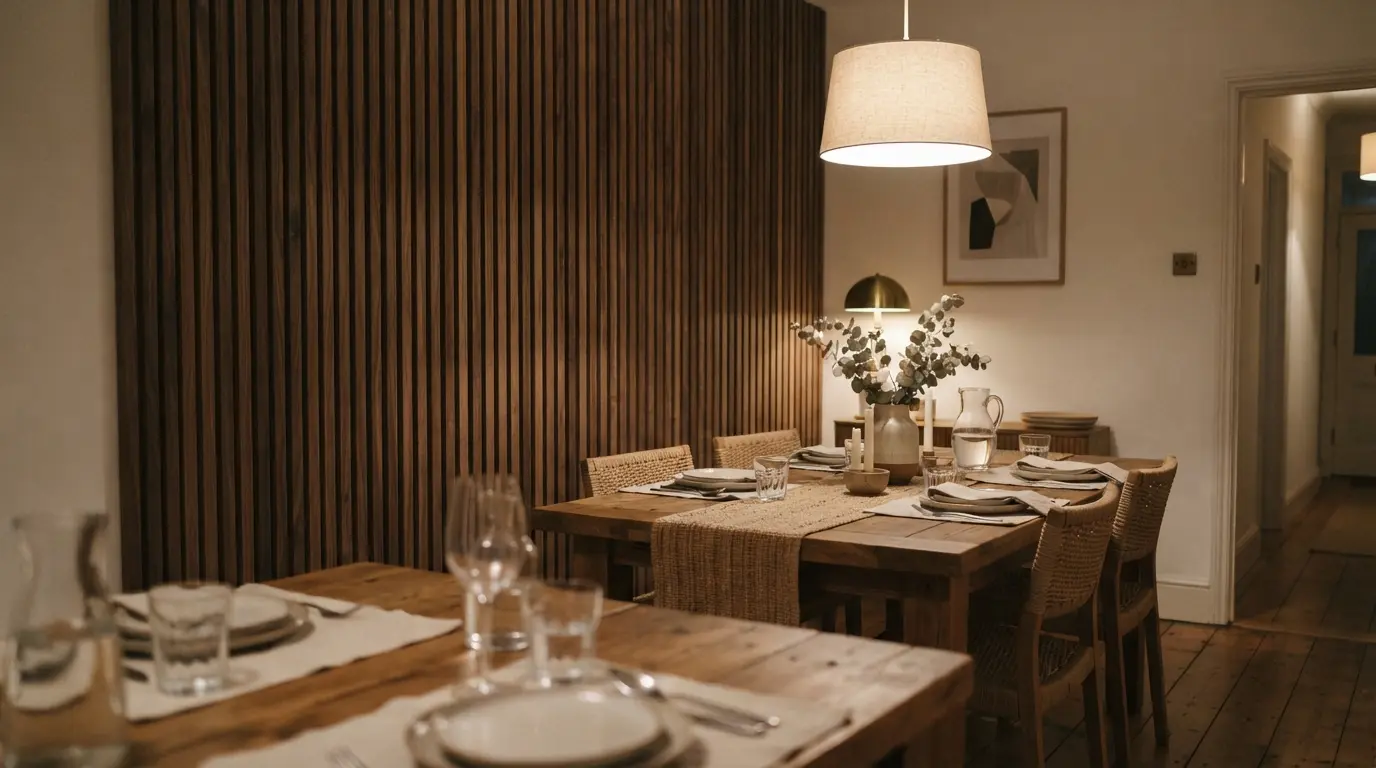
How to Create a Feature Wall in a Dining Room

Creating a feature wall in a dining room comes down to choosing a wall that’s already a natural focal point, picking a material suited to how close it sits to the kitchen, and lighting it specifically for evening use, since a dining room gets seen mostly after dark. Most feature walls that underwhelm in a dining room weren’t badly designed, they simply didn’t account for how differently the room reads once the sun goes down.
Choose the Wall Behind the Table or the One You See First
The strongest candidates are the wall directly behind the dining table, since it’s genuinely in view for everyone seated at a meal, or the wall you see first walking into the room, which naturally draws the eye before you’ve even sat down. A wall with an existing architectural feature, an alcove, a chimney breast, or the wall directly opposite a window also works well, since it’s already doing some of the visual work before you add anything to it.
Consider Whether Your Dining Space Opens Into the Kitchen
This is worth thinking through honestly before choosing a material, since it changes what’s actually practical. If your dining area is part of an open-plan kitchen-diner, a delicate wallpaper or an unsealed, porous finish is a poor match for a space that regularly deals with cooking splashes and steam, a wipeable tiled finish, a sealed panel, or a genuinely washable paint holds up far better here than something chosen purely for how it photographs. If your dining room is a fully separate space away from cooking activity, you have considerably more freedom with delicate materials that wouldn’t survive well in a kitchen-adjacent setting.
Choose a Material That Suits How the Wall Will Actually Be Seen

Textured materials, 3D panels, wood slats, or exposed brick, genuinely change character depending on the light hitting them through the day, catching shadow and depth in a way a flat painted wall doesn’t. Vertical wood slats read as more contemporary, while horizontal panelling suits a more classic, traditional room, and reclaimed timber brings genuine rustic character if that’s the direction you’re leaning. A tiled feature wall, herringbone or a simple pattern with a contrasting grout line, suits a kitchen-diner specifically, giving you texture and pattern in a genuinely practical, easy-to-clean material. Whichever you choose, consider how much natural light the wall actually gets, a heavily textured finish in a dim corner won’t show off its depth the way it would somewhere brighter.
Light the Wall Specifically for Evening Drama

This is the detail most dining room feature wall guides underplay, and it matters more here than in almost any other room, since a dining room is used mostly in the evening. Warm-toned lighting, rather than a cool, bright white, makes a feature wall feel genuinely inviting once the sun’s gone down, and directing light specifically at the wall, picture lights, wall sconces, or discreet track lighting, highlights texture and colour in a way ambient room lighting alone won’t achieve. A textured wall in particular benefits from this kind of directional light, since raking light across a 3D panel or exposed brick surface is what actually reveals its depth rather than flattening it under a single central fitting.
Stick to One Feature Wall, Not Several
This is worth saying plainly: painting or covering more than one wall as a genuine “feature” creates visual competition rather than a clear focal point. Choose one wall to carry the statement and keep the remaining walls in a calmer, complementary finish, this is what lets the feature wall actually read as intentional rather than the room feeling like several different design decisions competing for attention at once.
Tie the Feature Wall Into the Rest of the Room’s Decor
A feature wall works best when its colour or material genuinely relates to something already in the room, existing furniture, curtains, or accessories, rather than being chosen purely because it looked appealing on its own. Bringing a few other pieces into the room that echo the wall’s colour or tone, a cushion, a piece of art, a table runner, keeps the accent from feeling like an isolated decision bolted onto an otherwise unrelated scheme.
Scale the Colour and Material to the Room’s Actual Size and Light
A dark, bold colour or a heavily textured material can genuinely overwhelm a small dining room that doesn’t get much natural light, making the space feel smaller rather than more characterful. In a compact, dimmer room, a lighter tone or a more subtle texture generally works better, while a larger, brighter dining room can carry a genuinely bold, dark colour without the same risk. If you’re not sure which category your room falls into, it’s worth testing a real sample against your specific wall and lighting before committing to a full treatment, rather than assuming a colour that worked beautifully in a photo will read the same way in your actual space.
Final Thoughts
Creating a feature wall in a dining room really comes down to choosing the right wall, matching the material to how close you are to the kitchen, and lighting it specifically for the evening use the room actually gets. Stick to one wall, tie it into the rest of your decor, and scale the boldness to your room’s real size and light, and the finished wall will feel genuinely considered every time you sit down to eat, not just in a single daytime photo.
FAQs
Which wall should be the feature wall in a dining room?
The wall directly behind the dining table, or the one you see first entering the room, both make strong candidates, since they’re genuinely in view during meals or immediately upon walking in. A wall with an existing architectural feature also works well.
Can I have a feature wall if my dining room is part of an open kitchen?
Yes, but choose a practical, wipeable material like tile or a genuinely washable paint rather than a delicate finish, since a kitchen-diner wall regularly deals with cooking splashes and steam that an unsealed material won’t handle well over time.
Can a dining room have more than one accent wall?
It’s not recommended. Multiple feature walls compete for attention and create visual clutter rather than a clear focal point, stick to one standout wall and keep the rest of the room in a calmer, complementary finish.
How do I light a dining room feature wall properly?
Use warm-toned lighting directed specifically at the wall, picture lights, wall sconces, or track lighting, rather than relying on the room’s general ambient light alone. This matters particularly for textured materials, since raking light reveals depth that flat, even lighting doesn’t.
Does a feature wall work in a small, dark dining room?
It can, but a lighter tone or a more subtle texture generally suits a compact, dimly lit room better than a dark, bold treatment, which can make the space feel smaller rather than more characterful. Test a real sample in your specific room’s light before committing.