How to Achieve the Japandi Look in Your Living Room

Japandi living rooms work because they combine the calm restraint of Japanese interiors with the warmth and function of Scandinavian design. The result is a space that feels settled rather than empty. In UK homes the style needs a few practical adjustments for smaller rooms, cooler daylight and the furniture we already own.
Start by clearing what does not earn its place, then build the room around low furniture, natural materials and a muted palette. The steps below take you from the walls and floor through to the final objects that make the room feel finished.
Clear the Room and Keep Only What Serves a Purpose
Japandi starts with less. Walk through the living room and remove anything that is purely decorative or no longer used. Keep pieces that are comfortable, well made or genuinely needed. The empty space that remains is part of the look.
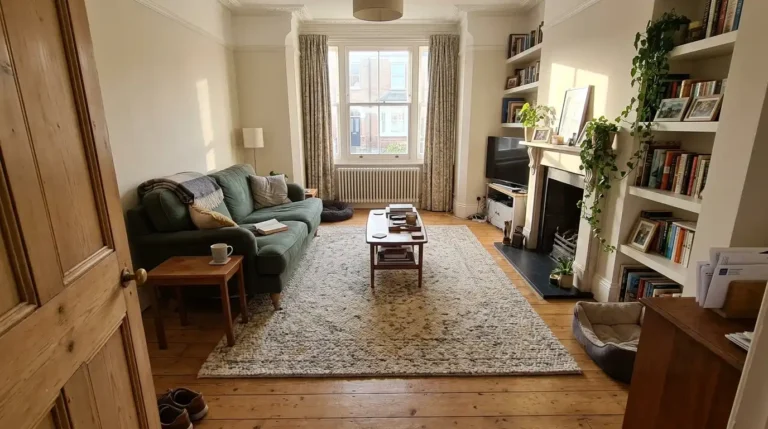
In a typical UK living room this often means reducing the number of cushions, taking down busy artwork and storing remote controls out of sight. Our guide to arranging living room furniture helps you check the layout once the room is clearer.
Choose a Warm Neutral Palette

Paint the walls in a warm off-white, soft greige or muted stone colour. Stark cool whites can look flat under British winter light. Test samples on different walls and look at them morning and evening.
Add depth with textiles in oatmeal, warm taupe or soft sage rather than bright accent colours. A matt emulsion finish suits the style better than satin or gloss. If you are choosing a living room colour scheme, the same principles apply here.
Select Low, Grounded Furniture
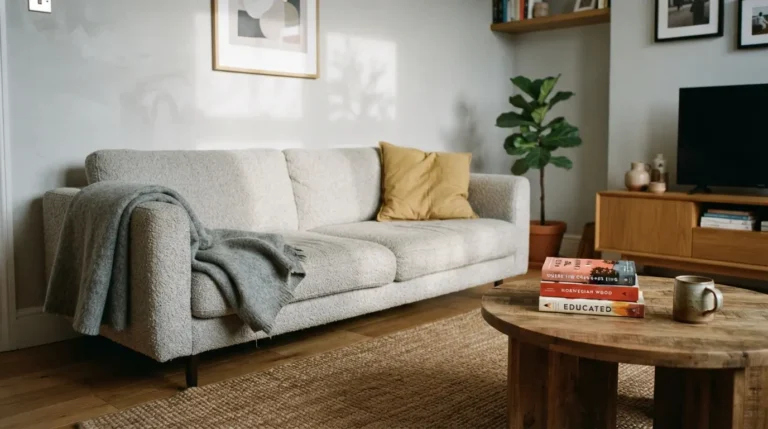
Lower seating and tables keep the visual line of the room calm and make ceilings feel higher. A sofa with clean lines and a low back works better than a high-backed or heavily tufted piece. Pair it with a simple wooden coffee table that sits closer to the floor.
If your existing sofa is taller, you can still achieve the look by keeping the rest of the furniture low and reducing the number of pieces. Check our advice on choosing the right sofa if you are replacing the main seating.
Use Natural Materials and Limited Wood Tones
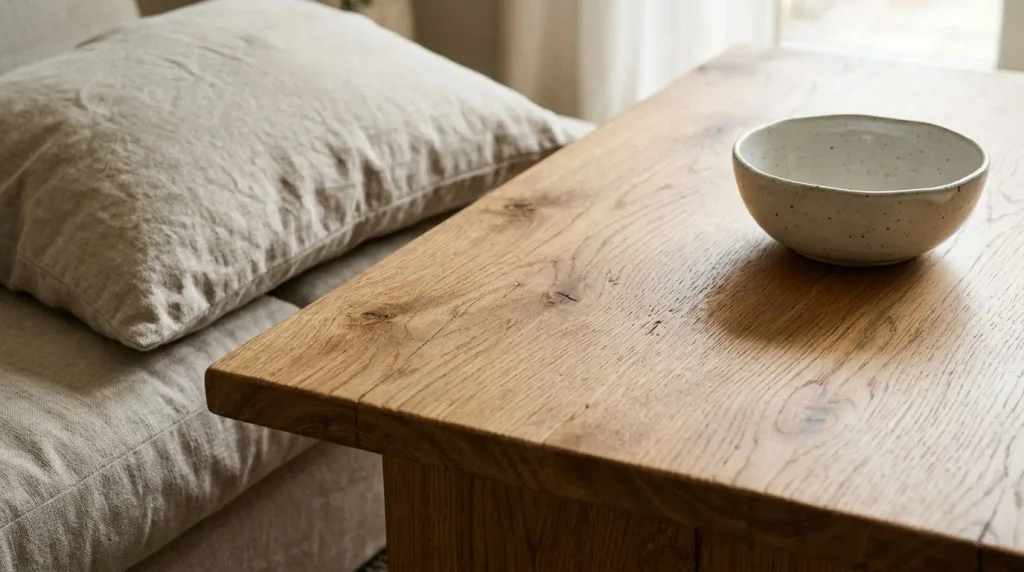
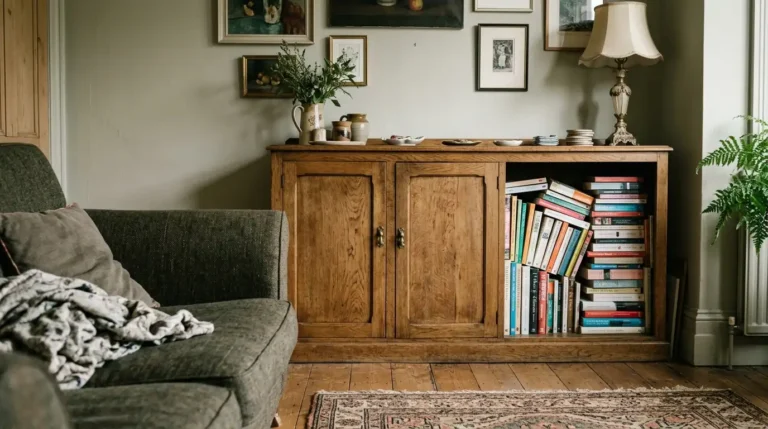
Oak, ash or walnut with visible grain form the backbone. Stick to one or two wood tones so the room does not feel busy. Linen, wool and cotton textiles add softness without shine. A jute or wool rug defines the seating area and adds warmth underfoot.
Avoid high-gloss finishes and very pale or very dark extremes. Engineered oak flooring with a natural oil finish is a practical base in most UK homes.
Layer Soft, Diffused Lighting
Use warm white bulbs around 2700K to 3000K. Floor lamps and table lamps at seated height give the soft glow the style needs. Avoid grids of cool downlights as the only source.
A paper or fabric shade that softens the light works better than bare bulbs. Our piece on layering living room lighting shows how to combine ambient and task sources without harsh contrast.
Add a Few Purposeful Objects and Plants
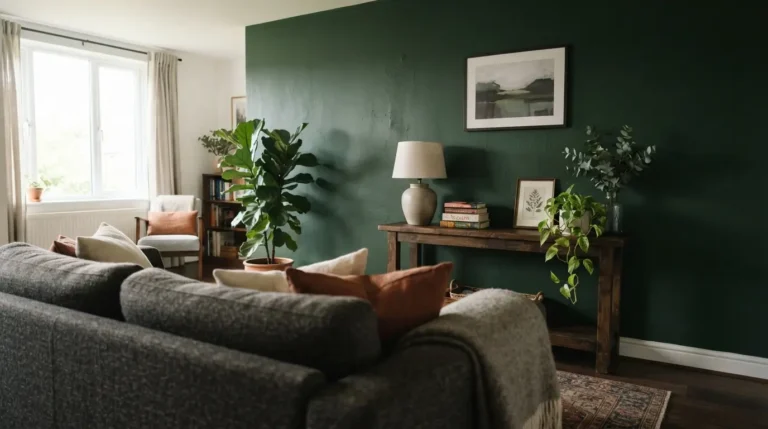
Limit decor to a small number of well-chosen pieces: a ceramic bowl, a single branch in a vase, one or two plants. Each object should have space around it. A large leafy plant in the corner brings life without clutter.
Keep surfaces mostly clear. The restraint is what makes the room feel calm rather than unfinished.
Conclusion
Achieving the Japandi look in a living room comes down to fewer pieces, lower furniture, natural materials and a warm neutral palette. Work with the light and size of a typical UK room rather than copying a showroom exactly. The result is a space that feels calm to live in day to day.
Is Japandi suitable for small living rooms?
Yes. The low furniture and limited number of pieces help smaller rooms feel more open. Keep the palette light and warm so the space does not feel closed in.
What wood tones work best for Japandi?
Light to medium oak, ash or walnut with visible grain. Avoid very pale birch or very dark stained pieces, and stick to one or two tones in the same room.
Do I need to buy all new furniture?
No. Clear the room, keep the pieces that have clean lines, and add one or two low natural wood items plus the right textiles. The restraint matters more than matching everything.