15 Dining Room Lighting Ideas to Set the Perfect Mood

Dining room lighting needs to work for everyday meals and for evenings with guests. The best schemes layer a main light over the table with softer ambient and accent lighting so you can change the mood without changing the fittings.
These 15 ideas focus on practical UK homes. They cover pendant height, bulb colour temperature, dimmers and layouts that suit both separate dining rooms and open-plan kitchen diners. Most mistakes come from hanging the light too high or using a single overhead fitting with no control.
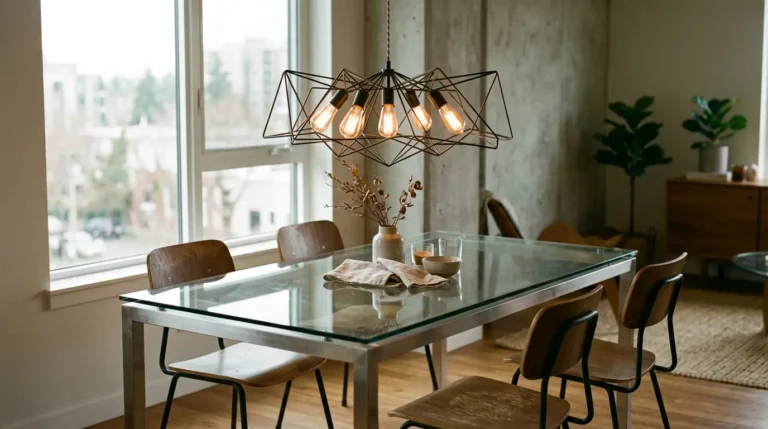
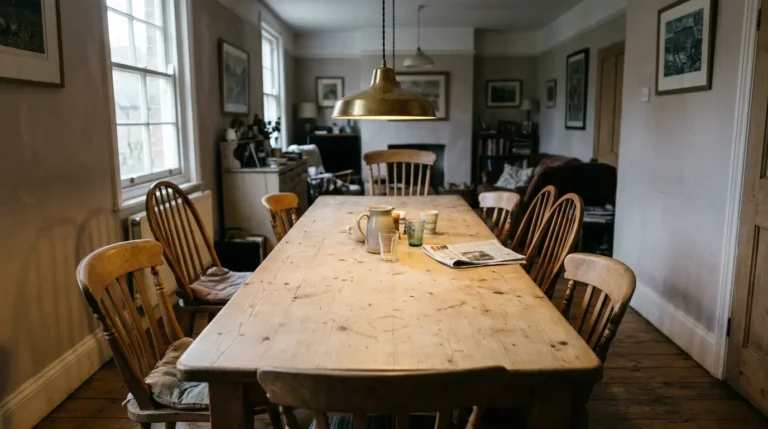
Hang a Single Pendant at the Right Height

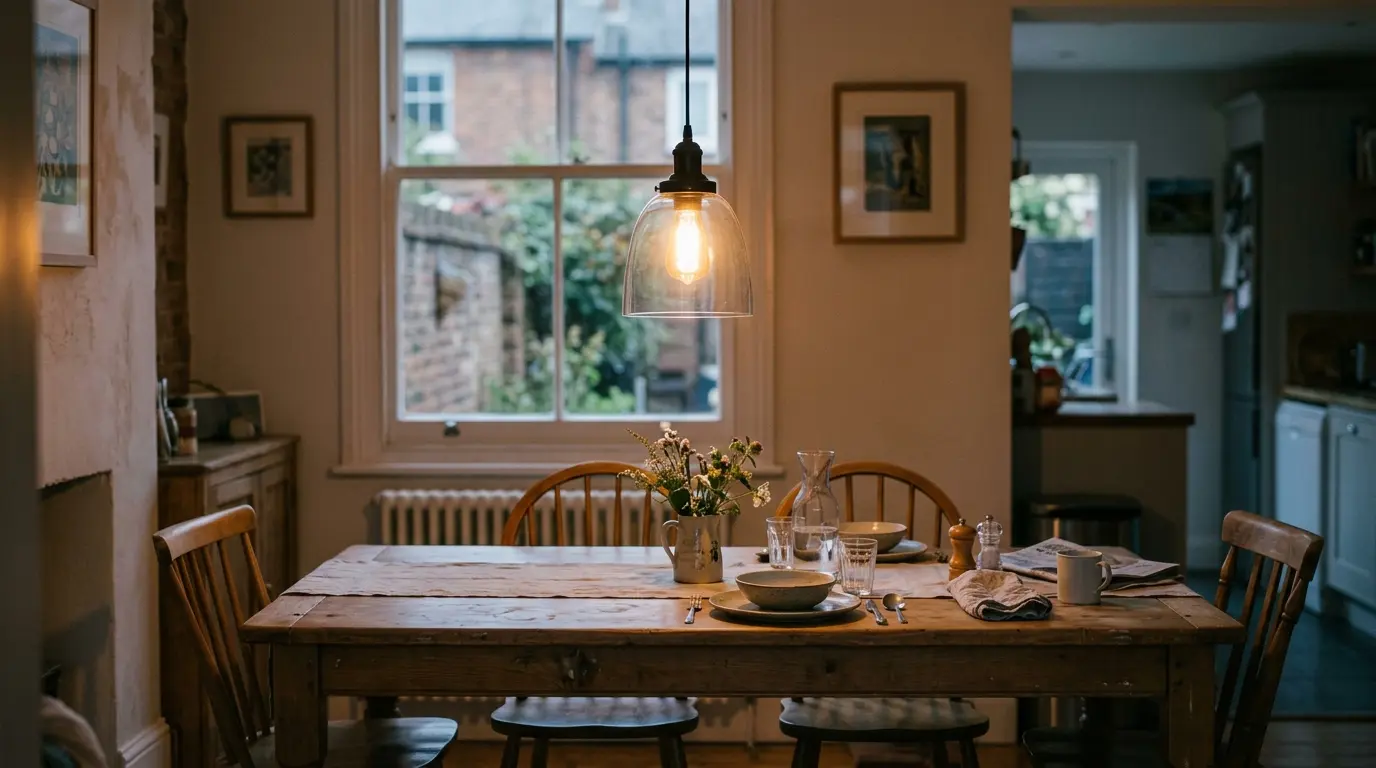
A pendant centred over the table is the most common and reliable choice. Aim for the bottom of the fitting to sit roughly 750 mm to 900 mm above the tabletop. Higher ceilings can go a little higher; lower ceilings need the fitting closer so it does not feel lost.
The light should not block views across the table. Choose a shade that directs light downwards for task use while still looking good when dimmed. Move the ceiling rose if the table is not under the existing centre point.
Use a Cluster of Smaller Pendants
Three or five smaller pendants over a longer table create a more even spread of light and look less formal than a single large fitting. An odd number usually balances better visually.
Space them evenly along the length of the table and keep them at the same height. This works particularly well over a dining table in an open-plan space where a single large chandelier might feel too heavy.
Add a Linear Bar or Track Over a Long Table
A linear pendant or track light running parallel to a long table gives even coverage without a single dominant fitting. It suits modern and contemporary dining rooms and can be dimmed for different occasions.
Position it so the light falls mainly on the table rather than into people’s eyes. The length should roughly match the table so the ends do not look stranded.
Layer With Wall Lights
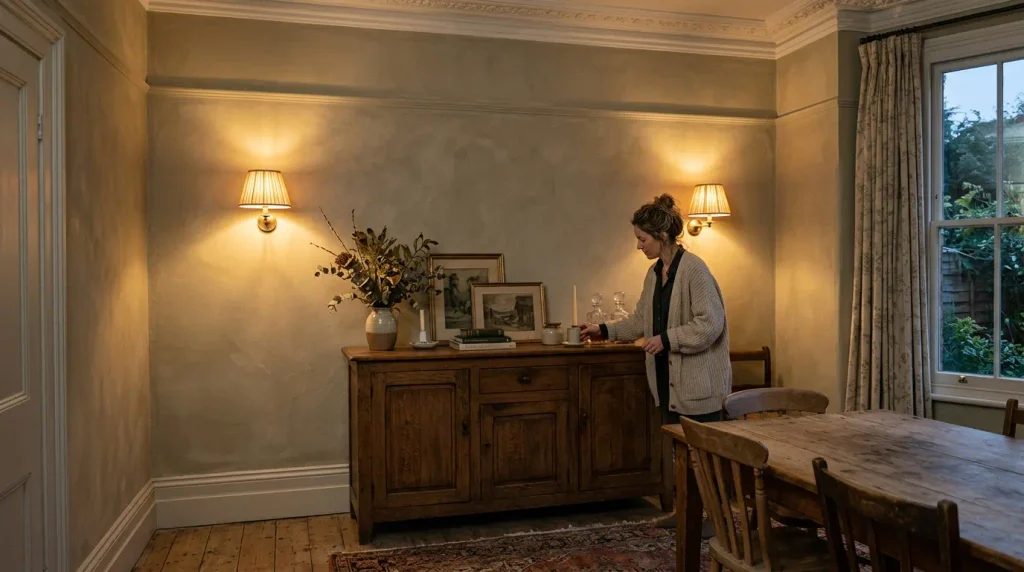
Wall lights on either side of the room or flanking a sideboard add ambient light and free up the table. They let you keep the main pendant lower without the room feeling dark when it is switched off.
Place them at roughly eye level when seated so they do not glare. Warm white bulbs keep the feel relaxed. This combination is one of the most useful for rooms that are used for both meals and other activities.
Put Every Circuit on a Dimmer
Dimmers are essential in a dining room. You need brighter light for homework, games or clearing up, and softer light for dinner. Separate circuits for the pendant and the wall lights give the most control.
Use trailing-edge dimmers with LED bulbs to avoid flicker. Label the switches clearly if more than one person uses the room. This single change often improves the space more than a new fitting.
Choose Warm White Bulbs
2700K to 3000K warm white suits dining rooms best. Cooler bulbs can make food look less appealing and the room feel clinical. Check the bulb is dimmable if you are using a dimmer.
Higher colour rendering index bulbs show food and table settings more accurately. Replace any existing cool bulbs first before buying new fittings; the difference is often enough on its own.
Size the Fitting to the Table
As a rough guide the fitting should be around one-third to two-thirds the width of the table. Too small and it looks lost; too large and it overwhelms the setting. Measure the table before you order.
In a small dining room a compact pendant or a pair of smaller lights usually works better than a large chandelier. Scale is one of the most common reasons a new light does not look right once it is hung.
Add Accent Lighting on a Sideboard
A small lamp or a pair of wall lights above a sideboard or drinks area adds a secondary glow and makes the room feel finished. It also gives you light when the main pendant is off.
Keep the lampshade open at the bottom so light falls on the surface. This is useful for serving or for display without needing the full overhead light.
Use Recessed Downlights Sparingly
A few recessed downlights can provide general ambient light, especially in a room with a lower ceiling. Place them around the edges rather than directly over the table so they do not create glare when you are seated.
They work best as the background layer, not the main light. Combine them with a pendant and dimmers so you still have atmosphere. Too many downlights can make the room feel like an office.
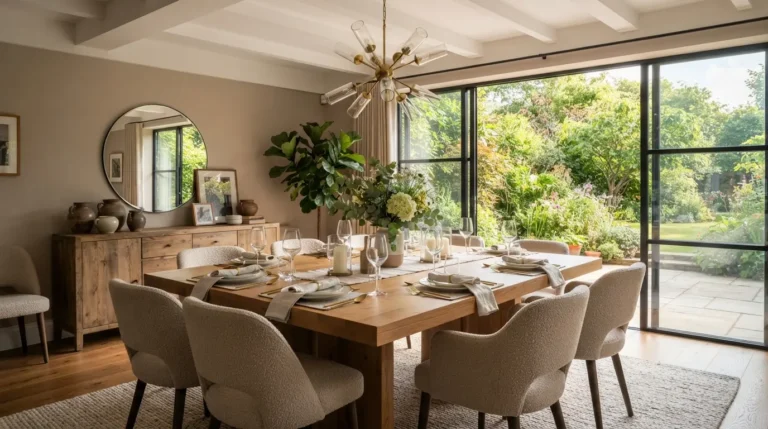
Consider a Chandelier for Period Rooms
A chandelier can suit a more traditional dining room, but it still needs the correct height and a dimmer. Choose one that is not so large that it blocks conversation across the table.
Modern interpretations with simpler lines often work better in mixed-style homes than a very ornate crystal fitting. Hang it so the lowest point clears heads when people stand.
Light the Perimeter for Open-Plan Spaces
In an open-plan kitchen diner, treat the dining table as its own zone. A lower pendant over the table and higher or different lighting over the kitchen helps separate the areas even when there is no wall between them.
Wall lights or a floor lamp near the dining zone add another layer. This approach is covered in more detail in guides to layering kitchen lighting, but the same principle applies here.
Add Candle-Style or Low-Level Glow
Battery or real candles on the table give a soft, low light for evenings. They are not a substitute for proper lighting but they add atmosphere once the main lights are dimmed.
Keep them stable and away from anything flammable. LED candle alternatives are safer in homes with children or pets and still provide the warm flicker.
Plan the Electrics Before You Decorate
Moving a ceiling rose, adding wall lights or installing dimmers is easier before the room is finished. A qualified electrician should handle any new circuits or changes to existing wiring.
Allow for plaster repairs and redecoration if you are moving fittings. Getting the positions right first saves having to live with a light that is slightly off-centre.
Match the Style to the Rest of the Room
The fitting should feel related to the furniture and the rest of the house rather than like an isolated statement. A simple metal or glass pendant often works across more styles than a very specific design.
If you are unsure, choose a neutral shape and let the bulb colour and the dimmer do the work. You can always change the shade later more easily than the wiring.
Conclusion
Good dining room lighting is mainly about height, scale, warm bulbs and the ability to dim. Layer a main light over the table with wall or accent lights and you can move from bright everyday use to a softer evening setting without buying new fittings. Measure the table, test the height, and put everything on a dimmer.
How high should a pendant hang over a dining table?
Usually 750 mm to 900 mm from the tabletop to the bottom of the fitting. Adjust for ceiling height and the size of the shade so it does not block views or feel too high.
Should dining room lights be on a dimmer?
Yes. Dining rooms are used for different activities and different times of day. Dimmers let you raise the light for practical tasks and lower it for meals without changing bulbs or fittings.
What colour temperature works best?
Warm white around 2700K to 3000K. Cooler temperatures can make the room and the food look less inviting. Check that the bulbs are dimmable if you are using dimmers.