
Types of Dining Chairs Explained: From Parsons to Rattan

Types of dining chairs fall into a handful of genuine categories once you strip away the marketing names: fully upholstered styles like Parsons, solid wood styles like Windsor and ladder-back, designer wood-and-cane styles like the Wishbone, metal-framed cantilever and industrial styles, and natural woven styles like rattan and wicker.
Most buying guides just list names next to stock photos and leave you no closer to knowing which one actually survives daily use in your dining room. Here’s what each type is actually built from, what it’s genuinely good at, and where it falls apart after a few years.
Side Chair or Armchair: The Distinction That Applies to Every Style
A side chair has no arms and is meant to sit along the long edges of a table, while an armchair has armrests and traditionally takes the head or foot of the table. This isn’t a style category on its own. Almost every type below, from Parsons to Windsor, comes in both versions.
The practical reason this matters: armrests need to clear the underside of your tabletop or apron by at least 18cm (7 inches), or the chair won’t push in properly and will always sit slightly too far from the table. A common and sensible setup is armchairs at the two heads of a rectangular table and side chairs along the sides, since side chairs take up less width per person and let you fit more seats along a long edge.
1. Parsons Chairs
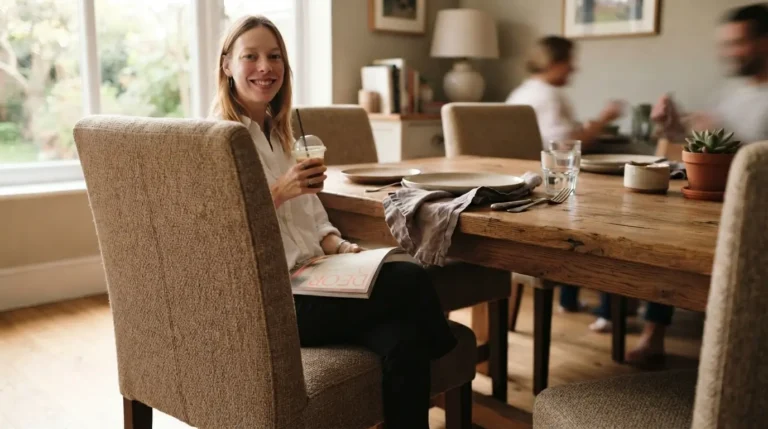
A Parsons chair is fully upholstered on both the seat and the back, with a straight, simple, armless frame and no exposed wood beyond the legs. It was designed in the 1930s at the Parsons School of Design as a deliberate rejection of ornate period furniture, and that clean-lined logic is exactly why it still works in almost any dining room today.
The trade-off is fabric wear. A Parsons chair in a busy family dining room shows marks on the seat front within a couple of years unless you choose a performance fabric or leather rather than a delicate linen or velvet. Removable, washable covers are worth the extra cost if young kids or messy dinners are a regular feature of your household.
2. Windsor Chairs
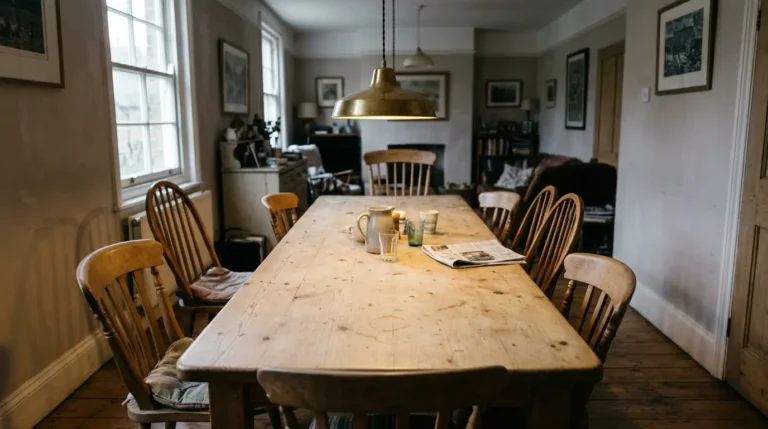
A Windsor chair is built entirely from solid wood, with a curved or bow-shaped back made of thin turned spindles socketed into a solid wood seat, and splayed legs for stability. It originated in England and has stayed in continuous production since, which tells you something about how well the structure actually holds up.
Because there’s no upholstery to wear out, a genuine Windsor chair can last decades with nothing more than the occasional wax or oil on the wood. The trade-off is comfort over a long meal, since the solid wood seat has no give at all, so a Windsor works best paired with a seat cushion if your dinners regularly run long.
3. Wishbone Chairs (Y-Chairs)
A Wishbone chair, also called a Y-chair, has a distinctive curved top rail that splits into a Y-shape down the chair’s back, with a wooden frame and a woven paper cord or cane seat. It was designed by Danish designer Hans Wegner in 1949, and the original is still in production today, which is unusual for a nearly 80-year-old design.
Genuine Wegner-licensed originals sit at the higher end of dining chair pricing, while widely available replica and inspired versions bring the look into a much more accessible budget. The woven cord seat is the part to check on a used or older piece, since it can loosen or fray with age, though it’s a straightforward professional re-cording job rather than a full rebuild.
4. Ladder-Back and Spindle-Back Chairs
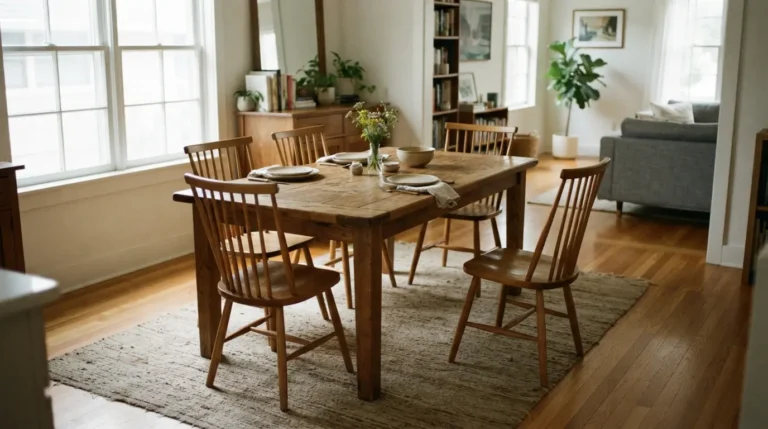
A ladder-back chair has horizontal wood slats stacked up the back like rungs of a ladder, while a spindle-back uses vertical turned rods instead. Both are solid wood, traditional, and common in farmhouse and country-style dining rooms, and both prioritise structure over cushioned comfort.
These styles are genuinely sturdy when well made, since the joinery relies on simple, repeated horizontal or vertical members rather than a single curved piece under stress. The real risk is with cheaply made versions where the slats or spindles are glued rather than properly joined, which loosens within a year or two of regular use. Check for a firm, no-wobble joint before buying rather than assuming solid wood automatically means solid construction.
5. Cross-Back (Farmhouse) Chairs
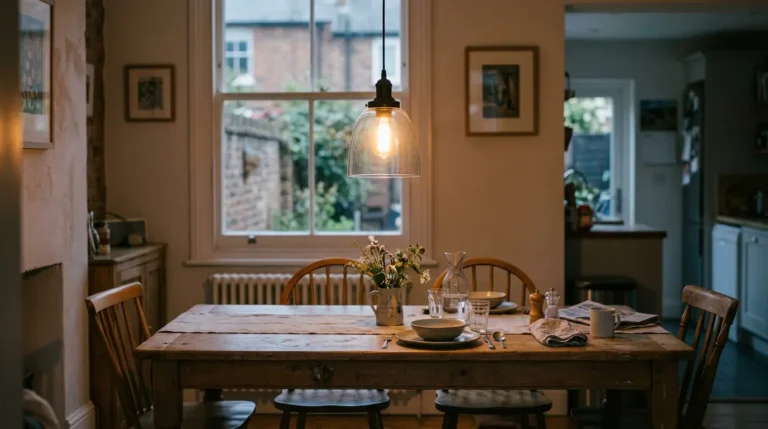
A cross-back chair, sometimes called a farmhouse chair, has an X-shaped crossed support built into the lower backrest, usually in solid oak or a similar hardwood, with a woven rush, cane, or upholstered seat. It’s become one of the most common styles in modern farmhouse and rustic dining rooms over the last several years.
The cross-back detail is mostly decorative rather than structural, so don’t assume it makes the chair inherently sturdier than a plain ladder-back of the same build quality. Rush or cane seats on this style need the same care as a Wishbone chair: keep them out of direct, sustained sun and away from constant damp, since natural woven seats dry out and become brittle faster than a solid wood or upholstered seat.
6. Wingback Dining Chairs
A wingback dining chair is fully upholstered with high, curved side panels, sometimes called wings, that extend forward from the backrest. It’s a scaled-down dining version of the classic wingback armchair silhouette, and it reads as more formal and traditional than a plain upholstered Parsons chair.
Wingbacks generally sit better as a pair at the head and foot of a table than as a full set of eight around the sides, both for cost reasons and because the wide wings take up more space per seat than a standard armless chair. Expect the same fabric wear considerations as any upholstered style, with the wings themselves picking up more visible dust and wear over time since they’re touched when pulling the chair in and out.
7. Cantilever Chairs
A cantilever chair has a continuous curved metal frame with no back legs, so the seat and back appear to float and flex slightly under weight. It’s a Bauhaus-era design principle, usually built from chrome-plated tubular steel, and it reads as distinctly modern regardless of what material fills the seat and back.
The flex is a genuine feature, not a flaw, giving a small amount of give that a rigid four-legged chair doesn’t have, though it also means a cheaply made cantilever can feel unstable if the steel gauge is too thin. These chairs often stack for storage, which is a real practical advantage if you need extra dining seating for occasional larger gatherings but don’t want it cluttering the room daily.
8. Bentwood, Tolix, and Other Metal-Frame Chairs
Bentwood chairs, most famously the Thonet No. 14, use steamed and curved solid wood for the frame instead of straight-cut pieces, giving a lightweight chair with a distinctive curved silhouette. Tolix-style chairs, by contrast, are made from pressed or stamped sheet metal, usually with a riveted construction, and bring an industrial, café-style look into a dining room.
Bentwood holds up well indoors with normal use and light cleaning, since the steaming process actually strengthens the wood along the curve rather than weakening it. Tolix and other raw or painted metal chairs are genuinely hard-wearing and easy to wipe clean, but an unsealed or poorly finished metal chair can develop surface rust in a humid kitchen or a room near an exterior door, so check the finish before choosing one for anywhere but a dry interior dining room.
9. Rattan and Wicker Chairs
Rattan is the raw material, a solid vine-like cane harvested from palm, while wicker describes the weaving technique or pattern, which can be done in natural rattan, cane, or a synthetic PE resin. A dining chair described as wicker could be either, so it’s worth checking which one you’re actually buying before you commit.
Natural rattan brings genuine warmth and texture to a dining room but dries out and can crack if it sits too close to a radiator or in a consistently very dry, heated room, so keep it away from direct heat sources. PE resin wicker looks similar but resists drying, cracking, and moisture far better, making it the more practical choice for a humid climate or a kitchen-diner that sees a lot of steam. Either version pairs naturally with a cushion, since the open weave alone isn’t the most comfortable surface for a long meal.
Choosing the Right Fit for Your Table
Getting the size right matters more than the style, since even a beautiful chair is a daily irritation if it doesn’t fit your table properly. Standard dining chair seat height runs 46 to 51cm (18 to 20 inches), and you want roughly 25 to 30cm (10 to 12 inches) of clearance between the top of the seat and the underside of the tabletop for comfortable legroom.
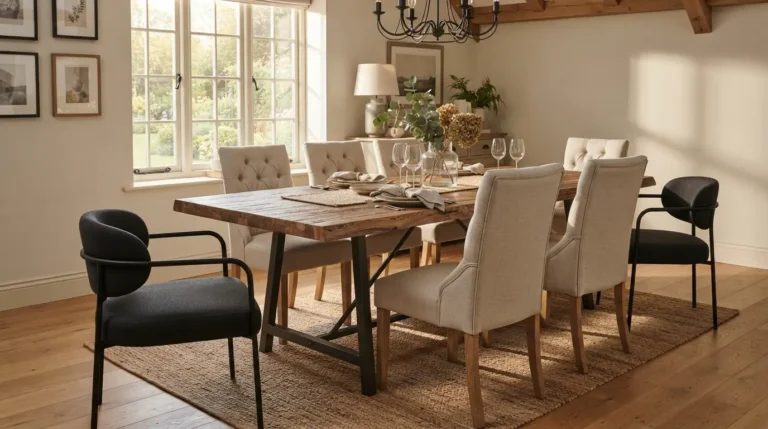
Plan around 60cm (24 inches) of table edge per side chair and slightly more, around 70 to 75cm (28 to 30 inches), per armchair, so elbows aren’t competing at a full table. If you’re mixing styles, a common and effective designer approach is armchairs at the two heads with side chairs along the sides, and limiting yourself to two styles maximum with seat heights within about 5cm (2 inches) of each other. Go beyond that and the table starts looking accidental rather than deliberately curated.
A bench along one side is another way to mix seating types while saving space, particularly with a farmhouse or cross-back table setup. Our guide to dining bench ideas covers how to pair one with chairs on the opposite side.
What Do Dining Chairs Cost by Type?
Cost varies enormously by material, brand, and whether you’re buying a genuine designer original or a widely available inspired version, so treat these as rough starting points rather than fixed prices.
| Chair Type | Typical Price Range (per chair, approx.) | Main Cost Driver |
| Budget Parsons or side chair | £40–£100 | Basic fabric, flat-pack construction |
| Solid wood Windsor, ladder-back, cross-back | £80–£250 | Timber species, joinery quality |
| Wishbone (inspired/replica versions) | £100–£300 | Wood grade, woven cord quality |
| Genuine designer originals (e.g. licensed Wegner) | £400–£1,000+ | Brand licensing, original manufacturing |
| Cantilever or bentwood | £80–£300 | Steel gauge or wood-steaming quality |
| Rattan or wicker | £70–£220 | Natural cane vs synthetic PE resin |
Prices vary significantly by country and retailer, so use this as a general guide for comparing categories rather than an exact budget. As a rule of thumb, the biggest jump in price within any single type is usually the difference between a genuine, licensed design and a widely available inspired version that looks nearly identical from across the room.
Conclusion
The different types of dining chairs each solve a different problem: Parsons for versatility and comfort, Windsor and ladder-back for genuine longevity, Wishbone and cantilever for a design-forward look, and rattan for warmth and texture in a lighter, more casual room. Pick based on how the chair actually gets used at your table, not just how it photographs, and check the seat height and clearance against your table before you commit. Get that fit right and almost any style on this list will earn its place.
FAQs
What’s the difference between a Parsons chair and a side chair?
Side chair simply means armless. A Parsons chair is a specific fully upholstered style that happens to usually come without arms, but the term Parsons refers to the design, not just the absence of armrests.
Is rattan the same as wicker?
No. Rattan is the raw cane material itself, while wicker describes the woven pattern, which can be made from rattan, cane, or synthetic PE resin. Always check which material is used under the word wicker before buying.
Can you mix different dining chair styles at one table?
Yes, and it’s a common design approach, but keep it to two styles maximum and make sure seat heights stay within about 5cm of each other so diners aren’t sitting at noticeably different levels.
What is the most durable type of dining chair?
Solid wood styles like Windsor, ladder-back, and bentwood tend to last the longest with the least maintenance, since there’s no fabric to wear and no woven seat to dry out, assuming the joinery is well made in the first place.
Are Wishbone chairs comfortable for long dinners?
Reasonably, thanks to the slightly flexible woven cord or cane seat, though they’re firmer than a fully upholstered Parsons or wingback chair. A seat cushion closes that gap if you regularly host long meals.
What dining chair style suits a small dining room?
Armless side chairs in general take up the least width per person, and cantilever chairs often stack for storage, both of which help in a smaller room where you need seating that doesn’t dominate the space when not in use.