Wall Panelling Ideas: The Complete Guide to Panelling and Wall Features for Your Home

Wall panelling is one of the most transformative things you can do to a room in a British home. It adds architectural character to spaces that have none, depth and texture to walls that are flat and featureless, and a sense of quality and permanence that no amount of paint alone can achieve. In new-build homes frequently delivered with minimal architectural detail wall panelling has become the single most widely used technique for adding the character and craftsmanship that the building itself lacks.
But wall panelling is only one of the tools available for transforming the vertical surfaces of a room. Wallpaper, gallery walls, textured plaster, exposed brick, acoustic panels, and decorative mouldings all offer different ways to treat a wall and make it an active participant in the design of a room rather than a passive backdrop.
This guide covers every aspect of wall panelling and wall features in the UK from the different types of panelling and the materials available to installation guidance, room-by-room ideas, and the full range of wall treatment options beyond panelling itself.
What Makes Great Wall Panelling?
Great wall panelling achieves three things: it adds architectural interest to a room, it is proportionate to the space it is in, and it is installed and finished to a standard that reads as quality rather than DIY. The best wall panelling in UK homes is also painted well. Most panelling is finished in a flat or eggshell paint, and the quality of the paint application the smoothness of the surface, the neatness of the edges, the consistency of the sheen is as important as the quality of the panelling itself.
Types of Wall Panelling Explained
Tongue and Groove Panelling
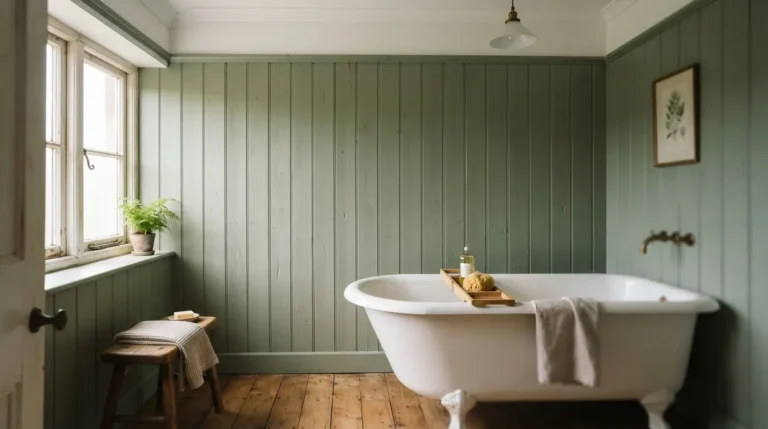
Tongue and groove commonly abbreviated to T&G is the most traditional form of wall panelling in the UK and one of the most versatile. Individual boards slot together using a protruding tongue on one edge and a corresponding groove on the other, creating a continuous surface without visible fixings. Tongue and groove is used on walls, ceilings, and in bathroom cladding, and is associated primarily with traditional and farmhouse interiors though when painted in a bold dark colour it sits equally comfortably in a contemporary setting.
Shiplap Panelling
Shiplap boards wider, flat boards with a rebated edge that creates a horizontal shadow gap between each board were originally used in shipbuilding and external cladding before finding their way into interior design. In the UK, shiplap wall panelling is associated with coastal, rustic, and contemporary interiors. It can be installed horizontally for a clean, linear look or vertically for a more traditional and height-enhancing effect.
MDF Frame Panelling
MDF frame panelling where strips of MDF moulding are fixed to a painted wall in a rectangular or geometric grid to create the impression of traditional raised panel is one of the most popular and most achievable DIY panelling techniques in the UK right now. It does not require the installation of individual boards; instead, the visual effect of panelling is created by applying relatively thin moulding strips to the wall surface and painting the entire assembly in a single colour. The result, when done well, is indistinguishable from traditional framed panelling at a fraction of the cost and effort.
Wainscoting and Dado Rail Panelling
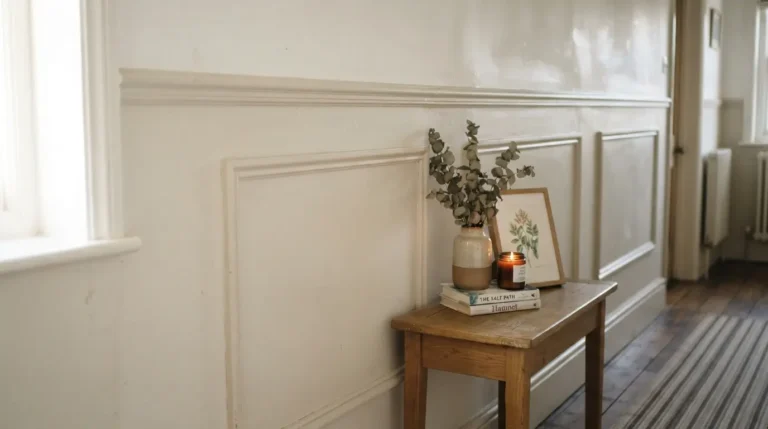
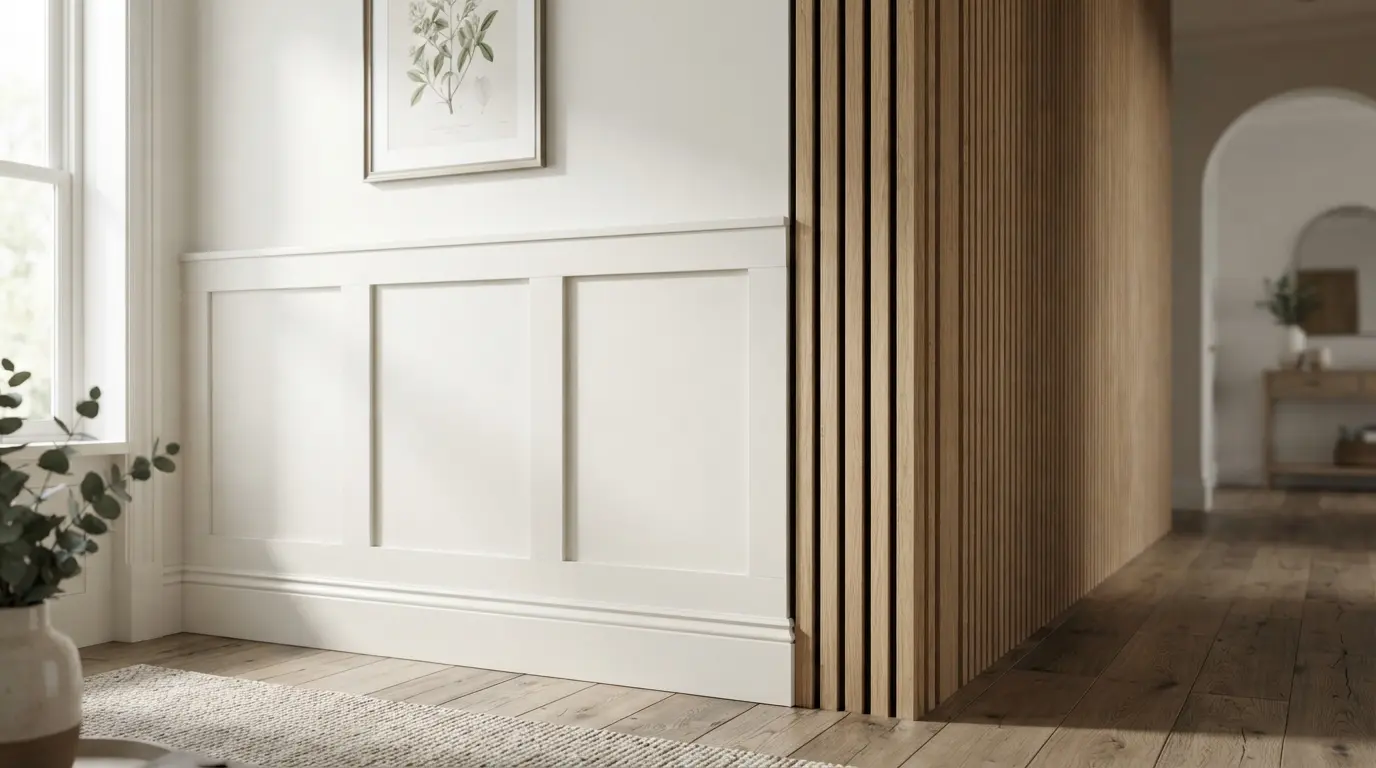
Wainscoting panelling applied to the lower portion of a wall, typically to the height of the dado rail (around 90 to 120 centimetres from the floor) is the most traditional form of interior wall panelling in the UK and one that is enjoying a strong revival. It provides both a decorative finish and a practical protective layer to the lower portion of a wall. A dado rail the horizontal moulding that marks the top of the wainscoting is also used without panelling below it as a decorative feature in its own right, dividing the wall into distinct areas that can be painted in different colours.
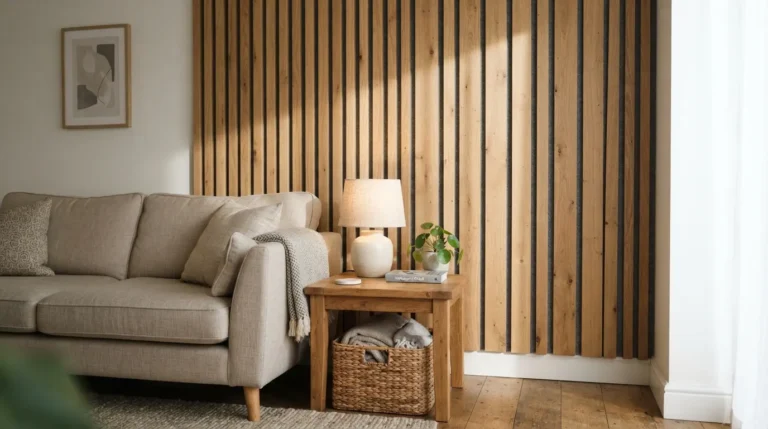
Acoustic and Slat Wall Panels
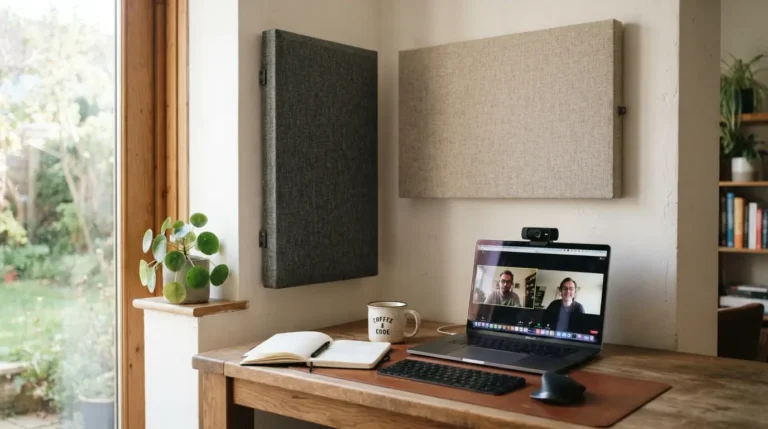
Acoustic wall panels typically made from felt, foam, or fabric were originally developed for commercial spaces but have found a growing audience in UK homes, particularly in home offices and media rooms. Wood slat wall panels thin strips of timber (usually oak or walnut veneer) fixed to an acoustic backing board are a beautiful and practical variation that adds warmth, texture, and acoustic performance simultaneously. They have become one of the most widely searched wall panel types in the UK.
How High Should Wall Panelling Go?
The height of wall panelling relative to the ceiling is one of the most important proportion decisions in any panelling project.
In a room with standard UK ceiling height (2.4 metres), half-height panelling to approximately 1.2 metres, or roughly halfway up the wall is the most versatile and most commonly used proportion. It creates a clear visual division between the lower, panelled portion of the wall and the painted or papered upper section.
Two-thirds height panelling to approximately 1.6 metres works particularly well in rooms with slightly higher ceilings or in hallways where a more dramatic effect is desired. It creates a more enveloping quality than half-height panelling and is one of the most popular proportions in contemporary UK interior design.
Full-height panelling from floor to ceiling suits rooms with higher ceilings (2.7 metres and above), period properties with natural architectural height, or bedrooms where a particularly cocooning effect is the goal.
Living Room Wall Panelling Ideas
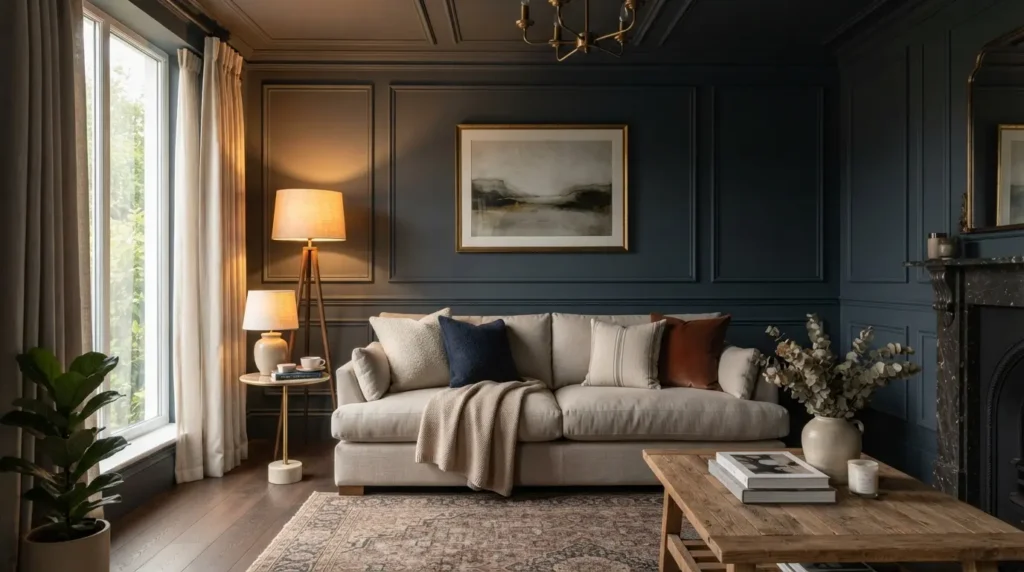
The living room is the room in which wall panelling makes the greatest visual impact because it is the room most frequently seen and most actively experienced by both family and visitors.
A panelled chimney breast the most natural focal point in a traditional British living room is one of the most impactful and relatively straightforward panelling projects available. MDF frame panelling applied to the chimney breast and painted in a contrasting or matching colour transforms what is often the most prominent surface in the room into a genuinely considered architectural feature.
A panelled media wall incorporating the television, flanking shelving, and often a built-in fireplace or log-effect fire is one of the most widely searched living room projects in the UK. It replaces a disparate collection of furniture and technology with a single, cohesive architectural feature that draws the entire room together.
Bedroom Wall Panelling Ideas
In the bedroom, wall panelling is most frequently used to create a headboard feature wall a panelled section of the wall behind the bed that replaces the need for a freestanding headboard and creates one of the most impactful features achievable in a domestic bedroom.
The most popular version of the bedroom panelling feature wall in the UK is a full-width panel behind the bed extending from floor to ceiling and from wall to wall painted in a contrasting colour to the remaining walls. The headboard sits in front of the panelling, either attached to it or positioned against it, and the combination reads as a considered, built-in installation.
Dark-painted bedroom panelling is one of the most dramatic and most sought-after looks in UK interiors right now. A wall panelled in MDF frame moulding and painted in deep navy, forest green, or near-black creates a cocooning quality behind the bed that transforms the character of the entire room.
Hallway Wall Panelling Ideas
The hallway is arguably the room where wall panelling adds the most value relative to the cost because the hallway of a UK home is typically a narrow, featureless corridor with little natural light, minimal furniture, and a functional rather than atmospheric quality that panelling transforms more dramatically than almost any other intervention.
Half-height panelling in a hallway painted in a dark, confident colour below the dado rail height and a lighter shade above creates a welcoming, layered arrival experience that makes the hallway feel like the beginning of a well-designed home rather than simply a means of getting from the front door to the rest of the house.
A panelled staircase wall the long, continuous wall that runs alongside the stairs from ground floor to first floor landing is one of the most visually prominent surfaces in many UK homes. Vertical MDF panelling applied to the staircase wall and painted in a deep, atmospheric colour creates a gallery-quality impression.
Bathroom Wall Panelling Ideas
In the bathroom, wall panelling serves both an aesthetic and a practical purpose providing a decorative wall surface that is also protective, covering potentially imperfect plaster, concealing pipework, and offering an engaging alternative to tiling the lower portion of the wall.
Tongue and groove bathroom panelling painted in a classic white or in a soft sage green is associated primarily with farmhouse, country, and coastal interiors and creates a clean, characterful bathroom that suits both period and contemporary homes.
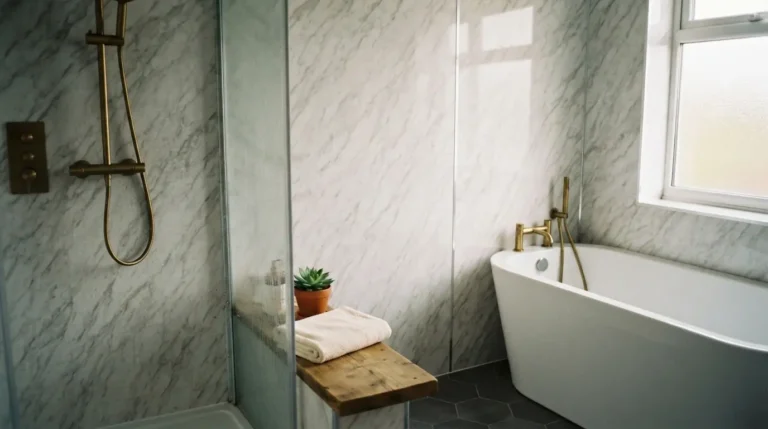
Waterproof MDF or PVC panels designed specifically for bathroom use provide a seamless, easy-to-clean alternative to tiles and suit contemporary bathrooms where a smooth, uninterrupted surface is preferred to the visual complexity of grout lines.
Feature Wall Ideas
What Is a Feature Wall?
A feature wall sometimes called an accent wall is a single wall in a room treated differently from the remaining three, typically in a bolder, darker, or more decorative way. The most effective feature walls have a natural focal point a chimney breast, the wall behind a bed or sofa, or the wall facing the door as you enter the room. Treating a wall that has no logical reason to be different rarely looks intentional.
Painted Feature Wall Ideas
A single wall painted in a bold, dark, or contrasting colour is the simplest and most cost-effective feature wall. It works best when the feature colour relates to the colours present elsewhere in the room in upholstery, rugs, artwork, or cushions rather than appearing in isolation. A dark navy feature wall in a room decorated in white and warm natural materials looks deliberate and sophisticated.
Wallpaper Feature Wall Ideas
A patterned or textured wallpaper on a single wall is one of the most widely used feature wall techniques in UK homes. Botanical and floral wallpapers are particularly popular in bedrooms; geometric and graphic patterns suit living rooms and dining rooms; textured wallpapers in grasscloth or linen suit any room where warmth and tactile interest are the priorities.
Gallery Wall Ideas
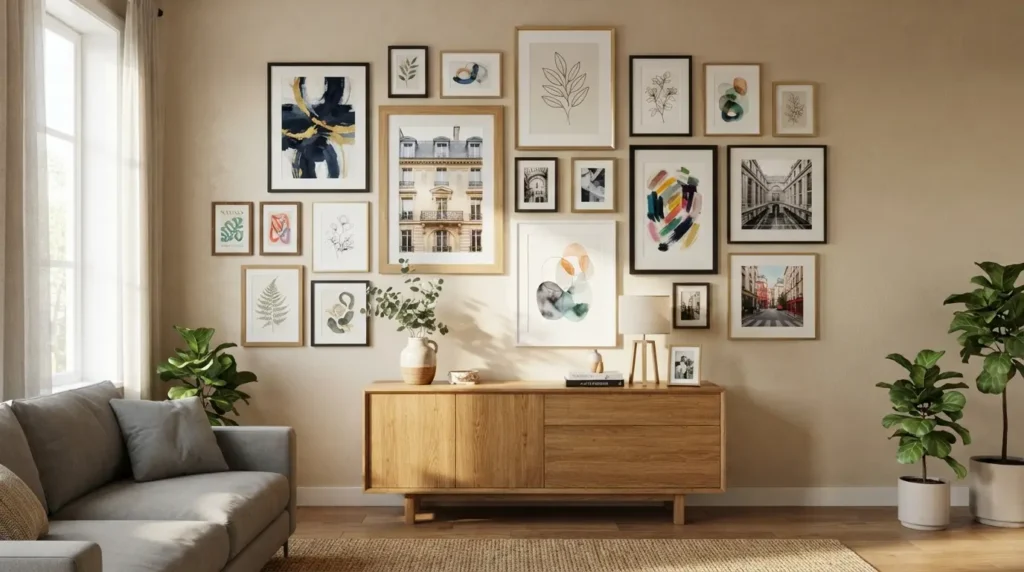
A gallery wall a curated arrangement of framed artwork, prints, photographs, and decorative objects displayed together on a single wall is one of the most personal and most expressive things you can do to a room in a UK home.
The most successful gallery walls are planned before anything is hung. Lay all the frames on the floor in the arrangement you intend to create on the wall, adjusting the composition until the balance of sizes, shapes, and content feels right. Use the largest frame as an anchor hung first, in the most visually central position and build outwards from there.
A coherent gallery wall has a consistent element running through it a consistent frame colour, subject matter, palette, or level of quality. A gallery wall of black frames in different sizes containing prints in a limited colour palette looks considered and deliberate. Mismatched frames in competing colours containing unrelated content looks like a collection of items that have not found a better home.
Wallpaper Ideas
Wallpaper is one of the most impactful and most versatile wall treatments available and has experienced a significant revival in UK interiors after a period in which painted walls were the default choice for most rooms.
The key to a successful wallpaper installation is preparation. Walls should be smooth, clean, and primed before any wallpaper is hung. Pattern matching the process of aligning the repeating pattern across adjacent drops is the most technically demanding aspect of wallpapering and the area most likely to produce a less-than-professional result without care.
Feature-wall wallpaper hanging a single drop or a single wall rather than papering the entire room is the most accessible way to introduce wallpaper into a home and the approach most likely to succeed for a first-time paperhanger. A single wallpapered wall behind a bed, behind a sofa, or in an alcove creates significant visual impact with minimal technical complexity.
Textured Wall and Venetian Plaster Ideas
Textured and artisan wall finishes — Venetian plaster, limewash, microcement, and clay plaster are among the most widely aspired-to wall treatments in contemporary UK interior design and among the most technically demanding to apply successfully.
Venetian plaster: a smooth, polished plaster finish that mimics the appearance of polished marble — is achieved through the application of multiple thin layers of a lime-based plaster compound, each burnished to a high sheen with a steel trowel. The result is an incredibly tactile, three-dimensional surface that catches light in a way that no paint can replicate.
Limewash: a diluted lime-based paint applied in translucent layers creates a soft, mottled, aged-looking finish that is particularly beautiful in natural daylight. It suits period properties and organic, biophilic interiors. Microcement and concrete-effect finishes suit contemporary, industrial, and minimal interiors.
DIY Wall Panelling Guide
MDF frame panelling is the most DIY-friendly panelling technique and the most widely undertaken by UK homeowners without professional experience.
The tools required are relatively simple: a tape measure, a spirit level, a mitre saw or hand saw, a construction adhesive (Gripfill or similar), panel pins, a nail gun or hammer, decorator’s caulk, and paint. The process is equally straightforward: measure and mark panel positions, cut MDF strips to length, apply adhesive, press firmly into position, pin for additional security, fill pin holes and gaps with caulk, sand smooth, and paint.
The most common DIY panelling mistake is failing to ensure panels are truly vertical. A spirit level is not optional even a slight deviation from vertical becomes increasingly obvious as the wall fills with panels and the cumulative error compounds.
Fill all gaps and imperfections before applying primer. Apply at least two coats of a good quality eggshell or flat paint, sanding lightly between coats, and the result will look professional regardless of experience level.
Final Thoughts
Wall panelling and wall features are among the most rewarding home improvement projects available to a UK homeowner high impact, relatively low cost, and entirely achievable without structural changes or professional trades. Whether you choose a classic tongue and groove bathroom, a dramatic MDF-framed headboard wall in the bedroom, a gallery wall in the hallway, or a fully panelled media wall in the living room, the effect is always the same: a room that feels more considered, more characterful, and more genuinely designed.
Start with one wall. Choose the room where the impact will be greatest often the hallway or the living room. Plan the proportion carefully, invest in a quality paint finish, and the result will repay the effort for years.
FAQs
What is the most popular type of wall panelling in UK homes in 2026?
MDF frame panelling where strips of MDF moulding are applied to the wall in a rectangular grid and painted is the most popular type of wall panelling in UK homes right now. It is achievable as a DIY project, relatively affordable, and highly effective at adding architectural character to both modern new-build and period homes alike.
How high should wall panelling go in a room with 2.4 metre ceilings?
Half-height panelling to approximately 1.2 metres, or roughly halfway up the wall is the most versatile and proportionate choice for a room with standard UK ceiling height of 2.4 metres. Two-thirds height (to approximately 1.6 metres) creates a more enveloping quality. Floor-to-ceiling panelling can feel heavy in rooms with lower ceilings; keep the colour pale and the panel sizes generous to prevent this.
Is wall panelling easy to DIY?
MDF frame panelling is one of the most accessible DIY home improvement projects available. It requires basic woodworking skills, a small set of tools, and care in measuring, cutting, and applying. The critical elements are accurate marking, truly vertical application, careful filling and sanding before painting, and a quality paint finish. With attention to these elements, a DIY panelling project can achieve professional-looking results.
What colour should I paint wall panelling?
The most popular approach in UK homes is to paint wall panelling in the same colour as the wall creating a single tonal surface where the texture of the panelling is emphasised without the contrast of colour. A second approach is to paint the panelling in a contrasting or bolder colour, creating a feature wall. White, off-white, and dark moody colours navy, forest green, charcoal are all widely used and effective.
What is the difference between tongue and groove and shiplap?
Tongue and groove boards have a protruding tongue on one edge and a corresponding groove on the other, locking the boards tightly together with no visible gap. Shiplap boards have a rebated edge that creates a deliberate horizontal shadow gap between boards when installed. Tongue and groove creates a smoother, more traditional surface; shiplap creates a more pronounced, graphic horizontal pattern.
Does wall panelling add value to a house?
Well-executed wall panelling adds perceived quality and character to a home and is generally regarded as a positive feature that differentiates a property from comparable homes. Poorly executed panelling with crooked lines, visible fixings, or a poor paint finish can have the opposite effect. Quality of execution matters more than the feature itself.
What is a gallery wall and how do I create one?
A gallery wall is a curated arrangement of framed artwork, prints, and decorative objects displayed together on a single wall. To create one, lay all frames on the floor first and adjust the arrangement until it feels balanced. Use the largest frame as an anchor, hang it first in the most visually central position, and build outwards. A consistent element frame colour, subject matter, or palette unifies the pieces and makes the gallery wall look deliberate rather than ad hoc.