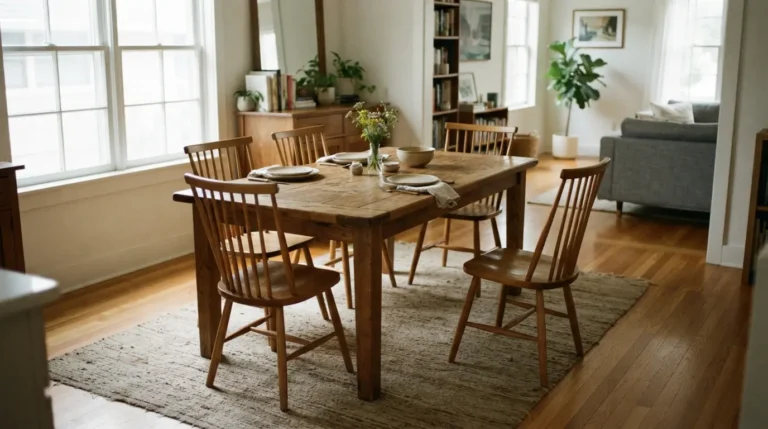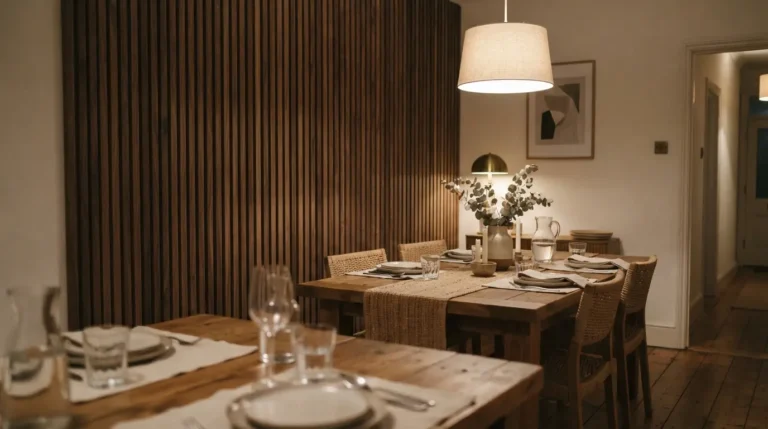
15 Dining Chair Ideas to Complete Your Dining Room

Dining chair ideas make the biggest difference to how a dining room actually feels, more than the table, since chairs are what people touch, sit in, and notice up close for the length of every meal. The 15 ideas below cover styles, materials, and a couple of genuinely practical checks most inspiration roundups skip in favour of another pretty photo.
1. Classic Windsor Spindle-Back for Timeless Character
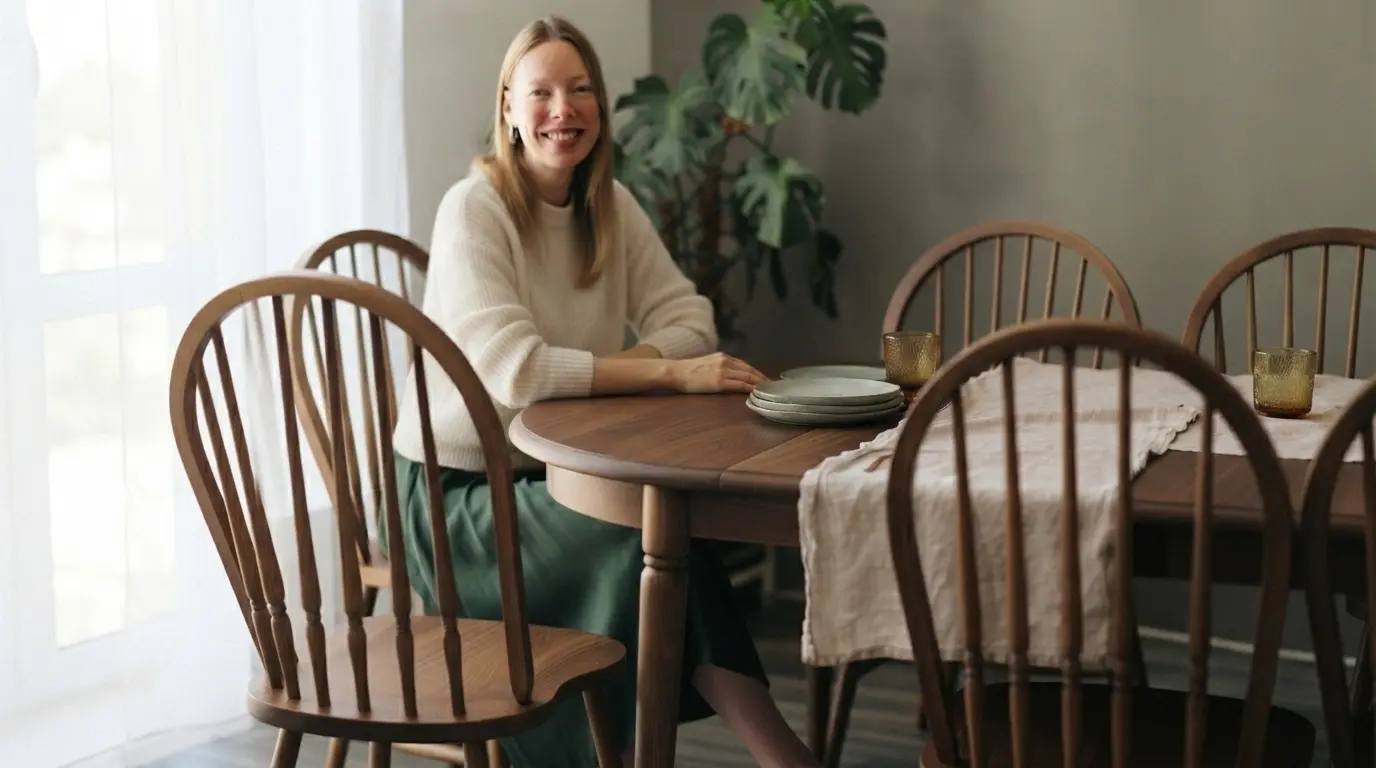
A spindle-back Windsor chair in a warm walnut or oak finish brings real character to a table without needing upholstery, colour, or pattern to do the work. The turned spindles and curved back read as traditional but genuinely suit a modern table too, especially paired with a dark oval or round tabletop rather than a matching wood set, which lets the chair’s silhouette stand out rather than blending into a uniform wood tone.
2. Clear Acrylic Ghost Chairs to Keep a Small Room Open
Clear acrylic chairs do something no other material on this list can: they visually disappear, which keeps a small or narrow dining room feeling genuinely open rather than crowded. They work particularly well as an addition to an existing wood or upholstered set, rather than a full matching table’s worth, since a full room of clear chairs can start to feel a little sparse. Keep in mind they scratch more visibly than most materials over years of daily use, so they suit a lower-traffic dining space better than one used for every meal. They’re also worth testing underfoot before committing a whole set, some acrylic chairs feel noticeably less forgiving to sit in for a long stretch than a padded or contoured wood seat, so a cushion pad is worth having on hand if the chair is meant for genuinely long dinners rather than quick meals.
3. A Bold Splash of Colour on Just One or Two Chairs
Swapping the colour of one or two chairs in an otherwise plain set creates a genuine focal point without the cost or commitment of a full coloured set. This is one of the most budget-friendly ideas here, since you’re only buying or repainting a chair or two rather than eight, and it’s an easy way to test a bold colour before deciding whether you want to live with it across the whole room.
4. Painted Mismatched Vintage Chairs Unified by One Colour

A genuinely eclectic mix of secondhand or inherited chairs looks intentional rather than accidental once they’re unified by a single paint colour or a coordinating seat fabric. This is a practical option if you’re building a set gradually or want a room with real history rather than a matching showroom set, and it’s often the cheapest of all fifteen ideas here, since you’re working with pieces you already own or find secondhand rather than buying new.
5. Captain Chairs with Arms at Each Table End
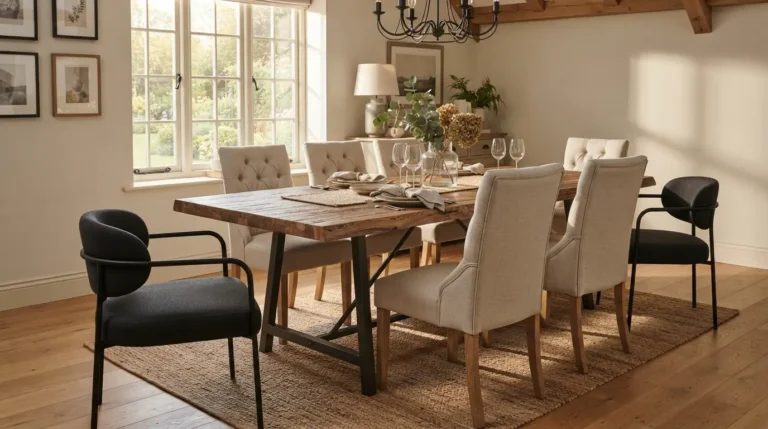
Placing a pair of chairs with arms at the head of the table, wood or rattan rather than fully upholstered, adds a small amount of formality and marks the head-of-table seats naturally. The honest trade-off worth knowing: arms genuinely add width to a chair, which means it takes up more floor space and is harder to tuck fully under the table when not in use, so this idea works better on a table with a little extra length to spare rather than one already tight for space.
6. Cane or Rattan Chairs for a Relaxed, Textural Look
Woven cane or rattan chairs bring warmth and texture without the visual weight of a fully upholstered seat, and they suit a relaxed, natural-leaning dining room particularly well. They’re also genuinely lighter to move and reposition than most wood or upholstered alternatives, which matters if the space doubles as a home office or gets rearranged often. Natural cane can dry out and become brittle with prolonged direct sun or very dry heating, so a spot with good but not constant harsh light keeps it looking right for longer.
7. Metal-Framed Chairs for an Industrial Edge
A metal frame, tubular steel or a cantilever base, brings a cooler, more architectural edge to a dining room, and it pairs particularly well with a reclaimed wood or concrete-effect table where a fully upholstered chair might feel too soft against the room’s other materials. Metal chairs are also genuinely low-maintenance, a quick wipe keeps them looking sharp, though a fully metal seat with no cushion isn’t the most comfortable option here for anyone planning to sit through a long meal. A slim seat pad, even a simple flat cushion tied to the frame, solves the comfort issue without softening the overall industrial look, and it’s an easy addition rather than something that needs to be built into the chair from the start.
8. A Dining Bench Along One Side Instead of Chairs
Swapping one side of the table for a bench introduces a relaxed, communal feel that a full set of individual chairs doesn’t quite achieve, and it’s genuinely practical in a smaller room, since a bench pushed against the wall takes up less floor space than chairs that need room to be pulled out. It also flexes more easily to fit an extra person at a family gathering than a fixed number of individual chairs ever could.
9. Slipcovered Chairs for Easy-Clean, Swappable Style
A slipcovered dining chair, with a removable, washable fabric cover over the frame, solves the practical cleaning problem that a fully upholstered chair can’t: when something spills, the cover comes off and goes in the wash rather than needing a professional clean or a permanent stain. It’s also one of the easiest ideas here to refresh seasonally, since swapping the cover for a different colour or pattern changes the whole room’s mood without buying new chairs. This is worth considering specifically for a household hosting frequent dinner parties, since a stained cover can be swapped or laundered before guests arrive rather than living with a permanent mark on a fixed upholstered seat.
10. Chairs That Do Double Duty Beyond the Dining Table
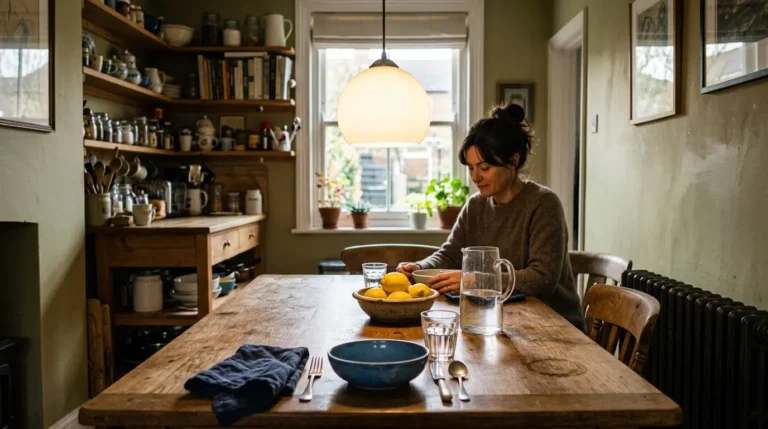
A dining chair with a simple, portable design, a light wood frame with a woven seat, for instance, can genuinely earn its keep beyond mealtimes: pulled into a bedroom as a spot to sling clothes overnight, used as an extra seat in a home office during a video call, or moved into a hallway for a pop of colour near the front door. This is a genuinely underused idea in most dining chair guides, since they tend to treat the chair as fixed to the table, but a lighter, more portable design gets far more use out of the same purchase.
11. Mid-Century Moulded Shell Chairs for a Design-Led Look
A moulded shell chair, plastic or fibreglass on slender wood or metal legs, brings a design-forward, slightly retro edge to a dining room without needing upholstery at all. It’s one of the more forgiving styles to mix and match, since the simple, consistent silhouette holds together even across several different colours around one table, unlike a set of very differently shaped chairs.
12. A Statement Chair at the Head of the Table
Rather than a matching pair of armchairs at each end, a single, deliberately different chair, a bolder colour, an unusual shape, a genuinely comfortable upholstered piece, at just one end of the table marks it as the head seat and adds a real focal point to the room. This suits a household where one person consistently sits in the same spot, and it reads as a considered design choice rather than simply running out of matching chairs.
13. Woven or Wishbone-Style Chairs for Scandi Warmth
A wishbone-style chair, with a curved wooden frame and a woven paper-cord or rope seat, brings genuine warmth and craftsmanship to a table without upholstery, and it suits a pale, Scandi-leaning room particularly well. The woven seat is also more breathable than a padded one, which some people genuinely prefer for a chair used through warmer months or in a room without much airflow.
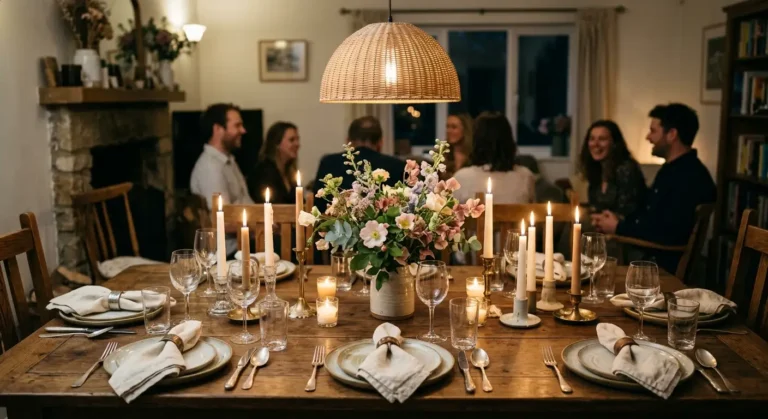
14. Ladder-Back Chairs for a Country or Farmhouse Feel
Horizontal wood slats across the back define the ladder-back chair, and it’s one of the most enduring country and farmhouse choices for a reason: the simple joinery is easy to check for quality before buying, and the style suits both a rustic reclaimed table and a more polished farmhouse-modern one equally well. A woven rush seat is a common pairing on this style, which adds texture but is worth checking for wear if buying secondhand, since rush seating does eventually need replacing with genuine daily use. A well-made ladder-back with a solid rush seat can be re-seated by a specialist rather than replaced entirely, which is worth knowing if you inherit or find a genuinely well-built vintage set with a worn seat rather than a damaged frame.
15. Check Arm Width and Table Clearance Before You Commit
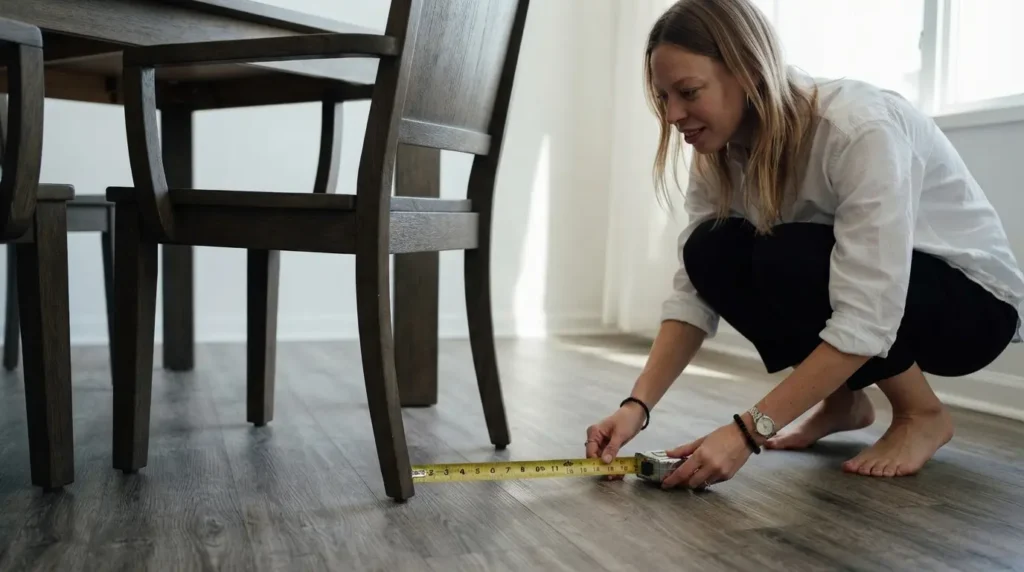
This is the detail most dining chair guides skip entirely, and it’s the one that decides whether any of the previous fourteen ideas actually work in your specific room. Chairs with arms need more width both at the table and for tucking fully underneath when not in use, so measure your table’s width against the number of chairs you actually want seated, arms included, before ordering a full set. As a general rule of thumb, allow roughly 90cm or more of clearance behind each chair for someone to comfortably pull it out and stand, and check that dimension against your room’s actual layout rather than assuming it will simply work itself out once the chairs arrive.
Final Thoughts
The best dining chair ideas balance genuine character with a couple of practical checks most guides never mention, arm width, table clearance, and how a mixed or mismatched set actually gets tied together. Pick the ideas that suit how your dining room really gets used, then measure before you commit, and the chairs you choose will complete the room rather than just filling the seats around it.
FAQs
Should all dining chairs match?
No. A deliberate mix, unified by a shared colour, fabric, or wood tone, often looks more considered than a fully matching set, and it’s a practical way to build a set gradually rather than buying everything at once.
What’s the easiest way to unify mismatched dining chairs?
Paint them all in a single colour, or reupholster the seats in the same or coordinating fabric. A shared element, colour, material, or leg finish, is what makes a mismatched set read as intentional rather than accidental.
Do dining chairs need arms?
No, but arms add real comfort for longer meals and mark a seat as slightly more formal, at the cost of extra width and a chair that’s harder to tuck fully under the table. Side chairs without arms are the more space-efficient default for most of the table.
How much clearance do I need around a dining table for chairs?
Aim for roughly 90cm or more behind each chair, enough space to pull it out and stand comfortably. This matters more than people expect, since a chair that technically fits the table can still make the room feel cramped if there’s no room to actually sit down.
What’s the difference between a kitchen chair and a dining chair?
Kitchen chairs tend to be lighter, more casual, and easier to wipe clean for everyday use, while dining chairs often lean slightly more formal, with padded seats or higher backs suited to longer, more considered meals. In practice, many chairs comfortably do both jobs.
Can dining chairs be used in other rooms?
Yes, a lighter, more portable dining chair works well as an extra bedroom seat, a home office chair for video calls, or a hallway accent, which is worth considering if you want more use out of the same purchase rather than a chair that only ever sits at the table.