
12 Dining Bench Ideas for a Relaxed and Casual Dining Space

Dining bench ideas work best when the bench genuinely fits how you eat, not just how the room photographs. A well-chosen bench seats more people per metre than chairs, slides fully out of the way when you need floor space, and gives even a formal dining table a looser, more gathered feel.
The problem most people run into is picking a bench that looks right in a showroom photo but fights the table, the room, or daily life once it’s home. Legs get in the way, cushions stain within a month, or a backless bench turns out to be genuinely uncomfortable after twenty minutes. The twelve ideas below are built around real layouts and materials that hold up, not just a mood board.
What Makes Bench Seating Work for a Relaxed Dining Space?
Bench seating works when the seat height sits close to the table’s natural chair height and the table legs stay clear of where people need to slide in and out. Standard dining tables sit around 74-76cm high, so aim for a bench seat around 44-48cm, with the table’s support structure either centred or at least 30cm clear of the bench’s inside edge.
Length matters as much as height. A 110cm bench comfortably seats two adults, while a 150cm bench typically fits three, so measure against your actual table length rather than guessing. In projects I’ve worked on, the most common regret isn’t the bench itself, it’s a table with legs positioned right where someone needs to swing their knees round to sit down.
1. Built-In Corner Banquette for a Breakfast Nook
A built-in corner banquette turns an underused corner into the most-used seat in the house, with two sides of cushioned bench wrapping the table and a couple of chairs filling the open side. It’s the classic move for a kitchen-diner corner that would otherwise sit awkwardly between the units and the window.
Built-in banquettes are custom to the space, which means every one is essentially bespoke joinery rather than an off-the-shelf purchase. That’s worth knowing before you commit, since it usually means a carpenter’s quote rather than a furniture delivery date, and a genuinely tailored fit is the whole point of going built-in rather than freestanding.
2. Freestanding Bench on One Side, Chairs on the Other
Placing a single freestanding bench along one long side of the table, with chairs on the other side and ends, is the easiest way to get the relaxed look of bench seating without committing the whole table to it. It gives you a casual, kick-back side for family meals and a slightly more formal side for guests.
This layout is also the most forgiving for smaller households, since the bench slides fully under the table on its side, keeping that half of the room clear when you’re not eating. It’s the setup most people land on when they want the bench look without a full renovation.
3. Storage Bench With a Lift-Up Seat
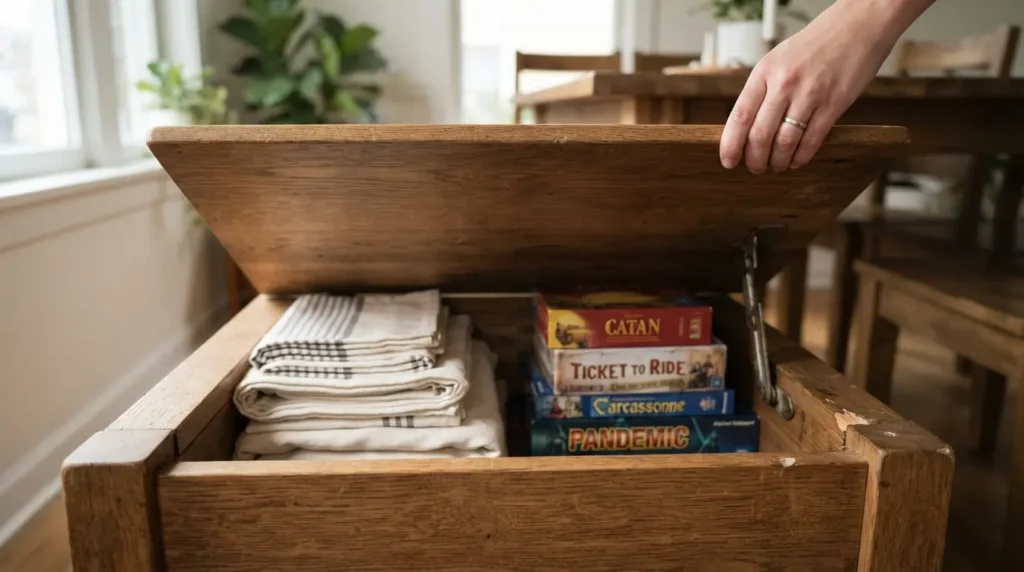
A bench with a hinged, lift-up seat or a set of drawers underneath turns dead space into genuinely useful storage for table linens, board games, or seasonal serveware you don’t want cluttering a sideboard. This is one of the most practical ideas on this list for a dining space that also doubles as a playroom or home office corner.
The trade-off is bulk. Storage benches are deeper and heavier than a simple slab-seat design, so they suit a room with a bit of space to spare rather than a genuinely tight nook. Check the hinge mechanism before buying too, cheaper lift-up seats can sag or stick within a couple of years of daily use.
4. Backless Bench Pushed Against the Wall
A backless bench pushed flush against a wall is the most space-efficient bench idea on this list, since it removes the need for any pull-out clearance behind the seat entirely. It works particularly well in a narrow dining room or a kitchen-diner where the table sits close to one wall.
The comfort trade-off is real and worth naming honestly. A backless bench against a wall is genuinely fine for everyday meals under an hour, but without back support, most adults start shifting and slouching on longer occasions, so it suits quick family dinners better than long dinner parties.
5. Upholstered Bench With a Low Back for Longer Meals
A low-backed upholstered bench gives you most of the space-saving benefit of a bench while solving the comfort problem that comes with a backless design. It’s the better choice for anyone who hosts regularly or simply enjoys sitting at the table for a while after the plates are cleared.
Fabric choice matters more here than almost any other decision on this list. Performance fabrics rated for everyday wear hold up far better than decorative-only textiles, and it’s worth checking that rating before falling for a fabric purely on colour or texture.
6. Bench Paired With a Round Table for a Sociable Layout
A curved or straight-edged bench set against one flatter side of a round table creates a relaxed, sociable layout where nobody is stuck at a formal head-of-table position. This works especially well for smaller households who want a casual, all-facing-in feel rather than the more hierarchical layout a rectangular table naturally creates.
The main consideration is table choice. A genuinely round table with no flat edge won’t pair as cleanly with a straight bench as an oval or a table with at least one straighter side, so this idea works best when the table is chosen with the bench pairing in mind from the start.
7. Two Benches Facing Each Other for a Communal Farmhouse Feel
Two matching benches, one on each long side of the table with no chairs at all, gives the most communal, farmhouse-style dining setup on this list. It’s the layout that maximises seats per metre of table and suits households that entertain in numbers or simply prefer the informality of bench-only seating.
The honest trade-off is accessibility. Getting in and out from the middle of a long bench with people already seated on either side takes a bit of coordination, so this idea suits a genuinely casual household more than one that wants guests to come and go freely through a meal.
8. Reclaimed Wood or Vintage Pew-Style Bench
A reclaimed timber bench, or a genuine vintage church pew repurposed as dining seating, brings a level of character and patina that a new piece simply can’t replicate. It’s a strong choice for a farmhouse or period-home dining space where a brand-new matching set would look too polished against the rest of the room.
The trade-off is comfort and condition. Old pews and reclaimed benches are often built for looks and durability rather than seat depth or ergonomics, so sit on one before buying if you can, and budget for a cushion or two if the original seat turns out harder than expected.
9. Rattan or Woven Bench for Texture and Warmth
A rattan or woven cane bench brings genuine warmth and texture into a dining space that’s otherwise dominated by flat wood and painted surfaces, and it tends to feel lighter, visually, than an equivalent solid timber piece. It pairs particularly well with a pale or bleached wood table for a relaxed, natural look.
Durability is the honest consideration here. Rattan holds up well in normal indoor conditions but isn’t as forgiving of heavy daily impact as solid hardwood, so it suits a more occasional-use dining space better than one that takes the full weight of family life every single day.
10. Scatter Cushions Instead of a Fixed Upholstered Seat
Dressing a plain wooden bench with a run of loose scatter cushions, rather than committing to a fully upholstered seat, gives you nearly the same comfort with far more flexibility to change the look, swap out a stained cover, or simply pack the cushions away for a cleaner line when you want one.
This is the most budget-friendly way to soften a hard bench, and it’s genuinely practical for households with young children or pets, since a removable, washable cushion cover is a much easier fix than reupholstering a fixed seat after a spill.
11. U-Shaped or Wraparound Banquette for a Small Room
A U-shaped banquette that wraps three sides of the table, leaving just one side open for chairs, squeezes the maximum number of seats into the smallest possible footprint. It’s the strongest option on this list for a genuinely small dining room or an alcove that a straight bench can’t fully use.
The layout consideration matters here more than almost any other idea on this list. Keep at least 30cm of clearance between the bench and any table leg or support, and if the bench has arms, leave roughly 38cm from the arm to the table edge, or getting in and out becomes a genuine hassle rather than a minor inconvenience.
12. Kid-Friendly Bench Seating for Family Meals
A simple, sturdy bench without sharp corners or a delicate fabric is often the most practical seat in a family dining space, since kids can shuffle along, climb in without pulling out a chair, and space is naturally more forgiving of the wriggling that comes with younger children at the table.
Wipeable or performance-rated fabric matters more here than style. A beautiful velvet bench will show every spill within the first family meal, while a treated canvas or vegan leather surface wipes clean in seconds and still looks good years into daily family use.
Choosing Fabric and Material for Everyday Use
Every bench material trades off differently between comfort, upkeep, and how it copes with daily meals. Solid wood is the most forgiving all-rounder, upholstered options add comfort at the cost of extra care, and natural weaves like rattan bring texture but need gentler treatment.
| Material | Best For | Maintenance Reality |
| Solid wood (oak, walnut, pine) | Durability, traditional or farmhouse looks | Dust weekly, treat spills immediately, occasional wood-specific polish |
| Cotton canvas upholstery | Family use, everyday wipe-downs | Good stain resistance, vacuum regularly, spot-clean spills |
| Performance velvet or bouclé | Comfort with a softer, current look | Durable and stain-resistant if genuinely rated performance, check the label |
| Leather or vegan leather | Easiest daily clean-up | Wipes clean fast, condition leather roughly twice a year |
| Rattan or woven cane | Texture, lighter visual weight | Dust with a soft brush, keep away from direct heat sources |
| MDF with veneer | Budget builds | Least hard-wearing option, avoid for heavy daily family use |
What Dining Benches Cost, and Where the Money Goes
Dining bench prices span a wide range because you’re paying for construction quality and comfort features, not just size. A straightforward wooden bench and an upholstered corner banquette set can differ by several hundred pounds even at a similar footprint.
| Bench Type | Typical Price Range (approx.) | What You’re Paying For |
| Basic wooden bench (110-150cm) | £80-£230 | Solid or veneered wood, simple construction |
| Upholstered freestanding bench | £150-£450 | Padding, fabric quality, sturdier frame |
| Storage bench with lift-up seat or drawers | £200-£500 | Hinge or drawer mechanism, extra materials |
| Corner or L-shaped banquette set | £500-£900+ | Custom or semi-custom shape, more upholstery |
| Built-in bespoke banquette | Varies widely, often £600-£2,000+ | Joinery, made-to-measure fit, on-site labour |
These figures are approximate and vary a good deal by country, fabric, and whether you buy off-the-shelf or commission something bespoke, so treat them as a planning guide rather than a fixed quote. A reasonable rule of thumb is that anything well under £100 for a genuinely solid wood bench is unlikely to be full hardwood, so check the material listing rather than assuming from the photo alone.
Common Bench Seating Mistakes to Avoid
The most common mistake is buying a table with legs at the corners rather than centred or set well back from the edge, which turns every sit-down into an obstacle course around table legs. Check leg placement before you commit to a table and bench pairing, not after.
A close second is choosing fabric for looks alone. A gorgeous velvet that isn’t rated for performance use will show its first stain within weeks in a household that actually eats at the table daily, so match the fabric to how hard the bench will really be used, not how it photographs in the shop.
Mismatched seat heights are the third recurring issue. A bench that sits noticeably lower or higher than the chairs beside it looks off even when it’s technically comfortable, so measure against your existing seating rather than assuming a “standard” bench height will match.
Conclusion
The best dining bench ideas for a relaxed space start with the same two checks every time: does the seat height match your table, and do the table legs stay clear of where people actually need to move. Get those right, then choose the style, from a built-in banquette to a simple reclaimed-wood bench, based on how the room is genuinely used day to day rather than how it looks in a single photo. Measure before you buy, match the fabric to your household, and the bench will earn its place at the table for years rather than months.
FAQs
Is bench seating comfortable for a full meal?
A backless bench is fine for everyday meals under about an hour. For longer dinners or regular hosting, a low-backed upholstered bench or added cushions make a real difference to comfort.
How long should a dining bench be for my table?
A 110cm bench comfortably seats two adults, and a 150cm bench typically fits three. Measure against your table length and leave clearance from any table legs rather than matching the table’s exact length.
Should a dining bench have a back?
A backed bench is more comfortable for longer meals and reads as slightly more formal. A backless bench saves space, tucks fully under the table, and suits a casual, everyday dining setup better.
Can I mix a bench with dining chairs?
Yes, and it’s one of the most popular layouts. A bench on one side with chairs on the other gives you a casual side and a more formal side without committing the whole table to bench seating.
Is a built-in banquette worth it over a freestanding bench?
A built-in banquette makes the most of an awkward corner and offers a tailored fit, but it’s essentially custom joinery rather than an off-the-shelf purchase, so it suits a genuinely fixed layout rather than a room you might rearrange.
What fabric holds up best for a dining bench with kids?
Wipeable performance fabrics, cotton canvas, vegan leather, or treated performance velvet, hold up far better to daily spills than decorative-only textiles that aren’t rated for heavy use.