
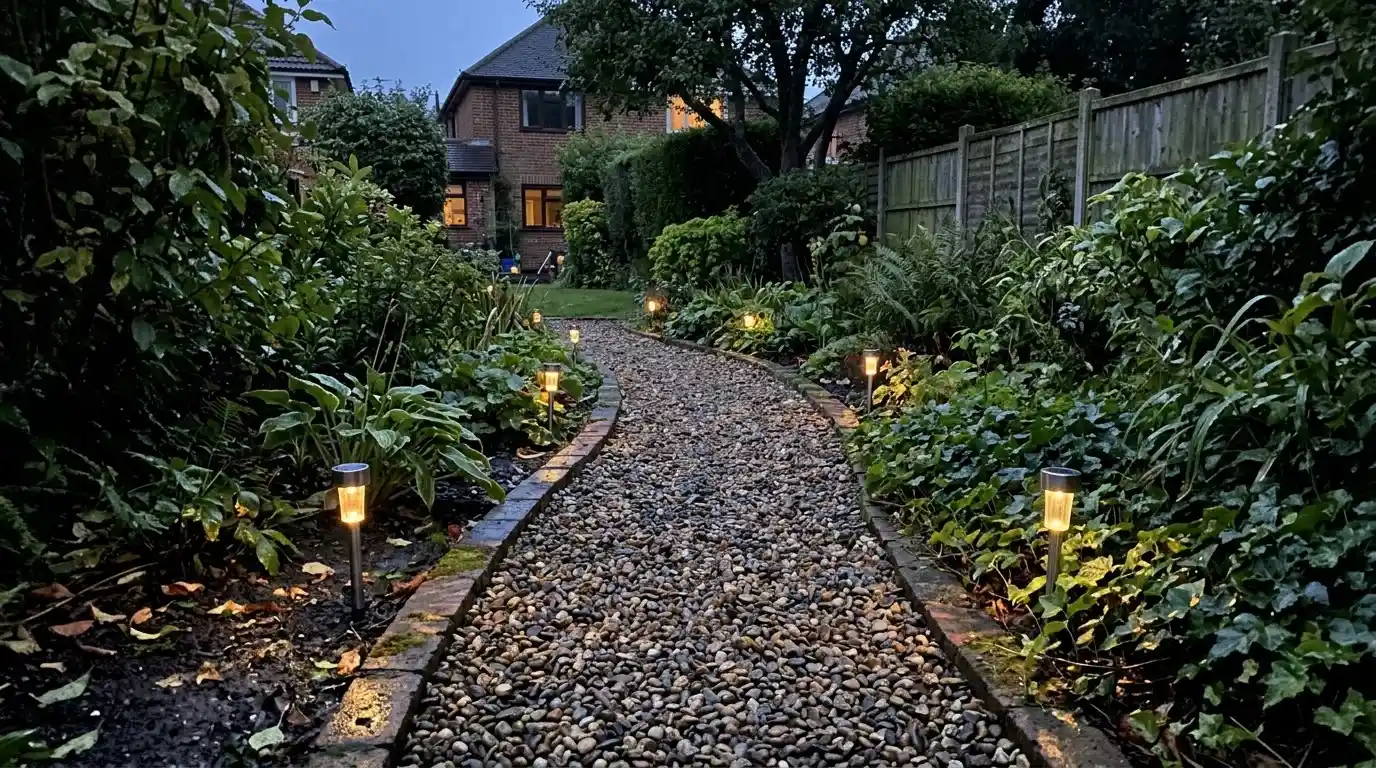
How to Plan and Install Garden Lighting

Solar lights are easy to move and need no electrician. Mains or 12 V systems give consistent brightness through the winter but cost more to install. Plan the paths and the places you actually use at night before you buy any fittings.
Most UK gardens get less reliable solar performance from November to February. If you want light you can count on for evening use, a 12 V plug-and-play system or a properly installed mains circuit is more predictable.
Decide what the lights need to do
Path markers and accent lights can be solar. Patio and seating areas that you use most evenings benefit from brighter, more reliable light. Security lighting near doors usually needs mains power.
Compare the main options
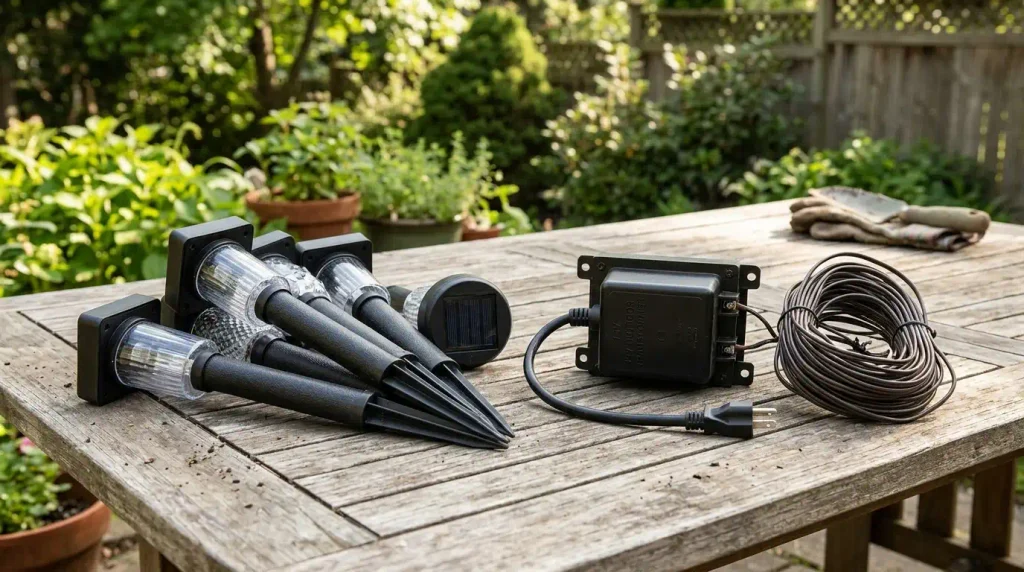
| Type | Install | Winter performance | Best for |
| Solar | DIY | Reduced hours | Paths, accents |
| 12 V | DIY | Consistent | Features, patios |
| Mains 230 V | Electrician | Consistent | Security, large areas |
Plan the cable runs and positions
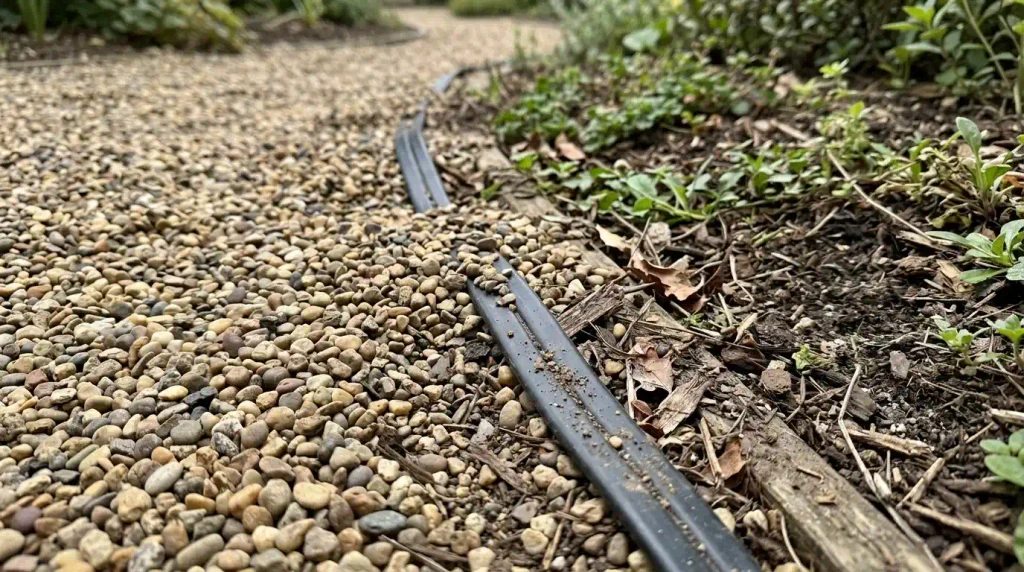
Mark the paths, steps and the areas where you sit. For a 12 V system, the transformer plugs into an outdoor socket. Run the low-voltage cable along edges or under gravel where it is protected. For mains, a registered electrician is required for new circuits under Part P.
Install solar for quick results
Place solar lights where they get daylight. Stake path lights along edges, clip string lights to fences, or screw wall lights to solid surfaces. Reposition them if the light is weak after a few weeks.
Conclusion
Start with the places you walk and sit after dark. Use solar for flexible accent lighting. Use 12 V or mains where you need reliable brightness through the winter. Check Part P rules before any new fixed outdoor circuit is installed.
FAQs
Do solar garden lights work in the UK winter?
They run for fewer hours because the days are shorter. Many path lights that give eight hours in July may only manage two or three hours in December.
Do I need an electrician for garden lighting?
New 230 V circuits are notifiable under Part P and need a registered electrician. 12 V systems that plug into an existing outdoor socket can usually be done as DIY.


5 Comments