12 Living Room Feature Wall Ideas to Transform Your Space

A living room feature wall works when it gives the room a clear focal point without making the space feel smaller or harder to live in. The most successful versions in UK homes use paint, wallpaper, panelling or texture that matches the light and the furniture already in the room.
These 12 ideas range from simple paint to more structural changes. Most can be done without major building work, and the best ones still look good once the novelty fades. Choose the wall that is visible when you enter or the one opposite the sofa so the feature is seen every day.
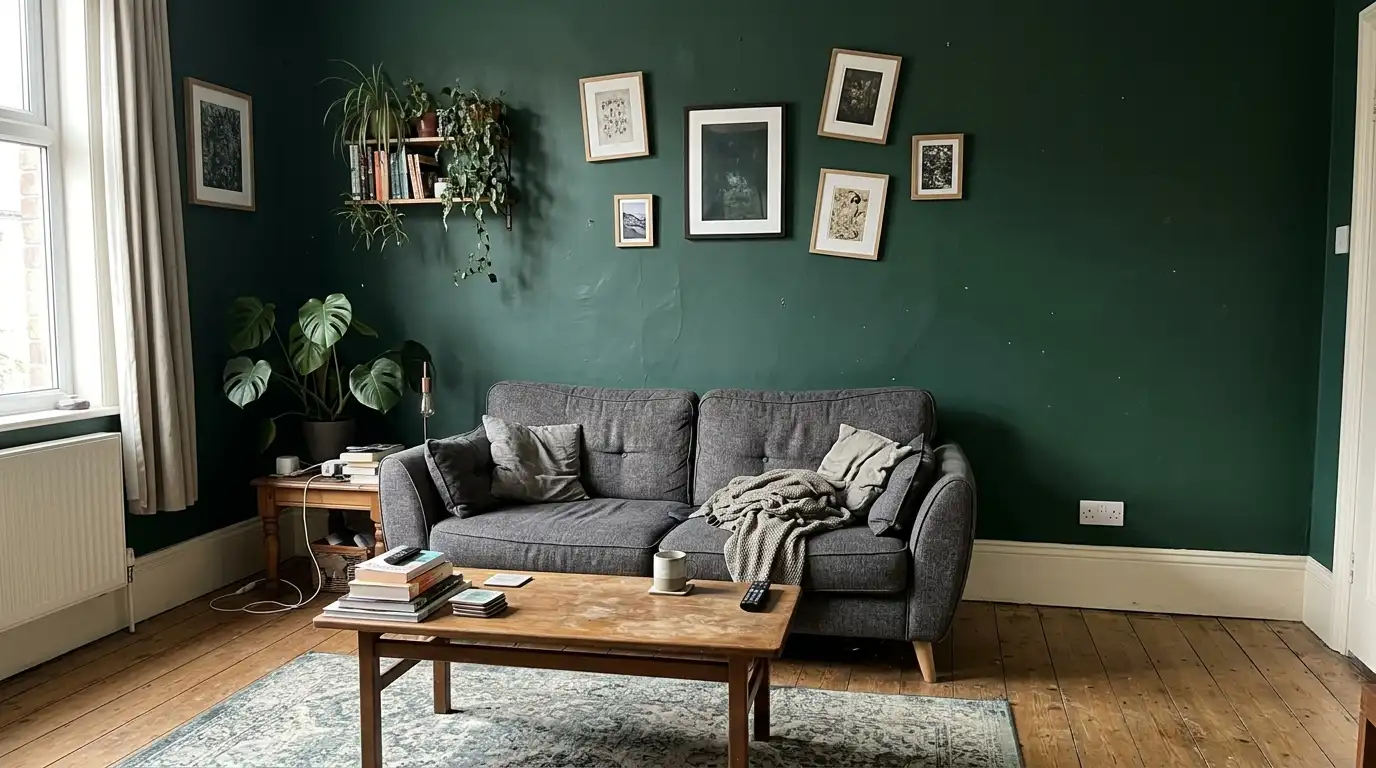
Bold Paint in a Single Colour
A single strong colour on one wall is the fastest way to create a feature. Deep greens, warm terracotta, navy or the Dulux Slow Swing indigo all work. Keep the other walls lighter so the room does not feel enclosed.
Test the colour in your own light for a week. North-facing rooms often need warmer tones, while south-facing ones can handle cooler or deeper shades. A durable finish helps in family living rooms.
Wallpaper on One Wall Only
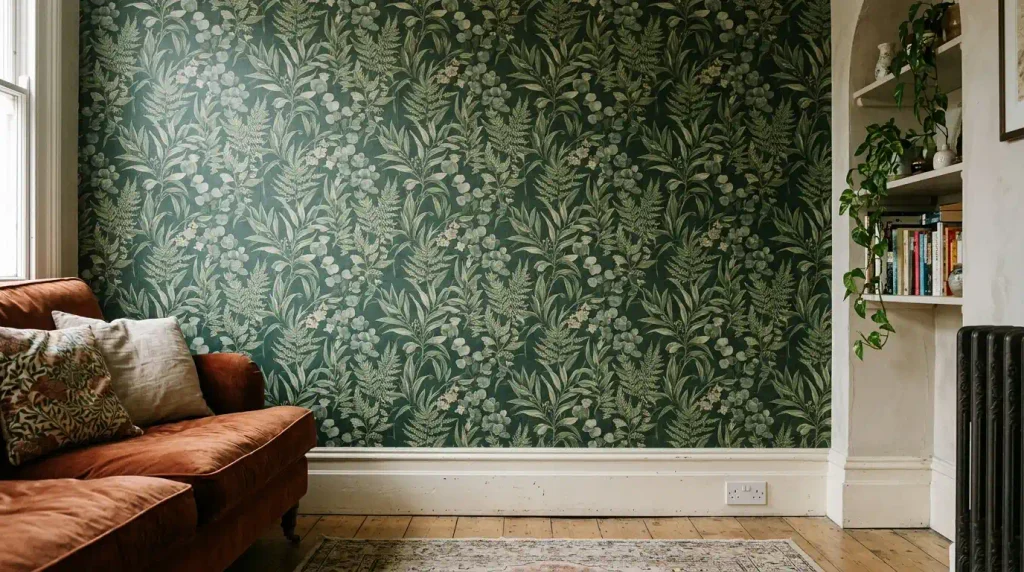
A wallpaper feature wall adds pattern or texture without committing the whole room. Botanical prints, subtle geometrics or grasscloth all work. Hang it on the wall behind the sofa or the one that faces the entrance.
Prepare the wall properly and use the right adhesive. A single well-hung wall looks more intentional than a full room of paper that has started to peel at the edges. It also makes future changes easier.
Vertical Timber Slats

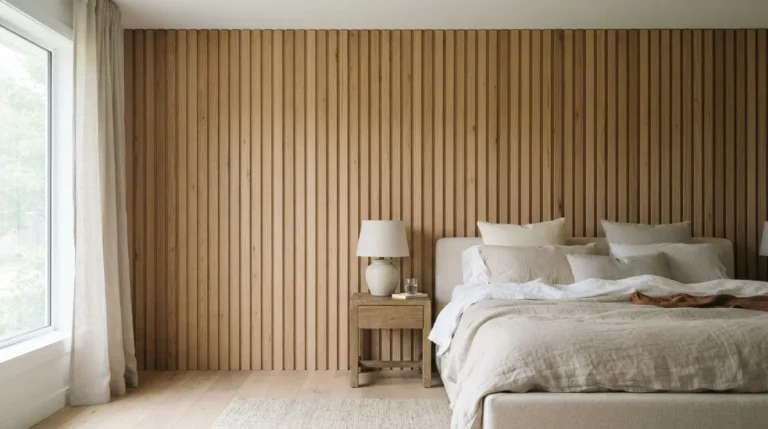
Narrow timber or MDF slats running floor to ceiling create shadow lines that change with the light. Paint them the same colour as the wall for a subtle effect or a deeper shade for more contrast. They work well behind a TV or as a soft divider in an open-plan room.
Spacing of 15 to 20 mm between slats keeps the look light. Fix them securely and allow for any skirting or sockets. The texture adds interest without the permanence of a full media wall build-out.
Board and Batten Panelling
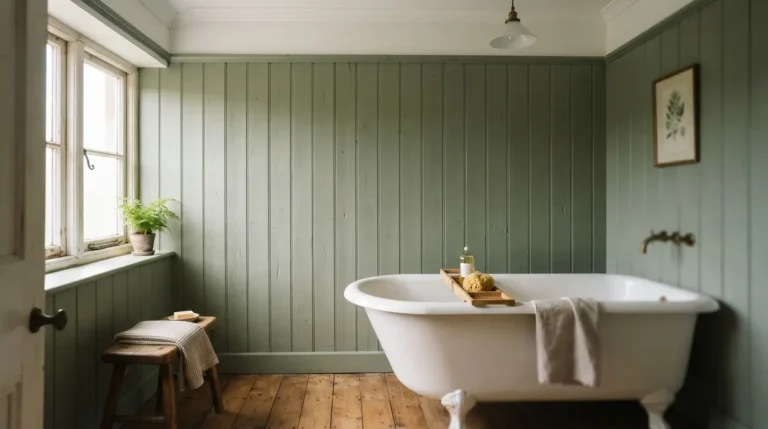
Simple board and batten on the lower half of a wall adds architectural detail and can hide minor imperfections. Paint it the same colour as the upper wall for a calm look or a different shade for definition.
It suits both period and modern rooms and is relatively straightforward to install. Keep the proportions balanced so the room does not feel top-heavy. This approach also pairs well with a feature fireplace or window.
Colour Blocking
A clean horizontal or vertical join between two colours creates a graphic feature wall. The join needs to be sharp, so use good masking tape and a steady hand or a professional. It works best on a flat wall without many switches or radiators.
Choose colours from the same family so the result feels considered rather than accidental. A deeper lower section and lighter upper section is the most common and forgiving arrangement.
Textured Limewash or Mineral Paint
Limewash and mineral paints give a soft, slightly varied texture that looks more natural than a flat emulsion. They suit living rooms where you want depth without a strong pattern. The finish is less uniform, which many people prefer once they see it in place.
Application takes practice, so test a sample area first. These paints can be more forgiving of imperfect walls than a high-sheen finish. They also age gently rather than showing every mark.
Gallery Wall as the Feature
A carefully arranged gallery of framed prints, photographs or art can become the feature wall. Use a consistent frame style or a tight colour palette so the collection reads as one thing rather than clutter.
Plan the layout on the floor first and leave enough space around the edges. It is easy to update later, which makes it practical for renters or people who change their minds. Hang the centre of the arrangement at roughly eye level.
Mirror Feature for Light
A large mirror or a group of mirrors on one wall bounces light and makes the room feel bigger. Place it opposite a window or the main light source. Choose frames that match the rest of the room so the mirror does not dominate.
In smaller UK living rooms this is often more effective than a dark paint colour. It also works well above a fireplace or sideboard. Ensure the mirror is fixed securely, especially if it is heavy.
Fireplace Wall as the Natural Feature
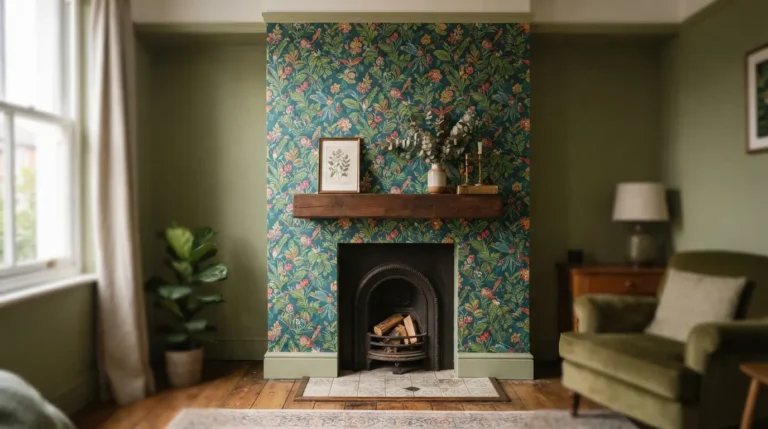
If the room already has a fireplace, make that wall the feature. Paint the surround, add a simple mantel treatment, or tile the hearth area. A log burner or electric fire then becomes the clear focal point without extra decoration.
Keep the rest of the wall relatively quiet so the fire remains the star. This approach uses what is already there rather than adding a new element that has to compete with it.
Media Wall With Integrated Storage
A low-profile media wall can hide cables and provide storage while acting as the feature. Keep the build-out shallow in rooms under 4 m wide so the space does not feel reduced. A flush TV and simple slat or panel background works better than a deep stud wall in most UK living rooms.
Include ventilation for any equipment and plan the electrics before you start. The best versions look calm rather than like a home cinema install.
Stone or Brick Effect
Exposed brick or a thin brick slip feature wall adds texture and warmth. It suits both traditional and industrial-leaning rooms. Use it on one wall only and keep furniture relatively simple so the texture remains the focus.
Real brick can be heavy and may need structural checks. Thin slips or textured panels are lighter and easier for most homes. Seal the surface if it is in a high-traffic area.
Painted Arch or Niche Detail
A simple painted arch or a shallow niche painted in a contrasting colour creates an architectural feature without building a full wall. It works well in alcoves or on a long flat wall.
The detail needs clean lines to look intentional. It is a lower-cost way to add character to a plain new-build living room. Combine it with lighting inside the niche if the depth allows.
Conclusion
The strongest living room feature walls give the room a clear point of interest while remaining practical. Start with the wall that is seen most often, match the treatment to the light and the furniture, and keep the rest of the room quieter so the feature can do its job. Most of these ideas can be updated later if your taste changes.
Which wall should be the feature wall?
Usually the wall opposite the sofa or the one you see when you enter the room. Avoid walls with many switches, radiators or doors unless you are happy to work around them. A fireplace wall is often the natural choice if one exists.
How much does a simple feature wall cost?
A bold paint colour can cost under £50 in materials. Wallpaper, slats or board and batten range from a few hundred pounds for DIY to more with professional installation. The biggest cost is usually preparation and finishing rather than the materials themselves.
Will a dark feature wall make the room feel smaller?
It can, especially in already small or poorly lit rooms. Keep the other walls light, add mirrors or good lighting, and use the dark colour on only one wall. Many people find a deep colour on the wall behind the sofa works better than on the wall facing the windows.