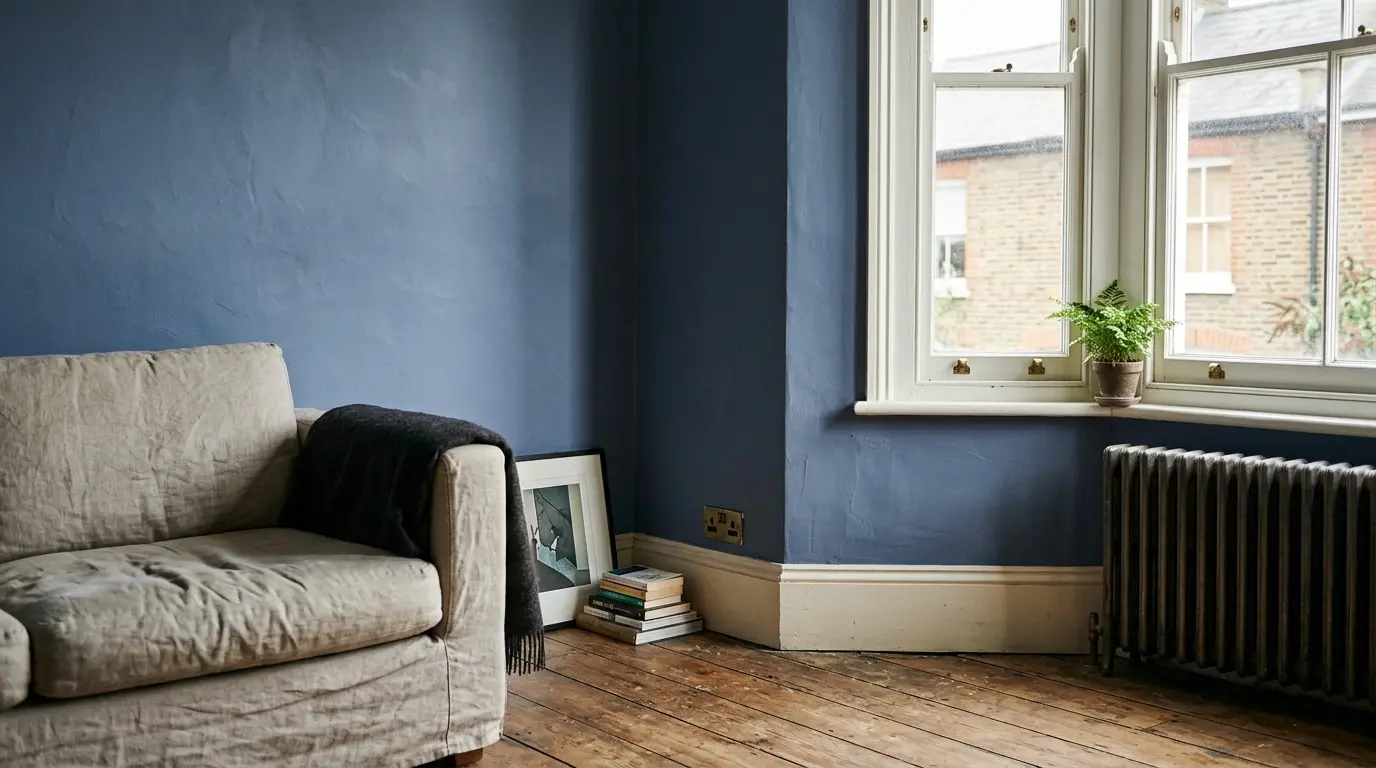
12 Best Dulux Paint Colours for Every Room in the House

Dulux remains one of the most practical paint ranges for UK homes because the colours are widely available, the finishes handle everyday wear, and the shades work with both period and modern interiors. The best results come from matching the colour to the room’s light, the fixed elements like flooring or tiles, and the way you actually use the space.
These 12 Dulux options cover living rooms, bedrooms, kitchens, bathrooms and hallways. They include the 2026 Colour of the Year family of indigo blues as well as reliable neutrals and warmer tones that hide minor marks. Test samples on your own walls for several days before committing, as light shifts colour more than any swatch can show.
Mellow Flow for Living Rooms
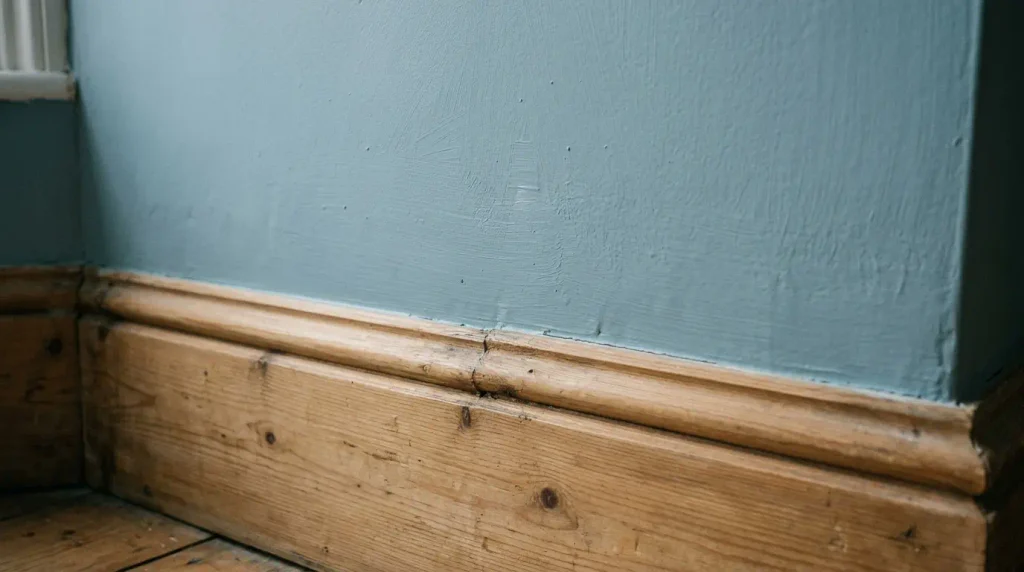
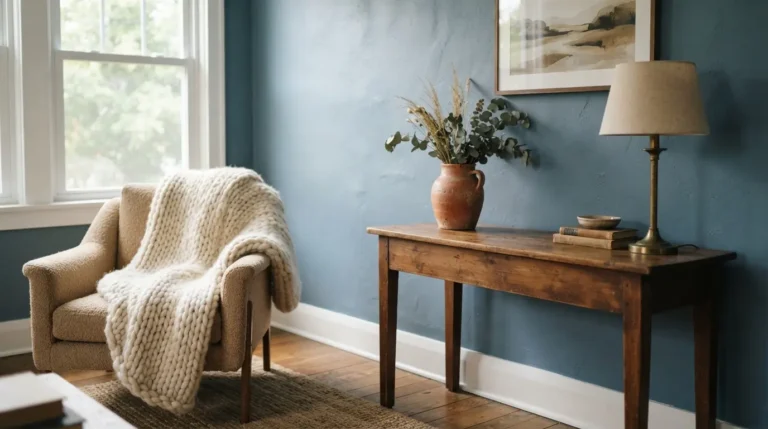
Mellow Flow is the lighter indigo from Dulux’s 2026 Rhythm of Blues. It reads as calm and expansive without feeling cold, which makes it useful as a main wall colour in living rooms that get mixed light. Pair it with warmer woods and soft textiles so the room does not feel stark.
It works especially well in open-plan spaces where you want continuity with the kitchen. The shade sits comfortably next to the deeper Slow Swing if you want a feature wall or a darker ceiling for more drama. Check how it behaves in your own north or south-facing room before ordering full tins.
Slow Swing for Bedrooms and Cosy Spaces
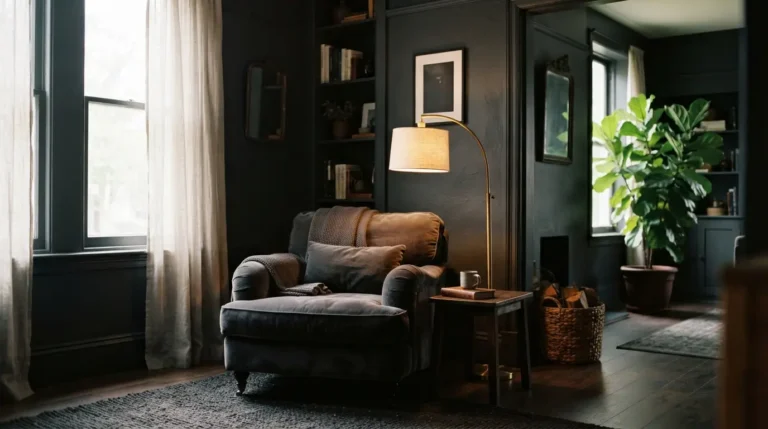
Slow Swing is the deeper indigo in the same family. It creates a more enclosed, restful feel that suits bedrooms and smaller sitting rooms. Use it on all walls or as a strong feature behind the bed.
Darker blues can make a room feel smaller, so keep furniture lighter or add mirrors if the space is already compact. It pairs cleanly with brass or warm metal finishes and with pale flooring. Many UK homes find it more usable than pure black or charcoal because the blue undertone stays softer in daylight.
Free Groove for Accent and Kitchens
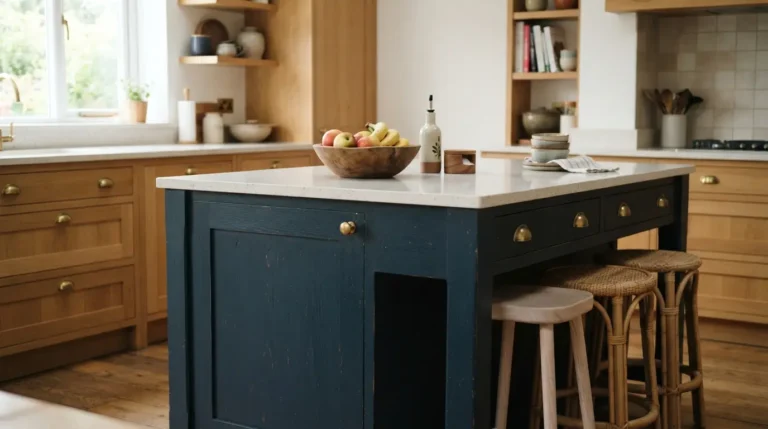
Free Groove is the brightest of the three 2026 blues. It works as a punchy accent on a kitchen island, a feature wall, or cabinetry rather than as an all-over colour. In a kitchen it adds energy without dominating the cooking zone.
Combine it with neutral worktops and pale walls so the blue reads as intentional. The colour is strong enough to stand up to daylight and artificial lighting, which is useful in rooms that are used at different times of day.
Chiswick White for Ceilings and Hallways
Chiswick White from the Dulux Heritage range is a soft, slightly warm white that suits ceilings, hallways and rooms where you want brightness without pure brilliance. It avoids the cold cast that pure brilliant white can take on in north-facing spaces.
It is a reliable choice when you are matching across different rooms or when the existing woodwork is already white. Test it next to your flooring and any existing joinery because whites shift more than people expect.
Egyptian Cotton for Neutral Living Rooms
Egyptian Cotton is a warm off-white that has become a staple for UK living rooms. The yellow undertone stops it looking grey in low light, which helps in rooms that face north or have limited windows.
It works with both modern and traditional furniture and hides minor marks better than a cooler white. Use a durable finish such as Dulux Easycare in high-traffic areas so the walls stay looking fresh between redecorations.
Brave Ground for Grounding Feature Walls
Brave Ground is a mid-tone earthy brown that feels more natural than black or dark grey. It grounds a room when used on lower panelling or a single feature wall and pairs well with lighter colours above.
It suits living rooms and bedrooms where you want warmth without going fully dark. The colour sits comfortably with timber flooring and natural textiles. Avoid using it on every wall in a small room unless you are adding strong lighting and lighter elements.
Copper Blush for Warm Accents
Copper Blush brings a soft terracotta warmth that works as an accent or on a single wall. It feels grounding and pairs with almost any neutral, making it useful in bedrooms or dining areas where you want a little colour without a full scheme change.
The shade reads differently depending on light, so sample it in the actual room. It can look softer in evening light and slightly brighter during the day, which many people find flattering rather than unpredictable.
Goose Down for Bathrooms

Goose Down is a pale neutral that works well in bathrooms when used with a suitable moisture-resistant finish. It keeps the space light while avoiding the clinical look of pure white next to white sanitaryware.
Combine it with warm wood or soft greys in towels and accessories. Always use a bathroom-specific paint such as Dulux Easycare Bathroom to handle humidity and occasional splashes. Check the finish recommendation for ceilings separately, as they need their own approach in wet rooms.
Teal Voyage for Kitchen or Bathroom Accents
Teal Voyage offers a deeper green-blue that works as a feature colour on cabinetry, a splashback wall, or a single bathroom wall. It feels fresher than navy while still providing contrast against pale worktops or tiles.
It holds up in rooms with mixed lighting and pairs cleanly with brass or chrome fittings. Sample it next to your existing tiles or worktop because teal can shift towards green or blue depending on the light.
Dewy Lawn for Fresh Neutrals
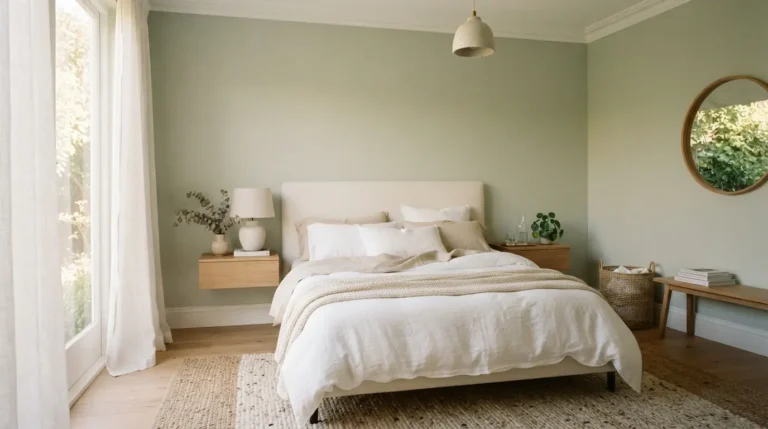
Dewy Lawn is a soft green-neutral that brings a little life without dominating. It works in bedrooms, living rooms or hallways where you want something calmer than a pure white but still light enough for smaller spaces.
The green undertone connects well with plants and natural materials. It is forgiving of minor marks and looks good in both daylight and artificial light, which makes it practical for rooms used throughout the day.
Soft Cinnamon for Warm Schemes
Soft Cinnamon from the Heritage range is a muted warm tone that suits traditional and modern homes. It works on feature walls or as part of a layered scheme with cream and timber.
It is less intense than a full terracotta and therefore easier to live with long term. Use it where you want the room to feel welcoming without committing to a strong colour on every surface.
Pure Brilliant White With Care
Pure Brilliant White is still the most common choice for ceilings and trim, but it can look cold or slightly blue in north-facing rooms. Use it where you want maximum brightness and pair it with warmer wall colours so the overall scheme does not feel stark.
In high-traffic areas choose a durable finish. For most UK homes a warmer white such as Chiswick White or Egyptian Cotton is more forgiving on the main walls while Brilliant White stays on the ceiling and woodwork.
Conclusion
The most successful Dulux schemes in UK homes match the colour to the room’s light and use, then test it properly. The 2026 indigo family offers clear options for calm, restful or energetic spaces, while the established neutrals remain reliable for whole-house continuity. Start with samples and a durable finish in busy rooms.
How do I test Dulux paint colours properly?
Buy sample pots and paint large patches on different walls. Live with them for several days, checking morning, afternoon and evening light. Look at them next to your flooring, furniture and curtains before ordering full quantities.
Which Dulux finish works best in a bathroom?
Use a bathroom-specific emulsion such as Dulux Easycare Bathroom Soft Sheen or Matt. These are formulated to handle humidity and occasional splashes better than standard wall paint. Ceilings may need a separate ceiling paint.
Are the 2026 Dulux blues hard to live with?
The lighter Mellow Flow is easy as a main colour. Slow Swing and Free Groove are stronger and usually work better as accents or feature walls unless the room is large and well lit. Always sample them in your own light.