12 Dining Room Rug Ideas to Define and Style the Space

Dining room rug ideas go well beyond simply picking a colour you like, since the right rug genuinely anchors the whole space, defines where the dining area begins, and adds texture a bare floor can’t offer. The 12 ideas below cover the style, shape, and material choices worth considering, along with honest care advice for a rug that’s going to face daily meals, moving chairs, and the occasional spilt glass of wine.
1. Round Rug Under a Round or Oval Table
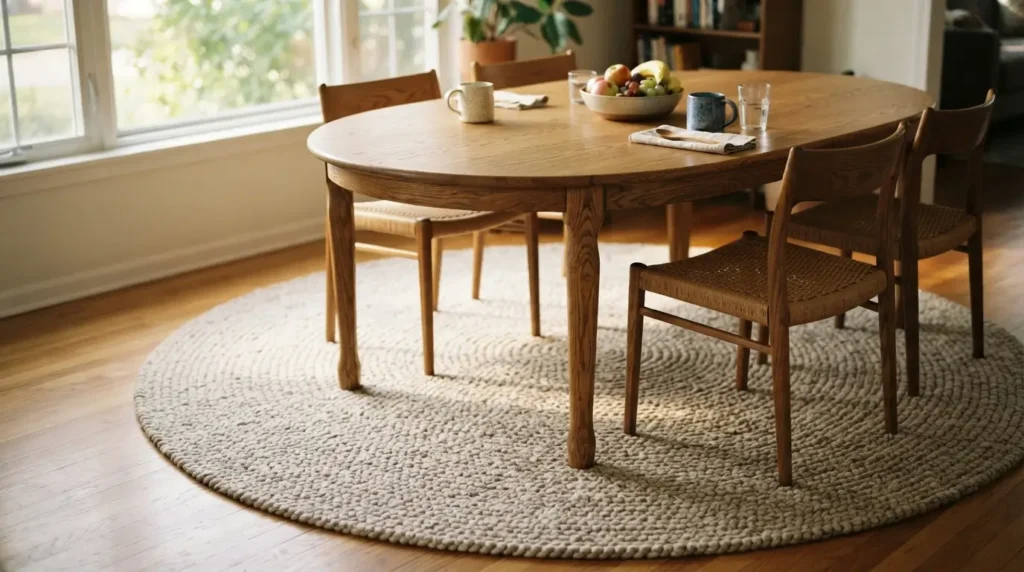
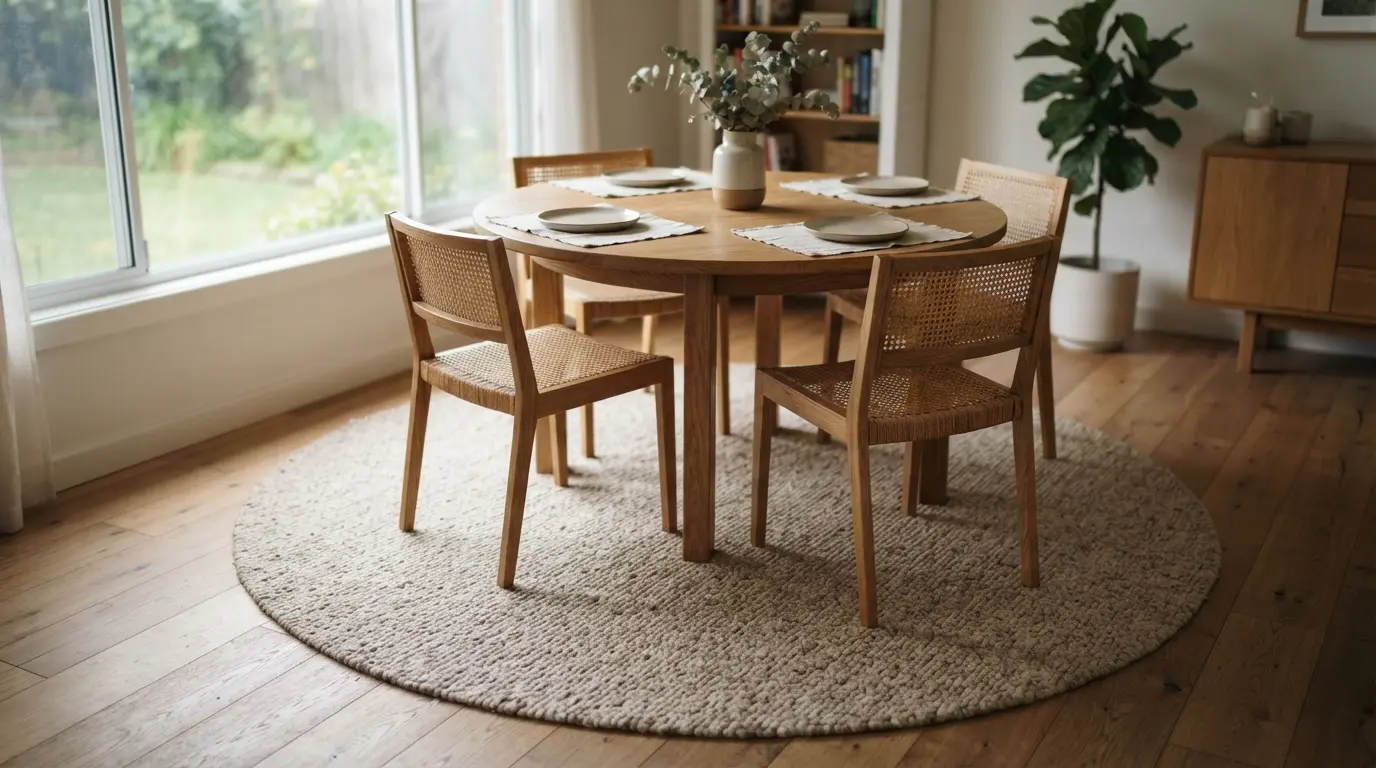
Matching a round or oval rug to a round or oval table creates a genuinely cohesive, considered look, the curved edges of both echo each other rather than fighting the straight lines a rectangular rug would introduce underneath a curved table. This pairing suits a smaller, more intimate dining setup particularly well, where the softer shape helps the whole arrangement feel less rigid.
2. Rectangular Rug for a Rectangular or Extendable Table
A rectangular table, especially one with extension leaves for larger gatherings, generally suits a rectangular rug best, since it echoes the table’s own proportions and gives you room to size the rug generously enough to handle the table at its fullest extended length. This is worth planning for specifically if your table extends regularly, choosing a rug sized for the table’s larger configuration rather than its everyday compact size.
3. Bold Pattern for a Large Dining Room
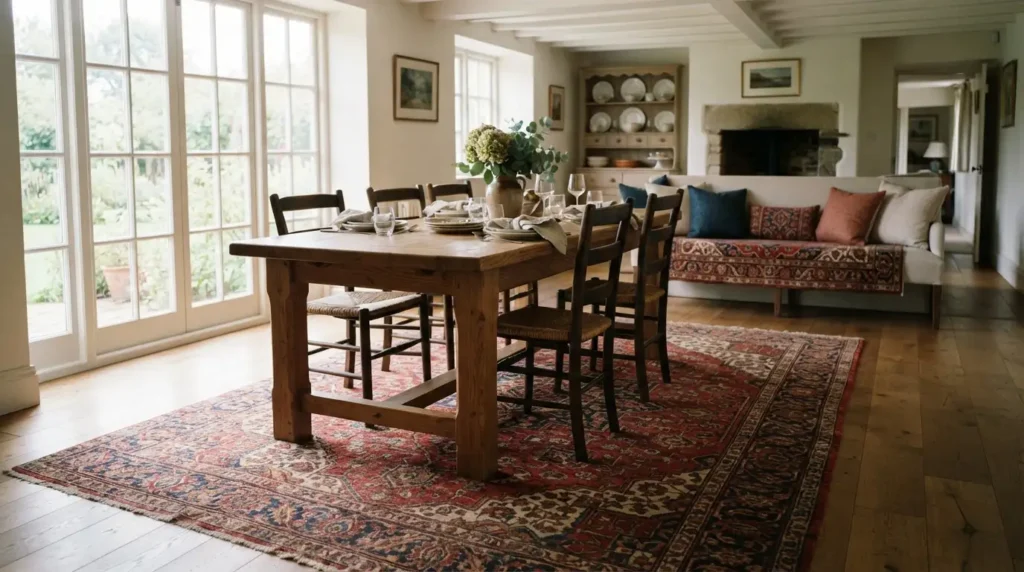
A genuinely large dining room can carry a bolder pattern or a richer, more saturated colour than a smaller space, simply because there’s more visual room for a statement design to actually make its impact rather than feeling cramped. This is worth embracing rather than defaulting to something safe purely because the rug covers a lot of floor, a confident pattern in a large room reads as considered rather than overwhelming.
4. Simple, Low-Contrast Design for a Compact Dining Space
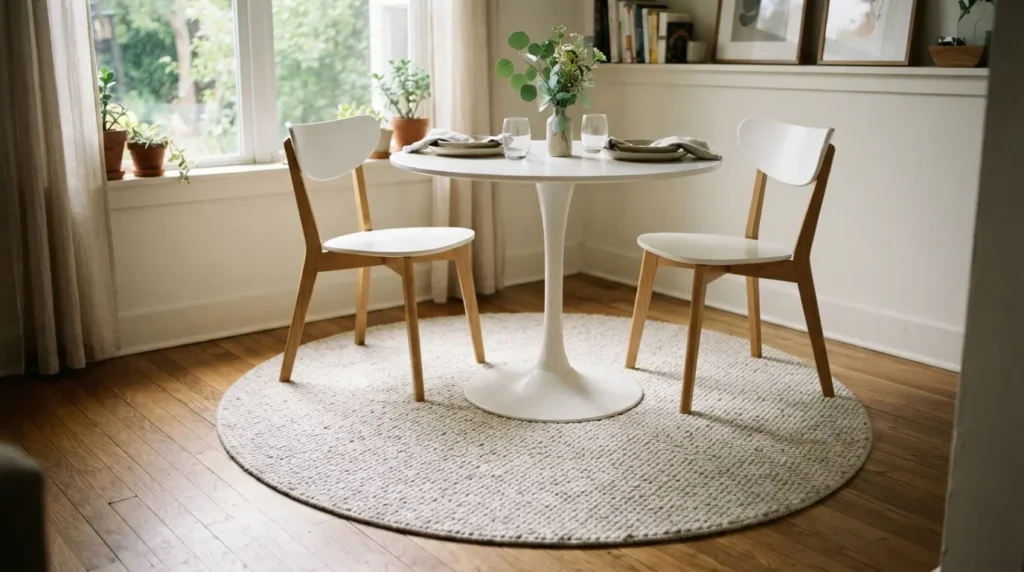
In a smaller dining area, resist the instinct to shrink the rug down to “save space,” since an undersized rug looks like an afterthought and lets chairs slip on and off its edges constantly. Instead, keep the rug at its properly sized dimensions but choose a simpler, lower-contrast design, this keeps the room feeling calm and cohesive rather than visually crowded, without sacrificing the practical sizing your table and chairs actually need.
5. Wool for Genuine Daily Durability
Wool remains one of the most reliable choices for a dining rug used daily, since it’s naturally resistant to soiling and holds up well to the regular vacuuming a dining room floor genuinely needs. This makes it the safer everyday choice for a busy household, young children, frequent entertaining, a table that doubles as a workspace, where the rug takes real, sustained contact rather than occasional light use.
6. Viscose or a Silkier Weave for a Formal Dining Room
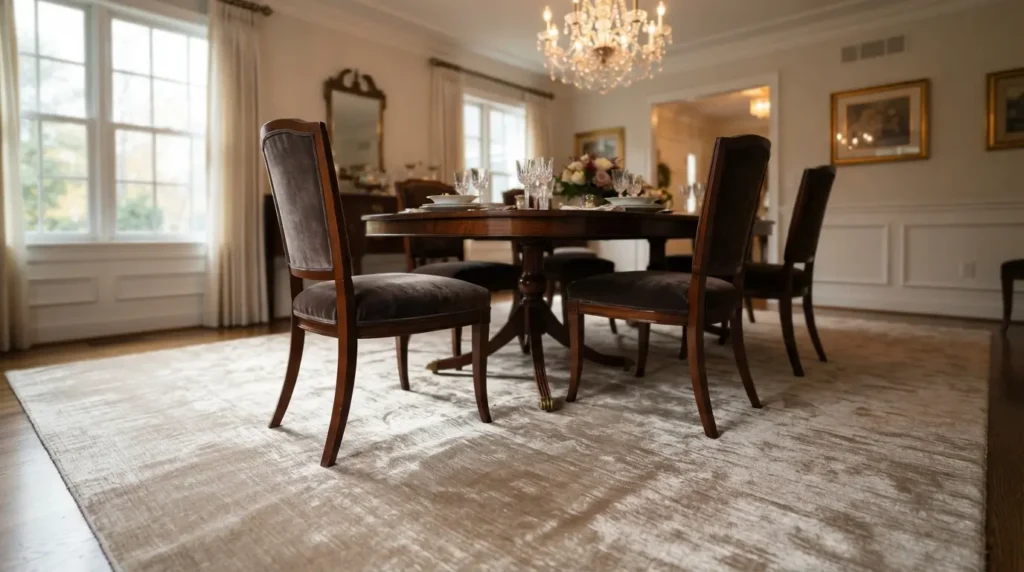
If your dining room is reserved mainly for special occasions rather than daily family meals, a viscose or similarly lustrous weave brings a softer, more refined sheen that suits that more formal, occasional use. This trade-off is worth being honest about, viscose generally shows wear and marks more readily than wool under heavy daily traffic, so it makes more sense for a room used less constantly than for an everyday family dining space.
7. Neutral Tones to Disguise Everyday Marks
Soft greys, warm beiges, and muted stone shades do genuine practical work beyond simply looking dependable, they disguise everyday marks and light staining considerably better than either a very pale or a very dark solid colour. This suits a dining room used heavily day to day, where you’d rather the rug quietly support the room than demand constant, careful maintenance to keep looking presentable.
8. A Richly Coloured or Patterned Rug as a Genuine Style Statement
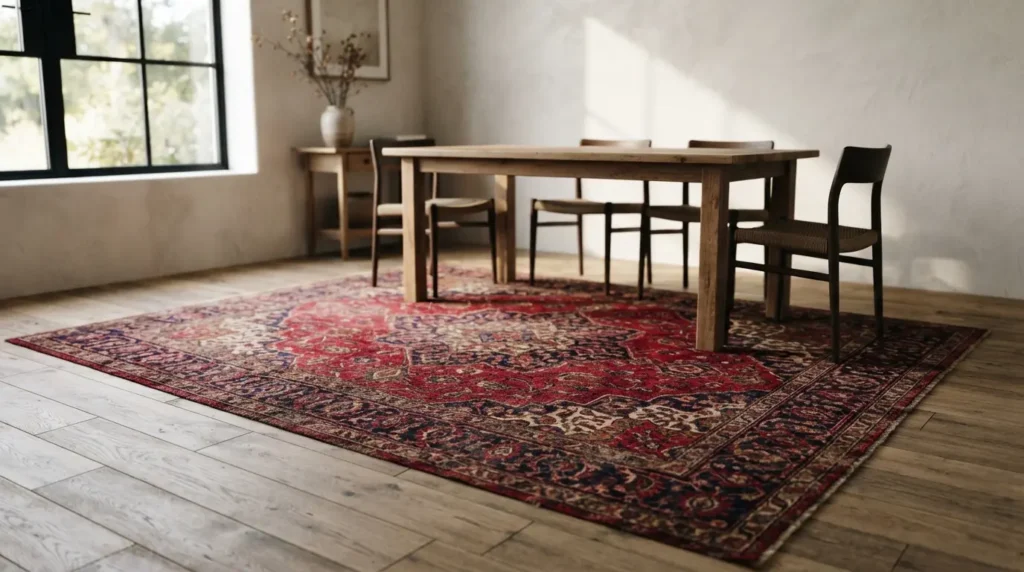
A dining room genuinely has more room to be bold with rug choice than a living room does, since it isn’t a space people typically walk across barefoot or lounge directly on the floor of, which takes some of the practical caution out of choosing something more expressive. A richly coloured or boldly patterned rug can become the room’s actual focal point, setting the tone for the whole space rather than quietly receding into the background the way a neutral choice does.
9. Layer a Runner or Cushions to Tie the Rug Into the Room
A rug rarely needs to work alone. Adding a table runner, cushions on a nearby bench, or coordinating soft furnishings elsewhere in the room helps tie the rug’s colour or pattern into the wider space, rather than leaving it reading as an isolated shape on the floor. This is a particularly effective, low-cost way to make a large dining room’s rug feel properly integrated rather than simply placed.
10. Vintage or Antique Rugs for Genuine Character
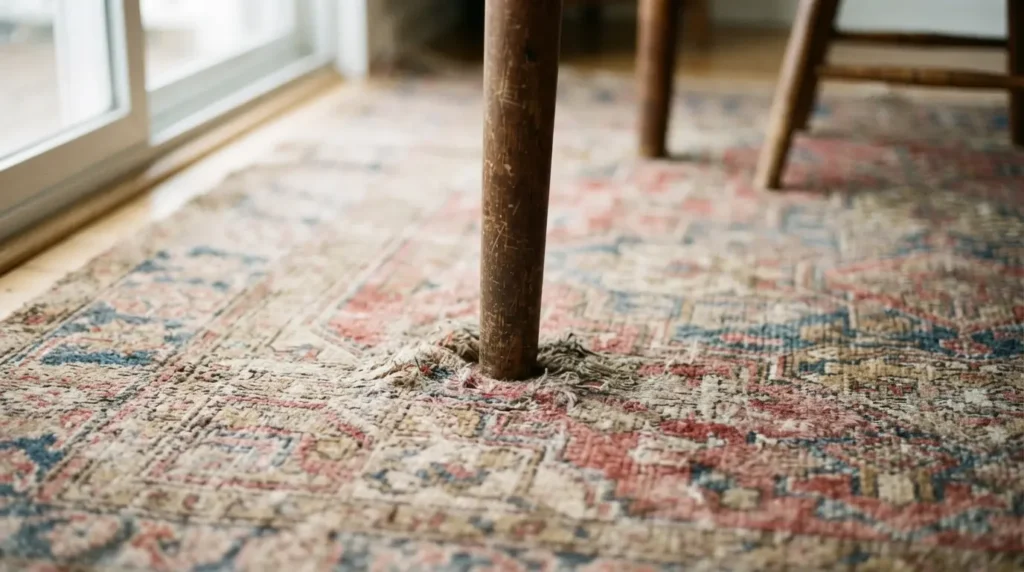
A genuine vintage or antique rug brings a depth of colour and pattern that a new, mass-produced rug rarely replicates, and the gentle wear an older rug already carries can actually work in its favour under a dining table, since it won’t show fresh daily marks quite as starkly as a brand-new rug would. This is worth sourcing from a specialist dealer or a reputable secondhand source specifically, where you can check the rug’s actual condition and construction before committing.
11. Rotate the Rug Periodically to Even Out Wear
This is a genuinely simple maintenance habit worth adopting rather than an optional extra. Turning or rotating the rug every so often lets the pile recover in areas that see constant chair traffic and evens out wear across the whole surface, rather than concentrating it in the same spots directly under the table’s most-used seats. Moving nearby furniture slightly at the same time also helps prevent permanent indentations from settling into one fixed pattern.
12. Choose a Rug That Complements Rather Than Competes With Your Table
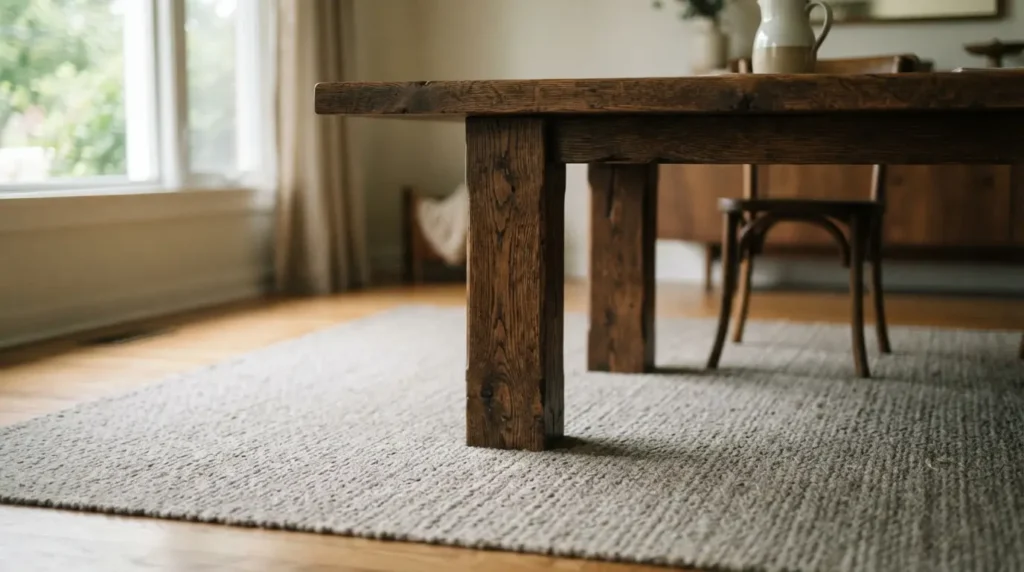
This is the detail that ties every other idea on this list together. A rug’s colour and pattern should relate to your table’s wood tone or finish, rather than clashing with it or competing for the same visual attention. A warm wood table generally pairs well with a rug carrying similarly warm undertones, while a darker or more graphic table can handle a bolder rug without the two fighting each other for dominance in the room.
Final Thoughts
The best dining room rug ideas balance genuine style with an honest read of how the room actually gets used, matching shape to your table, choosing a material suited to daily wear or occasional formality, and picking a colour that either quietly supports the space or confidently defines it. Get the practical choices right alongside the styling, and the rug will genuinely hold up to real dinners and gatherings, not just look good in the first photo before anyone’s pulled out a chair.
FAQs
What shape rug is best for a round dining table?
A round or oval rug generally suits a round or oval table best, since the curved edges of both echo each other rather than introducing the straight lines a rectangular rug would bring underneath a curved table.
Should a dining room rug be bold or neutral?
Either works well, and the choice largely depends on room size and how you want the space to feel. A larger room can carry a bolder pattern convincingly, while neutral tones suit a smaller or heavily used dining space that benefits from disguising everyday marks.
Is wool or viscose better for a dining room rug?
Wool is generally the more durable, practical choice for a dining room used daily, since it resists soiling and holds up to regular vacuuming. Viscose offers a softer, more lustrous finish better suited to a formal dining room used mainly for occasions rather than everyday meals.
How do I keep a dining rug clean day to day?
Vacuum regularly, deal with spills promptly without over-wetting or scrubbing hard, and use a mild rug shampoo for routine cleaning rather than harsh products. Rotate the rug periodically to even out wear, and call in professional cleaning for anything beyond a light stain.
Can I use a vintage rug under a dining table?
Yes, genuinely, a vintage or antique rug brings real character and its existing gentle wear can actually help it handle daily use without showing fresh marks quite as starkly as a brand-new rug would. Source it from a reputable dealer where you can check its actual condition first.