
What Makes a Great Feature Wall and How to Get It Right

A great feature wall works because it’s chosen as a genuine focal point the eye is already drawn to, then the rest of the room responds to it, rather than being an isolated decorative decision made because painting the whole room felt too committal. That distinction, focal point versus afterthought, is what separates a feature wall that genuinely elevates a room from one that ends up looking arbitrary once it’s finished.
What a Feature Wall Actually Does in a Room
A feature wall’s real job is to set the tone for everything else in the space, not simply to add a splash of colour to an otherwise plain room. When it’s working properly, the wall’s colour effectively defines the room’s atmosphere, and every other decision, your furniture, your accessories, your soft furnishings, responds to that anchor rather than existing independently of it. This is why a feature wall chosen purely because it looked good in isolation, without any real thought to how it relates to the rest of the room, so often ends up feeling disconnected once the paint has dried and the furniture’s back in place.
The Wrong Reason People Choose a Feature Wall
This is worth being honest about, since it’s a genuinely common trap. Choosing a feature wall purely out of nervousness about committing to a full room of colour isn’t the same as choosing one because that specific wall genuinely deserves the attention. A feature wall isn’t a safer, halfway measure to dip a toe into bold colour, it’s a deliberate design decision about which surface in the room should carry the visual weight. If your actual instinct is toward a fully coloured room but you’re defaulting to a single wall out of hesitation, it’s worth asking honestly whether a feature wall is really the right call, or whether it’s simply the more cautious option standing in for the choice you’d actually prefer to make.
Why the Wall Itself Matters More Than the Colour
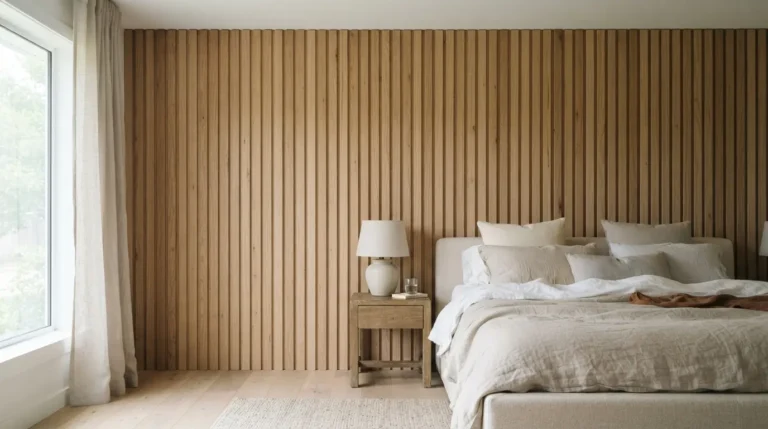
Before any colour decision, the wall you choose has to already be where attention naturally lands, not selected at random because it happened to be the most convenient surface. A wall interrupted by a door or window loses much of its impact, since the colour gets broken up into awkward sections rather than reading as one confident, uninterrupted statement. The strongest candidates are typically walls that already anchor the room in some way, behind a bed, behind a sofa, opposite the main entry point, or a wall that already has an architectural feature like a fireplace to build on. Choosing well here matters more to the final result than which specific colour you eventually settle on.
The Honest Debate About Feature Walls in Small Rooms

This is worth addressing directly, since the advice genuinely varies depending on who you ask, and both positions have real merit depending on the specific colour and room. Some designers argue that a feature wall in an already small room makes the space feel more enclosed, and that painting the entire room in one considered colour actually creates more impact and cohesion than isolating one wall. Others point out that a paler, more considered feature wall, rather than a dark, heavy one, can still work well in a small space, and that the real issue isn’t room size itself but the depth and boldness of the colour chosen relative to how much natural light the room actually gets. The honest takeaway: a small room isn’t automatically disqualified from having a feature wall, but it’s worth thinking harder about colour depth and light in a compact space than you would in a larger, brighter one, and being genuinely willing to consider a whole-room colour instead if a single wall doesn’t feel like enough impact.
Let the Feature Wall Set the Room’s Whole Atmosphere

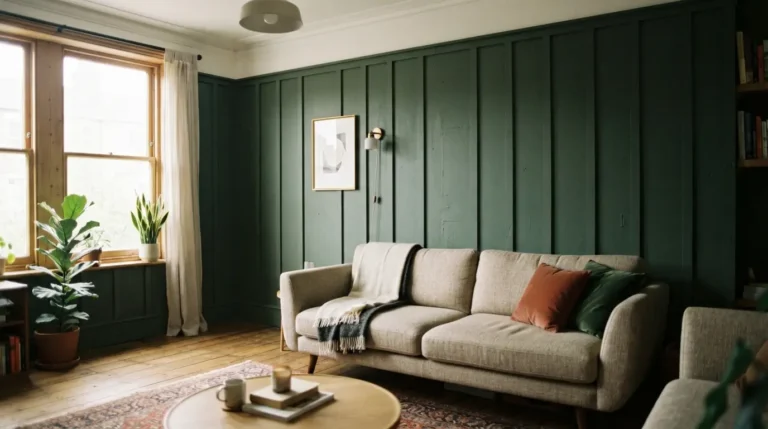
Once you’ve chosen a wall and a colour, use that decision to guide everything else in the room rather than treating it as an isolated element. If the feature wall reads as calm and enveloping, let your furniture and accessories lean into that same mood rather than fighting it with jarring, unrelated colours elsewhere. If it’s bold and energetic, the rest of the room can either lean into that energy with a complementary accent or stay deliberately quiet to let the wall carry the drama alone, both are valid approaches, but the decision should be made deliberately rather than by accident.
Keep the Room Simple Around It
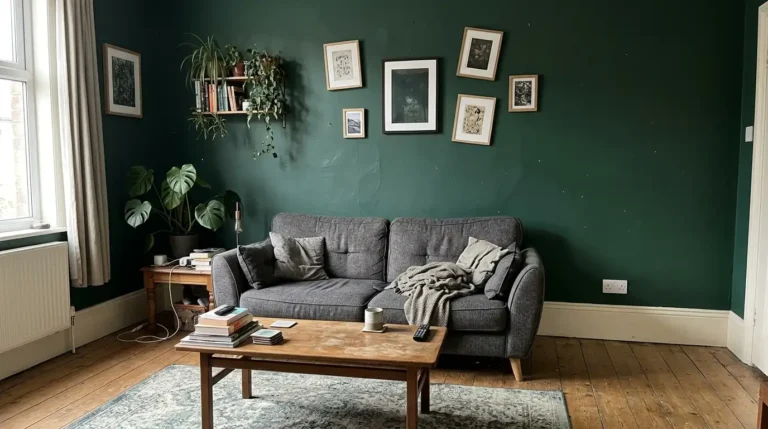
A genuinely effective feature wall needs room to actually be seen, which means resisting the urge to fill the rest of the space with competing colour, pattern, or clutter. One well-chosen statement piece, a striking mirror, a single bold piece of furniture, does more for a feature wall than several smaller items all vying for attention at once. This matters even more in a room that’s already busy with furniture and everyday clutter, since a feature wall genuinely struggles to do its job as a focal point when the eye has too many other things competing for its attention in the same space.
When a Feature Wall Isn’t the Right Call At All
Sometimes the honest answer is that a feature wall simply isn’t the best solution for a specific room, and it’s worth recognising this rather than forcing the idea in regardless. A room that’s already visually busy, full of furniture, pattern, and clutter, won’t let a feature wall do its job properly, since there’s too much competing for attention already. A wall broken up by multiple doors or windows rarely delivers the impact a feature wall is meant to have. And if your genuine instinct is toward a fully coloured room rather than a single accent, that’s a legitimate design choice in its own right, not a lesser option than the feature wall you might default to out of habit.
Final Thoughts
What makes a feature wall genuinely great isn’t the colour itself, it’s choosing the right wall for the right reason, then letting that decision shape everything else in the room around it. Be honest about whether you’re choosing a feature wall because that specific surface deserves the attention, or simply because committing to a whole room feels like too big a step, and the wall you choose will do real work in the room, not just add colour for its own sake.
FAQs
What makes a wall a good candidate for a feature wall?
A wall that’s already a natural focal point, behind a bed or sofa, opposite the room’s entry, or anchored by an existing feature like a fireplace, and one that’s genuinely uninterrupted by doors or windows, makes the strongest candidate.
Should a feature wall be a bold colour or can it be subtle?
Either works, a bold, contrasting colour delivers genuine drama and impact, while a subtler, complementary shade adds interest without overwhelming the room. The right choice depends on the mood you want the room to have, not a fixed rule that bold is always better.
Do feature walls work in small rooms?
They can, but it’s worth being more thoughtful about colour depth and available natural light than you would in a larger room. A paler, more considered colour tends to work better in a compact space than a very dark, heavy one, and painting the whole room is a genuinely valid alternative if a single wall doesn’t feel like enough.
Is it wrong to choose a feature wall just to avoid painting the whole room?
It’s worth being honest with yourself about the motivation. A feature wall chosen because a specific wall genuinely deserves the attention is a considered design decision, while one chosen purely out of hesitation about committing to a full room is worth reconsidering, since it may not deliver the impact you’re actually after.
Can furniture like a wardrobe be treated as a feature wall?
Yes, painting a full-length wardrobe or built-in storage the same colour as an adjoining feature wall can visually extend the effect, making the furniture read as part of the wall itself rather than a separate element breaking up the scheme.