12 Internal French Door Ideas to Add Light Between Rooms

Internal French door ideas work because they solve a genuine problem, letting light and a sense of connection flow between two rooms without fully merging them into one open-plan space. The 12 ideas below cover the applications and finishes worth considering, along with the honest practical checks around cost and structure that most inspiration pieces skip.
1. Connect a Hallway to a Living Space for Borrowed Light
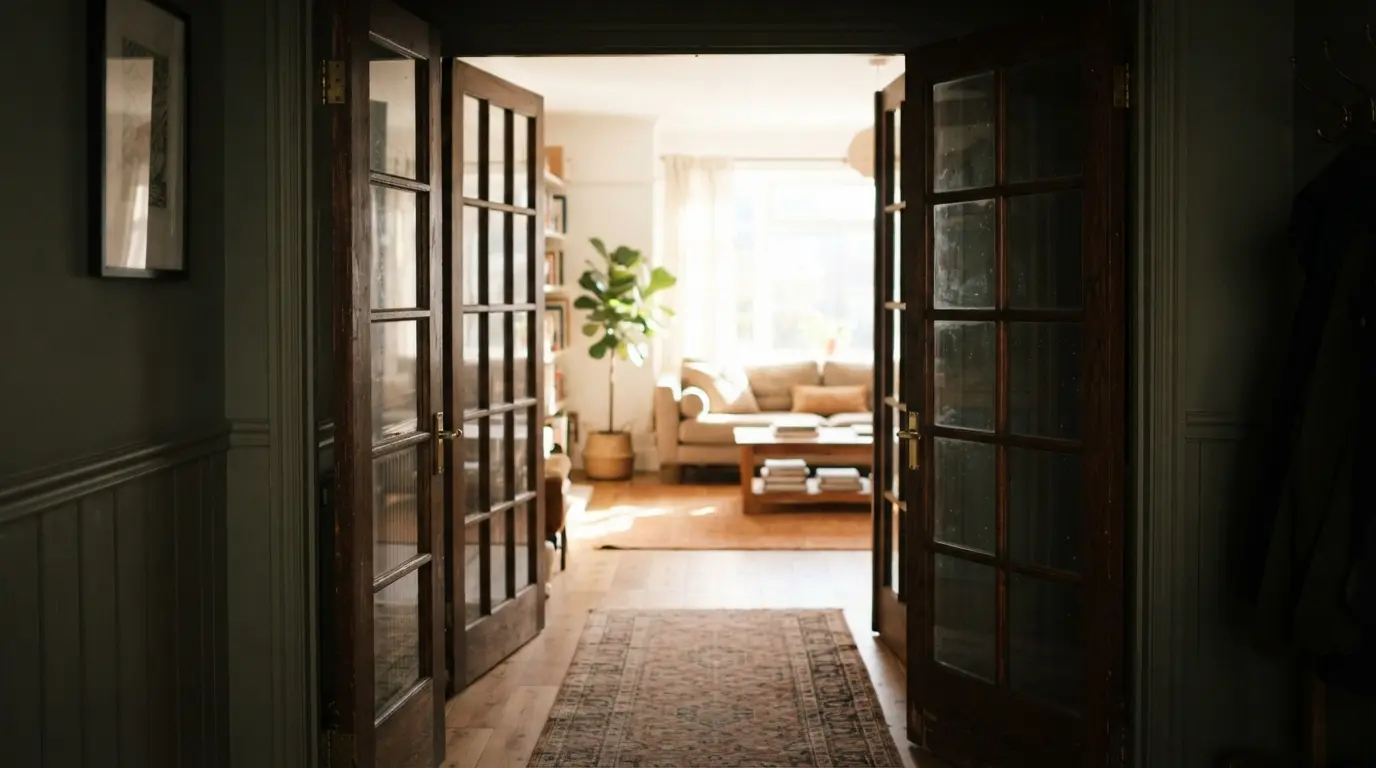
A hallway is often the darkest part of a home, with no direct window of its own, and a glazed French door between it and an adjoining living space genuinely borrows light from that brighter room. This is one of the most practical applications for internal glazing specifically because it solves a real problem, a naturally dim hallway, rather than being purely decorative.
2. Divide an Open-Plan Kitchen-Diner Without Fully Closing It Off
If your open-plan kitchen-diner sometimes needs a genuine visual and sound break, cooking smells kept from the dining area, a bit of separation during a dinner party, glazed French doors let you close that divide without losing the light and connection an open-plan layout was built for in the first place. Closed, they still let you see through to the other side, open, they disappear against the wall like any hinged door.
3. Glaze a Home Office or Study for Light Without Losing a Door
A home office needs a genuine door for sound separation during calls or focused work, but a solid door can leave the room feeling cut off and gloomy, particularly if it doesn’t have generous windows of its own. A glazed French door gives you both, a real door that closes for privacy and quiet, and enough visibility through the glass that the room still feels connected to the rest of the home rather than sealed away.
4. Frosted or Reeded Glass for Privacy Without Blocking Light
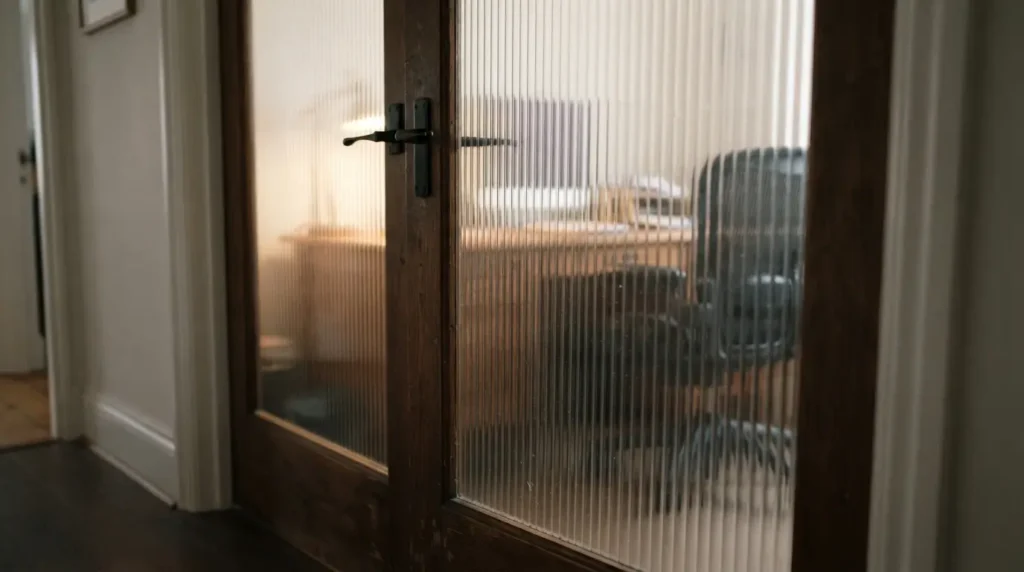
If full visibility through the glass isn’t what you want, frosted or reeded glass, with its fluted, textured surface, still lets genuine light pass through while obscuring a clear view of what’s happening on the other side. This suits a bathroom, a home office used for sensitive calls, or any room where you want the light-sharing benefit of glazing without the room being fully visible from the hallway or adjoining space.
5. Crittall-Style Glazing Bars for a Considered Period-Meets-Modern Look
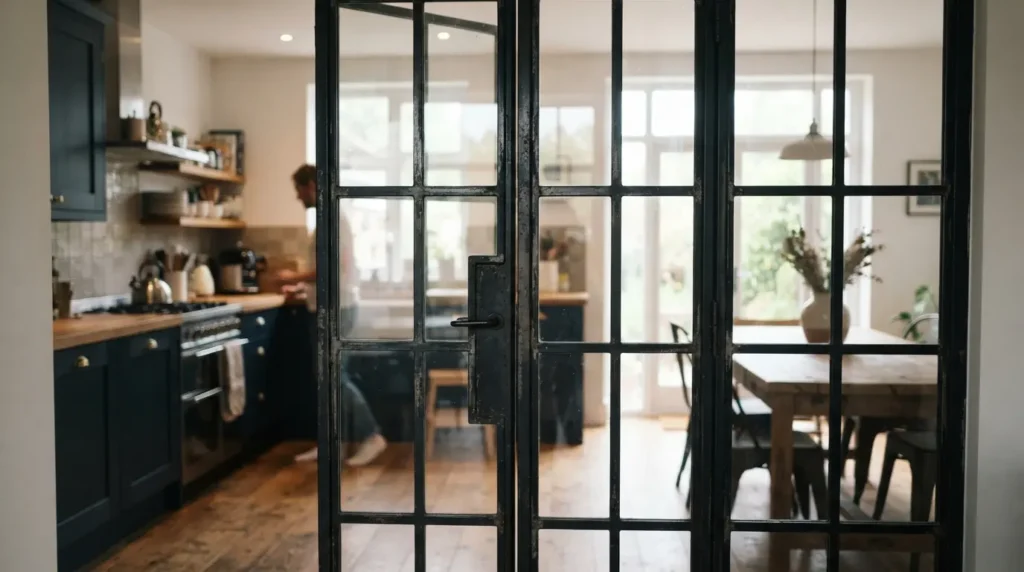
Horizontal and vertical glazing bars across the glass, styled after the classic Crittall steel window look, bring genuine architectural character to internal French doors, whether executed in real steel or in a modern aluminium frame designed to mimic the same aesthetic. This suits both a genuinely modern scheme and a period property being updated with a considered contemporary touch, since the grid pattern reads as intentional rather than a passing trend.
6. Position Matching Doors Opposite Each Other for Symmetry
Installing a matching pair of glazed French doors directly opposite one another, across a hallway or on either side of a central room, creates a genuine sense of symmetry and visual flow through the home. This works particularly well in a period property with a naturally axial layout, and it draws the eye through multiple spaces in a way a single door on its own doesn’t achieve.
7. Open Just One Door When You Don’t Need the Full Opening
This is a genuine practical advantage French doors have over a sliding or pocket door specifically, since each panel operates independently on its own hinge, you can open just one side for everyday access without needing to expose the full width of the opening every time. This matters more than it might seem for an internal application, where you often want a quick, casual way through rather than fully merging two rooms every time someone walks between them.
8. A Walk-In Pantry or Utility Room Behind Glass
Fitting glazed French doors to a walk-in pantry or utility room lets you keep the space visually connected to the kitchen, glimpsing shelving and supplies through the glass, while still containing mess, clutter, or noise from a washing machine behind a genuine door. This suits a household that wants the practicality of a separate utility space without it feeling like a closed-off, forgotten room the rest of the time.
9. Paint Internal French Doors to Match or Contrast the Room
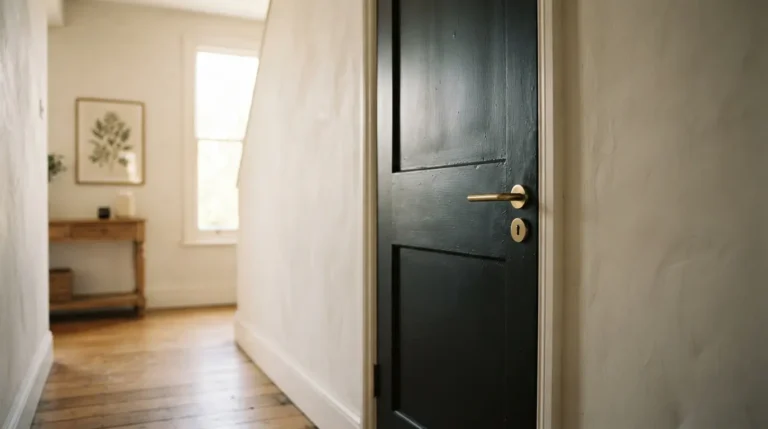
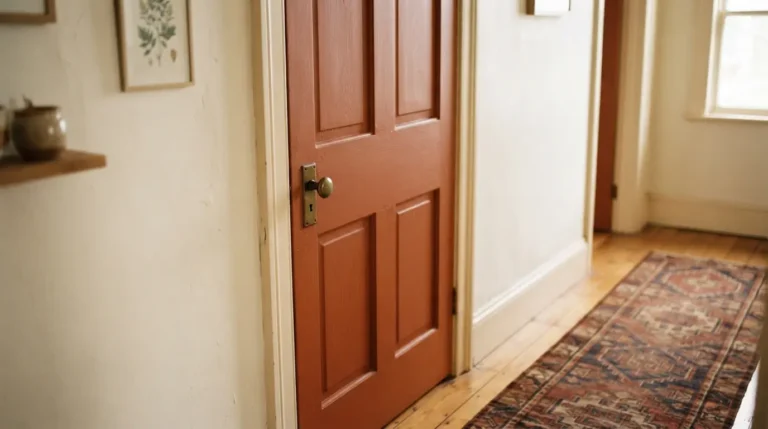
Since internal French doors sit within the room’s decorating scheme far more than an exterior door does, the paint colour genuinely matters. Matching the frame to your existing woodwork keeps the doors feeling like part of the room’s fabric, while a confident contrasting colour, a deep charcoal or a rich colour against pale walls, turns the doors into a genuine style feature in their own right.
10. Choose Timber for a Period Property, Aluminium for a Contemporary One
Timber suits a period property’s internal doors particularly well, sitting comfortably alongside existing skirting, architrave, and window styles without needing to disguise its material. Aluminium, with its slimmer sightlines and lower long-term maintenance, suits a more contemporary interior, and it’s worth noting that timber internal doors handle natural material movement more gracefully than a mechanism reliant on precise sliding or folding parts, since a simple hinge accommodates minor seasonal shifts far better than running gear does.
11. Real Cost Considerations Against a Standard Stud Wall
This is worth understanding honestly before committing to internal glazing throughout a renovation. A genuinely well-made French door installation costs considerably more than a standard solid stud wall with a plain door, since you’re paying for the glazing, the frame, and typically a more considered finish. Internal doors don’t need the double glazing, weatherproofing, or security specification an exterior door requires, so they’re generally more affordable than an equivalent exterior installation, but they still represent a real additional cost over simply building a plain wall, worth budgeting for specifically if you’re planning several internal glazed openings through a larger renovation.
12. Check Structural Requirements Before Knocking Through for a New Opening
If you’re creating a brand new opening between two existing rooms rather than replacing an existing doorway, this needs a genuine structural assessment before any work begins, since a wall you’re opening up may be load-bearing and require appropriate support once the opening is made. This is a job for a structural engineer or a qualified builder to confirm, not something to assume based on the wall’s appearance alone, and it’s worth factoring this check into your planning and budget from the earliest stage rather than discovering the requirement partway through a project.
Final Thoughts
The best internal French door ideas solve a genuine problem, a dark hallway, an over-open kitchen-diner, a home office that needs both light and quiet, rather than being purely decorative. Choose the application, glazing style, and finish that suits your specific rooms, budget honestly for the real cost difference over a plain wall, and check any structural requirements properly before creating a new opening, and the doors will do genuine, lasting work connecting your home’s rooms together.
FAQs
Do internal French doors need double glazing?
No, internal doors don’t need the weatherproofing or thermal performance an exterior door requires, so single glazing is standard and generally more affordable, since you’re not paying for the specification needed to handle outdoor conditions.
Can I use frosted glass in internal French doors for privacy?
Yes, frosted or reeded glass lets genuine light pass through while obscuring a clear view, making it a good choice for a bathroom, home office, or any room where you want the light-sharing benefit without full visibility from the other side.
Are internal French doors expensive compared to a stud wall?
Generally yes, a glazed door installation costs more than a plain solid wall and door, since you’re paying for the glazing and frame. They’re typically more affordable than an equivalent exterior installation, though, since they don’t need the same weatherproofing or security specification.
What glass pattern works best for internal French doors?
It depends on your style direction. Clear glass with slim glazing bars in a Crittall-inspired pattern suits both period and contemporary schemes, while frosted or reeded glass suits a room where partial privacy matters more than full visibility.
Can internal French doors be painted any colour?
Yes, and the colour matters more here than on an exterior door, since internal doors sit within your room’s decorating scheme. Matching your existing woodwork keeps them feeling integrated, while a confident contrasting colour turns them into a genuine feature.