How to Choose Kitchen Appliances That Work Together

Choosing kitchen appliances that work together means deciding on them at the design stage, not after the cabinetry is finalised, since appliances dictate layout, ventilation, worktop runs, and power and plumbing positions far more than most people expect. Buy them as an afterthought and you end up with mismatched finishes, a fridge door that clashes with the oven’s, or a dishwasher retrofitted somewhere it was never meant to go.
Choose Appliances Before You Finalise the Layout
The classic “kitchen triangle”, keeping the sink, hob, and fridge within easy, unobstructed reach of each other, still holds up as a working principle even in larger, island-led kitchens. Deciding your major appliances early lets the whole layout flow around them properly: fridges stay accessible to prep areas and the door from outside, dishwashers sit near the sink and dish storage, and cooking appliances stay clear of main walkways rather than creating a bottleneck during a busy dinner. Appliances chosen after the cabinetry is drawn up almost always mean a compromise somewhere, usually in the exact spot you’ll notice every single day.
Decide Between Freestanding, Built-In, and Panel-Ready
| Type | What It Is | Trade-off |
| Freestanding | Stands alone, not fixed into cabinetry | Easiest and cheapest to replace or service, but breaks up clean cabinetry lines |
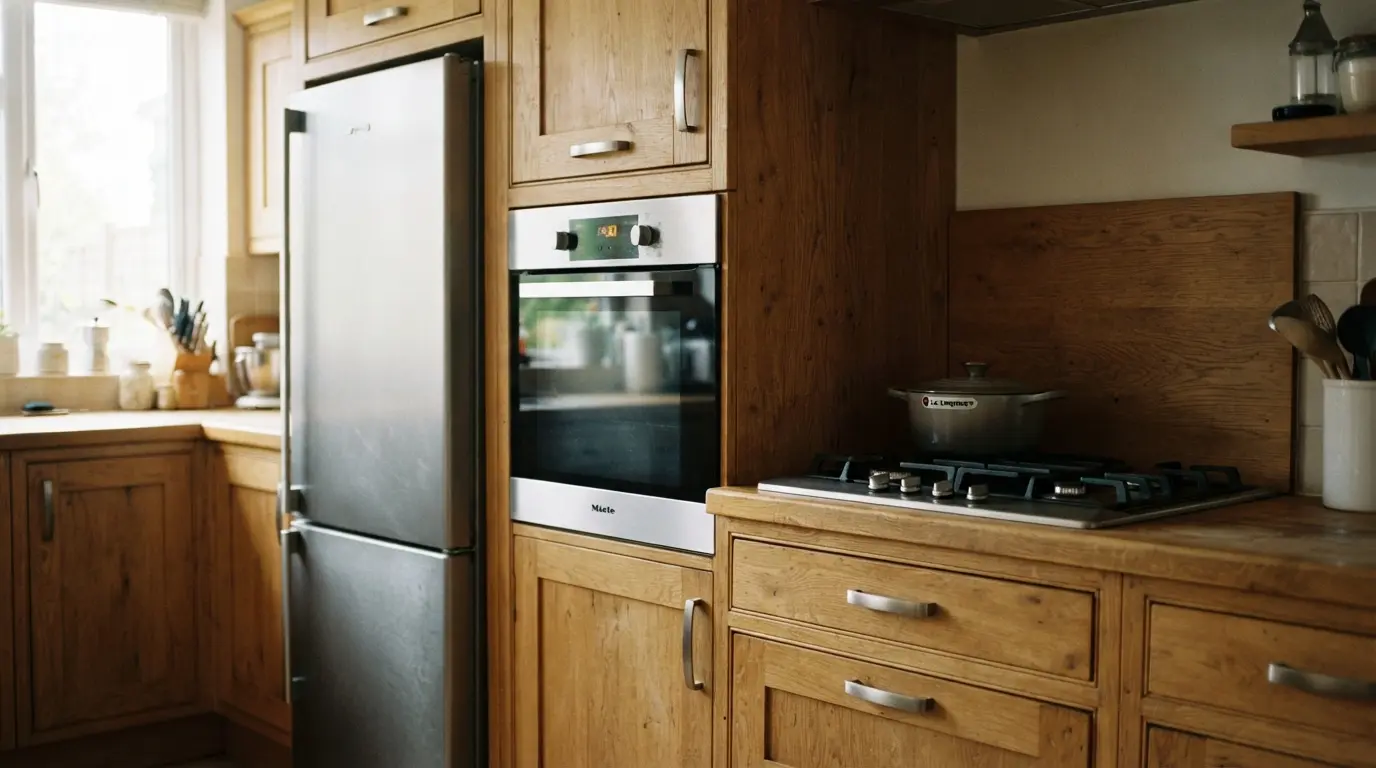
| Built-in | Fits flush within cabinetry or a wall unit | Cleaner look, but repairs need the appliance pulled from its housing |
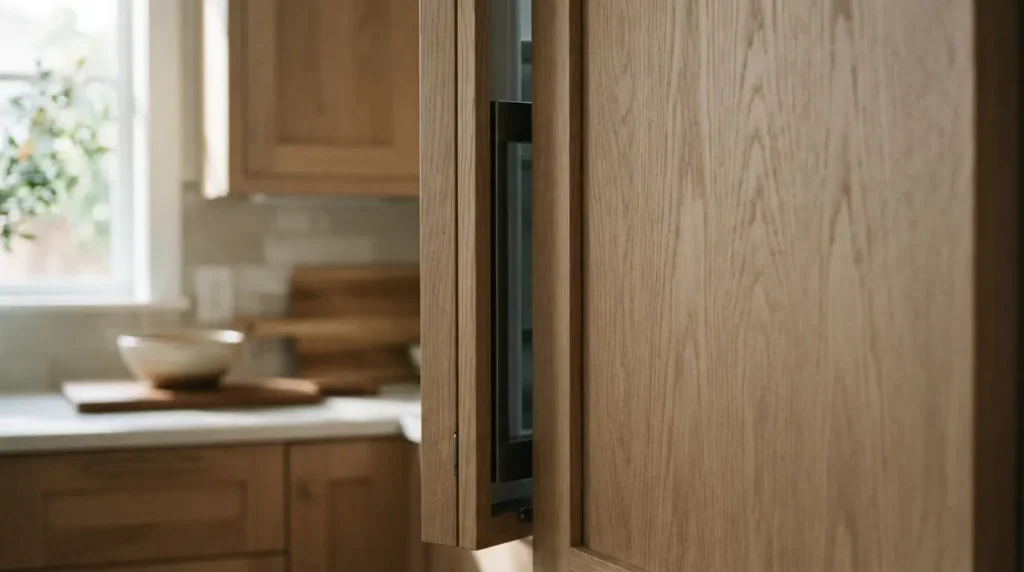
| Panel-ready | Accepts a custom cabinetry panel that conceals the appliance front entirely | Most seamless look, but the priciest option and least flexible if you change your mind later |
A freestanding range cooker makes a genuine style statement and remains the simplest to swap out or repair, since a technician doesn’t need to work around fitted cabinetry. Built-in ovens, hobs, and fridges integrate more neatly and suit a streamlined kitchen, though servicing typically takes longer since the appliance has to be freed from its housing first. Panel-ready appliances, where a matching cabinetry panel covers the appliance front almost entirely, give the most seamless, invisible result, but they cost more than an equivalent built-in model and commit you to that specific footprint if you ever want to change appliance brands later.
Keep the Finish Consistent Across Every Appliance
Stainless steel remains the most versatile finish, working across traditional and modern kitchens alike and pairing easily with most cabinet and worktop colours. Matte black and other coloured finishes add real character but narrow your options for future additions, since a mismatched finish stands out far more than a mismatched brand ever does. The detail worth extending beyond the major appliances: coordinating smaller ones too, a kettle, toaster, and stand mixer in a clashing finish undoes a carefully matched bank of ovens and fridges more than people expect, since these sit out on the worktop in full view every day.
Check Real Clearance and Door Swing Before You Buy

This is the detail that causes genuine daily frustration and gets skipped in almost every buying guide. Fridge-freezers need ventilation clearance on both sides to run efficiently and avoid overheating, not just floor space for the unit itself, check the manufacturer’s specific clearance requirement rather than assuming a snug fit is fine. Just as important: check that an oven door and a nearby dishwasher or cabinet door can open at the same time without colliding, a common and entirely avoidable mistake when appliances are chosen individually rather than mapped against the finished layout together.
Plan Power, Plumbing, and Ventilation at the Design Stage
Appliances that need dedicated circuits, a plumbed water line, or specific extraction, range cookers, plumbed fridge-freezers, integrated wine coolers, need those connections designed in before the kitchen is fitted, not added afterward. Retrofitting power or plumbing into a finished kitchen means lifting cabinetry or cutting into worktops that were never meant to be disturbed again, a considerably more expensive and disruptive job than wiring it in correctly the first time. The same applies to ventilation: a proper hood or extraction system, hidden or otherwise, needs to be planned against your specific hob’s output rather than chosen for looks alone.
Be Honest About What “Smart” and “Connected” Actually Means
Smart appliances genuinely add convenience, remote monitoring, maintenance alerts, and app-based control are all real, useful features. What’s worth knowing before assuming a fully “connected kitchen” is achievable: most manufacturers’ apps are built around their own ecosystem and don’t reliably talk to appliances from other brands, so a smart fridge from one manufacturer and a smart oven from another typically won’t coordinate with each other the way marketing sometimes implies, even if both connect to a shared voice assistant individually. If a genuinely unified smart kitchen matters to you, staying within one brand’s ecosystem, or checking compatibility with a common smart home standard before buying, avoids the disappointment of several separate apps that never quite work together.
Give Noisy Appliances Somewhere to Go
A separate utility room, even a small converted space, gives washing machines and tumble dryers somewhere to live outside the main kitchen, keeping both noise and laundry clutter out of a room that’s increasingly used for entertaining as much as cooking. Where a separate room genuinely isn’t possible, positioning the noisiest appliances furthest from the main seating or dining area, and choosing quieter, better-insulated models specifically for that spot, is a reasonable second-best option.
Common Appliance-Buying Mistakes
The most frequent mistake is choosing appliances individually, based on features and price, without checking how they’ll actually sit together in the finished layout, this is how door-swing clashes and ventilation shortfalls happen. The second is assuming built-in or panel-ready automatically means better value, they’re a style and integration choice, not a guarantee of superior performance over a well-specified freestanding equivalent. The third is leaving power, plumbing, and ventilation decisions until after the kitchen design is finalised, by then, correcting them costs considerably more than planning them in from the start.
Final Thoughts
Choosing kitchen appliances that work together comes down to sequencing and consistency: decide on your major appliances before the layout is finalised, keep finishes coordinated across everything from the fridge to the kettle, and plan power, plumbing, and ventilation in from the start rather than as an afterthought. Get that right and the kitchen will function as one considered space, not a collection of individually good appliances that never quite fit together.
FAQs
Do all my kitchen appliances need to be the same brand?
No, but keeping the finish consistent, stainless steel, matte black, or whatever you choose, matters more for a cohesive look than matching every appliance to one brand. Smart features are the exception, since cross-brand compatibility is genuinely limited.
What’s the difference between built-in and panel-ready appliances?
Built-in appliances fit flush within cabinetry with their own visible front, while panel-ready appliances accept a custom cabinetry panel that conceals the appliance almost entirely. Panel-ready gives the most seamless look but costs more and is less flexible to change later.
Can smart appliances from different brands work together?
Not reliably. Most manufacturers build their apps around their own ecosystem, so a smart fridge and a smart oven from different brands typically won’t coordinate with each other even if both offer standalone smart features.
How much clearance does a fridge-freezer need?
Check the specific manufacturer’s requirement, since it varies by model, but ventilation space on both sides is essential for the appliance to run efficiently rather than overheating. Don’t assume a snug fit into a cabinet gap is automatically fine.
Should I choose appliances before or after the kitchen design?
Before. Appliances dictate layout, ventilation, worktop runs, and power and plumbing positions, so choosing them at the design stage means they sit properly within the finished kitchen rather than being squeezed in afterward.