How to Choose the Right Roman Blind for Your Window

Choosing a Roman blind means matching the fold style, fabric weight and fitting method to the way the window is actually used. A well-chosen Roman blind stacks neatly, blocks light where needed and sits cleanly against the reveal or the wall. Get the measurements and clearances wrong and the blind either catches on the handle or leaves light gaps. This guide walks through the practical decisions that matter in a UK home. Pair it with ideas from roller blind ideas for every room if you want to compare other options.
How a Roman Blind Actually Works
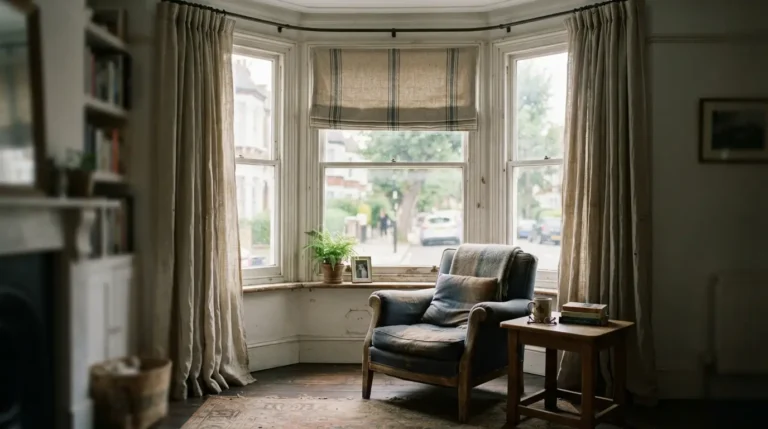
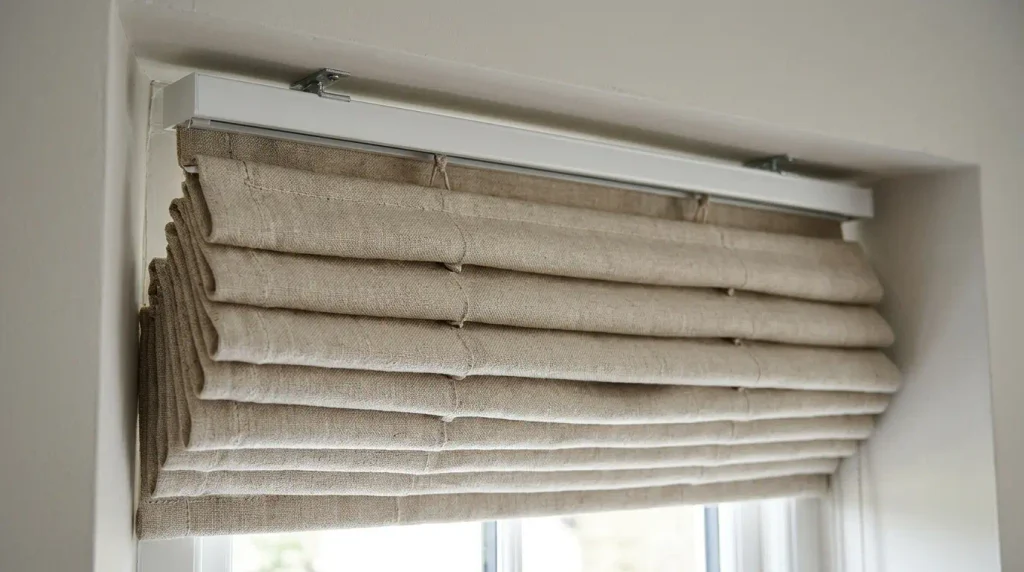
A Roman blind hangs flat and rises in soft folds when raised. The fabric is fixed to a headrail and pulled up by cords or a chain that lift horizontal bars or rods sewn into the fabric. When fully raised the stack sits at the top of the window. Unlike a roller blind the fabric does not disappear into a cassette; the folds remain visible. This makes the stack height an important measurement. Typical stack heights range from 150 mm on short blinds to over 300 mm on longer drops once lined. Check the manufacturer’s stack chart for the exact fabric and lining combination before you order. If you are layering treatments, look at how living room curtains sit alongside the stack.
Recess Fit or Face Fit
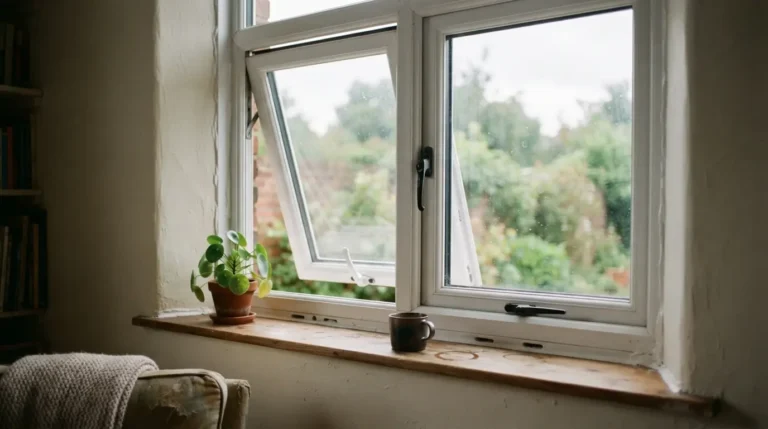
Recess fitting places the blind inside the window reveal. You need a minimum depth of 50–70 mm clear of any handle, tile or trim for the headrail and stack to operate without catching. Measure the width at three points and use the narrowest; most suppliers deduct 10 mm automatically for free travel. The drop is measured from the top of the reveal to the sill. Face fitting mounts the blind on the wall or architrave outside the reveal. Add at least 50 mm overlap on each side and 70–100 mm above the reveal so the raised stack clears the glass. Face fitting reduces light gaps and works better when the recess is shallow or when you want to pair the blind with curtains. Measure carefully; a 5 mm error on a recess fit can stop the blind from rising freely.
Fabric, Lining and Light Control
Linen and cotton weaves give a soft, natural fold that suits most UK interiors. They filter light well but need a lining for privacy after dark. Blackout lining adds thickness and weight, which increases the stack height by 20–40 mm. Thermal linings improve insulation without full blackout. Unlined blinds look lighter when backlit but allow more light through and offer little thermal benefit. Patterned fabrics need pattern matching across panels; allow extra fabric for the repeat. Avoid very heavy fabrics on wide windows unless the headrail is rated for the weight. Test a sample in the actual room light before ordering; a fabric that looks crisp in the shop can look thin against a bright south-facing window. For fabric ideas see linen curtain ideas.
Measuring Correctly Before You Order
Use a metal tape and measure width and drop at three points. For recess fit record the smallest width and the shortest drop. Note any protruding handles; if they stick out more than 25 mm consider spacer brackets or switch to face fit. For face fit decide the overlap first, then measure from the outer edges of the planned position. Record the depth of the reveal at several points so you know whether the stack will clear the glass when raised. Check the sill projection; if it sticks out more than 50 mm the blind should stop at the front edge of the sill. Write measurements as width first, then drop, in millimetres. Double-check the figures before you submit the order; suppliers rarely accept returns on made-to-measure blinds.
Stack Height, Handles and Everyday Clearance
When the blind is raised the fabric stack occupies vertical space at the top. A 1.5 m drop with blackout lining can stack 250–300 mm high. Allow this space so the view is not blocked when the blind is open. Window handles need at least 30 mm clearance from the fabric when the blind is down. If the handle hits the fabric the blind will bow or the mechanism will strain. In bay windows measure each section separately and allow for the angled junctions. Child-safe chain tensioners or cord cleats are required on most UK blinds; plan the location so they do not interfere with the folds. Test the operation once fitted; the fabric should rise and fall evenly without snagging.
Common Mistakes to Avoid
Ordering without checking recess depth is the most frequent error. A 45 mm deep reveal cannot take a standard Roman headrail plus stack. Ignoring stack height means the raised blind covers part of the glass and reduces light. Choosing a heavy fabric without confirming the headrail weight rating leads to sagging. Forgetting to account for pattern repeat on multi-width blinds produces mismatched seams. Measuring only once instead of three times misses out-of-square windows. Ordering blackout lining without checking the extra stack height creates clearance problems. Face fitting without enough side overlap leaves light leaks at the edges. Always request fabric samples and a stack-height guide from the supplier before you commit.
What to Check Before You Order
Confirm the headrail type (cassette or open) and its depth. Ask for the exact stack height for your chosen fabric and lining at the measured drop. Verify the maximum width the system can take without intermediate brackets. Check lead times for made-to-measure; most UK suppliers need 2–4 weeks. Confirm child-safety compliance and whether chain or cord operation is included. Request a sample of the exact fabric and lining combination. Make sure the colour is available in the lining you want. Ask about returns policy on made-to-measure items; most are non-returnable once cut. Finally, confirm the fitting instructions or whether professional installation is recommended for wide or high windows.
Conclusion
The right Roman blind starts with accurate measurements and a clear understanding of recess depth, stack height and fabric weight. Choose the lining for the light control you need, allow proper overlaps on face fit, and always check the manufacturer’s technical data before ordering. A carefully specified blind will rise smoothly, sit neatly and last for years in a UK home.
FAQs
How much depth do I need for a recess-fit Roman blind?
Most Roman blinds need at least 50–70 mm clear depth inside the reveal for the headrail and fabric stack to operate without catching on handles or the glass. Measure the shallowest point and check for any obstructions.
What is the typical stack height of a Roman blind?
Stack height varies with drop and lining. A short unlined blind may stack around 150 mm; a longer blackout version can reach 300 mm or more. Always request the supplier’s stack chart for your exact specification.
Can I use Roman blinds with curtains?
Yes. Face-fit the Roman blind so the stack sits clear of the glass, then hang the curtains on a pole or track further out. This layering works well for light control and insulation.