8 Plantation Shutter Ideas for a Classic and Elegant Interior

Plantation shutters bring structure and soft light control to British homes. They suit period properties and modern extensions equally well when the frame, louvre size and finish are chosen carefully. Before you order, measure the recess depth, check for obstructions from handles or sills, and decide whether you need full height, cafe style or tier on tier. These eight ideas show practical ways to use plantation shutters while keeping the look classic and elegant. For more on choosing shutters, see how to choose the right shutters for your home.
1. Full Height Shutters in a Living Room
Full height plantation shutters run from the sill to the top of the window frame. They create a clean vertical line that works well in living rooms with high ceilings or sash windows. Choose a frame width of around 50 to 63 mm so the shutters sit neatly without looking bulky. Louvre sizes of 63 mm or 89 mm give good light control and a traditional appearance. In UK homes, check the recess depth first. Most plantation shutters need at least 50 mm of clear depth for the frame and hinges. If the recess is shallower, a face-fixed option or a narrower frame may be needed. Pair them with a soft neutral paint or a natural wood finish to keep the room elegant. Common mistakes include ignoring the window handle clearance and ordering without allowing for the stacking space when the shutters are open. Measure twice and allow 5 to 10 mm tolerance on the width. For window dressing ideas that complement shutters, look at 8 shutter ideas for every room to add privacy and style.
2. Cafe Style Shutters for Privacy with Light

Cafe style shutters cover only the lower half of the window. They give privacy from the street while letting light in above. This works particularly well in kitchens and bathrooms where you want daylight but not full visibility. The lower panel usually stops at about 900 to 1200 mm from the floor, depending on the window height and the view outside. Use the same louvre size throughout for a consistent look. Materials matter here. Solid wood or high quality faux wood both work, but check moisture resistance if the room gets steamy. Before ordering, confirm the exact height of the lower panel so it does not cut across the view of the garden or street in an awkward place. Many people forget to consider the sill height and end up with a panel that sits too high or too low. A good rule is to align the top of the lower shutter with the middle of the window or with any existing mid-rail. This approach keeps the classic plantation look while solving a practical privacy problem. Related reading on window treatments includes how to choose the right window treatment for every room.
3. Tier on Tier Shutters for Flexible Control
Tier on tier shutters split into two or more independently moving sections. You can open the top for light and keep the bottom closed for privacy, or open both. This gives more flexibility than cafe style. In British homes with tall sash windows, a three-tier setup often looks balanced. Frame depth and hinge placement are critical. Each tier needs enough space to fold back without hitting the next section or the window furniture. Measure the clear opening carefully and allow for the thickness of the louvres when open. A common error is ordering tiers that are equal in height when the window has a mid-rail; it is better to align the split with the existing rail for a cleaner finish. Choose 63 mm louvres for a finer traditional look or 89 mm for more modern proportions. Check the material warranty for the finish, especially if you plan to paint them yourself later. For more on bay windows that often use this style, see how to dress a bay window with curtains or blinds.
4. Painted Shutters in Soft Neutrals
Painting plantation shutters in soft neutrals such as warm white, pale grey or soft taupe keeps the classic elegance while tying them into the rest of the room. Order them factory painted if possible so the finish is even and durable. If you paint them yourself, use a good quality primer and a satin or eggshell finish that is easy to wipe clean. In UK conditions, check that the paint is suitable for the material, especially on wood where movement can crack rigid finishes. Measure the window accurately including any architrave if the shutters will be face fixed. A frequent mistake is choosing a colour that looks perfect on a small sample but clashes with the wall once the full shutter is fitted. Take a large sample to the room and view it in both daylight and evening light. Allow 2 to 3 mm clearance all round for expansion if the shutters are solid wood. This idea works well with existing period features. See also what are plantation shutters and are they worth the cost.
5. Natural Wood Shutters for Warmth
Natural wood plantation shutters bring warmth and grain to an interior. Oak, basswood or a well finished hardwood suit classic British rooms. The finish should be sealed against moisture, particularly in kitchens or bathrooms. Before ordering, confirm the species and the grade so you know how much natural variation to expect. Louvre size still matters; 89 mm louvres show the wood grain more clearly. Clearances are the same as for painted versions, but wood can move more with seasonal humidity, so leave a little extra gap at the sides if the supplier recommends it. A common problem is ordering unfinished wood and then finding the stain or oil does not match the floor or furniture. Request a sample of the finished wood and compare it in situ. Check the hinge quality and the warranty on the finish. Natural wood shutters pair well with other timber elements in the home. For complementary window ideas, read 10 window frame ideas to update the look of your home.
6. Shutters in a Bay Window
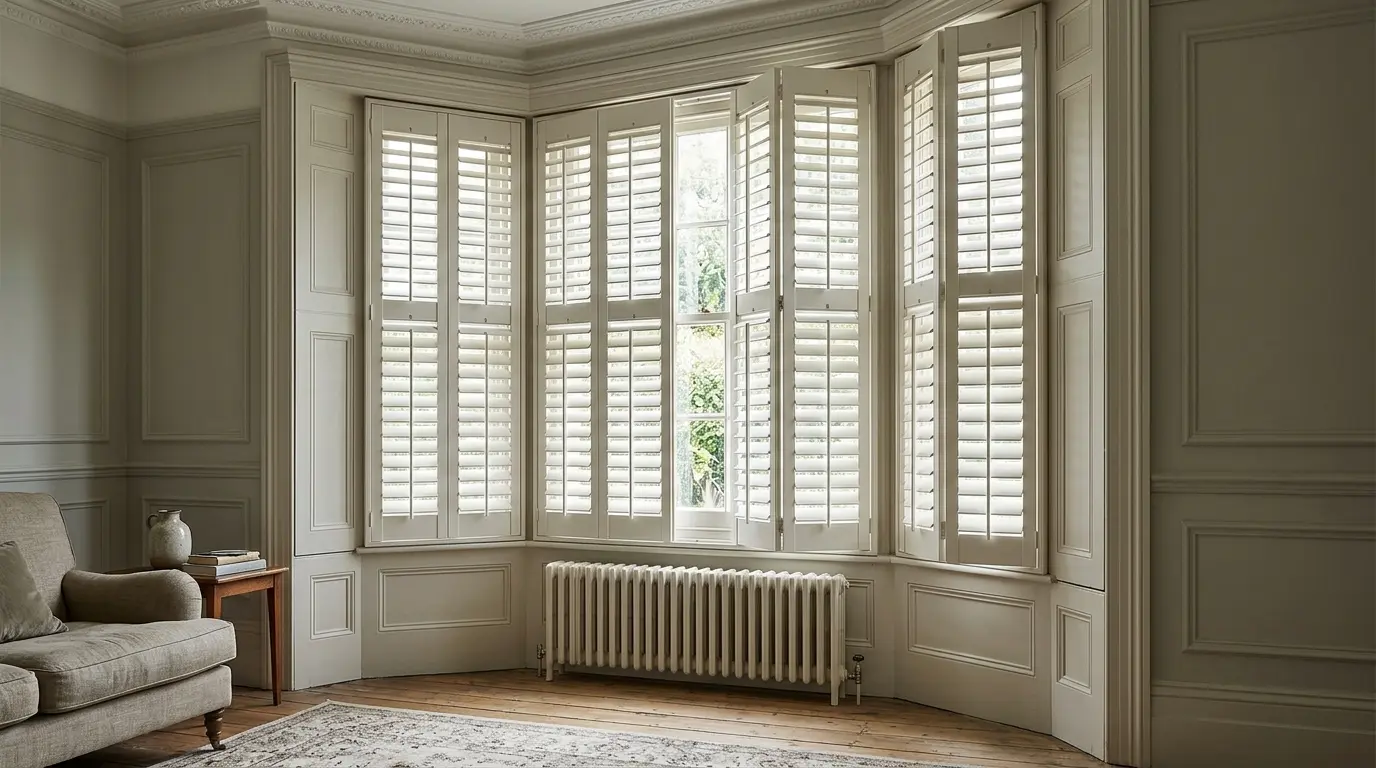
Bay windows need careful planning for plantation shutters. You can fit individual panels to each face or use a continuous run with angled frames. Measure each section separately and note the angles. Most suppliers offer special bay fittings, but the frame depth must still clear any existing poles or handles. In many UK bay windows the recess is deep enough, yet the corner posts take up space, so confirm the clear opening on each face. Louvre size of 63 mm often looks better in a bay because the smaller scale suits the broken lines. A frequent mistake is trying to force a single set of shutters across the whole bay without allowing for the angles, which leaves gaps or binding. Order a site survey if the bay is complex. Once fitted, the shutters give excellent light control and privacy while keeping the elegant shape of the bay. More on bays can be found at 10 bay window seat ideas to create a cosy reading nook.
7. Bedroom Shutters with Blackout Options
In bedrooms, plantation shutters can be combined with a blackout liner or ordered with tighter louvre spacing for better light blocking. Full height or tier on tier both work. Measure the window carefully and decide whether you want the shutters to meet in the middle or open to the sides. Frame colour should match or contrast gently with the walls. Check the sill and any radiators so the shutters can open fully without obstruction. A common error is underestimating how much light still comes through standard louvres; if total darkness is needed, discuss a blackout option or a secondary blind with the supplier. Allow standard clearances of 3 to 5 mm per side. Choose a finish that is easy to dust, as bedrooms collect soft furnishings nearby. This keeps the classic look while solving the practical need for sleep. Related bedroom window advice is at how to choose the right curtains for a bedroom.
8. Kitchen Shutters with Easy Clean Finishes
Kitchens benefit from plantation shutters that are easy to wipe clean. Faux wood or well sealed timber with a durable paint finish works best. Cafe style is popular so steam can rise while the lower part stays private. Measure the window and note any sink taps or worktops that might restrict the opening. Louvre size of 89 mm is practical because the wider gaps are easier to clean. Before ordering, confirm the material is suitable for the humidity and that the hinges are stainless or well protected. A frequent mistake is fitting full height shutters that trap cooking grease on the upper louvres and become hard to reach. Choose the split height carefully and leave enough gap at the bottom for cleaning the sill. This idea keeps the elegant plantation style while meeting the demands of a working kitchen. For more kitchen window ideas, see 7 kitchen paint colour ideas to transform your space.
Conclusion
These eight plantation shutter ideas show how a classic treatment can be adapted to different rooms and window types in a British home. The key practical points are accurate measuring of recess depth and clearances, choosing the right louvre size and material for the room, and planning the opening style so the shutters do not bind or look unbalanced. Check samples in your own light, confirm warranties, and allow for seasonal movement if you choose solid wood. Done well, plantation shutters deliver light control, privacy and an elegant finish that lasts. For further guidance on shutters and other window treatments, explore the related articles on the site.
FAQs
What recess depth do plantation shutters need?
Most plantation shutters need at least 50 mm of clear recess depth for the frame and hinges. Shallower recesses may require a face-fixed installation or a slimmer frame. Always measure the narrowest point and check for handles or sills that reduce the usable depth.
What louvre size is best for a classic look?
63 mm louvres give a finer, more traditional appearance that suits period homes. 89 mm louvres look slightly more modern and are easier to clean. Choose based on the scale of the window and the room style.
Can I fit plantation shutters in a bay window?
Yes. Measure each face of the bay separately and note the angles. Most suppliers offer special bay frames. Confirm clearances at the corners so the shutters open fully without binding.
Are plantation shutters suitable for bathrooms?
Yes, if you choose a moisture-resistant material such as faux wood or well sealed timber with a durable finish. Cafe style or tier on tier often work well so steam can escape while privacy is maintained.
How much clearance should I allow around the shutters?
Allow 3 to 5 mm on each side and a little more for solid wood that may move with humidity. Check the supplier’s recommendation and measure the finished opening rather than the frame size alone.
Do I need a survey before ordering?
For simple rectangular windows you can measure carefully yourself. For bays, arched tops or awkward recesses a professional survey reduces the risk of fitting problems. Always double-check your own measurements before you place the order.