The 5 Most Popular Garden Design Styles Explained

The five most popular garden design styles are cottage, formal, contemporary, Mediterranean and Japanese. Each has its own layout, planting palette and upkeep demands. Cottage suits plant lovers, formal suits people who like order, contemporary suits busy owners, Mediterranean suits dry sunny plots, and Japanese suits anyone who wants calm.
Most people can’t name what they like in a garden, so they buy plants they love, plonk them in gaps, and end up with a pleasant but disjointed patch. Picking a style first makes every later decision on paving, planting, furniture and colour faster and cheaper.
What Is a Garden Style, and What Isn’t?
A garden style is a distinct design approach defined by layout, materials, planting and how the plants are pruned. It is not a plant preference. Cottage, formal and contemporary are styles. Edible, wildlife-friendly and pollinator-friendly gardens are themes you can layer onto any style.
That distinction saves a lot of confusion. A vegetable patch or a wildflower corner can sit happily inside a cottage garden, a naturalistic garden or even a contemporary one with raised beds. The style decides how the space looks and feels. The theme decides what you grow or who you invite in.
1. Cottage Garden Style
A cottage garden is an informal, densely planted style built around layered flowers, soft colours and winding paths. It suits people who enjoy hands-on gardening and prefer abundance to order. Expect roses, foxgloves, delphiniums and lavender spilling over edges, with climbers softening every fence and wall.
The look is often described as organised chaos, and the word “organised” is doing the heavy lifting. Every good cottage garden has a hidden structure: a clear path, a few evergreen anchors such as clipped box balls or yew, and a solid boundary for climbers to work on. Without those, it slides from romantic to overgrown by August.
Plants are packed tightly and allowed to self-seed, so your main job becomes editing rather than planting. Herbs and even a few vegetables can be tucked between the flowers, which is part of the historic charm.
Cost, timeline and upkeep. A mixed perennial border typically costs roughly £30 to £80 per square metre in plants and soil preparation if you buy in 2 to 3 litre pots. Swapping cuttings and dividing your own plants cuts that sharply. Allow two to three growing seasons for the planting to knit together. The first summer often looks thin and slightly awkward, which is normal.
Upkeep is seasonal and front-loaded. From late spring to early autumn, most homeowners find a medium-sized cottage garden takes three to five hours a week for staking, deadheading, cutting back and dividing.
The honest trade-off. Cottage gardens look wonderful in June and can look like a muddy tangle in January unless you plan winter structure. Weeds also hide well in dense planting, and slugs treat delphiniums as a buffet. Prices and plant choices vary by country, so check what thrives locally.
2. Formal Garden Style
A formal garden is defined by symmetry, geometry and clipped evergreen structure. Hedges, topiary and straight paths lead the eye to a central focal point such as a fountain or statue. It suits period or symmetrical houses and rewards owners who enjoy precision and regular trimming.
The style draws on Roman, Italian and French traditions, and the principles scale down better than people expect. A square lawn framed by low hedging, a pair of matching planters at the door and a single stone bird bath on the central axis can deliver the effect in a small plot. Because evergreens carry the design, a formal garden holds its shape through winter when other styles have collapsed.
The palette is deliberately limited: greens, whites, perhaps one accent colour. Repetition is the point. The same plant repeated three times looks intentional, whereas five different plants look accidental.
Cost, timeline and upkeep. Hedging is the big spend. Established, ready-grown hedging can cost roughly £60 to £200 per metre, while young plants are far cheaper but need five years or more to look the part. Expect to pay more for stone edging, gravel paths and quality containers.
Clipping is the ongoing job. Yew usually needs one or two cuts a year, whereas box and small-leaved hedges often need three or more. Lawn edges also need cutting sharply, or the geometry blurs.
The honest trade-off. This is the highest-maintenance style of the five, and neglect shows within one season. Box is also vulnerable to box blight and box moth caterpillar in many regions, so many designers now specify yew, Japanese holly (Ilex crenata) or similar alternatives. Formal design also fights with wonky or asymmetrical houses, so check your architecture first.
3. Contemporary Garden Style
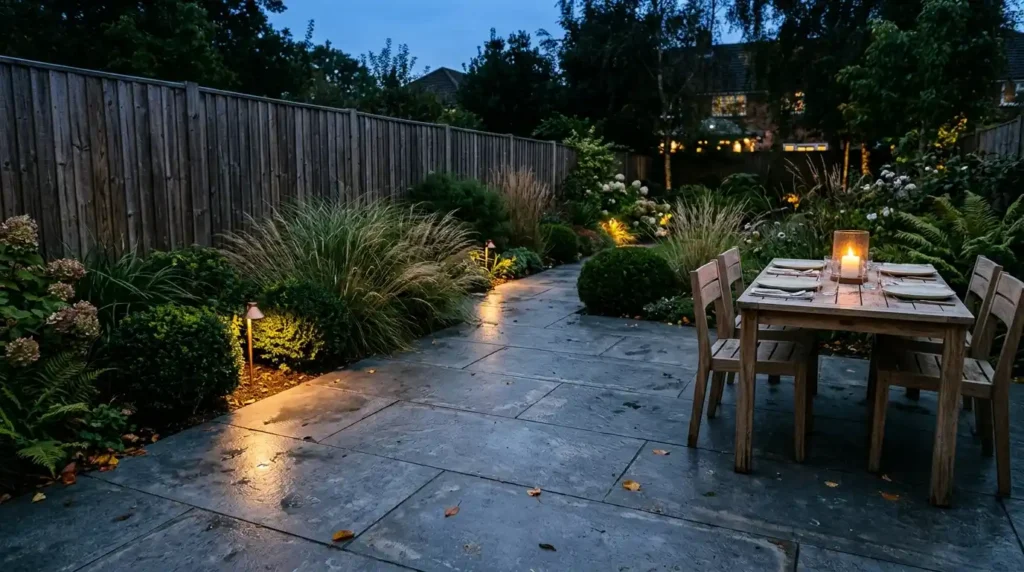
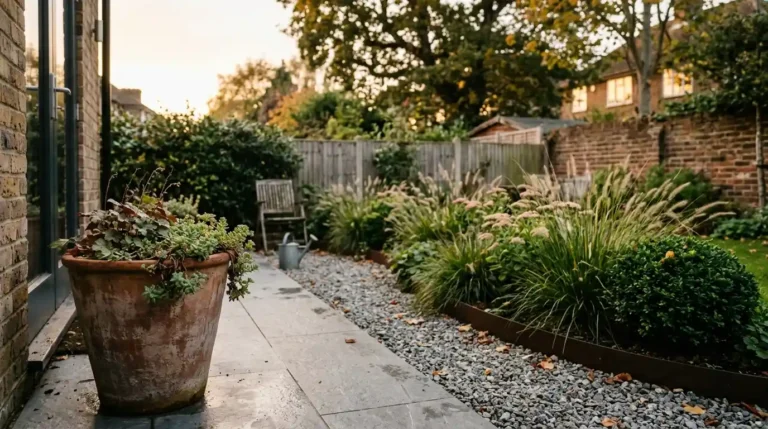
A contemporary garden uses clean lines, geometric shapes and a restrained plant palette, with hard landscaping doing as much work as planting. Expect stone or porcelain paving, sculptural plants such as ornamental grasses and clipped shrubs, and built-in seating and lighting. It suits modern architecture and people who entertain outdoors.
Materials carry the look: concrete, steel, timber cladding, gravel and glass. Planting is deliberately limited to a few architectural plants, repeated in blocks rather than scattered. Lighting matters more here than in any other style, because a well-lit contemporary garden works as an extra room after dark.
The style is often sold as low-maintenance, and that’s true for the planting but not always for the materials.
Cost, timeline and upkeep. This is usually the most expensive style upfront. Porcelain paving installed in the UK often runs roughly £70 to £150 per square metre, and a full contemporary redesign of an average suburban garden commonly lands somewhere between £15,000 and £50,000 or more, depending on groundworks, access and country. Most builds take two to six weeks on site, after several weeks of design and ordering.
Day-to-day, expect one to two hours a week. Weeds still find gravel and paving joints, shaded porcelain grows algae and needs a yearly wash, and timber cladding needs re-oiling every year or two.
The honest trade-off. With so few plants, every dead or sulking one is on show. The style can also feel cold if you go too far with hard surfaces. A rule of thumb many designers use is roughly 70 percent planting and 30 percent hard landscaping, though small urban gardens often need more paving to stay usable. Choosing permeable surfaces also helps with surface water.
4. Mediterranean Garden Style
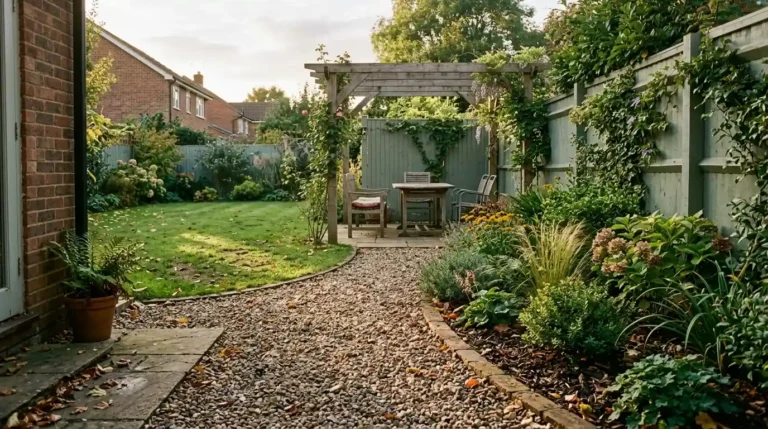
A Mediterranean garden is a sun-soaked, low-water style built on drought-tolerant plants, gravel, terracotta and warm stone. Lavender, rosemary, olive trees and agapanthus set the planting, while pergolas and gravel paths create shaded outdoor rooms. It suits dry, sunny plots and works in cooler climates with the right drainage.
Scent is a big part of the appeal. Herbs release their fragrance as you brush past, and gravel underfoot adds sound and texture. Warm terracotta, ochre and sun-bleached stone tie the scheme to the house, and a vine-covered pergola gives you shade for a dining table.
The biggest mistake in cooler, wetter regions is blaming the cold. In practice, winter wet kills more Mediterranean plants than frost does. These plants evolved in lean, free-draining soil, so success depends on drainage: raised beds, grit dug into the soil, and a gravel mulch around the crowns.
Cost, timeline and upkeep. A mature olive tree alone can cost roughly £150 to £600 or more depending on size and age, while gravel, terracotta and herbs are modest. A small garden in this style often falls somewhere between £5,000 and £20,000. Because you can buy plants at a decent size, it looks good within one to two seasons.
Once established, watering is minimal. Lavender should be trimmed after flowering each year, or it turns woody and sparse. Expect one to two hours a week.
The honest trade-off. Heavy clay, shade and permanently damp ground will defeat the style without serious soil work. In colder areas, keep tender plants such as citrus and bougainvillea in pots you can move to shelter over winter.
5. Japanese Garden Style
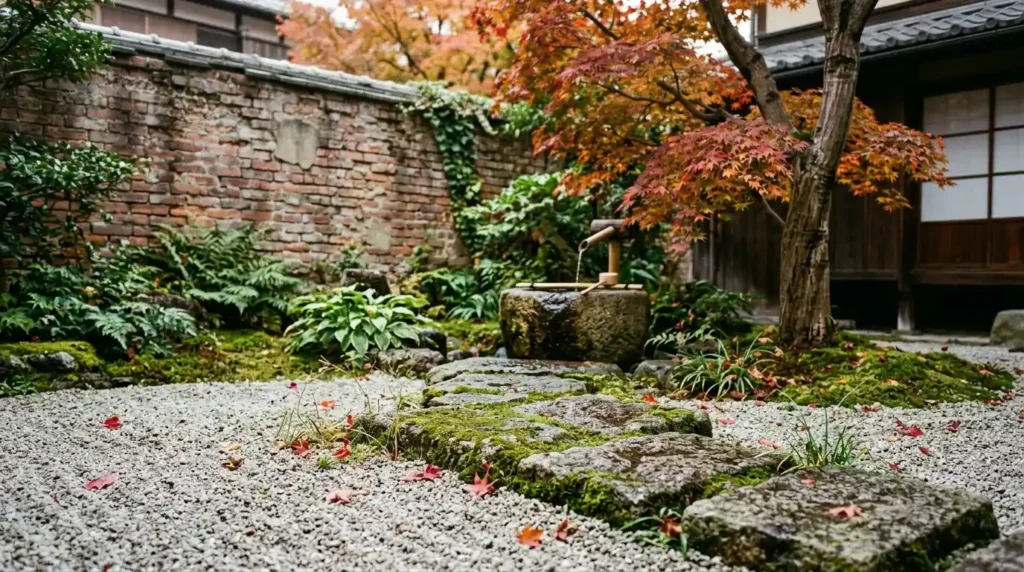
A Japanese garden is a calm, asymmetrical style built from rocks, water, evergreens and carefully placed ornaments. It relies on restraint, balance and pruned shapes to create a contemplative space. It works especially well in small and courtyard gardens where stillness matters more than colour.
The four core elements are rock, water, plants and ornaments. Stones are placed in odd-numbered groups, water might be a still pond, a stone basin or a simple trickle, and plants are chosen for form rather than flowers: Japanese maples, bamboo, moss, clipped evergreens and ferns. Paths bend so you cannot see everything at once, which makes a small space feel bigger.
Cost, timeline and upkeep. Costs vary hugely. Stone is heavy and often needs machinery to place, a decent Japanese maple might cost roughly £30 to £150, and cloud-pruned pines can run from £150 to £1,000 or more. A small garden in this style commonly sits between £8,000 and £35,000. It also looks sparse in year one, and moss and maples take several years to settle.
Regular jobs are simple but fussy: raking gravel if you have it, removing fallen leaves from moss, and pruning evergreens by hand.
The honest trade-off. Japanese maples scorch in strong wind and hot afternoon sun, so they need shelter and moist but well-drained soil. Running bamboo needs a root barrier or it will take over. The style is also hard to change later, because so much of it is fixed in stone, and gravel areas will grow weeds if you skip the membrane and edge maintenance.
How Do the Five Garden Design Styles Compare?
The five styles differ most in upkeep, upfront cost and how long they take to look established. Cottage is cheapest but seasonal. Formal demands the most trimming. Contemporary costs the most to build. Mediterranean is the most forgiving in dry sites. Japanese is the most fixed once built. Use this garden style guide as a quick filter.
| Style | Best for | Weekly upkeep (peak season) | Time to look established | Indicative cost (typical suburban garden) | Biggest risk |
| Cottage | Plant lovers, period homes | 3 to 5 hours | 2 to 3 seasons | £3,000 to £10,000 | Bare, muddy winters |
| Formal | Symmetrical houses, tidy minds | 1 to 3 hours plus clipping days | 3 to 5+ years for hedging | £8,000 to £30,000 | Neglect shows fast |
| Contemporary | Modern homes, entertaining | 1 to 2 hours | Immediate after build | £15,000 to £50,000+ | Cold look, exposed plant failures |
| Mediterranean | Dry, sunny, free-draining sites | 1 to 2 hours | 1 to 2 seasons | £5,000 to £20,000 | Winter wet and poor drainage |
| Japanese | Small spaces, calm seekers | 1 to 3 hours | Several years | £8,000 to £35,000 | Hard to alter, wind scorch |
All figures are approximate GBP estimates for planning and vary by country, labour costs, site access and plant size.
How Do You Choose the Right Garden Style?
The right style depends on your house, climate, upkeep tolerance and how you use the space. Look at your home’s architecture first, then check your soil and sun, then be honest about weekly time. Only then choose the look you like best. Different garden styles fail mainly when they fight one of those four.
Here is how most homeowners find it works in practice:
- Match the house. Symmetrical period homes suit formal and cottage. Modern extensions and clean-lined new builds suit contemporary. A garden that mirrors materials from the house, such as brick paths beside a brick facade, always looks more resolved.
- Match the site. Free-draining sun suits Mediterranean. Sheltered, moist, part-shaded spots suit Japanese and cottage. Heavy clay favours cottage planting and away from lavender and olives.
- Match your time. If you would rather sit in the garden than work in it, avoid formal and high-input cottage. If you love pottering, cottage is the most rewarding.
- Match how you live. A garden that doubles as a dining room needs solid paving and shade, which points to contemporary or Mediterranean.
Small gardens can carry any of the five, but Japanese, contemporary and a scaled-down formal layout usually make the tightest, most convincing use of a small plot.
Can You Mix Garden Styles?
Yes, but only when the styles share a similar mood, otherwise both lose impact. Cottage and formal blend well, and French country is the classic example: structured hedging and paths with soft planting inside. Contemporary hard landscaping with naturalistic planting also works. Cottage combined with sharp modern paving usually clashes.
The safest approach is to choose one lead style and borrow one supporting idea from a second. Pick your popular garden themes on top: wildlife ponds, an edible corner, pollinator planting or a tropical-leaning shaded nook. Themes sit comfortably inside almost any style, which is why they suit hybrids better than a second full style does.
What Are the Biggest Garden Design Mistakes?
The most common mistakes are picking a style that fights the site, buying plants before planning, over-paving, underestimating upkeep and ignoring boundaries. Most of these are cheap to avoid at the design stage and expensive to fix once the garden is built.
- Copying a show garden. Photographs and show gardens are built for one week in perfect light, with plants held back or forced to peak. This tends to look great in photos but rarely survives normal weather and normal weekends.
- Buying plants first. A plan comes first, and the plant list follows. Impulse buys turn into orphan plants with no job to do.
- Paving too much. Covering everything to reduce maintenance leaves a hard, echoing space that still needs weeding and washing.
- Underestimating upkeep. Formal hedges and cottage borders both demand steady attention. If your honest weekly budget is one hour, choose accordingly.
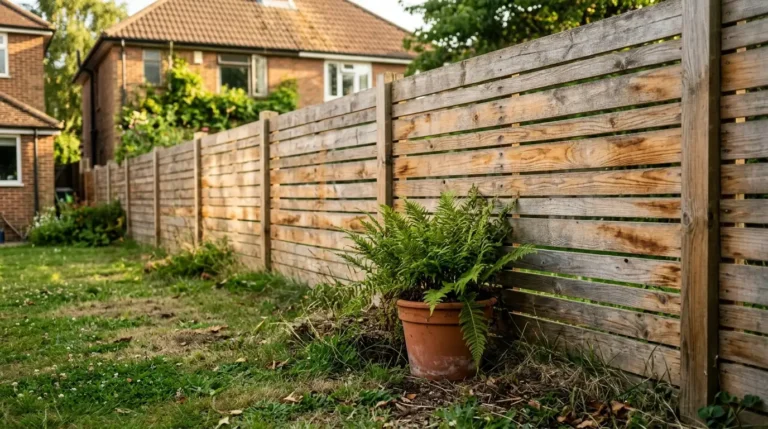
- Forgetting the boundaries. Fences and walls fill much of your view. Paint them, clad them or cover them with climbers as part of the design.
Conclusion
The best of the garden design styles is the one that fits your house, your soil and the hours you will really spend outside. Choose cottage for abundance, formal for order, contemporary for clean entertaining space, Mediterranean for dry sun and Japanese for calm. Pick one lead style, borrow lightly from a second, and plan before you plant. A garden designed around how you live will always look better than one designed around a photograph.
FAQs
Beginner questions
What are the main types of garden?
The five most popular types of garden are cottage, formal, contemporary, Mediterranean and Japanese. Others include naturalistic, tropical or jungle, and urban courtyard gardens. Edible and wildlife gardens are usually treated as themes that can be added to any style.
Which garden style is easiest to maintain?
Mediterranean and a well-planned contemporary garden usually take the least time, at around one to two hours a week. Both still need annual jobs such as trimming lavender or washing paving. Formal and cottage gardens demand the most attention.
What is the cheapest garden style to create?
Cottage is usually the cheapest to start, especially if you grow from cuttings, divide plants and swap with neighbours. Contemporary is normally the most expensive because of paving, groundworks and lighting.
Intermediate questions
What garden style suits a small garden?
Japanese, contemporary and a scaled-down formal layout suit small spaces well because they rely on structure and restraint. A small cottage garden also works, as long as you keep paths clear and plant in layers rather than adding more plant varieties.
Can I create a Mediterranean garden in a cold or rainy climate?
Yes, provided you fix drainage and choose hardy plants. Use raised beds, grit and gravel mulch, and keep tender plants such as citrus in pots you can move under cover. Lavender, rosemary and many herbs cope with cold better than they cope with wet soil.
How long does a cottage garden take to look established?
Most cottage borders need two to three growing seasons to fill out and look natural. Self-seeders speed things up, but you will need to edit them each spring.
Is a contemporary garden really low maintenance?
It is low maintenance for planting, but not for materials. Expect to wash paving, re-oil timber, weed gravel and replace failed plants promptly. It is a lighter routine than cottage or formal, not a zero-effort one.
Advanced questions
How do I stop a formal garden looking stuffy?
Keep the structure but loosen the planting. Soften hedge lines with billowing perennials or grasses in the beds, and use a relaxed material such as gravel or aged stone for paths. This is essentially the French country approach.
What can replace box in a formal garden?
Yew is the classic alternative and clips beautifully. Japanese holly (Ilex crenata) and some Euonymus varieties are also used for low hedging. Availability and disease pressure differ by region, so check with a local nursery.