10 Low Maintenance Garden Ideas for a Beautiful Space

The best low maintenance garden ideas cut the jobs that repeat every week: mowing, weeding, watering and treating timber. Choose durable hard surfaces, evergreen structure planting, big pots and mulch, and get drainage right at the build stage. That gives you a good-looking space that needs attention a few times a year.
Most of us know the weekend loop. Mow, weed, scrub the moss off the patio, retreat the decking. The frustrating part is that much of this work is built into the garden by the materials you chose, so clever plant swaps only get you so far. The ideas below design that work out.
What Actually Makes a Garden Low Maintenance?
A low maintenance garden needs attention seasonally rather than weekly. The biggest time drains are lawns, timber that needs treating, hard surfaces that grow algae, poor drainage and plants in the wrong spot. Fix those five and a simple garden mostly looks after itself.
“Low” does not mean “none”. A no fuss garden still needs a seasonal tidy, an annual clean of hard surfaces and some watering while new plants settle in. A realistic target for a low effort garden is an hour or two every few weeks in the growing season, instead of several hours every weekend.
One note for readers outside the UK: the plant names below suit temperate climates. In very hot, dry or cold regions, keep the principles and swap in tough local equivalents.
1. Shrink or Replace the Lawn
Removing or shrinking the lawn cuts more work than any other change. Swap it for larger borders, gravel, paving or ground cover, or lay artificial grass if you need a soft surface. In a small garden without children, a lawn often costs more effort than it repays.
Artificial grass ends mowing, feeding and moss treatment. The trade-offs are real, though. It needs a properly compacted sub-base, it can get warm in strong sun, and it needs an occasional brush and rinse, especially with pets. Installed prices often run around £40-£90 per square metre, and a small lawn usually takes one to three days.
If you keep real grass, make it easy to cut. Choose a simple shape with no awkward corners, and set a brick or paving edge level with the turf so the mower cuts right to the boundary. That removes the strimming.
2. Lay Porcelain Paving on the Terrace
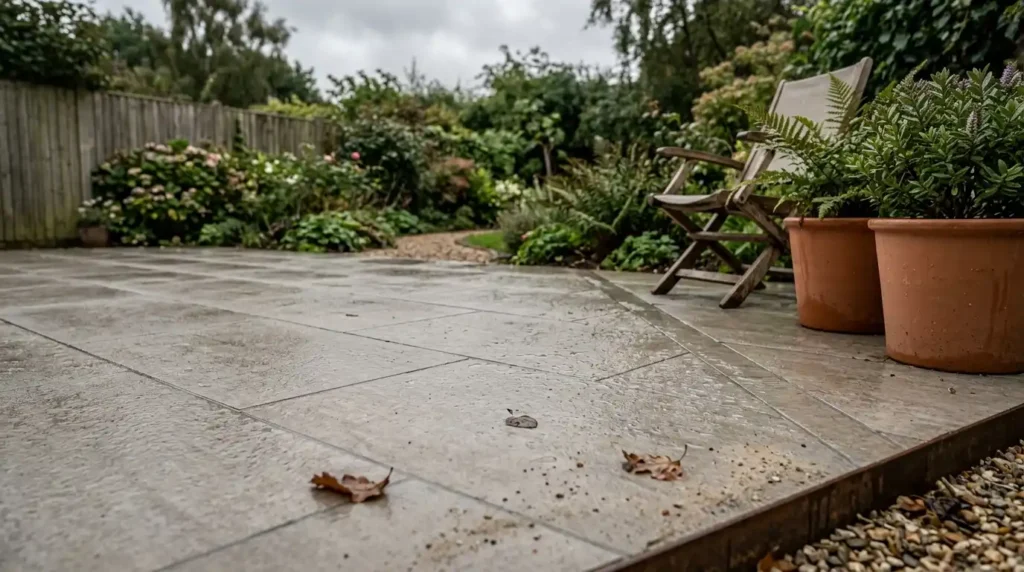
Porcelain paving is one of the lowest upkeep hard surfaces because it barely absorbs water. It resists moss, algae and staining, and needs no sealing. One pressure wash a year usually keeps it clean. Expect to pay more than for concrete, and check the slip rating if your climate is wet.
Installed cost is often £70-£150 per square metre, and a 20 square metre terrace typically takes three to five days including ground prep. Natural sandstone and limestone look lovely but soak up water, so in shade they grow algae and need regular cleaning.
The paving itself is rarely what fails. A thin sub-base is. Compacted foundations, edge restraints and a gentle fall away from the house decide whether the surface stays flat for years or sinks and grows weeds in the joints.
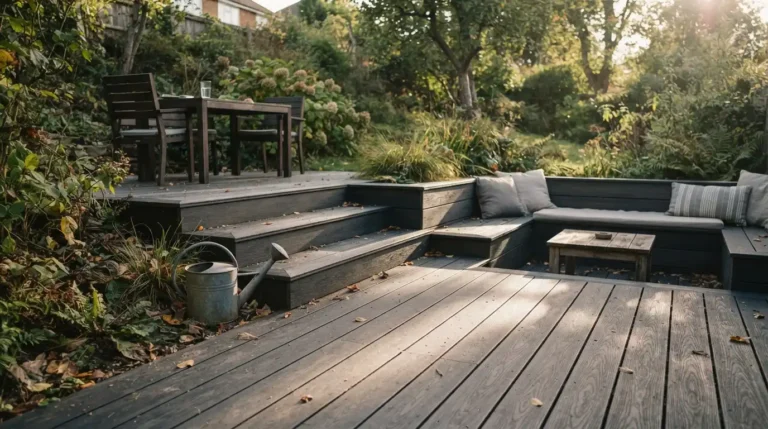
3. Choose Composite Decking Over Softwood
Composite decking removes the yearly treating that softwood needs. It does not rot or splinter, and it resists algae better than bare timber. It costs more upfront but usually saves money over its life. Dark boards get hot in direct sun and can scratch.
Softwood decking might cost £50-£100 per square metre installed, while composite often lands around £100-£200. Softwood needs retreating every year or two, and if you skip a treatment it turns slippery and eventually rots. Most small decks take two to four days to build.
Composite still needs a sweep and a wash a couple of times a year, and gaps between boards should stay clear so debris does not hold water. Decking also suits sloped gardens, where levelling the ground would cost more than building up.
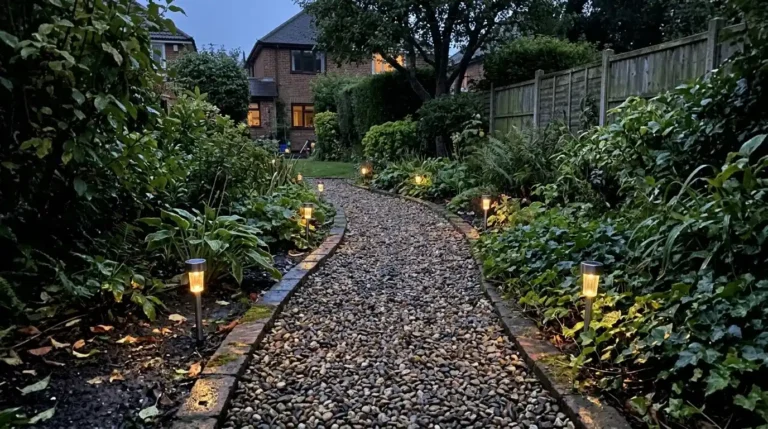
4. Use Angular Gravel Over a Proper Membrane
Gravel drains freely and needs only occasional raking, but only if you lay angular stone over a good membrane. Rounded pebbles roll underfoot and look untidy. Cheap installation means weeds within a couple of seasons, so budget for the base layer, not just the stone.
Angular gravel locks together and stays put. A depth of about 5 cm is typical, and installed cost often falls around £30-£60 per square metre. Add a firm edge, such as timber or steel, so it does not spread onto lawn or paths.
Even so, weeds will seed into leaf litter on top, so plan to rake or blow leaves off once or twice a season. Gravel is also awkward for wheeled items and heels, tricky on slopes, and can radiate heat in hot climates.
5. Plant Evergreen Shrubs and Ground Cover
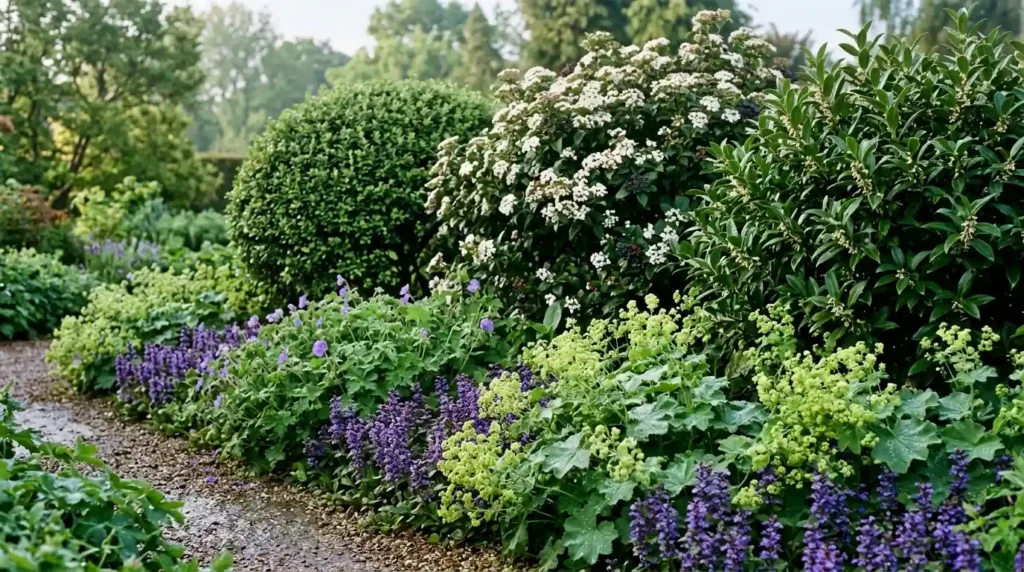
Evergreen shrubs and ground cover give year-round structure with little yearly effort. Pittosporum, viburnum tinus and sarcococca hold their leaves and need cutting back only every few years. Hardy geraniums, ajuga and alchemilla spread to smother weeds. Match every plant to your sun and soil.
Keep the palette simple. Five to ten varieties, planted in bigger groups, look calmer and cost less effort than a scattering of singles. This is where a minimal garden earns its name. Look for the RHS Award of Garden Merit label when shopping, which flags reliable varieties.
Be honest about timing. Ground cover typically takes two to three seasons to knit together, so expect some weeding and regular watering in the first summer. A shade plant in full sun will sulk however much you fuss over it.
6. Add Ornamental Grasses and Tough Perennials
Ornamental grasses and reliable perennials add movement and colour for one main cut a year. Miscanthus, pennisetum, calamagrostis and carex handle structure, while lavender, sedum, hardy geraniums and hostas add flower and leaf. Skip anything that needs staking, deadheading or dividing.
Most grasses want one tidy in late winter. For a handful of clumps, that is a quarter of an hour with shears. Lavender is the exception to “cut once”: a light trim after flowering keeps it from going woody and bare in the middle.
This tends to look wonderful from midsummer to autumn and a bit scruffy in late winter until you cut. Some grasses also self-seed freely, so pull unwanted seedlings while they are small.
7. Go Large With Pots and Raised Planters
Large containers need far less watering than small pots, because a bigger volume of compost dries out more slowly. Group a few big pots, or use raised planters where you have no soil. Add a timer-controlled drip line, and a dry fortnight stops being a problem.
A rough guide is to avoid pots much under 40 cm across for anything you want to leave alone in summer. A basic drip kit with a timer often costs £30-£80 and takes about an hour to fit. Raised beds at a comfortable height also save your back, which matters if this is your long-term home.
The catch: containers still need water in summer, frost can crack cheap pots, and a full large planter is heavy to move. Position them where you want them to stay.
8. Mulch Every Bare Patch of Soil
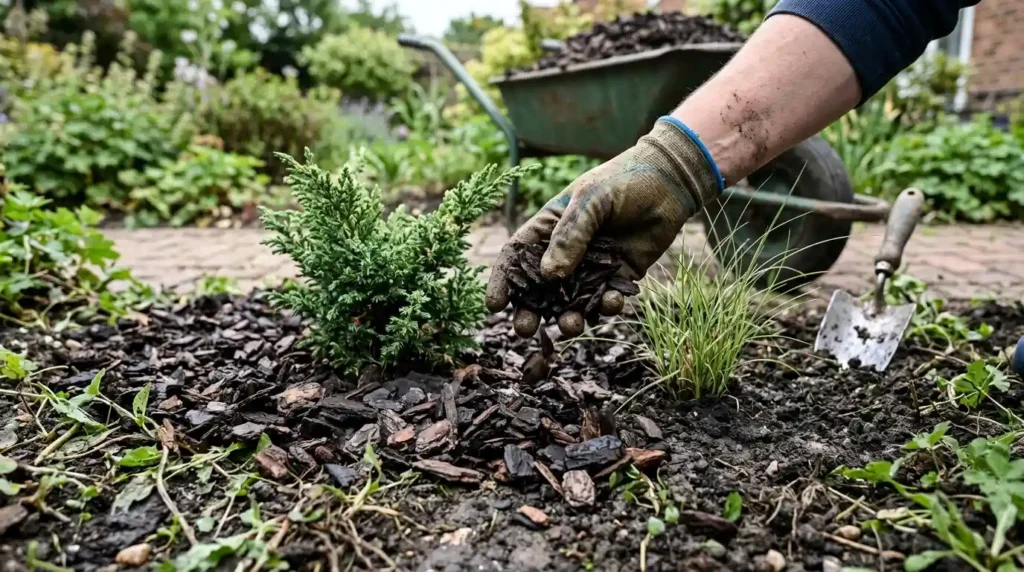
A thick mulch of bark, gravel or compost blocks light from weed seeds and locks moisture into the soil. That means far less weeding and watering. Apply 5 to 7 cm over damp, weeded soil and top it up every year or two.
Bulk bark often costs roughly £40-£100 per cubic metre delivered, and one cubic metre covers about 14 to 20 square metres at that depth. Spreading it takes a morning. Keep mulch clear of stems and trunks so they do not rot.
One expert tip: use a membrane under gravel, but not under bark. Fabric beneath bark tangles with the chippings, and weeds root into the mulch on top of it. Bare soil between plants is an open invitation, so cover it.
9. Sort Drainage, Edges and Layout First
Poor drainage quietly creates most of the maintenance in a garden. Standing water grows algae on paving, and waterlogged soil kills plants you then replace. Build falls into hard surfaces, add land drains in heavy clay, and simplify shapes so nothing needs strimming.
Patios usually need a gentle fall away from the house, commonly around 1 in 80. In wet, clay-heavy plots, land drains or permeable surfaces save repeated cleaning and replanting later. This is the cheapest moment to fix it, because retrofitting means lifting what you have just laid.
Layout counts too. Straight-sided beds and simple rectangles are quicker to keep tidy than fussy curves. Built-in storage gives cushions and tools a home, and an irrigation timer handles thirsty pots without daily effort.
10. Leave One Corner a Little Wild
A defined wild patch lowers effort and helps wildlife, as long as it has clear edges. Leave one raised bed or corner to self-seed, add a log pile or water butt, and clear the worst weeds once a year. Leaving a whole garden untouched lets brambles and ground elder win.
Clear boundaries are the trick. The wooden sides of a raised bed tell you, and everyone else, that this mess is intentional. To fill a bare gap cheaply, scatter green manure seed in late September, rake it over and let it grow through winter. It takes about ten minutes.
If you prefer a crisp, minimal garden, skip this one. It suits people who like a relaxed look and can live with a stray weed or fallen leaf.
How Much Do Low Maintenance Garden Ideas Cost?
Hard surfaces cost the most upfront and save the most time, while planting, mulch and containers cost the least. In the UK, a small garden makeover can run from a few hundred pounds for planting and mulch to several thousand for paving and decking. Prices vary widely by country and contractor.
| Feature | Approx. installed cost (GBP) | Typical build time | Yearly upkeep |
| Porcelain paving | £70-£150 per m² | 3-5 days for about 20 m² | One pressure wash |
| Composite decking | £100-£200 per m² | 2-4 days | Sweep and wash twice |
| Softwood decking (for comparison) | £50-£100 per m² | 2-4 days | Treat every 1-2 years |
| Angular gravel with membrane | £30-£60 per m² | 1-2 days | Rake and spot weed |
| Artificial grass | £40-£90 per m² | 1-3 days | Brush and rinse |
| Bark mulch | £40-£100 per m³ | Half a day | Top up every 1-2 years |
| Shrubs and grasses | £5-£30 per plant | A weekend | One trim or cut, water in year one |
Which Easy Garden Ideas Suit Your Space?
Match the idea to the problem. Shade, slopes, rented homes and dry climates each favour different first moves. Start with the biggest time drain in your garden, usually the lawn or the timber, rather than trying everything at once.
| Your garden | Best first moves |
| Small shady courtyard | Porcelain or gravel, evergreen shrubs, large pots, light-coloured walls to bounce light |
| Sunny family garden | Artificial grass or a simple mowing-edge lawn, gravel borders with grasses |
| Sloped garden | Raised decking or terraces, rock garden planting pockets to hold soil |
| Rented home | Big containers, mulch, movable furniture, nothing fixed |
| Hot, dry climate | Gravel, thick mulch, drought-tolerant local plants, drip irrigation |
Conclusion
The best low maintenance garden ideas remove the jobs that keep coming back: the lawn, the timber treatment, the algae, the weeds and the watering. Choose durable surfaces, plant fewer and tougher things, mulch the gaps, and get drainage right before anything else. Start with your biggest time drain and work outwards from there. Do that, and your garden becomes somewhere to sit, not somewhere to work.
FAQs
What is the lowest maintenance garden design?
A simple garden with hard surfaces, evergreen shrubs, ground cover and a few large pots. Keep the palette to five to ten plant types, mulch bare soil and build in good drainage. Remove the lawn if you can. That combination needs attention only a few times a year.
How much time does a low maintenance garden really take?
Once established, expect roughly an hour or two every few weeks in the growing season, plus a seasonal tidy and an annual clean of hard surfaces. The first year is busier because new plants need watering. A traditional lawn-and-borders garden can easily demand several hours weekly.
What is the cheapest way to make a garden low maintenance?
Mulch, ground cover and a few big shrubs cost the least and cut weeding and watering fast. Gravel over membrane is also affordable. Paving and decking cost more upfront but save the most time. Spread the work over seasons and do the messiest area first.
What can I use instead of grass?
Gravel, paving, decking, artificial grass or low ground cover such as pachysandra, vinca or ajuga. Ground cover suits shade better than grass does. Choose based on use: gravel for borders, paving for seating, artificial grass where children or pets need a soft surface.
Does gravel really stop weeds?
Gravel over a good membrane blocks most weeds from below, but seeds still land and root in leaf litter on top. Lay it about 5 cm deep in angular stone and rake or blow leaves off once or twice a season. Without the membrane, expect weeds within a couple of seasons.
Is artificial grass really low effort?
It removes mowing, feeding and moss treatment, so mostly yes. It still needs a good sub-base, occasional brushing and rinsing, and extra care with pets. It can get warm in strong sun and adds no soil life. Decide whether that trade suits your garden.
What are the best low maintenance plants for shade?
Sarcococca, hostas, hellebores, alchemilla and ajuga cope well with shade and need little attention once settled. Evergreens keep structure in winter. The rule is right plant, right place: a shade lover in shade thrives without fuss, while the same plant in sun struggles.
How long before a new low maintenance garden looks after itself?
Usually two to three growing seasons. Shrubs and ground cover need regular watering in the first summer, and you will pull weeds until the plants knit together. After that, mulch top-ups and one annual cut of grasses cover most of the routine work.