How to Design a Garden on a Budget: A Practical Guide

To design a garden on a budget, draw a scale plan, split your money by priority, and phase the work over a few seasons. Spend on structure and drainage first, then grow, divide and swap most of your plants. A good garden design budget rewards patience more than cash.
The real problem is the half-finished garden. People spend early on a patio or a trolley of plants, run out of money, and end up with a patch of bare soil and no clear plan. The steps below stop that from happening.
Step 1: Draw a Scale Plan and Split Your Budget
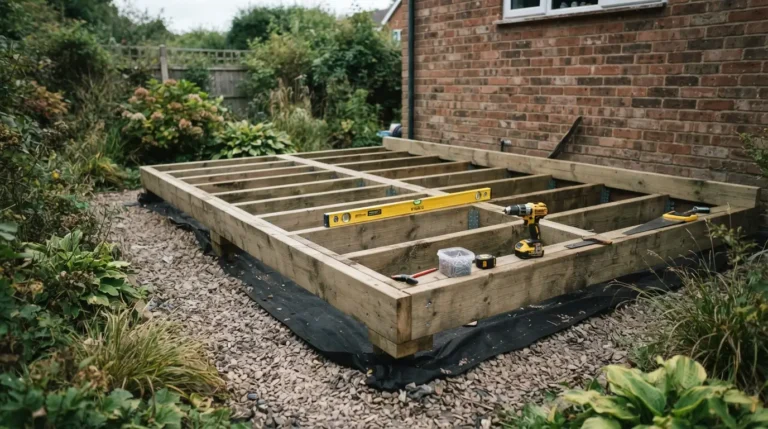
Draw your garden to scale on graph paper, list what you want in priority order, and divide your money before buying anything. A useful starting split is roughly 40 percent structure, 10 percent soil and drainage, 25 percent plants, 15 percent furniture and features, and 10 percent contingency.
| Budget area | Share (rule of thumb) | What it covers |
| Structure | About 40% | Paths, seating area, boundaries, edging |
| Soil and drainage | About 10% | Topsoil, compost, drainage fixes |
| Plants | About 25% | Shrubs, perennials, seed, bulbs |
| Furniture and features | About 15% | Table, lighting, pots, arch |
| Contingency | About 10% | Skip hire, delivery, surprises |
Treat this as a starting point rather than a rule. A wildlife or kitchen garden might spend more on soil and plants and far less on hard surfaces.
On the plan, mark zones for dining, play, growing and quiet sitting. A low fence, an arch, a row of pots or a hedge can divide them cheaply. Sketching first also shows you what to leave out, which is the cheapest saving of all.
Step 2: Test Your Soil, Drainage and Light
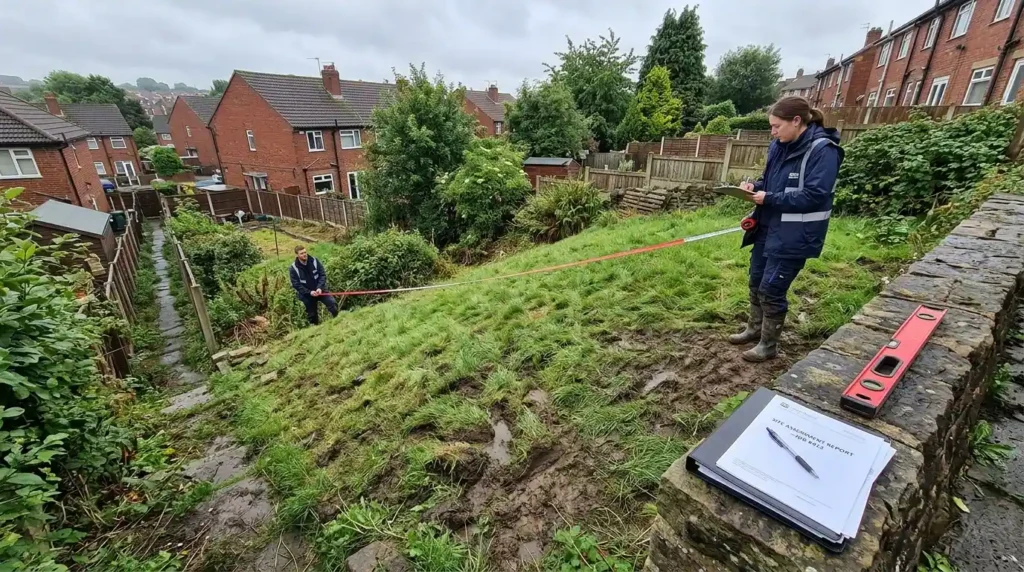
Check your soil, drainage and sunlight before choosing plants or surfaces, because fixing these later costs far more. Dig a test hole, fill it with water and see how fast it drains. Then note which areas get full sun, part shade or deep shade during a day.
Buying the wrong plant for the wrong spot is the most common way to waste money. A sun lover in deep shade will sulk or die, and you pay twice. If water sits in your test hole for hours, plan for raised beds or wet-tolerant planting rather than hoping for the best.
Access matters too. Professionals commonly add around 20 to 40 percent to quotes for steep slopes, poor drainage or tight access, so a difficult site is worth knowing about early. Prices vary by country and contractor.
Step 3: Phase the Work in the Right Order
Phase the work so structure comes first, planting second and extras last, and time your purchases to the seasons. Winter suits planning and groundworks, autumn to early spring suits bare-root plants, spring suits seed and lawn, and summer suits cuttings.
| Season (northern hemisphere) | Best budget jobs |
| Winter | Finalise the plan, do groundworks, plant bare-root hedging and trees |
| Spring | Sow seed and lawn, lay paths, buy small perennials |
| Summer | Take cuttings, build furniture, hunt end-of-season bargains |
| Autumn | Divide perennials, plant bulbs, spread mulch |
Southern hemisphere readers should shift the seasons by six months. If you’re hiring anyone, planning in winter can secure better prices for spring work than booking in the rush.
Be realistic about year one. A garden grown from seed and divisions looks thin at first. Annuals flower the same year, but perennial borders usually need two to three seasons to fill, and hedge whips take several years.
Step 4: Pick Low-Cost Surfaces and Boundaries First

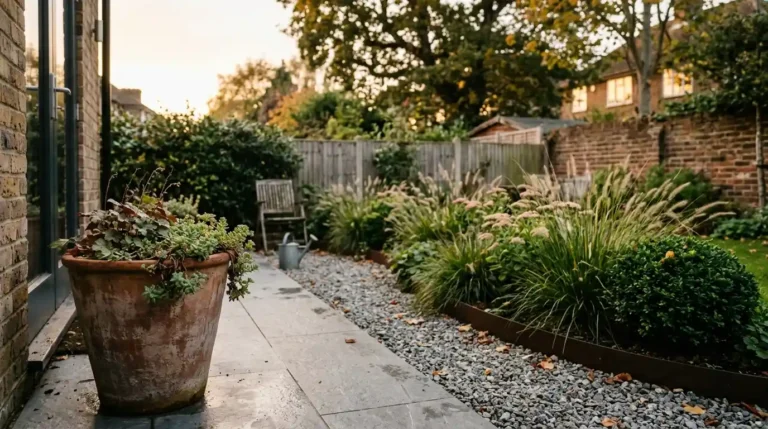
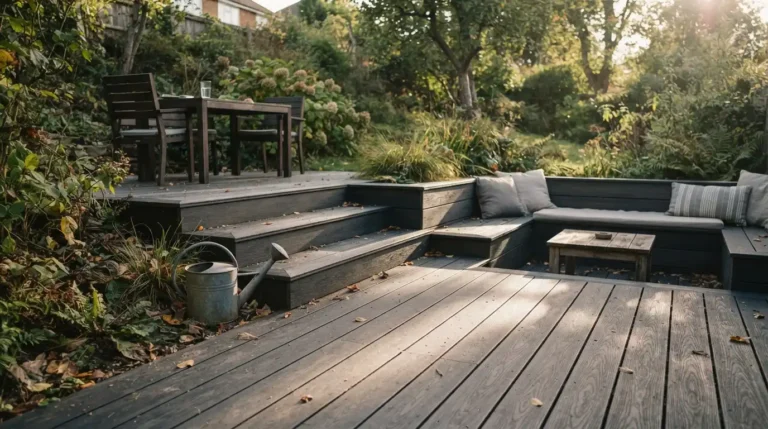
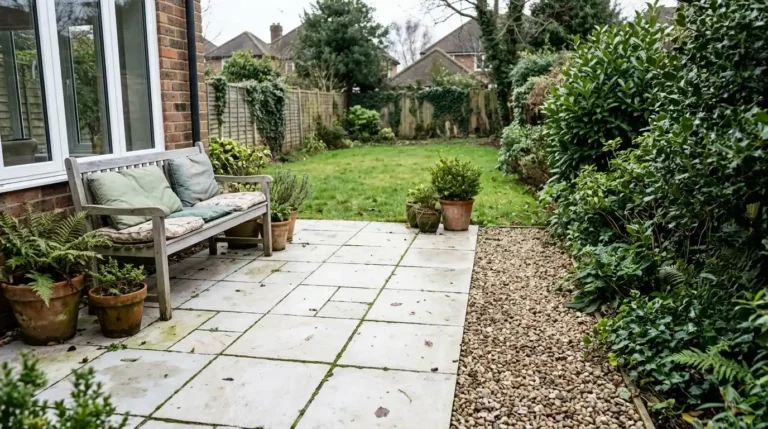
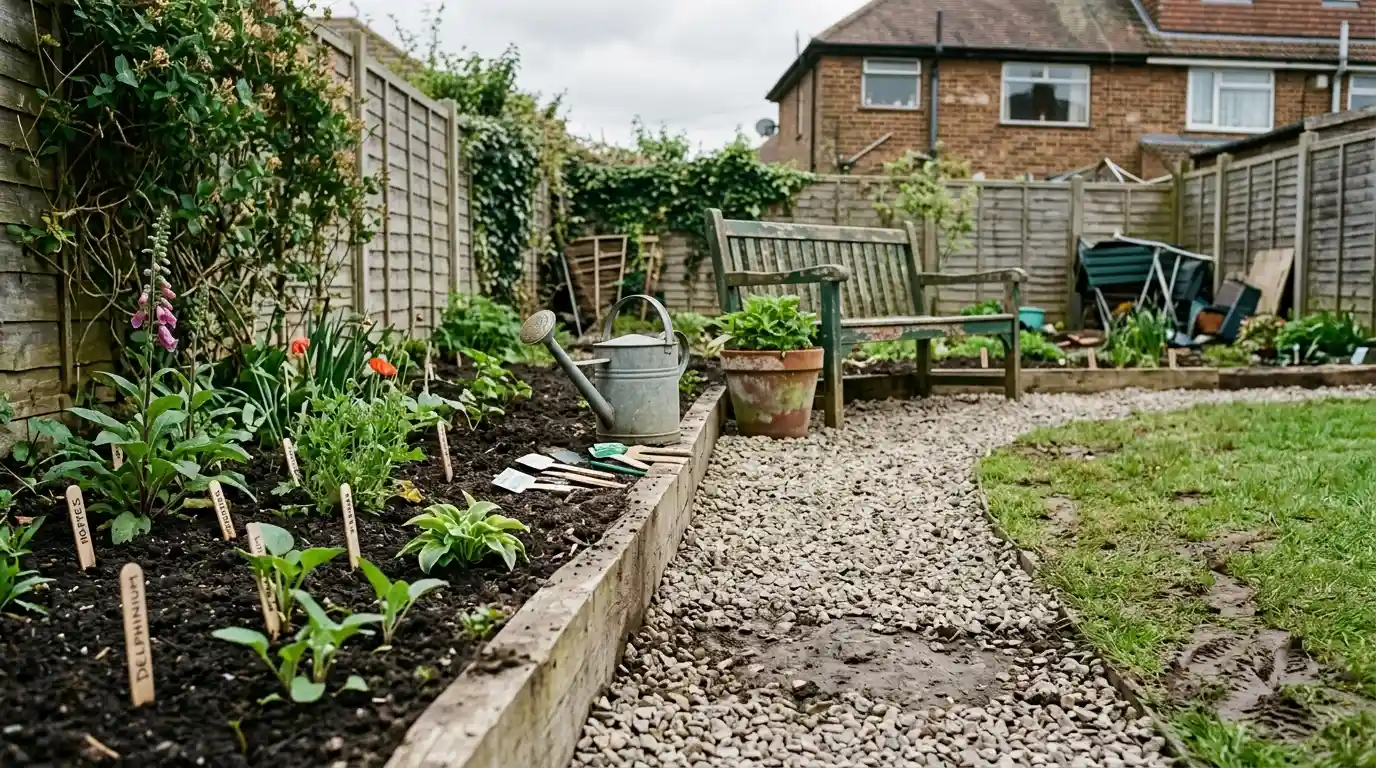
Choose the cheapest surface that suits each area’s use: lawn from seed, gravel or bark over membrane, then paving only where you need firm ground for a table. Leave decking and porcelain until last, as they are the priciest options.
These figures are rough UK estimates in GBP and vary by country, supplier and labour.
| Surface | Approx. cost per m² | Honest trade-off |
| Lawn from seed | £1 to £3 (materials) | Slow to establish, needs mowing |
| Turf | £5 to £12 (supplied) | Needs good ground prep and watering |
| Gravel over membrane | £15 to £35 (DIY materials) | Weeds still grow through cheap membrane |
| Bark or wood chip path | £8 to £20 (bulk) | Rots down, top up every year or two |
| Paving (DIY) | £40 to £90 plus base | Weak sub-base means sinking slabs |
| Paving or decking (installed) | £70 to £150+ | Highest cost, lasts longest |
Permeable options such as gravel or slate laid on soil let rain drain away, which also helps with wet patches. Whatever you choose, spend properly on the base layer, since a poor base ruins even a cheap surface.
For boundaries, paint tired fences a deep colour and grow climbers on trellis. It’s far cheaper than replacing panels and it softens the whole space.
Step 5: Fill Your Beds Almost for Free
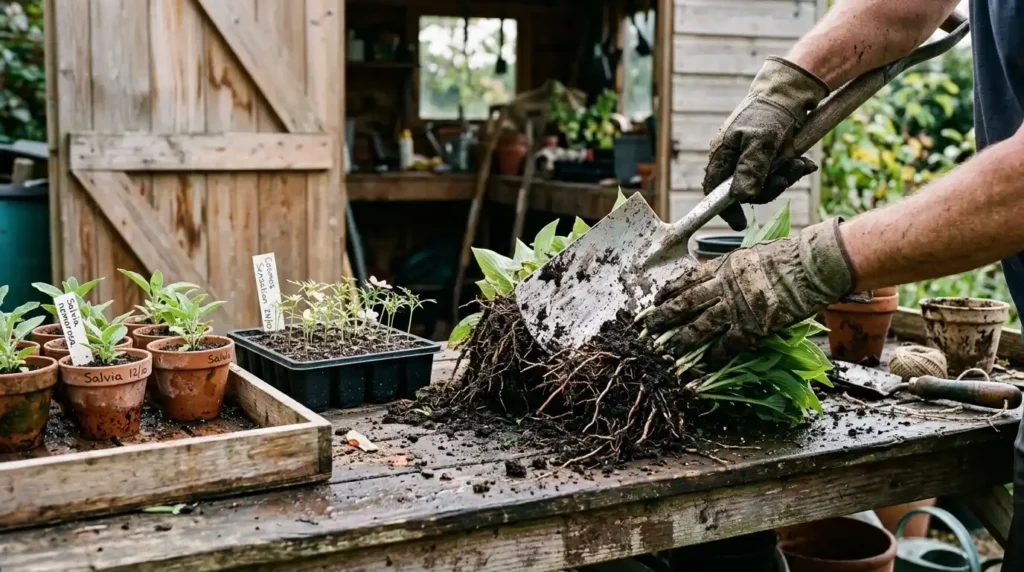
Grow or swap most of your plants rather than buying them. Seed, bulbs, cuttings and divisions cost a fraction of nursery plants, and this is the single biggest saving in a low cost garden design.
- Seed: Cosmos is easy and flowers until the first frosts. Sow indoors, then plant out once frost risk has passed.
- Bulbs: They come back year after year, so they repay the outlay.
- Cuttings: Late spring to early summer suits salvia, herbs and many shrubs. Use sharp scissors, remove the lower leaves and pot into compost.
- Divisions: Hostas, irises and bergenia can be split in autumn to double your stock.
- Swaps: Neighbours, seed swaps, allotments and community plant sales often give away spares.
A few warnings. Running bamboo spreads aggressively, so plant it in a sunk pot. Avoid willow cuttings near buildings because the roots are vigorous. If you collect wild seed, take only a little, get permission, and never uproot wild plants.
Step 6: Buy the Plants You Can’t Grow Smartly
When you must buy plants, buy small and buy in season. Nine-centimetre pots and plug plants cost far less than larger pots, bare-root hedging is cheaper than potted, and clearance bays offer bargains if you check plant health first.
A 2-litre plant can cost two or three times more than a small version of the same thing. Mix a few larger plants with lots of small ones so the border looks established sooner. Plugs and clearance stock may need a season of nursing before they earn a place, so only buy ones you truly want.
Always read the label for final height and spread. Some conifers and trees grow far taller than a small garden can handle, which turns a cheap buy into an expensive removal. For a low-cost backbone, choose perennials and a few evergreen shrubs, which come back every year and hold the garden together in winter.
Step 7: Furnish and Light the Space Second-Hand
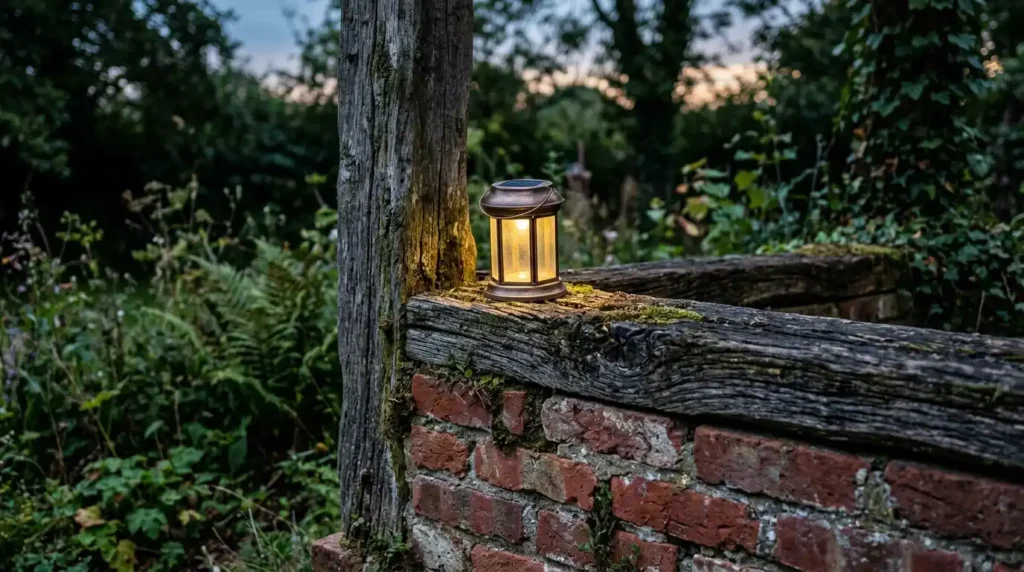
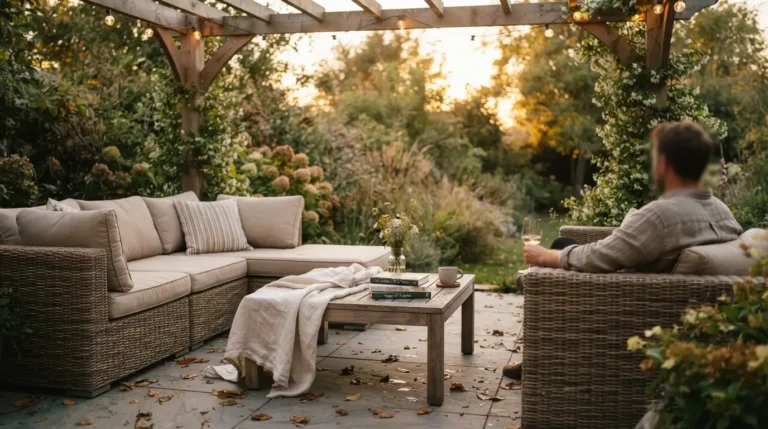
Buy furniture second-hand, build features from reclaimed materials, and use solar lights for atmosphere. Online marketplaces, reclaim yards and charity shops often have solid tables, benches and pots at a fraction of retail, and solar lights need no electrician.
Sanding and re-oiling a tired hardwood bench takes an afternoon and looks smart. Pallets make good planters and raised beds, but choose heat-treated ones and avoid any stamped MB, which indicates a chemical treatment. A small DIY water feature from a planter, stones and a pump adds sound for very little.
Solar lights are dimmer than mains lighting and weak in winter. Most homeowners find them perfect for paths and seating areas but not for bright task lighting.
Step 8: Cut Running Costs With Mulch, Compost and Water
Mulch, home compost and stored rainwater cut watering, weeding and feeding costs for years. Spread 5 to 8 centimetres of mulch on damp soil, start a compost bin, and fit a water butt to a downpipe.
Many councils offer free or subsidised compost bins, so it’s worth a call. A bin started now typically gives usable compost in about a year. Buy soil and mulch in bulk rather than small bags, and refresh mulch each autumn. Grouping plants with similar water needs also reduces hose time.
Where Should You Never Cut Corners?
Never cut corners on drainage, groundwork, boundaries, timber quality and any structural or electrical work. These are hard and costly to redo, while planting and decoration are easy to improve later, so this is where a real garden design budget should be protected.
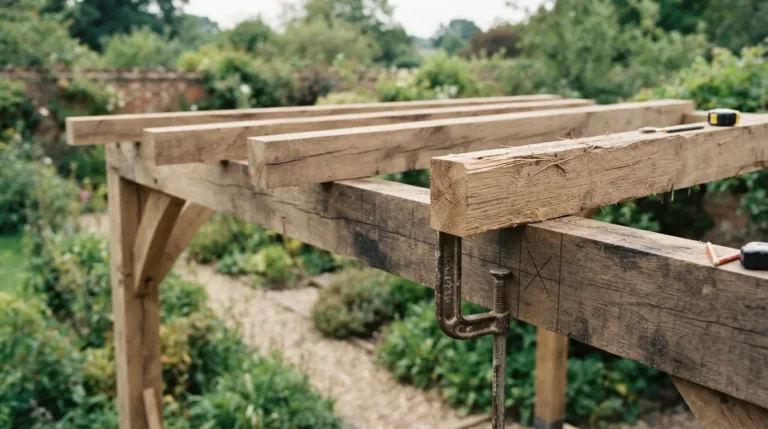
Cheap membrane under gravel, untreated timber for raised beds and thin sleepers all tend to fail within a few years. Pergolas, retaining walls, irrigation, electrics and big tree work are better handled by professionals. Also budget for the boring extras: skip hire, delivery charges and tool hire. That 10 percent contingency exists for exactly these.
Conclusion
Learning how to design a garden on a budget is mostly about order and patience. Plan to scale, protect your spending on drainage and structure, and grow or swap most of your plants. Add furniture and lighting last, second-hand where you can. A phased, affordable garden built this way looks complete at every stage and gets better each year.
FAQs
How much should I spend on a garden makeover?
It varies by country and garden size. A basic refresh with lawn repair, a new bed, seed and mulch can cost a few hundred pounds, while adding a small patio, fencing and shrubs commonly runs into the low thousands. Set your total first, then use the split in Step 1.
What is the cheapest way to fill a garden with plants?
Grow from seed, take cuttings, divide existing perennials and swap with neighbours. These cost a fraction of nursery prices, but they take patience.
What is the cheapest ground cover?
Lawn from seed is usually cheapest, followed by bark or gravel over membrane. Paving and decking cost the most.
Can I redesign a garden in stages?
Yes, and it’s often smarter. Do structure and drainage first, then planting, then furniture and features, so each stage looks finished.
Is a garden designer worth it on a tight budget?
A plan-only service or one-off consultation can prevent expensive mistakes without paying for a full design and build. Fees vary widely, so ask whether they charge hourly, fixed or as a percentage.
How do I make a small garden feel bigger cheaply?
Paint boundaries a dark colour, grow climbers up walls, place a seat or pot at the far end of a path, and keep the design simple with fewer materials.
Which jobs need a professional?
Pergolas, retaining walls, irrigation, electrics, major drainage and large tree work usually do. Planting, mulching, small paths and simple raised beds are realistic DIY jobs.
How do I avoid hidden costs?
Get itemised quotes, allow for waste removal and delivery, and keep a contingency. Sloping or hard-to-access sites often cost noticeably more.
Are cheap garden ideas like pallet furniture safe and durable?
They can be, if you choose heat-treated pallets, sand them and seal them. Expect shorter life than quality hardwood, and re-treat them each year.