12 Garden Fence Ideas to Define and Protect Your Outdoor Space

A good garden fence does two jobs at once: it marks where your space ends and holds its own as a design feature, not just a backdrop. The right garden fence ideas can turn a plain boundary into the best-looking part of the plot, whether that means slatted timber, a trellis dressed in clematis, or a run of woven willow. The trouble most people run into is choosing from dozens of fence design options without knowing what actually holds up, what it costs, and what needs looking after two years down the line.
That’s the gap this list fills. Each idea below comes with a real sense of cost, upkeep, and where it genuinely earns its place, not just how it photographs on day one.
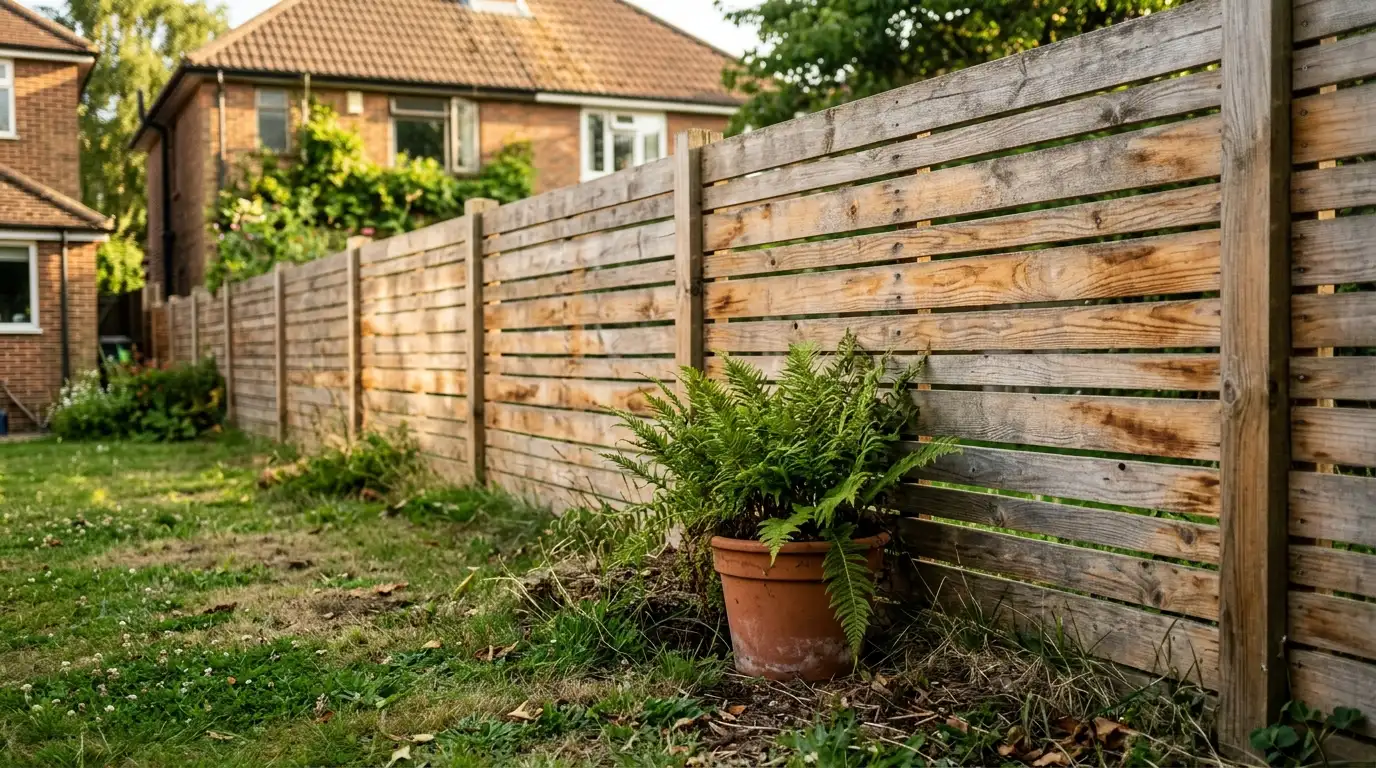
1. Horizontal Slatted Fencing for a Modern Boundary
Horizontal slatted fencing has become the default choice for anyone wanting a contemporary look, and it earns that popularity honestly. The wide, even boards create a clean backdrop that makes planting look more considered, and it works equally well in a small courtyard or a long back garden.
Cedar and thermally treated pine both hold up well outdoors, though cedar carries a higher price tag and needs less frequent treatment. A good rule of thumb is to expect a re-oil or re-stain every two to three years to stop the boards greying, more often in a wet or coastal climate. Skipping this maintenance won’t cause the fence to fail quickly, but the warm tone will fade to silver-grey within a single summer if left untreated.
2. A Trellis-Topped Fence for Extra Height and Light Privacy
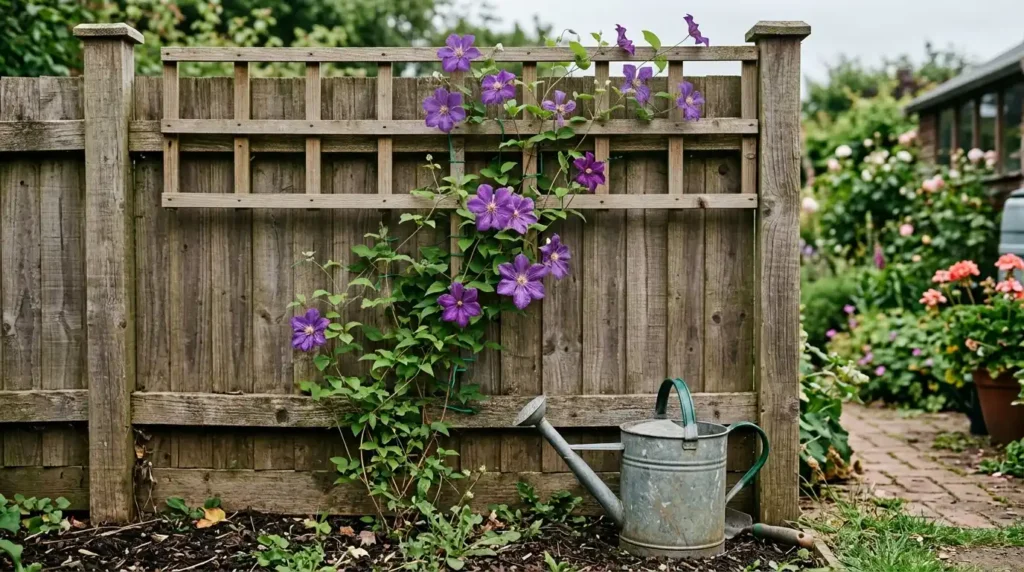
Adding a trellis section to the top of an existing fence is one of the most cost-effective ways to gain height and privacy without a full rebuild. It also solves the problem of a fence that feels heavy or boxed-in, since the open lattice lets light and air through even as it screens sightlines from a neighbouring window or upstairs balcony.
Before adding a topper, it’s worth checking local rules on boundary height. In the UK, fences over two metres generally need planning permission, and many other countries apply similar limits, so measure the total height including the trellis before you buy materials. Pair the trellis with a fast climber like clematis or jasmine and expect full coverage within one to two growing seasons.
3. A Living Hedge Boundary Instead of Panels
A hedge solves the fence question entirely by replacing it. Box, privet, and yew all hold a tidy shape with two trims a year, while a looser hedge of beech or hornbeam gives a softer, more informal edge that still screens effectively once established.
The honest trade-off is time. A hedge takes several years to reach real screening height, so it suits a garden where you’re planning for the long term rather than an immediate fix. It also asks for more than a fence ever will: regular feeding, trimming, and watering in the first two years while roots establish. What you get in return is a boundary that never needs painting and only gets better looking with age.
4. Woven Willow or Hazel Hurdles for a Cottage Look
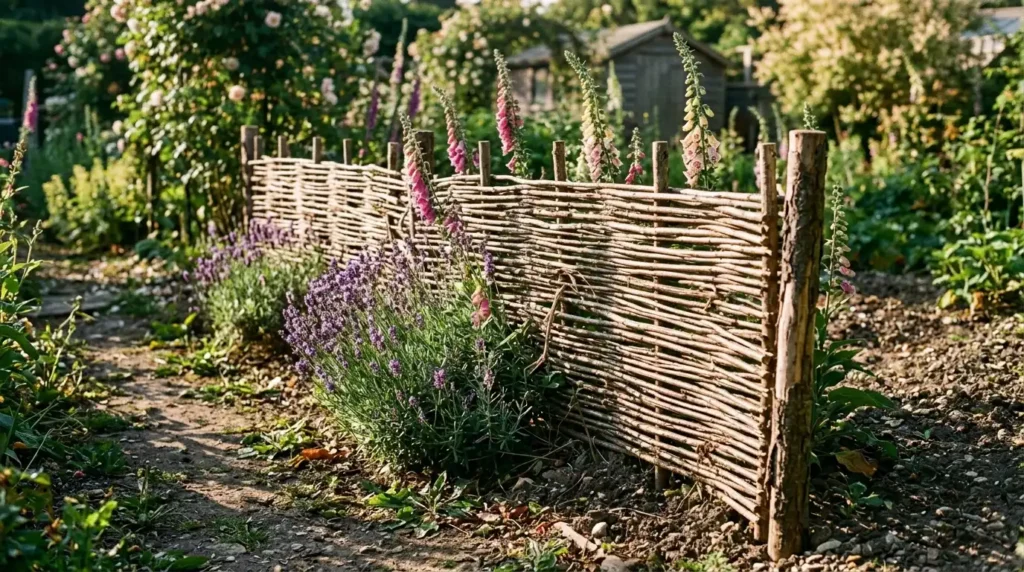
Woven willow and hazel hurdles bring a texture that no manufactured panel can match, and they suit a cottage or naturalistic garden far better than flat timber ever will. Left to weather, they take on a soft grey tone that sits comfortably against planting.
The catch is lifespan. Untreated willow screening typically lasts somewhere between five and ten years depending on exposure to rain, and it’s rarely worth trying to repair a section once it starts to sag, since the weave degrades as a whole rather than in patches. Treat this as a decorative, mid-term boundary rather than a permanent one, and budget for replacement panels down the line.
5. Corten Steel or Laser-Cut Metal Panels for a Contemporary Statement
Corten steel develops a rust-coloured patina over its first year outdoors, and that controlled weathering is exactly the appeal. It reads as intentional and architectural rather than neglected, and it pairs particularly well with minimal planting schemes and gravel or concrete hard landscaping.
Laser-cut steel or aluminium panels offer the same modern edge with a customisable pattern, letting light filter through in a way that solid fencing can’t. Both options sit at the higher end of the price scale compared with timber, but neither needs painting or staining, which claws back some of that cost over a ten-year span. The main thing to check before committing is how the panel is fixed to the posts, since a poorly mounted metal panel can rattle in strong wind.
6. A Painted Accent Panel to Break Up a Long Run
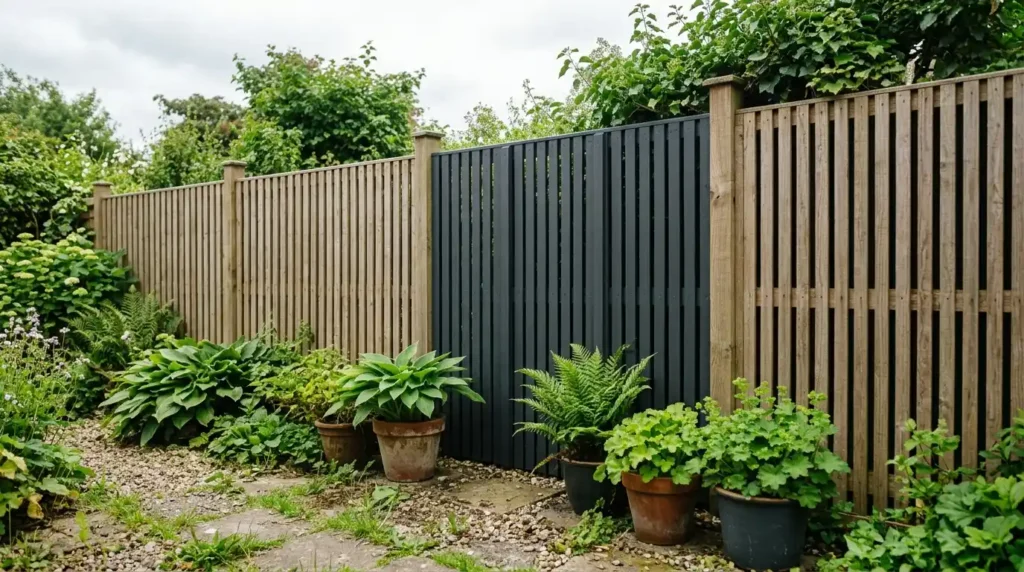
A single painted panel or short run of colour breaks up a long, uniform fence line without the cost or commitment of repainting the whole boundary. Deep green, charcoal, and terracotta all read well against greenery, and a mural or bold geometric pattern works especially well behind a seating area where it becomes the backdrop rather than competing with the whole garden.
The main practical point competitors tend to skip is prep. Bare or previously stained timber needs a proper clean and a compatible exterior masonry or fence paint, not leftover wall paint, or the finish will peel within a season. Expect to repaint an accent section every three to four years to keep the colour looking sharp.
7. Wood and Wire Fencing for Vegetable Beds and Play Areas
Wood and wire fencing, a simple timber frame filled with galvanised mesh, is one of the most underrated fence design choices for a working garden. It’s inexpensive relative to solid panelling, quick to put up, and effective at keeping pets contained or deterring rabbits from a vegetable bed without blocking light from reaching crops.
It won’t offer privacy, and it’s not the fence to choose if screening from neighbours is the priority. But for defining a kitchen garden, a chicken run, or a play area where visibility actually matters for safety, it does the job better than a solid alternative, and a painted post or capped rail can lift it well beyond purely functional.
8. A Fence Topper Instead of a Full Rebuild
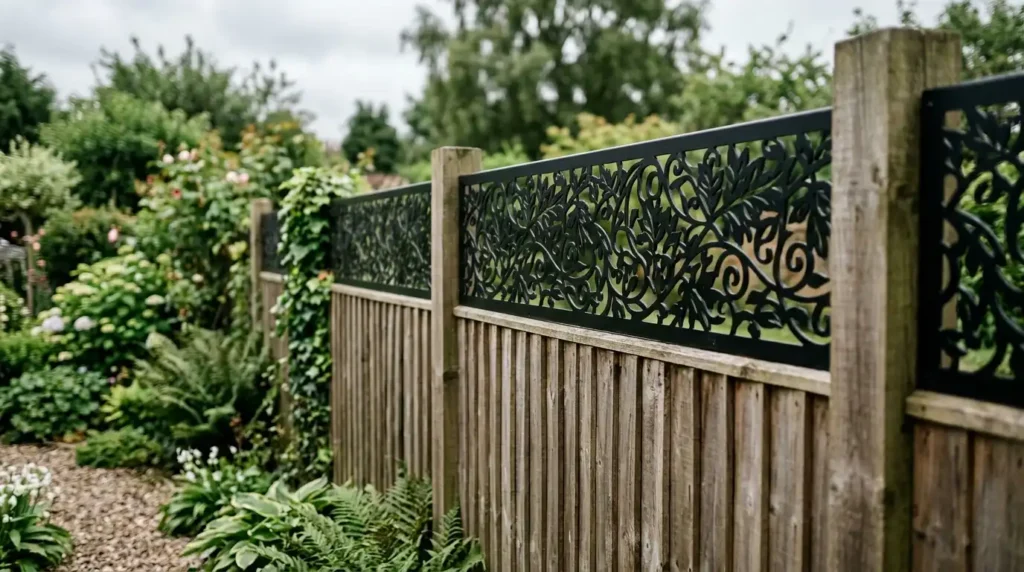
When an existing fence is structurally sound but just needs more height, privacy, or personality, a topper is the cheapest fix available. Solid wooden battens add height and block sightlines, decorative metal toppers add a finished, more premium look, and a natural screening roll in willow or bark softens a tired panel without replacing it.
This is genuinely one of the best value upgrades on this list because it works with what’s already there. The trade-off is that a topper is only as strong as the fence underneath it, so it’s worth checking posts and panels for rot before adding weight or height, particularly ahead of the winter storm season when wind load on a taller fence increases noticeably.
9. A Classic Picket Fence for Cottage and Front Gardens
A picket fence remains the clearest way to signal a boundary without shutting a garden off, which is exactly why it suits front gardens so well. Low, evenly spaced pickets keep sightlines open for security while still giving a defined edge to flower borders.
Painted white or a soft heritage colour, a picket fence needs the same repaint cycle as any painted timber, roughly every three to four years, and pressure-treated timber will outlast basic softwood by a wide margin for a modest price difference. It’s not the fence to choose if privacy is the goal, but for character and kerb appeal on a front boundary, few other options compete.
10. Wildlife-Proof Mesh Fencing for Rural Gardens
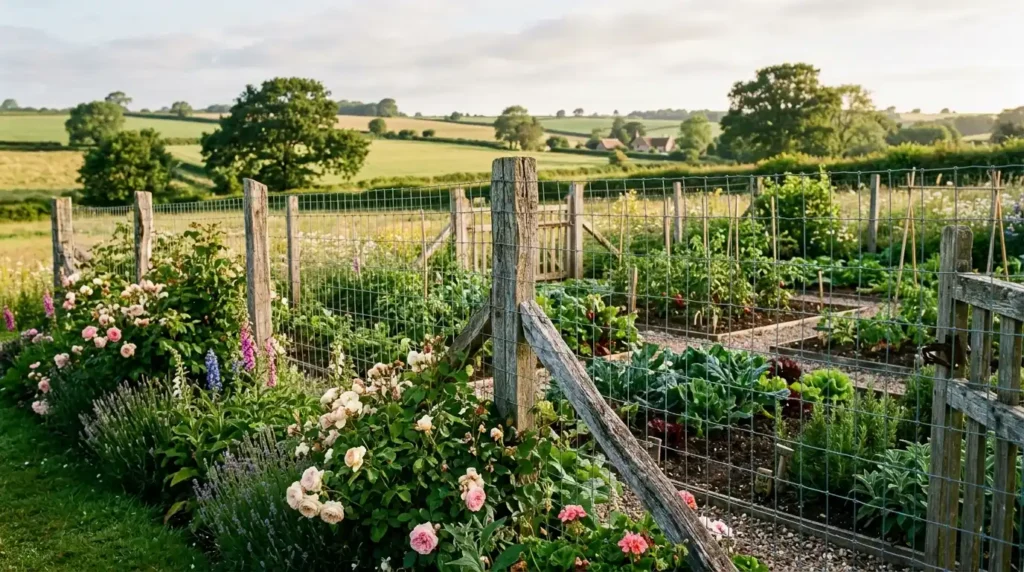
In gardens bordering countryside, a dedicated wire mesh fence on timber or metal posts is the most practical way to keep deer and rabbits away from vegetable beds and young planting without the cost of a full timber boundary. Positioning it a little further back into the garden, rather than right on the visible boundary line, keeps it from becoming the dominant visual feature.
This is a purely functional choice and one of the few on this list where looks genuinely take second place to protection. Expect galvanised or plastic-coated mesh to outlast a basic wooden fence by several years with essentially no maintenance beyond checking for gaps after storms.
11. Mixing Solid and Slatted Sections for Balanced Privacy
Alternating solid panels with slatted or trellis sections along the same fence line solves the common complaint that a fully solid boundary feels heavy and closes a garden in. Solid sections work well near a patio or anywhere overlooked directly, while open sections keep the rest of the boundary feeling connected to the wider garden.
This approach also spreads cost, since slatted or trellis panels are typically cheaper per metre than solid privacy panels. It takes a bit more planning to get the proportions right, and it’s worth sketching the run before ordering materials so the mix doesn’t end up looking accidental rather than designed.
12. Built-In Planters and Benches Along the Fence Line
Running planters or a bench along the base of a fence turns dead space at the boundary into something the garden actually uses. Planters soften a solid run with greenery at eye level, while a built-in bench against a fence makes a narrow garden feel more finished without eating into the lawn.
This works particularly well in smaller plots where every metre needs to do more than one job. The one thing to plan for is drainage: planters fixed directly against timber fencing should sit on a small gap or feet to stop constant moisture from rotting the boards behind them.
How Much Does a Garden Fence Cost?
Costs vary widely by material, height, and region, so treat the figures below as a general guide rather than a quote.
| Fence Type | Approximate Cost per Linear Metre (GBP) | Typical Lifespan |
| Wood and wire mesh | £15 to £30 | 10 to 15 years |
| Basic softwood panel | £25 to £45 | 10 to 15 years |
| Cedar or hardwood slatted | £50 to £90 | 20 to 25 years |
| Composite panel | £60 to £100 | 25 to 30 years, low maintenance |
| Willow or hazel hurdle | £30 to £55 | 5 to 10 years |
| Wrought iron or metal | £70 to £150 | 25 years or more |
| Corten steel or laser-cut panel | £100 to £200 | 30 years or more |
Prices vary by country and supplier, and installation labour typically adds a similar amount again if you’re not fitting it yourself. Composite and metal options cost more upfront but need little beyond an occasional wash, while any painted or stained timber carries an ongoing cost in time and product every few years.
Conclusion
The best garden fence idea is the one that matches how you actually use the space, not just how it looks in a photograph. A slatted modern boundary, a living hedge, or a simple wood and wire run can all count as good garden fencing when they solve the right problem for your plot. Start with what the fence needs to do, privacy, containment, or definition, then let the style follow from there. Get that order right and the fence stops being an afterthought and becomes one of the best-looking decisions in the whole garden.
FAQs
What is the best fence for a garden?
There isn’t a single best option. Slatted timber or composite suits most gardens wanting privacy and a modern look, a hedge suits those planning long term, and wood and wire suits vegetable beds or pet containment where light matters more than screening.
What is the cheapest garden fence idea?
Wood and wire mesh and basic softwood panels sit at the lower end of the cost scale. A fence topper is also a low-cost way to improve an existing fence without a full rebuild.
How tall can a garden fence be?
In the UK, a fence up to two metres generally doesn’t need planning permission, dropping to one metre if it borders a road. Rules differ elsewhere, so check local regulations before adding height with a topper or trellis.
How do I make my garden fence more private?
Add a trellis topper with a fast-growing climber, mix in solid panel sections where you’re overlooked directly, or choose a taller slatted design with narrow gaps between boards.
What plants grow well on a garden fence?
Clematis, jasmine, and honeysuckle are reliable, fast-covering choices for trellis or wire supports, while climbing roses suit wrought iron and metal frames particularly well.
How often does a wooden fence need to be treated?
Most softwood fences need re-staining or re-oiling every two to three years to prevent greying and slow down rot, though hardwoods like cedar can often stretch to three or four years between treatments.
Is composite fencing worth the extra cost?
For most homeowners planning to stay put for a decade or more, yes. The higher upfront cost is usually offset by avoiding repeated staining and a longer lifespan than basic timber.
Who is responsible for a boundary fence shared with a neighbour?
This depends on property deeds and local law rather than a fixed rule, so check your title documents or land registry record before assuming which side is yours to maintain.