12 Pergola Ideas to Create a Shaded and Stylish Garden Feature

The best pergola ideas start with how you actually use your garden, not with what looks nice in a photo. A well-chosen pergola gives you dappled shade, a defined seating zone, and a proper reason to spend more time outdoors, whether that’s a fully roofed timber structure or a simple frame dressed in climbing plants. Below are twelve pergola ideas worth considering, along with the practical trade-offs that most inspiration boards leave out.
Here’s the problem with a lot of garden pergola content: it shows you a beautiful finished space and never mentions that the pergola is too big for the patio, the roof blocks light from the kitchen window, or the wisteria needed three years to look like that. A pergola can look brilliant in a photograph and still be the wrong choice for your actual garden. So before you fall for the nearest Pinterest board, it’s worth understanding what each style is genuinely good for.
What Is a Pergola Actually Good For?
A pergola’s main job is to create partial shade and structure without fully enclosing the space. It softens harsh sun, gives some protection from light rain, and provides a frame for climbing plants or lighting. Unlike a solid roof extension, a pergola is meant to stay open and airy, letting light and breeze filter through rather than blocking them out completely.
Most homeowners find that a pergola earns its keep in two ways: it makes an outdoor area usable for more of the year, and it gives an otherwise flat garden a sense of a “room”. That second point matters more than people expect. A patio with a pergola over it reads as a destination. The same patio without one just reads as paving.
How Do You Choose the Right Pergola Design for Your Garden?
The right pergola design depends on the problem you’re solving, not just the style you like. A bare patio needs shape and structure. An overlooked garden needs privacy more than shade. A rainy climate needs a solid or louvred roof rather than an open frame. Start with the problem, then pick the design.
| Your garden situation | Pergola idea that solves it |
| Small patio with no defined seating area | Compact 3m x 3m pergola with light furniture |
| Overlooked garden or close neighbours | Pergola with side panels or dense planting |
| Wants shade some days, sun on others | Louvred pergola with adjustable slats |
| Frequent rain but you still want daylight | Polycarbonate roof pergola |
| Large garden with room to spare | 4m x 4m or bigger dining and lounge layout |
| Tight budget, renting, or testing the idea | Fabric sail, bamboo screen, or DIY shade cloth |
With that framework in mind, here are twelve pergola ideas worth building your shortlist from.
1. A Fully Roofed Wooden Pergola for Year-Round Shelter
A solid roofed pergola, built in timber, gives you genuine weather protection rather than just dappled shade. It suits anyone who wants to use their garden regardless of the forecast, and it doubles as a sturdy base for hanging lights or a ceiling fan.
The trade-off is upkeep. A wooden pergola typically needs re-staining or oiling every one to two years to stop the timber greying and to protect against rot, and untreated softwood in a damp UK garden can start showing weathering within a single season. Pressure-treated softwood is the more affordable route, generally landing somewhere in the low hundreds of pounds for a basic kit, while hardwood options like oak run considerably higher, often into four figures once you factor in a solid roof. It’s a good rule of thumb to budget for maintenance costs on top of the purchase price, not just the initial outlay.
2. A Louvred Pergola for Adjustable Sun and Shade Control
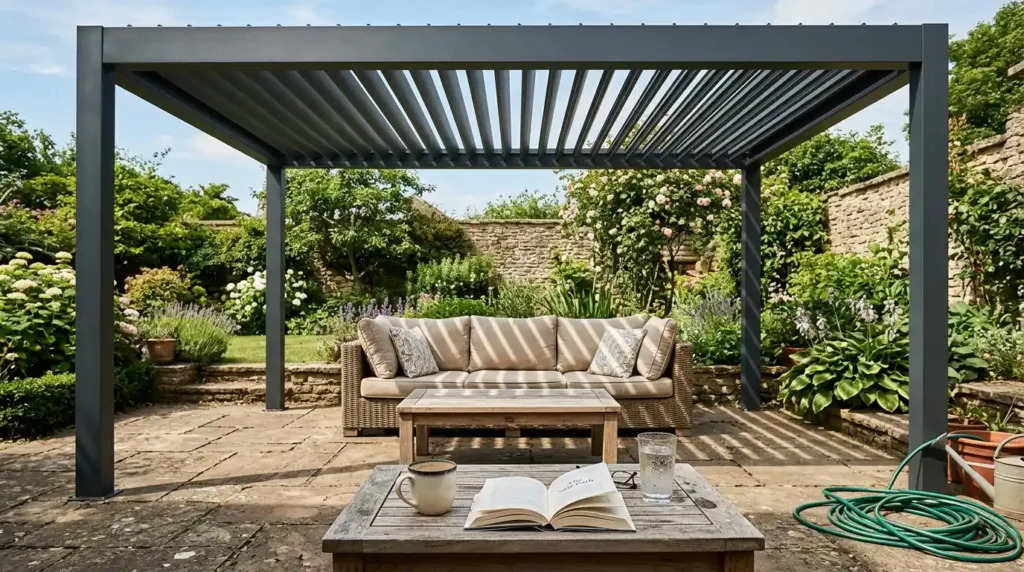
Louvred pergolas use rotating roof slats that open for sun and close for shade or light rain, usually operated manually or via a remote-controlled motor. This is the pergola design for anyone who wants flexibility rather than committing to one fixed level of coverage.
This tends to look sleek in photos, and it genuinely performs well day to day, but it sits at the premium end of pergola ideas, often several times the cost of a basic fixed-roof structure once you add motorisation and drainage channels. Most manufacturers recommend an annual check of the motor mechanism and seals, since louvred systems have more moving parts than a static roof and are the first thing to develop a fault if left unchecked for years.
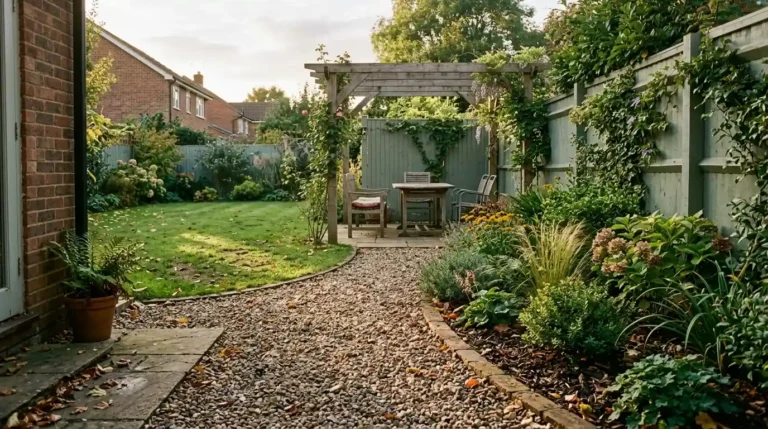
3. A Pergola With Climbing Plants for a Natural Green Canopy
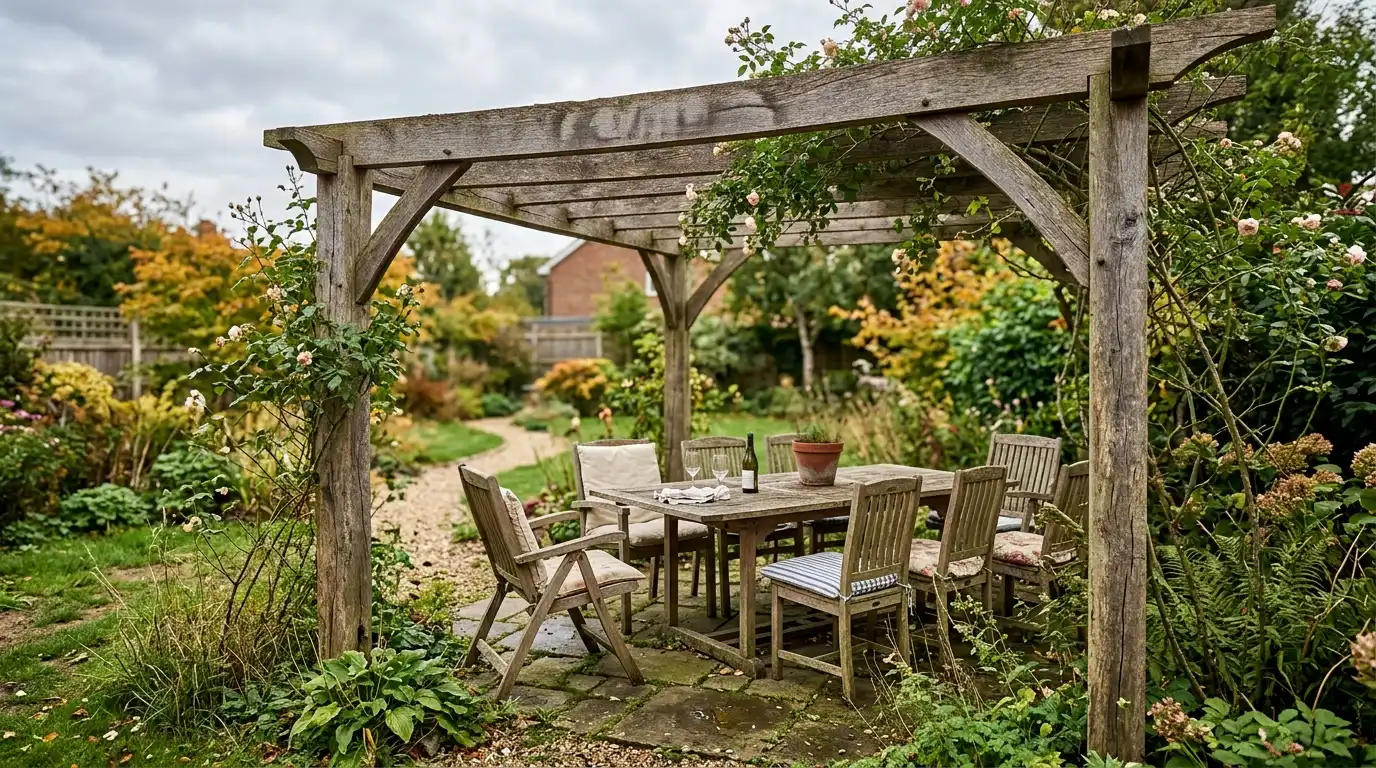
Growing climbers like wisteria, roses, jasmine, or honeysuckle over an open pergola frame is one of the most romantic garden pergola ideas, and it comes with genuine benefits: natural shade that shifts with the seasons, scent near your seating area, and a softer look than any fabric or hard roof can achieve.
The honest downside is patience. This is not instant shade. A young wisteria can take several years to properly cover a structure, and it needs a genuinely strong frame plus regular pruning once established, since mature growth gets heavy and can strain a lightweight pergola. Roses and jasmine are less demanding but still need training along the beams. If you want a finished look while the plants establish, dress the structure with lighting, planters, and furniture in the meantime rather than leaving it bare.
4. A Retractable Canopy Pergola for Flexible Shade
A retractable canopy pergola lets you slide the roof open on a nice day and close it when the sun gets too intense or a shower rolls in. It’s a practical middle ground between a fully open frame and a permanent solid roof, and it works particularly well for anyone who can’t decide between sun and shade.
Fabric canopies need a bit of reality-checking though. They’re genuinely good for seasonal shade and light rain, but they’re not a substitute for a solid roof in heavy or driving rain, and most fabrics benefit from being retracted overnight or during storms to extend their lifespan. Expect to replace or recover the fabric every several years depending on UV exposure and how exposed the garden is.
5. A Pergola With Side Panels or Screens for Privacy and Wind Protection
If your garden is overlooked or exposed to wind, a pergola with drop sides or fixed screens does more for comfort than the roof itself. Side panels block direct sightlines from neighbouring windows and cut down the wind that makes an otherwise shaded seating area feel unusable.
A common mistake is enclosing every side, which can make a small pergola feel boxed in rather than sheltered. A better approach is screening only the side that actually needs it, whether that’s the neighbour-facing side or the direction the wind usually comes from, and leaving at least one side open so the space still feels connected to the rest of the garden.
6. A Compact 3m x 3m Pergola for a Small Patio
For smaller gardens, a compact pergola around 3m x 3m is usually the better call than something larger, even if a bigger structure looks more impressive in a catalogue photo. Oversizing a pergola on a small patio makes the whole garden feel more cramped, not less.
This size suits two chairs and a small table, or a compact bistro set, rather than a large dining table with chairs pulled fully out. If you’re tempted to squeeze in a bigger dining set, measure with the chairs pulled out from the table, not tucked in, since that’s where most sizing mistakes happen.
7. A Wall-Mounted or Lean-To Pergola for Narrow Gardens
A wall-mounted pergola attaches directly to the house and uses the wall as one side of its support, making it a smart pergola design for narrow gardens, terraced houses, or side returns where a freestanding structure would eat up too much space.
Because it sits right against the house, positioning matters for indoor light too. A dark, solid roof mounted close to bifold doors or a kitchen window can noticeably dim the room behind it, so a clearer polycarbonate or louvred roof is often the better fit for anything attached directly to the house.
8. A Polycarbonate Roof Pergola for Rain Cover Without Losing Light

Polycarbonate roofing gives genuine protection from light rain while still letting daylight through, which makes it one of the more practical pergola ideas for anywhere that gets regular showers rather than consistent heat. It’s a noticeably different experience from a solid felt or shingle roof, which blocks light entirely.
It’s worth being clear-eyed about what it isn’t. Polycarbonate is not equivalent to a fully sealed conservatory roof, and wind-driven rain can still get in from the sides in exposed spots. It’s best paired with warm furniture, planting, and decent lighting so the space reads as a proper seating area rather than a utilitarian lean-to.
9. A Larger Dining Pergola for Proper Outdoor Entertaining
Once you move up to a bigger footprint, roughly 4m x 4m or beyond, a pergola stops being a shady corner and starts functioning as an actual outdoor room. This size comfortably fits a six to eight seat dining set, or a dining table alongside a separate lounge area if the garden allows it.
The main mistake at this scale is overcrowding. It’s tempting to fit a barbecue, a storage box, dining furniture, and a sofa all under one roof, but that tends to make even a generous pergola feel cluttered fast. A simple layout, sofa or dining set against the back with a clear path through, generally looks and functions better than trying to fit everything in.
10. A Cosy Lounge Pergola With a Fire Pit and Ambient Lighting
For evening use, a lounge-style pergola built around a fire pit and warm lighting extends the usable season well past midsummer. Deep cushioned seating, a low table, and warm white festoon or wall lighting turn the space into somewhere people actually want to linger after dark, rather than somewhere that gets abandoned once the sun drops.
A heater or fire pit alone won’t do all the work though. Without some shelter from wind, most of that warmth disperses quickly, so this idea performs best when paired with at least partial side screening or a more sheltered position in the garden.
11. A Pergola Over a Hot Tub or Spa Area
Positioning a pergola over a hot tub gives year-round privacy and shelter from rain and prying eyes, and it’s one of the more requested pergola ideas for gardens with a dedicated wellness corner. The key details people miss are practical rather than aesthetic: steam needs somewhere to go, the cover needs enough clearance to lift off comfortably, and the surrounding surface needs to stay safe when wet.
Partial screening with one open side facing the garden tends to work better than boxing the whole area in, which can start to feel airless and more like a cramped cupboard than a relaxing spa spot.
12. A Fabric Sail, Bamboo Screen, or DIY Shade Idea for Budget Setups
If you’re not ready to commit to a full structural pergola, DIY shade options like fabric sails, shade cloths, or bamboo screens strung over an existing frame or fence line offer a lower-cost way to test the idea. Fabric sails suit a relaxed, coastal look, while bamboo screening filters light in a more rustic, natural way.
These are genuinely useful for renters or anyone testing whether a shaded seating area gets used before investing in a permanent structure, but they’re not built for heavy weather. Fabric will need retensioning or removing in strong wind, and most DIY shade cloths have a shorter lifespan than a purpose-built pergola roof.
How Much Does a Pergola Cost?
Pergola prices vary enormously depending on material, size, and whether the roof is fixed, retractable, or louvred, and costs will differ by country and supplier, so treat the figures below as a general guide rather than a fixed quote.
| Pergola type | Typical price range (GBP, approximate) | What affects the cost |
| Basic timber kit, open roof | £200 to £600 | Wood type, size, DIY vs installed |
| Aluminium or steel frame, fixed roof | £500 to £1,500 | Roof material, finish, drainage |
| Wall-mounted pergola with drop sides | £700 to £2,000 | Size, fabric quality, LED lighting |
| Motorised louvred pergola | £2,000 to £6,000+ | Automation, size, side panels |
| Bespoke hardwood or oak-framed pergola | £2,000 to £8,000+ | Timber quality, joinery, bespoke sizing |
Installation adds to the total if you’re not fitting it yourself, and most straightforward kits can be assembled over a weekend, while bespoke or motorised structures with electrics typically need professional fitting and can take several days depending on groundwork.
Do You Need Planning Permission for a Pergola?
In many countries, a pergola falls under permitted development rules similar to other garden structures, meaning formal planning permission usually isn’t required if it stays under a certain height and doesn’t cover too much of the garden. However, rules vary significantly by country, and even within the UK they can differ for listed buildings, conservation areas, or gardens close to a boundary. It’s worth checking with your local planning authority before ordering anything permanent, since the height, position relative to boundaries, and whether the structure is attached to the house can all affect whether permission is needed.
Maintenance and Durability: What to Expect Over Time
Material choice has the biggest impact on how much upkeep a pergola needs. Aluminium and powder-coated steel pergolas generally require the least maintenance, mainly an occasional wash down, and they resist rot and warping better than timber. A wooden pergola brings warmth and a more traditional look but needs re-treating periodically to avoid greying, splitting, or rot, particularly in wetter climates.
Fabric and canopy elements have the shortest realistic lifespan of any pergola component, and most will need cleaning, retensioning, or eventual replacement well before the frame itself needs attention. If low maintenance is the priority, metal frames paired with a polycarbonate or louvred roof tend to hold up best with the least ongoing effort.
Conclusion
The best pergola ideas are the ones matched to how you actually plan to use your garden, whether that’s a fully roofed timber structure for year-round shelter, a louvred design for flexible sun control, or a simple plant-covered frame for a softer, greener look. Think about your climate, your garden’s size, and how much upkeep you’re realistically willing to take on before you commit to a style. Get those decisions right first, and the finished pergola will do far more for your garden than just look good in a photo.
FAQs
What is the best pergola idea for a small garden?
A compact 3m x 3m pergola with simple, lightweight furniture and one or two large planters usually works better than a bigger structure, which can make a small space feel more cramped rather than more finished.
Are wooden pergolas better than metal ones?
Wooden pergolas offer a warmer, more traditional look and support climbing plants well, but they need more regular maintenance. Metal pergolas, particularly aluminium, are lower maintenance and better suited to a modern garden style, though they can feel colder without warm furniture or lighting to balance them.
How long does it take for climbing plants to cover a pergola?
It depends on the plant, but most climbers like wisteria or climbing roses take a few growing seasons to properly establish and cover a structure. Faster-growing options like jasmine or clematis can fill in more quickly, though they still need at least a full season to look established.
Can a pergola actually keep you dry in the rain?
An open or slatted roof will not keep rain out. A solid roof, polycarbonate covering, or a retractable canopy in the closed position will offer real protection from light to moderate rain, though wind-driven rain can still get in from open sides unless side panels are added.
Do I need an electrician for pergola lighting?
For simple solar or plug-in lighting, no. For permanent wired lighting, heaters, or a motorised louvred roof, a qualified electrician is strongly recommended, and it’s worth planning the electrics before the pergola goes up rather than retrofitting cables afterwards.
Is a pergola worth it if I have a small garden?
Yes, in most cases. A well-sized pergola can make a small garden feel more purposeful by defining a seating zone, and it often gets more genuine daily use than a larger, unstructured patio because it feels more intentional and inviting.