How to Choose the Right Curtains for Any Room

Choosing the right curtains for any room starts with the room’s actual conditions, not the colour or pattern you fall for first. A fabric that performs beautifully in a shaded bedroom can fade within a year in a sun-drenched living room, and the same style that reads as elegant in a dining room can look entirely wrong hung in a steamy kitchen.
Start With the Room’s Real Conditions, Not Just the Colour Scheme
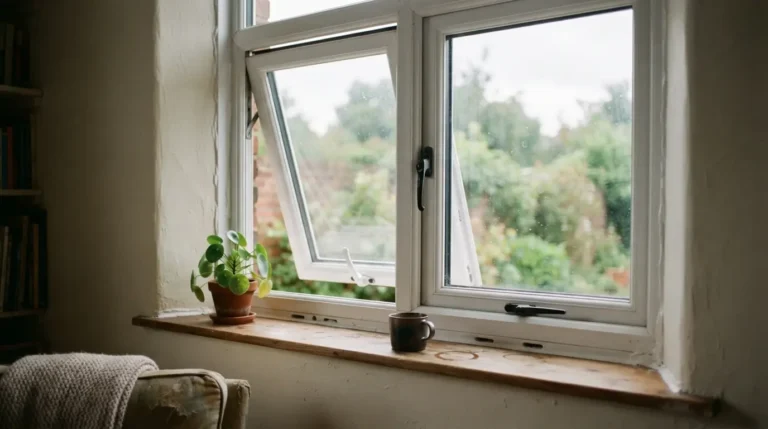
Before choosing anything, think honestly about what the room actually does to fabric over time. A living room with strong, direct sun needs a fabric genuinely resistant to fading and sun damage, since a beautiful silk or delicate print can visibly deteriorate within a season in the wrong light. A kitchen brings heat, steam, and cooking residue into the equation, so a fabric that’s easy to wipe down or launder matters more here than anywhere else in the house. A dining room, typically used mostly in the evening, can carry a richer, more dramatic fabric than a room relied on for all-day brightness. Match the fabric’s real-world demands to the room before you fall for a specific colour or pattern.
Choose Pole or Track Based on How You Want the Hardware to Look
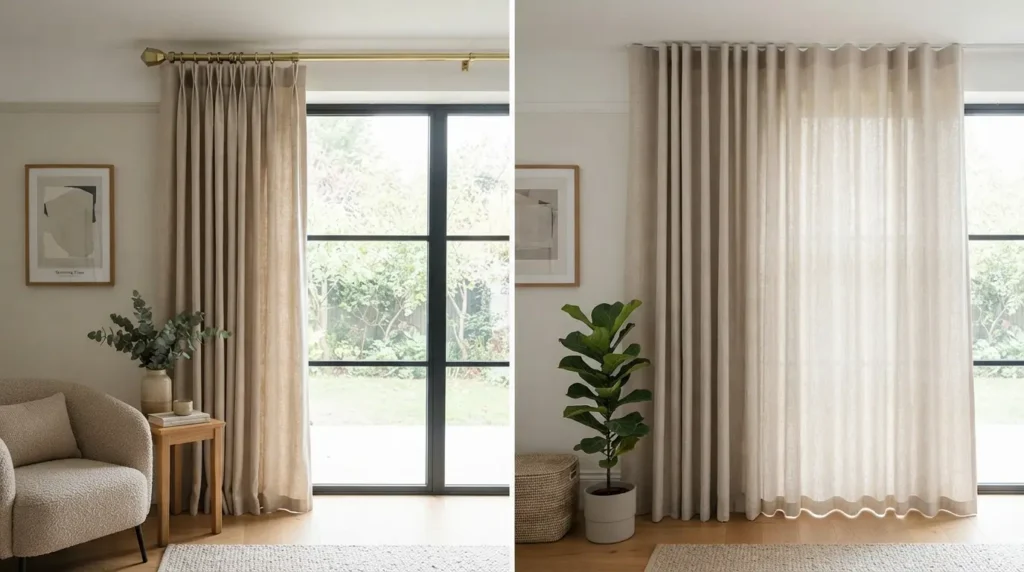
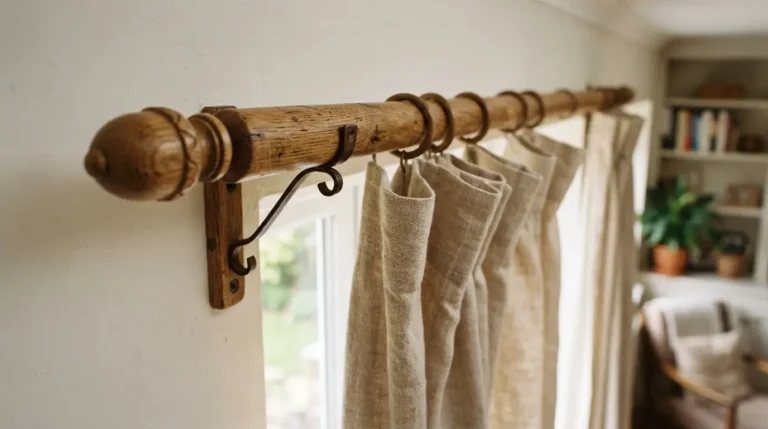
A curtain pole stays genuinely visible as part of the room’s decoration, the fabric hangs from rings or hooks threaded along it, and it can be finished with decorative finials for a more considered, opulent look. A track, by contrast, hides behind heading tape and clip-on gliders so the fabric appears to hang with no visible hardware at all, and tracks are generally easier to shape and more flexible than poles, which makes them the better choice for an angled or bay window where a rigid pole can’t follow the curve.
Pick a Heading Style That Suits the Room’s Formality
Pencil pleat headings, with their neat, orderly rows of gathered fabric, suit a more traditional room and work on both poles and tracks, making them a genuinely flexible default if you’re not certain which hardware you’ll end up choosing. Eyelet headings, with metal-ringed holes threaded directly onto a pole, give a softer, more relaxed fold and a distinctly more contemporary look, though they only work on a pole, not a track, so this choice needs deciding alongside your hardware rather than afterward.
Match Fabric Weight to the Room’s Actual Job
| Fabric | Best For | Honest Trade-off |
| Silk | Formal, low-sun rooms | Thin, poor privacy, prone to sun damage |
| Velvet | Living rooms, bedrooms, cold rooms | Genuinely insulating and colourfast, but high-maintenance |
| Linen | Relaxed, casual rooms | Breathable and natural-looking, creases and marks more easily |
| Performance/synthetic blends | Kitchens, high-use rooms | Easy to clean and maintain, less luxurious drape |
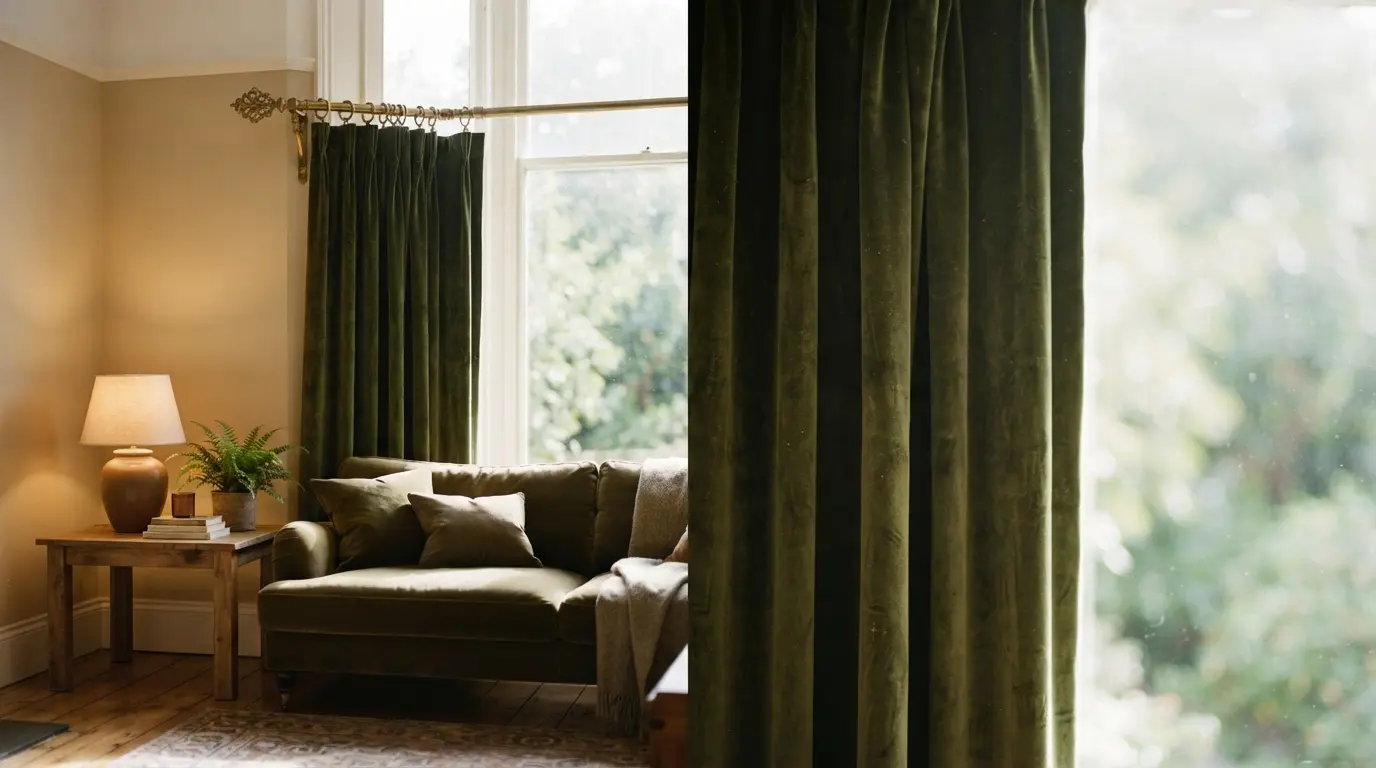
Velvet is worth its higher cost and maintenance in a room where you want genuine light-blocking and insulation, its density holds colour well over years and adds real warmth to a cold room, though it does need more careful cleaning than a simpler fabric. Silk looks genuinely luxurious but is thin enough that it offers little real privacy on its own and fades or weakens with prolonged sun exposure, so it suits a room with limited direct light far better than a bright, south-facing living room. Linen brings a relaxed, textural quality that suits a more casual room, though it creases and marks more readily than a tighter weave, worth knowing if you want a crisp, unwrinkled look rather than a naturally rumpled one.
Consider How Colour and Light Interact in the Specific Room
Darker curtain colours genuinely absorb more light than pale ones, which can make an already dim or small room feel more enclosed than intended, worth weighing carefully in a room with limited natural light to begin with. In a room that already gets plenty of daylight, this effect matters less, and a darker, richer colour can add real depth without the room feeling boxed in. If you’re unsure, test a genuine fabric sample in the room at different times of day rather than judging purely from a swatch or a photo taken somewhere else entirely.
Measure Properly for Width and Drop Before You Buy
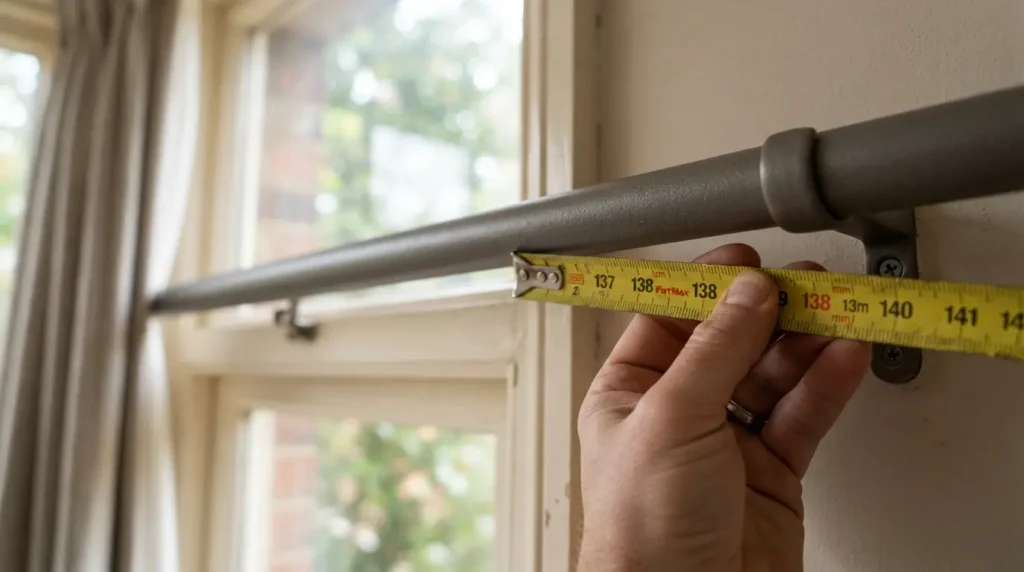
Measure your pole or track’s full width, including any extension beyond the window frame, rather than just the window opening itself, since curtains that only cover the glass leave the room looking under-dressed and let more light escape around the edges when closed. For drop, measure from the pole or track down to where you want the hem to fall, whether that’s just below the sill, to the floor, or with a deliberate slight puddle, and measure this fresh for each window rather than assuming a standard length works everywhere, since very few rooms have perfectly uniform ceiling heights or floor levels throughout.
Choose a Lining That Matches the Room’s Real Demands
A standard lining adds body and a more finished drape to almost any curtain, while a thermal lining is worth the extra cost in a room that loses noticeable heat through the window, particularly an older property with less efficient glazing. Blackout lining matters most in a bedroom or a home office used for video calls, where genuine light control changes how well the room actually functions, though it’s worth checking that a blackout lining doesn’t feel overly heavy or stiff for a lighter, more relaxed fabric you’ve chosen for its drape rather than its density.
Common Curtain Buying Mistakes
The most frequent mistake is choosing a fabric purely for its colour or pattern without checking whether it can actually handle the room’s light, heat, or moisture conditions, which is exactly how a beautiful silk curtain ends up faded or a delicate linen ends up stained in a kitchen. The second is measuring only the window itself rather than the pole or track’s full width, leaving curtains that look pinched and under-dressed once hung. The third is choosing eyelet heading and then deciding you’d prefer a track, or the reverse, without realising the two are incompatible, a decision worth locking in together rather than one after the other.
Final Thoughts
Choosing the right curtains for any room really comes down to matching the fabric, hardware, and heading to what that specific room actually needs, not just the colour that first caught your eye. Measure properly, choose a fabric that can genuinely handle the room’s light and use, and the curtains will look right and perform well for years, not just for the first few months after they’re hung.
FAQs
Should curtains match the walls or contrast?
Either works, and a deliberate contrast often looks more considered than an exact match. What matters more is that the colour and weight suit the room’s actual light and function, not simply whether it matches the paint.
What’s the difference between pencil pleat and eyelet curtains?
Pencil pleat curtains gather into neat, uniform folds and work on both poles and tracks, suiting a more traditional look. Eyelet curtains hang from metal-ringed holes directly on a pole, giving a softer, more relaxed fold with a distinctly more contemporary feel, but they only work with poles, not tracks.
Are pole or track curtains better?
Neither is universally better. Poles stay visible as a decorative element and suit a more traditional or considered look, while tracks hide behind the fabric and offer more flexibility for shaped or bay windows.
What curtain fabric is best for a sunny room?
Avoid delicate fabrics like silk in a room with strong, direct sun, since they fade and weaken over time. A more robust fabric, or one with a sun-resistant lining, holds its colour and structure considerably better in bright conditions.
Do curtains need lining?
Not always, but lining adds body, improves drape, and can genuinely help with insulation or light control depending on the type chosen. An unlined curtain suits a purely decorative, lightweight look where function matters less than the fabric’s natural drape.