10 Black Door Colour Ideas for a Bold and Dramatic Interior

Black door colour ideas work because black genuinely does more than look striking, it hides everyday marks better than a pale finish, and it can make a room feel either more enclosed or more spacious depending entirely on how much natural light and what wall colour surrounds it. The 10 ideas below cover the finishes and applications worth considering, along with the honest conditions that decide whether black actually works in your specific room.
1. Matte Black for a Sophisticated, Fingerprint-Hiding Finish

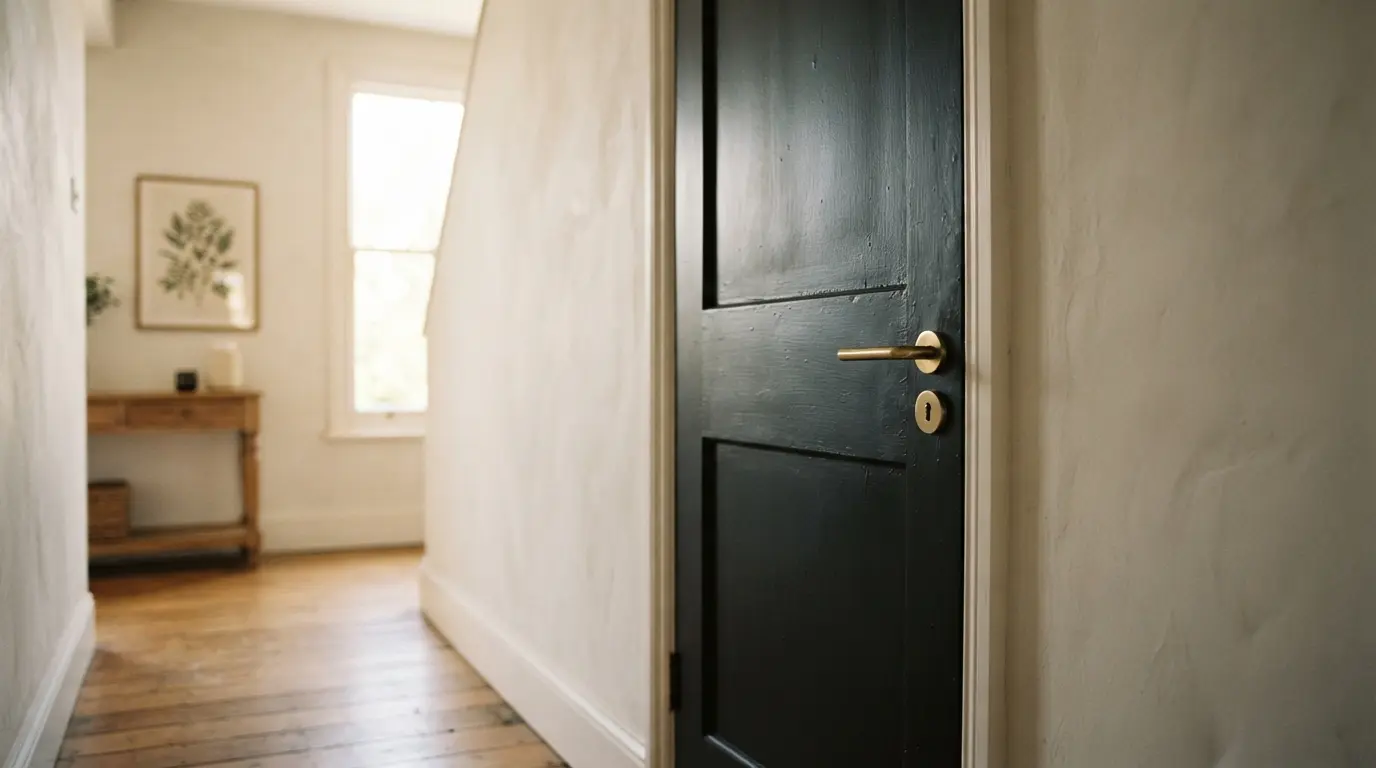
A matte black door brings genuine sophistication without the maintenance concerns some people assume come with a dark colour. In practice, black doors hide everyday smudges and fingerprints considerably better than a pale finish does, since marks simply don’t show up against a dark, non-reflective surface the way they would on white or a light neutral. This makes matte black a genuinely practical choice for a high-traffic doorway, not just a striking one.
2. Glazed Black Doors to Let Light Flow Through
A black door with clear glazing lets light pass through freely, softening the visual weight a solid black door can bring while still delivering the same graphic, considered frame. This suits a hallway or an internal doorway where you want the drama of black without sacrificing the light that travels between rooms, a genuine consideration in any home relying on borrowed light from one space to another.
3. Solid Black for a Genuinely Dramatic Statement

Where a glazed door softens black’s impact, a fully solid black door delivers the boldest possible version of the look, a genuine focal point rather than a supporting detail. This suits a room or hallway with strong natural light elsewhere, since a solid black door works best as one confident, considered element rather than the room’s only source of visual weight.
4. Frosted or Textured Black Glass for Privacy With Light
Frosted or textured glazing within a black frame gives you a middle ground between solid and clear, genuine privacy for a bathroom or a home office door while still allowing light to pass through and soften the overall effect. This is worth considering specifically for any door where you want both the black frame’s drama and a practical degree of privacy that a fully glazed door wouldn’t offer.
5. Charcoal or Anthracite for a Softer Alternative to True Black

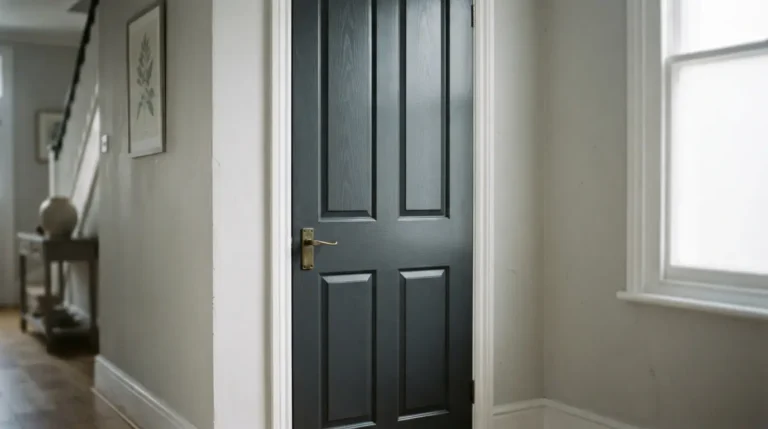
If true black feels like too stark a commitment, a charcoal or anthracite shade delivers much of the same dramatic, grounding effect with slightly more warmth and softness. This suits a traditional or period property particularly well, where an absolute black can occasionally feel more severe than the rest of the room’s character, while a deep charcoal reads as considered rather than harsh.
6. Black Doors Paired With Light Walls to Make a Room Feel Larger
This is genuinely counter-intuitive, but it holds up: because black visually recedes rather than advancing toward the eye, a black door set against pale, light walls can actually make a room feel more spacious rather than smaller. This effect depends entirely on pairing the dark door with a considerably lighter wall colour, a black door against equally dark walls loses this benefit entirely and reads as heavy rather than expansive.
7. Black French or Room-Divider Doors for an Open-Plan Zone

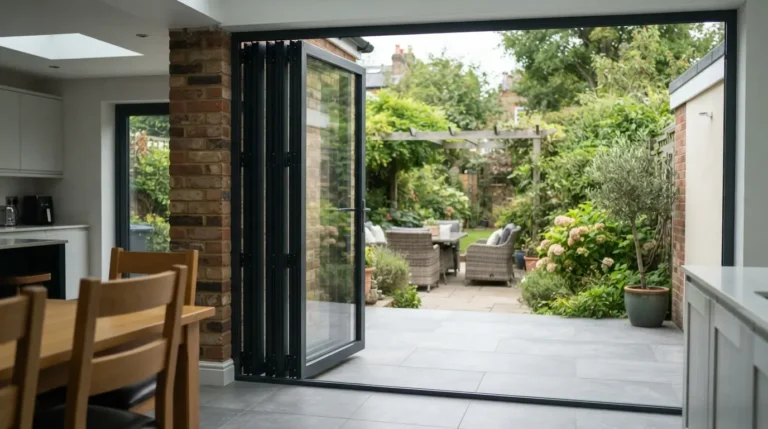
A pair of black French doors or a glazed room divider brings genuine definition to an open-plan space without fully closing it off, the black frame reads as an intentional architectural line separating one zone from another while glass keeps sightlines and light open between them. This suits a kitchen-diner or a living-dining space where you want a visual boundary between activities without committing to a solid wall.
8. Black Doors in a Period Property With Raised Panel Mouldings
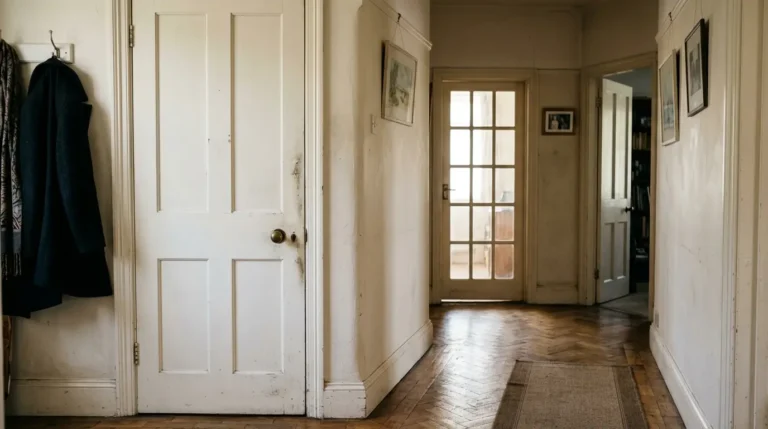
Black paired with a traditional raised panel moulding style brings genuine period character together with a considered, contemporary edge, this combination works because it borrows the door’s classic proportions and detailing while the colour itself feels current rather than dated. This suits an older property where you want the door’s traditional joinery to remain the star, with black doing the work of updating its overall impact.
9. Mix Matte Black Door Hardware With Wood or Metallic Accents

If a fully black door feels like too much of a commitment, black hardware alone, handles, hinges, a letterbox, delivers a genuine taste of the same drama at a much smaller scale. Pairing black fixtures with warm wood tones or a metallic accent elsewhere in the doorway, a brass kick plate, a wooden threshold, keeps the look from feeling flat or one-dimensional, since the contrast in texture and material does real work alongside the colour itself.
10. Know When Black Doors Need Genuine Natural Light to Work
This is the detail every purely aesthetic black door guide skips, and it’s worth being honest about before committing to the colour throughout a home. Black works best in a space with genuinely good natural light, since the colour’s visual weight needs balancing against brightness elsewhere in the room to avoid feeling oppressive rather than dramatic. In a naturally dark room or a hallway with little daylight, a black door can tip the space toward gloomy rather than sophisticated, so it’s worth being realistic about your room’s actual light levels before committing, and considering a softer charcoal alternative if daylight is genuinely limited.
Final Thoughts
The best black door colour ideas balance genuine drama with an honest read of your room’s actual light and wall colour, since black’s effect shifts considerably depending on both. Choose a finish, matte, glazed, or a softer charcoal alternative, that suits your specific space, pair it with enough natural light and the right wall colour, and black will feel like a genuinely sophisticated, practical choice rather than a risk that didn’t quite land.
FAQs
Do black doors make rooms look smaller?
Not necessarily, black actually recedes visually rather than advancing, which can make a room feel larger when paired with light walls and good natural light. The effect reverses in a room that’s already dark or has similarly dark walls, where black can feel heavier rather than expansive.
Are black doors hard to keep clean?
Generally no, and they’re actually more forgiving in this respect than a pale finish, since black hides everyday fingerprints and smudges considerably better than white or light-coloured doors do.
What wall colour goes best with black doors?
Light, neutral walls create the strongest contrast and let black’s visually receding quality work in the room’s favour. Darker walnut tones, warm neutrals, or a soft white all pair well, depending on whether you want the black door to stand out sharply or sit within a more tonal scheme.
Can black doors work in a small, dark room?
They can, but genuine natural light matters more here than in a larger, brighter space. If the room is naturally quite dark, a softer charcoal or anthracite shade is often a safer choice than true black, which needs brightness elsewhere to avoid feeling oppressive.
Is charcoal a good alternative to true black for doors?
Yes, charcoal and anthracite deliver much of black’s dramatic, grounding effect with a touch more warmth and softness, making them a genuinely good option for a period property or a room where tru