
10 Bay Window Seat Ideas for a Cosy Reading Nook

The best bay window seat ideas turn dead space into the most used spot in the room. A built-in bench, the right cushion foam, and smart planning around your radiator and window opening are what separate a seat that gets sat in every day from one that just looks good in photos.
If you’ve been scrolling bay window seating photos for weeks and still don’t know where to start, you’re not alone. Most people freeze up over the same three worries: will it cost a fortune, will it block the radiator, and will it actually be comfortable once the cushion goes flat in a year. Here’s what I’ve learned from fitting and designing these spaces, plus ten ways to do it well.
What to Sort Out Before You Build
Before picking a style, settle three things: seat height, structural support, and what happens to any radiator underneath. Get these wrong and no amount of cushion styling fixes it. A standard window seat sits around 45 to 48cm (18 to 19 inches) high once the finished cushion is on top, matching a normal dining chair.
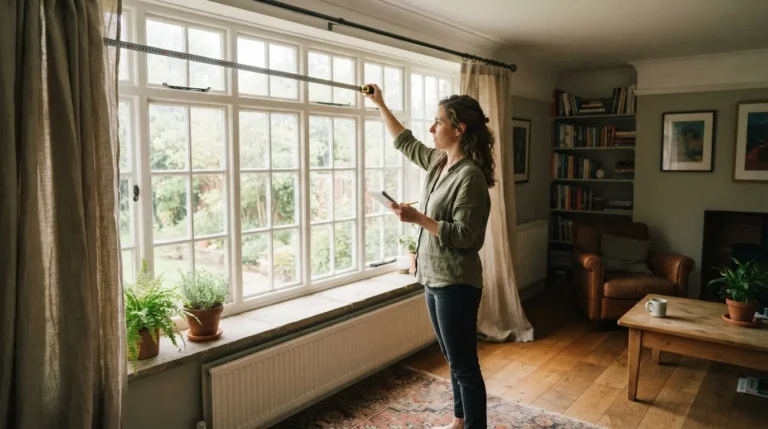
Measure the bay properly first. Bay windows rarely have three identical, perfectly square sections, so don’t trust a single tape measurement. Lay a sheet of card or paper on the floor, press it into the skirting to capture the angles, then cut along the fold. That template becomes your cutting guide for the seat top and stops you ordering a bench that doesn’t sit flush against the walls.
Structural support matters more than people expect. A built-in bay seat fixed into solid masonry or timber studs will last decades. Older properties with soft plaster often need extra noggins or steel brackets behind the wall before a wall-mounted bench is safe to sit on. If you’re planning a cantilevered seat with no visible legs, budget for that extra bracing, because it’s not optional.
1. Built-In Storage Bench with a Hinged Lid
A hinged-lid storage bench is the most requested bay window seat design, and for good reason. The seat top lifts on hinges to reveal a full storage cavity underneath, ideal for blankets, board games, or seasonal clothing that would otherwise clutter a cupboard.
Keep the lid lightweight enough to lift one-handed, and fit soft-close hinges if small children will be using the space. This design works best when the bay has no radiator running along the back wall, since a full storage box will trap heat and block airflow if one is there.
2. Bookshelf-Flanked Reading Corner
Flank the seat with built-in bookshelves on either side and you’ve made a proper window reading nook, not just a bench. The shelves anchor the space visually and keep your current read within arm’s reach instead of stacked on the cushion.
Add a small adjustable task light clipped to one shelf for evening reading, since bay windows lose their natural light fast once the sun moves round. This idea suits deeper bays where you have enough wall either side of the glass to fit narrow shelving without crowding the seat itself.
3. Budget Boxed Frame Bench
A boxed frame bench is the simplest build: a plywood or MDF box with a padded top, no drawers, no lift lid, no curves. It’s the cheapest way to get a genuine built-in bay seat and the one most DIYers can manage in a weekend with basic tools.
The trade-off is obvious once you know it: no hidden storage and a slightly less polished look than a fitted joinery job. For a first-time bay window project, or a room you’re not staying in long term, this is usually the sensible starting point.
4. Cantilevered Floating Seat
A cantilevered seat appears to float above the floor with no visible legs or box front, which reads as clean and modern in a way a boxed bench never will. It also leaves the floor beneath fully visible and easier to clean or mop under.
This look genuinely needs proper structural support hidden inside the wall or a concealed steel frame, so it costs more in both materials and labour than a boxed design. It’s a strong choice for a minimalist living room, less so for a busy family space where kids will be climbing on it daily.
5. Radiator Cover Window Seat
If your bay has a radiator running along the back wall, as most period homes do, you can build the seat around it rather than removing the heating. Design the front and top panels with proper ventilation gaps, an air inlet near the floor and an outlet near the top, so the radiator still works as a convector.
Covering a radiator this way typically cuts its heating efficiency by a noticeable margin, so it’s worth checking with a heating engineer whether the room needs that radiator at all, especially in a well-insulated home where heat could be relocated to an interior wall instead. Keep the radiator base at least 150mm off the floor for airflow, and never build a sealed box straight over the top.
6. Curved Bench for a Bow Window
A bow window curves gently rather than angling in straight sections like a true bay, and the seat should follow that same curve rather than fighting it with straight panels. This is a joinery job, not a flat-pack one, since each seat panel needs to be cut to a slightly different angle.
The payoff is a genuinely custom-looking piece that makes the most of a period property’s original architecture. Expect this to sit toward the higher end of the cost range, since curved cutting and fitting takes longer than a straight run.
7. Deep Daybed-Style Lounging Seat
Push the seat depth out to 75 to 90cm and add a thicker cushion, around 10cm, and the bench stops being somewhere you perch and becomes somewhere you actually lie down. This works well in a bedroom bay or a quiet corner of a living room where the seat doubles as extra guest seating.
You’ll need more floor depth in the bay to pull this off, so measure carefully before committing, and check the window still opens fully with the deeper seat in place. A bolster cushion or two at each end finishes the daybed look without needing a full headboard.
8. Kitchen Bay Window Breakfast Nook
A bay window in an eat-in kitchen is one of the best spots in the house for a small dining set, turning unused floor space into a proper breakfast nook. Pair a built-in bench with a round or oval table and a couple of freestanding chairs on the open side for easy access.
Choose a wipeable fabric like a treated canvas or vinyl-backed cotton here rather than velvet, since kitchen seating takes far more spills and crumbs than a living room bench ever will. Woven wood shades or a simple café curtain work better than heavy drapery in this spot, keeping the light in without blocking the view while you eat.
9. Bedroom Reading Nook with a Curtain Canopy
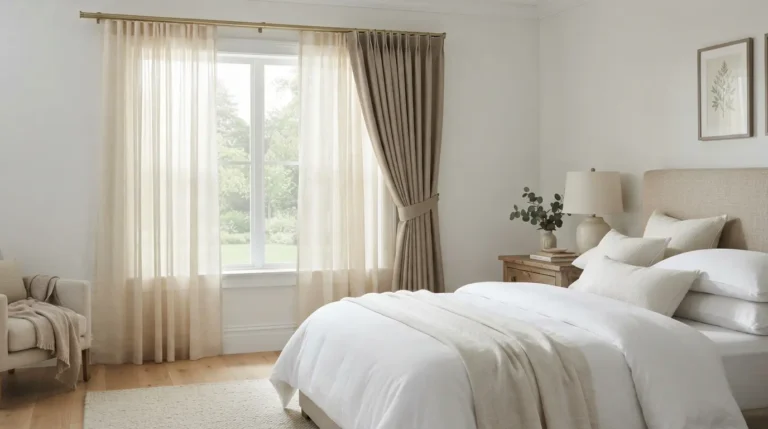
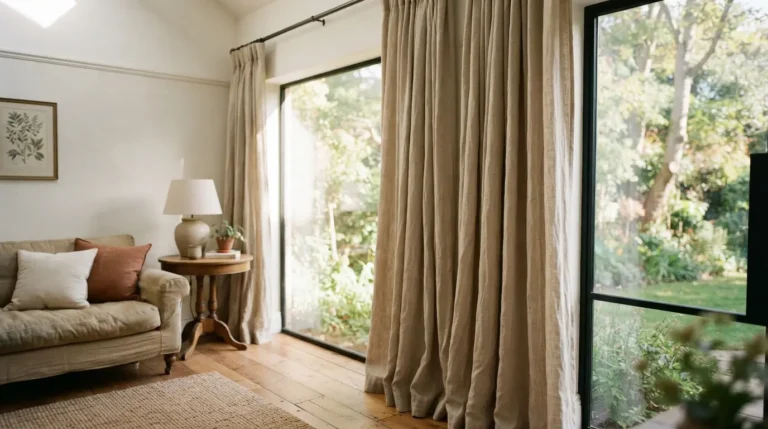
In a bedroom, dress the bay with sheer linen panels on a ceiling-mounted curtain track rather than a standard wall rod. A ceiling track follows the bay’s angles properly, letting the curtains wrap right round the seat to create a private little canopy when drawn.
This is a genuinely cosy upgrade that most bay window guides skip entirely, and it costs very little compared to the seat build itself. Add a soft rug directly in front of the seat, where your feet land when you sit down, to finish the sense of a separate little room within the bedroom.
10. No-Build Faux Window Seat
If you’re renting or just don’t want construction work, you can get most of the effect with a freestanding piece: a storage ottoman, a narrow upholstered bench, or a small daybed positioned to fit the window width. No fixings into the wall, no permanent structure, and it moves with you.
This is the fastest and cheapest way onto this list, and it’s a genuinely good option, not just a consolation prize. Pick a piece a few centimetres shorter than the window’s width so it doesn’t look wedged in, and add a bolster or two so it reads as a considered seat rather than a spare bench parked under a window.
How Much Does a Bay Window Seat Cost?
Costs vary a lot by country, but as a rough guide, a straightforward UK boxed bench starts from a few hundred pounds while a bespoke, curved, or storage-heavy build can run into the low thousands. In the US, a comparable built-in typically falls in a similar band once converted, though labour rates differ by region.
| Style | Typical UK Cost (approx.) | Best For |
| No-build faux seat (bench or ottoman) | £150–£600 | Renters, quick styling, zero construction |
| Wall-mounted floating bench | £300–£1,000 + labour | Minimalist rooms with strong wall fixing |
| Boxed frame bench | £600–£1,700 | Budget DIY builds, simple bays |
| Bespoke fitted joinery | £600–£2,500+ | Period homes, curved or angled bays |
| Built-in storage bench | £1,700–£2,800 | Families needing hidden storage |
| Cantilevered floating seat | £2,000–£3,200+ | Contemporary rooms, extra structural work |
Custom upholstery, meaning tailored cushion shapes and fabric rather than an off-the-shelf pad, typically adds another £200 to £600 on top of any of these builds. A good rule of thumb: the more the bench needs cutting to an unusual angle or hiding a mechanism like a lift lid, the more labour hours go into it, and that’s where most of the cost sits, not the raw materials.
Common Bay Window Seat Mistakes to Avoid
The biggest mistake I see is boxing in a radiator with no ventilation gaps at all, which traps heat and can quietly damage the timber over time. Always leave a clear air inlet near the floor and an outlet near the top if a radiator sits behind the seat.
The second most common issue is choosing seat cushion foam based purely on how soft it feels in the shop. A window seat has no springs underneath, just a solid platform, so low-density foam bottoms out and goes flat within a year or two under daily use in one spot. The third mistake is skipping the paper template step and cutting the seat top from a single straight measurement, which almost never fits a genuine bay properly on the first try. Last, check that any window used as a fire escape can still open fully once the finished seat and cushion are in place.
Choosing the Right Cushion and Fabric
For daily seating, look for foam in the 1.8 to 2.0 lb/ft³ density range with an ILD (firmness) rating around 28 to 36. That combination holds its shape for years under concentrated daily use, whereas cheaper low-density foam typically needs replacing within three to five years. Go 3 inches thick for a normal perch, or up to 4 inches if you want a more lounge-like feel, and check that against your sill height before ordering.
Skip memory foam if the seat faces south or west and gets direct sun for long stretches, since it holds heat and softens in warm rooms. Cotton and linen are the easiest fabrics to live with day to day and clean when spilled on. Velvet looks the part but shows wear on high-traffic seats faster than a woven cotton or canvas blend, so it suits a lower-use spot like a bedroom nook better than a busy family living room.
Conclusion
The right bay window seat idea depends less on style and more on three practical questions: what’s behind the wall, what’s happening with any radiator, and how the space actually gets used day to day. Sort the structure and the cushion foam properly, and the styling on top is the easy part. Start with the option that matches your budget and your bay’s actual shape, not the one that looks best in a single photo, and you’ll end up with a seat people actually use instead of walk past.
If you’re dressing the window itself once the seat is built, our guide on how to dress a bay window with curtains or blinds covers ceiling tracks and curved rods in more detail. And if you want a small table within reach for a coffee or a lamp, take a look at these side table ideas for options that won’t crowd the seat.
FAQs
How deep should a bay window seat be?
A standard perching seat works well at 45 to 55cm deep. For a daybed-style lounging seat, push that out to 75 to 90cm, but check the window still opens fully once the cushion is in place.
What is the standard height for a window seat?
Around 45 to 48cm (18 to 19 inches), matching a typical dining chair once the finished cushion is on top.
Can you put a radiator under a bay window seat?
Yes, if the front and top panels include proper ventilation gaps for airflow. A boxed-in radiator with no vents loses a meaningful amount of heating efficiency and can trap moisture over time.
Do I need planning permission to build a bay window seat?
Generally no, since it’s internal, non-structural furniture rather than a change to the building itself. If your home is listed or in a conservation area, it’s still worth a quick check with your local authority before starting.
How much does a bay window seat cost to build?
In the UK, expect roughly £600 to £2,500 for most bespoke builds, with simple boxed benches at the lower end and storage or curved designs pushing toward the top. Costs vary by country and by how much custom cutting the bay requires.
What’s the best foam for a window seat cushion?
High-density foam, roughly 1.8 to 2.0 lb/ft³ with an ILD of 28 to 36, holds up far better under daily concentrated sitting than standard sofa cushion foam or memory foam.
Can I add a window seat without building anything?
Yes. A freestanding storage ottoman, narrow bench, or small daybed positioned under the window gives most of the look and function without any fixings or construction.