How to Choose the Right Curtain Pole or Rail for Your Window

Choosing the right curtain pole or rail starts with your curtain heading, not the window itself, since eyelet and tab top curtains only work on a pole while most gathered and pleated styles can use either. Getting this order wrong is the most common reason someone buys a beautiful pole or track only to discover it’s physically incompatible with the curtains they’d already chosen.
Let Your Curtain Heading Decide Between Pole and Track First
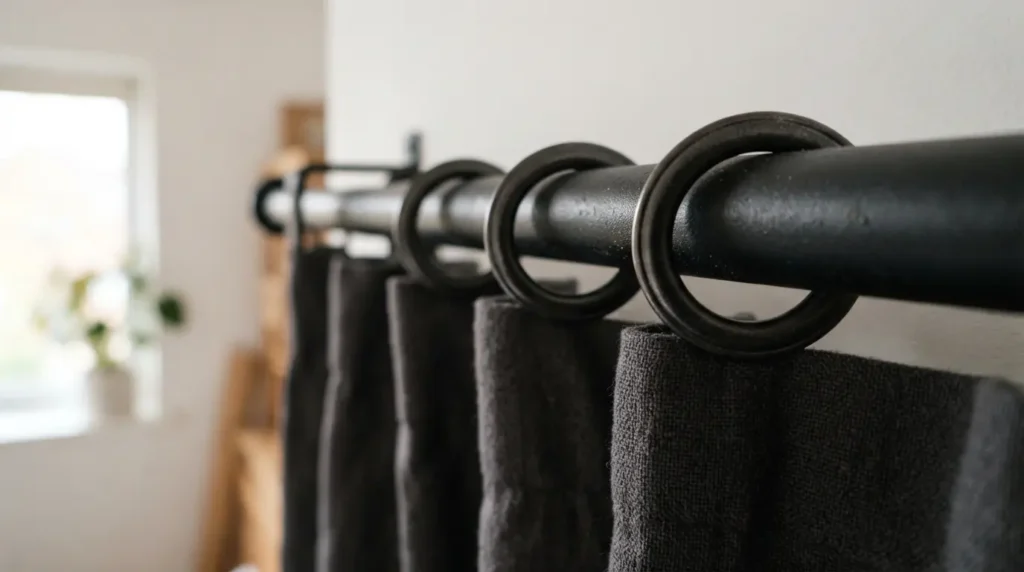
This is the detail that genuinely narrows your choice before anything else. Eyelet curtains, with metal rings set directly into the fabric, and tab top curtains, with fabric loops threaded over the rod, both need a visible pole to hang from, a track simply doesn’t work for either style. Gathered headings like pencil pleat, and most pleated styles including pinch pleat, are more flexible and can be hung from a pole with curtain rings or from a track with clip-on hooks. Confirm your curtain heading before you shop for hardware, not after, this single check prevents the frustrating discovery that your chosen curtains and your chosen hanging system simply don’t fit together.
Choose a Pole When You Want the Hardware to Be Part of the Look
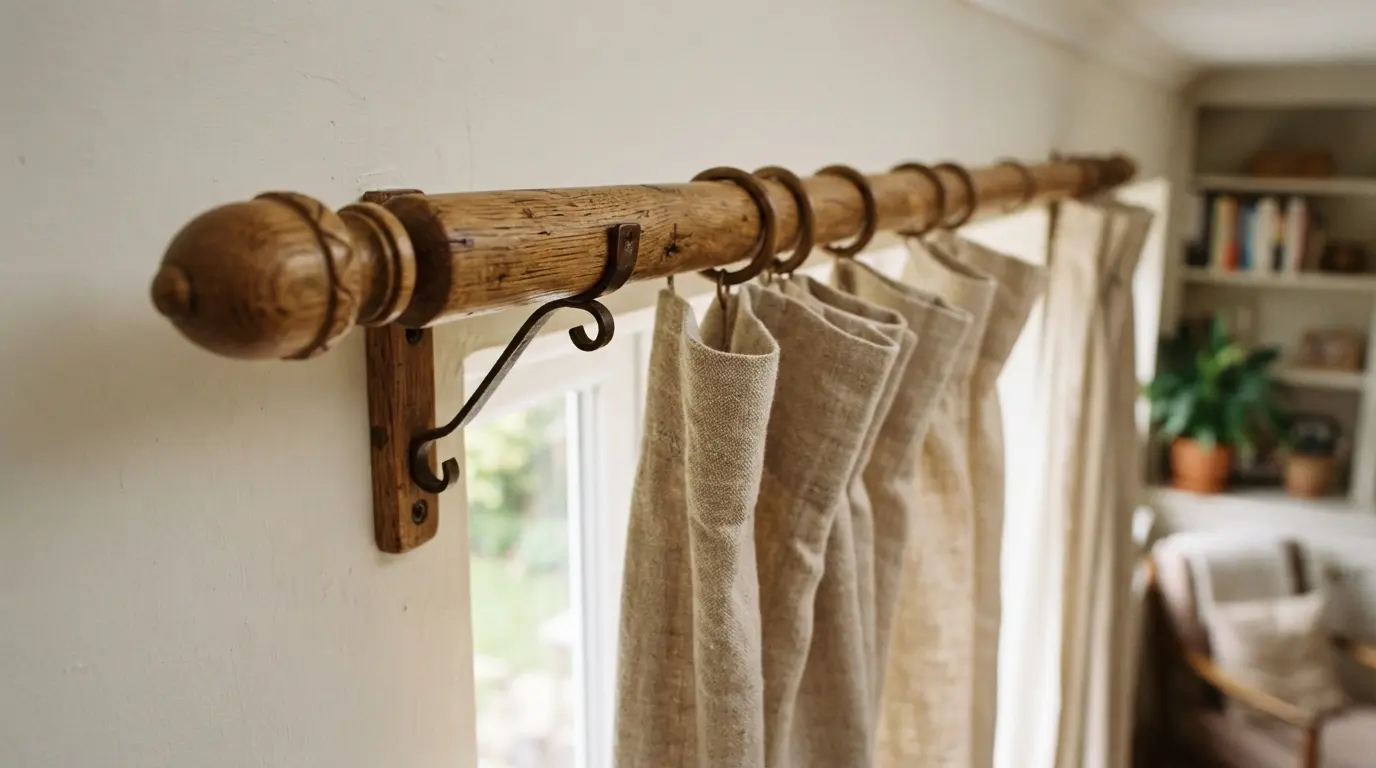
A pole stays genuinely visible as part of the room’s styling, made from wood or metal, and finished with decorative brackets and finials that let you personalise the look considerably. A wooden pole in a natural finish suits linen and other organic fabrics particularly well, while a matte metal pole suits a more modern, minimalist scheme. Because the pole and bracket system is generally stronger than a lightweight track, it’s also the more reliable choice for heavier fabrics and thicker linings, worth keeping in mind if you’ve chosen a substantial curtain fabric like velvet.
Choose a Track When You Want the Hardware to Disappear
A track sits mostly hidden behind the curtain heading, with a row of clips along its length for attaching hooks, and it suits a scheme where you want all the visual attention on the fabric itself rather than the hardware. Corded tracks, operated with a pull cord rather than by hand, are worth choosing specifically for a high ceiling or a bay window, where reaching the curtains directly to open and close them is genuinely awkward. Tracks can also be mounted from the ceiling rather than the wall, which is particularly useful if your walls are wallpapered and you’d rather avoid drilling into the paper, or if you want the curtain to start right at ceiling height for a taller, more dramatic look.
Match the Pole or Track’s Strength to Your Curtain’s Weight
This is worth checking honestly before you commit to either option, since the wrong choice here leads to sagging or bowing hardware within a year or two of regular use. A heavier fabric, particularly one with a thick thermal or blackout lining, puts real strain on lightweight hardware, so confirm the weight rating of your chosen pole or track against your actual curtain fabric and lining combined, not just the fabric alone. Generally, a sturdier pole in wood or metal handles a heavier curtain more reliably than a slim decorative track, so if you’ve fallen for a substantial fabric, factor that into your hardware decision from the start rather than as an afterthought.
Get the Central Support Right on a Wide Window
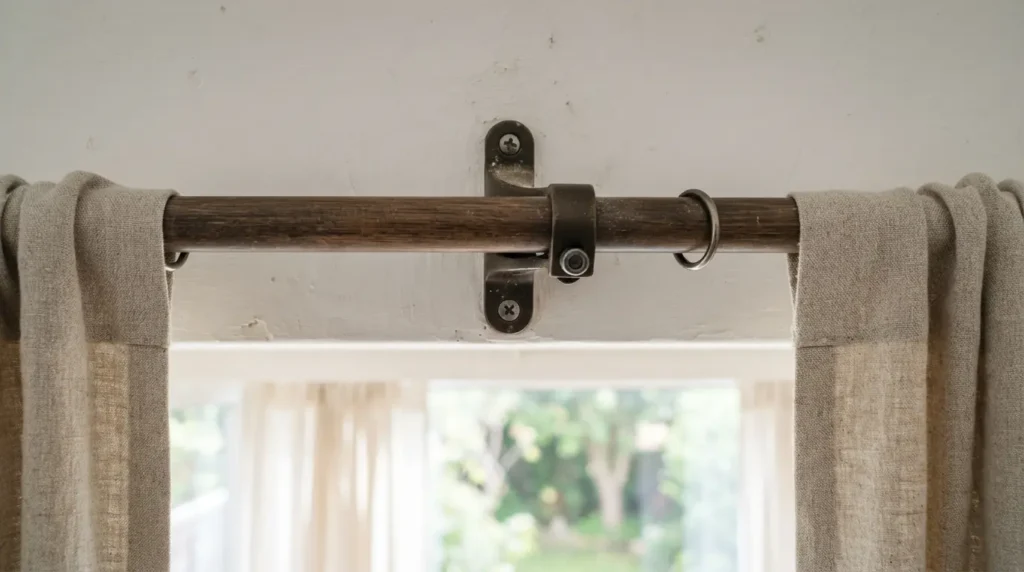
A single bracket at each end works fine for a standard window, but once you’re spanning a pole wider than around 180cm, a central support bracket becomes genuinely necessary for stability. Without it, a long pole can bow under the weight of the curtains over time, particularly with a heavier fabric, so this is worth planning in before installation rather than discovering the sag months later. On a track, the equivalent consideration is simply using enough brackets along the full length rather than relying on the two end points alone.
Decide Between Wall-Mount and Ceiling-Mount
Wall-mounted brackets remain the standard choice for most windows and work well with either a pole or a track. Ceiling-mounted tracks are worth considering specifically when you want the curtain to start right at the ceiling for maximum height, when your walls are papered and you’d rather not drill into them, or when the window itself sits close to the ceiling with little wall space above the frame to mount into. Check which mounting method suits your specific wall and window situation before ordering, since not every pole or track system offers both options.
Mount at the Right Height and Width Before You Buy
Position your pole or track roughly 15-20cm above the window frame, and extend it a few centimetres beyond each side of the frame, this lets the curtains stack back neatly when open rather than covering part of the glass, and it gives the window a more generous, properly framed look once the curtains are hung. Measure your actual window width and the wall space above and beside it before ordering hardware, rather than guessing, since a pole or track cut too short leaves curtains bunching awkwardly against the frame instead of stacking back cleanly.
Consider a Corded or Motorised Option for a Hard-to-Reach Window
Beyond a bay window or high ceiling, a corded track genuinely earns its place on any window where reaching the fabric directly to open and close it is a daily inconvenience. For an especially large or awkward window, a fully motorised track takes this further, letting you operate the curtains remotely rather than manually at all, worth the extra cost specifically if the window in question is one you’d otherwise avoid adjusting regularly simply because it’s such a hassle to reach.
Final Thoughts
Choosing the right curtain pole or rail really comes down to letting your curtain heading decide the pole-versus-track question first, then matching the hardware’s strength and mounting method to your actual window, wall, and fabric weight. Get those details right before you order, and the finished result will hang smoothly and support your curtains properly for years, not just look good in the box it arrived in.
FAQs
Can eyelet curtains be hung on a track?
No, eyelet curtains need a pole to thread through, since the metal rings in the fabric are designed to sit directly on a rod. A track’s clip-and-hook system doesn’t accommodate this heading style.
Do I need a central support bracket for a wide curtain pole?
Yes, generally once the pole spans wider than around 180cm. Without a central bracket, a long pole can bow or sag under the weight of the curtains over time, particularly with a heavier fabric.
Should curtain poles be mounted on the wall or ceiling?
Wall-mounting is the standard choice for most windows and works with either poles or tracks. Ceiling-mounting suits situations where you want maximum height, have wallpapered walls you’d rather not drill into, or have limited wall space above the window frame.
How high above the window should a curtain pole be mounted?
Around 15-20cm above the window frame is a reliable general guide, giving the curtains room to fall elegantly and making the window feel more generously proportioned once dressed.
Is a pole or track better for heavy curtains?
A sturdy pole and bracket system generally handles heavier fabrics and thicker linings more reliably than a lightweight track. Check the specific weight rating of whichever hardware you’re considering against your actual curtain and lining combined before committing.