
What Are Bi-Fold Doors and Are They Worth Having?

Bi-fold doors are multi-panel doors that fold concertina-style and stack neatly to one side on a track, opening up an entire wall to the garden rather than a single doorway’s worth of space. Whether they’re worth having depends on what you’re actually optimising for: they win decisively on light and space, but they come with real cost, thermal, and maintenance trade-offs that most sales-driven guides gloss over.
What Are Bi-Fold Doors, Exactly?
A bi-fold door system is made up of several glazed panels connected by hinges, running on a track with rollers at the top and bottom of each panel. When opened, the panels concertina and stack against the wall, occupying only a small fraction, typically 10-15%, of the total opening width. Most configurations include a “traffic door”, one panel that opens independently like a standard door, so you’re not unfolding the entire system just to nip outside.
How Wide Can They Actually Open, and What Frame Should You Choose?

Bi-fold doors can span an entire wall, with configurations opening up to 7 metres or more, far beyond what a standard door or even sliding doors typically achieve. Frame material genuinely changes how the door performs, not just how it looks.
| Frame | Frame Width | Maintenance | Best For |
| Aluminium | Slimmest (around 40mm) | Minimal, resists warping and corrosion | Larger openings, low upkeep |
| Timber | Chunkier | Needs treating every few years | Period properties, natural warmth |
| uPVC | Bulkier | Low, but frames are less slim | Budget-conscious, good insulation |
Aluminium is the go-to for larger or more contemporary openings because slim frames mean more visible glass. Timber suits a period property where an aluminium frame would look out of place, but it’s the highest-maintenance option here, needing regular treatment to avoid weathering. uPVC sits in the middle: genuinely good thermal performance at a lower cost than aluminium, at the expense of a bulkier frame profile.
The Real Benefits
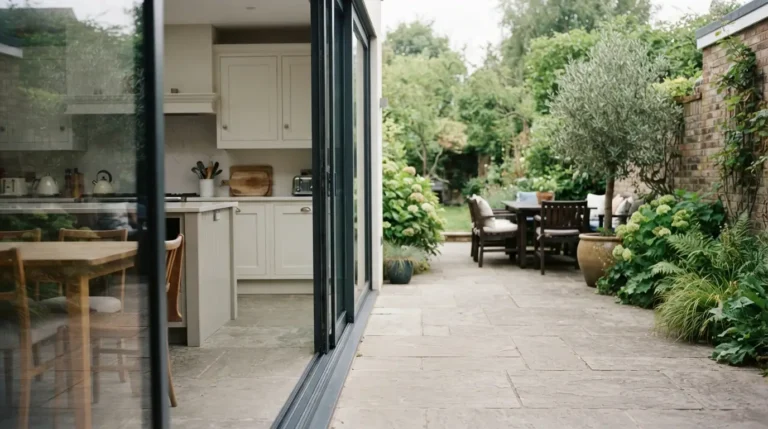
The light difference is the most immediately obvious benefit: floor-to-ceiling glazing with slim frames genuinely floods a room in a way a standard door or window never will, and it makes the most noticeable difference in a north-facing room or during the darker months of the year. The space-saving design matters just as much in practice, since stacked panels don’t need the swing clearance a hinged door does, which frees up how you can arrange furniture near the opening. And the sheer width of the opening changes how a room functions day to day, turning a kitchen or dining space into something that genuinely extends onto a patio or garden rather than just having a view of it.
The Honest Downsides
This is where most sales-oriented guides go quiet, so it’s worth being direct. Bi-fold doors have more moving parts and more panel joints than a standard door or a sliding door, which means more potential weak points for both draughts and, over years of use, mechanical wear on rollers and hinges. Ground-level tracks can collect dirt and debris, which affects smooth operation if not cleaned regularly, though top-hung systems avoid this specific issue at a higher cost. Thermally, multiple glass panels and seals will never quite match a solid, insulated wall, modern double or triple glazing with a proper thermal break closes much of that gap, but it’s honest to say a wall of glass loses more heat than the wall it replaced, whatever the marketing copy claims. None of this makes bi-folds a poor choice, but going in expecting zero trade-offs is where the disappointment usually comes from.
How Much Do Bi-Fold Doors Actually Cost?
Costs vary considerably by size, frame material, and installation complexity, and different suppliers quote it differently, so treat these as a general shape rather than an exact price. As a rough guide, budget uPVC systems start from roughly £600 per metre of width, while higher-end aluminium can run £1,500 or more per metre; for a typical installed opening, all-in costs commonly land somewhere between £2,000 and £5,000, with bespoke or larger configurations costing more. On top of the doors themselves, factor in installation, and budget for occasional maintenance, roller lubrication, seal checks, and eventually replacement of mechanical parts after years of regular use.
Bi-Fold vs Sliding vs French Doors
A bi-fold isn’t automatically the right answer just because it’s the most dramatic option. Sliding doors offer a cleaner, less interrupted view with fewer moving parts, but only around half the opening becomes usable space when open, and they don’t need clearance for stacked panels, which suits a tighter room. French doors cost less and suit smaller, more traditional openings well, but can’t come close to a bi-fold’s width. If your priority is the widest possible opening and you have room for the stacked panels, bi-fold wins; if uninterrupted glass and simplicity matter more than maximum width, sliding is worth a serious look first.
Are They Worth It in a Period Property?

Yes, with the right approach. Bi-fold doors aren’t limited to modern builds, timber frames in heritage colours, period-appropriate hardware, and careful proportion-matching to existing windows all help them sit comfortably in an older home. The real hurdle is often planning rather than design: listed building consent or conservation area restrictions can apply, and rear installations that don’t affect the street-facing appearance are generally viewed more favourably than front-facing changes. Getting advice early, before ordering doors, avoids the costly scenario of a system that doesn’t get approval.
So, Are Bi-Fold Doors Worth Having?
If light, a genuinely wide opening, and a strong indoor-outdoor connection matter more to you than minimising cost and long-term maintenance, yes, they’re generally worth it. If your priority is the cheapest, lowest-maintenance option, or you don’t have the wall space for stacked panels, a sliding or French door likely serves you better for less money and fewer moving parts to maintain.
Final Thoughts
Bi-fold doors are worth having if you genuinely want the widest possible opening and the light and space that comes with it, and you’re prepared for the real cost and occasional maintenance that comes with more panels and more moving parts. Weigh that against a sliding or French door honestly, based on your specific room and budget, rather than assuming the most dramatic option is automatically the right one.
FAQs
Are bi-fold doors hard to maintain?
Not especially, once installed correctly. Regular cleaning of the glass and tracks, along with occasional lubrication of the rollers, covers most of what’s needed. Timber frames need more attention than aluminium or uPVC.
Do bi-fold doors let heat out?
They lose more heat than a solid insulated wall, since that’s true of any large glazed opening, but modern double or triple glazing with a thermal break closes much of that gap. Poor installation affects thermal performance more than the door type itself.
What is a traffic door?
It’s the single panel within a bi-fold system that operates independently, like a standard door, so you can pop outside without unfolding the entire configuration.
How wide can bi-fold doors open?
Configurations can span 7 metres or more, though the practical width for most homes depends on the wall available and how much stacking space you have to one or both sides.
Are bi-fold or sliding doors better?
Neither is universally better. Bi-folds open wider and create a fuller connection to outdoor space; sliding doors offer an uninterrupted view with fewer moving parts and don’t need stacking clearance. The right choice depends on your room’s shape and what you value most.