
How to Choose the Perfect Armchair for Your Living Room

Choosing the perfect armchair starts with how you’ll use it, not how it looks in a showroom. Get that right and size, upholstery, frame, and budget fall into place. Get it wrong and you end up with a chair that photographs well and gets sat in twice.
How Will You Use the Chair?
Name the chair’s job first. A daily reading chair needs a supportive back and a seat depth you can sink into for an hour. An occasional chair can trade some of that comfort for a bolder shape, since it won’t see hours of daily use. A pure accent piece can lead with colour and silhouette over deep cushioning.
This decision narrows your search faster than style ever will, because it tells you which comfort features matter here and which you can skip.
Run the Five-Minute Fit Test Before You Shop
Most guides jump straight to style. A better starting point is your own body, because a striking chair that doesn’t fit you physically gets abandoned within a month.
Sit in a chair or sofa at home that already feels right and check three things: feet flat with knees near a right angle, your seat reaching the backrest with no gap when you sit right back, and forearms resting on the arms without hunching your shoulders. Note that chair’s rough seat depth, seat height, and arm height. As a general guide, a seat depth around 50-55cm and arm height around 60-65cm suits most adults, though your own numbers matter more than any generic figure. Use them as a benchmark against listings, most retailers publish these specs, so you rule out uncomfortable chairs before they arrive.
Measure the Space and the Walkways Around It
Mark the chair’s footprint on the floor with tape or paper before buying. This shows exactly how it will sit relative to your sofa and doorways, and whether the room starts to feel cramped the moment you walk it.
Leave clear walkway space around the chair, roughly 45-75cm depending on how tight the room already is, and check doorway and hallway widths for delivery day. It’s a genuinely common mistake to fall for a chair online only to find it can’t get round a stairwell turn.
Choose the Right Armchair Type for Your Room
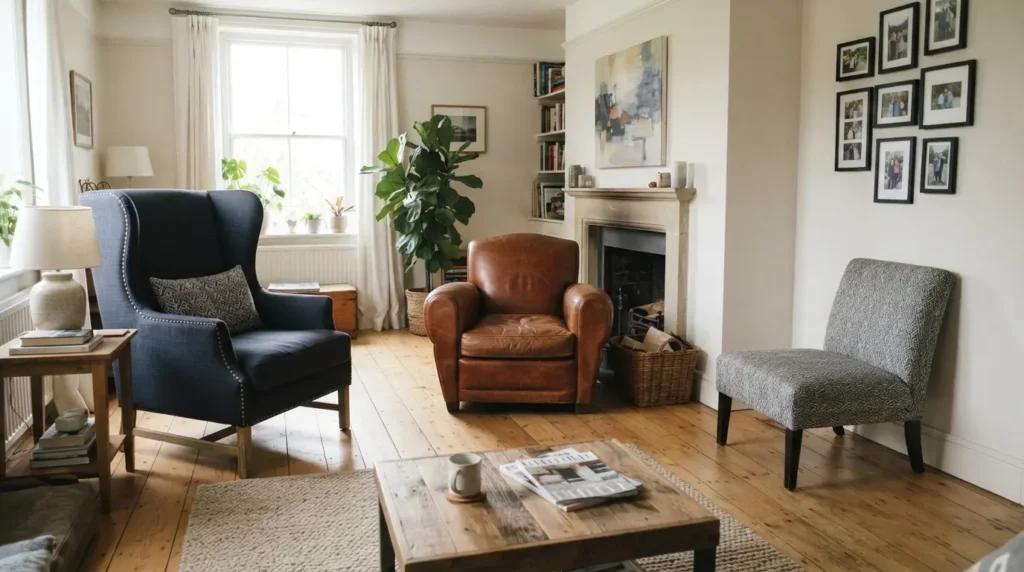
Armchair types differ mainly in back height, arm shape, and floor space needed, and each suits a different job.
| Type | Best For | Footprint |
| Wingback / highback | Reading nooks, enclosed feel | Larger, needs ceiling height |
| Club chair | Low, relaxed lounging | Wide and deep, needs clearance |
| English roll arm | Relaxed, versatile living rooms | Medium, works in most spaces |
| Mid-century | Contemporary, design-led rooms | Compact, tapered legs |
| Slipper / armless | Small rooms, reading corners | Smallest footprint |
| Swivel | Multi-use rooms (TV, chat, reading) | Medium, needs turning space |
A wingback suits a dedicated reading corner because the tall sides genuinely block draughts and distractions, not just for looks. A club chair needs more walkway clearance than its footprint suggests. English roll arm chairs are the most versatile of the group. Mid-century and slipper styles suit smaller rooms, since tapered legs and armless profiles use less visual and physical space. A swivel base earns its cost in a multi-use room by saving you from repositioning the chair constantly.
Pick Upholstery That Matches Your Lifestyle
Choose fabric for how the chair will actually be used, not how it looks under showroom lighting.
Leather and tightly-woven performance fabrics suit busy households with children or pets, wiping clean and resisting daily wear. Linen and cotton blends breathe well and feel relaxed but mark more easily, so they suit lower-traffic spots. Velvet delivers a depth of colour nothing else matches, but it shows pressure marks over time and needs regular brushing, making it a better fit for an occasional chair than one used daily. Bouclé and wool both hide daily wear well, with wool resisting stains naturally.
If you’re unsure, picture the chair after two years of real use, not two days. That question alone rules out a surprising number of options.
Check the Frame and Construction Quality
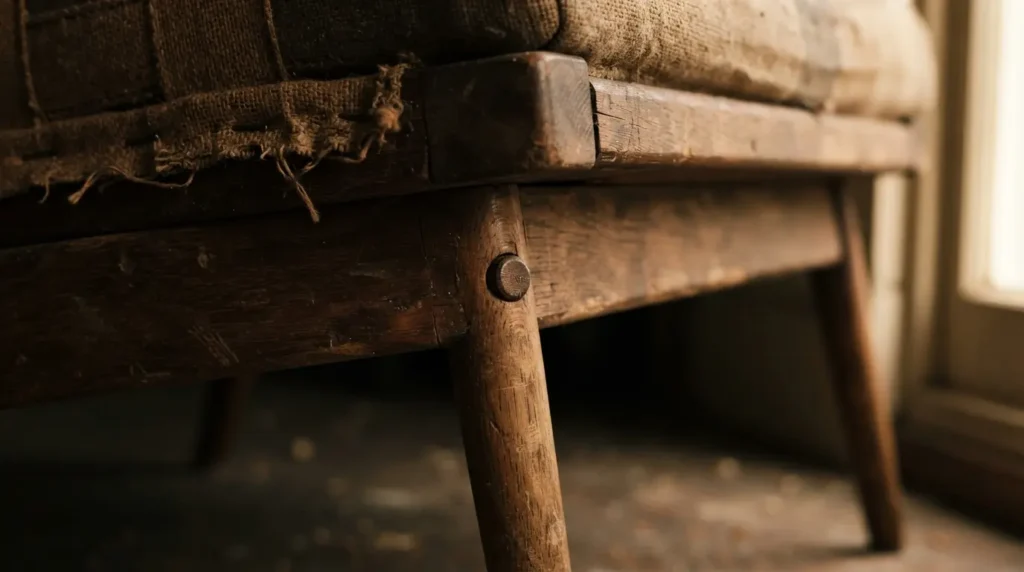
This is the detail most guides skip, and it decides whether your armchair lasts two years or twenty.
Look for a hardwood frame (beech, oak, or ash) joined with dowels, glue, and screws rather than staples alone. A frame like this typically outlasts a stapled softwood or particleboard frame by a decade or more, even when the two chairs look identical in a photo. Underneath the cushion, sinuous springs (a zig-zag wire pattern) beat webbing alone, while pocket springs offer the best support and shape retention over years of use. If a retailer doesn’t list frame material or spring type, it’s worth asking directly, since this is the part of the chair you’ll never see again once the upholstery is on.
Set a Realistic Budget by Quality Tier
Armchair prices roughly split into three tiers, and knowing what each buys you prevents overpaying for looks or underpaying for durability.
| Tier | What You Typically Get | Watch Out For |
| Entry-level (under £500 or local equivalent) | Simpler frames, softwood or metal | Shorter lifespan under daily use |
| Mid-range (roughly £500-£1,000) | Solid hardwood frames, better springs | The sweet spot for daily-use chairs |
| Investment (£1,000+) | Premium materials, hand-finished detail | Longer lead times, made-to-order |
At entry level you’re mainly paying for style, a fair trade for an occasional chair. The mid-range tier is where construction quality jumps noticeably, and it’s genuinely the sweet spot for a chair used daily. Above that, you’re paying for premium materials and finish, though made-to-order pieces at this tier can take several weeks, so order with a buffer if you’re working to a deadline. Prices and delivery times vary by country and retailer, so treat these as a guide rather than a fixed rule.
Decide Whether It Should Match or Contrast Your Sofa
An armchair doesn’t need to match your sofa exactly, and a gentle contrast, a different material in a related colour, often looks more considered than an identical pairing.
What matters is keeping the two pieces connected: a shared leg finish, a repeated cushion colour, or fabrics in the same colour family all tie a contrasting chair back into the room. One detail most guides miss: a chair and sofa with very different seat heights can look visually disconnected even when their footprints are well matched, so check seat height alongside overall size. A side table, a floor lamp, and a cushion or throw that repeats a colour from elsewhere finish the look and stop a single chair from feeling stranded.
Common Armchair Buying Mistakes to Avoid
A handful of avoidable mistakes account for most regretted purchases. A tall wingback can crowd a low-ceilinged room’s sightline even if it technically fits the floor space. A deep club chair positioned without checking clearance ends up blocking the natural path through the room. Velvet chosen for a household with shedding pets often looks worn within months. And ordering a made-to-order piece too close to a moving date or event leaves you without seating when you need it most. Each is easy to avoid once you know to check for it.
Final Thoughts
Choosing the perfect armchair comes down to fit before style: know how you’ll use it, run the five-minute fit test, measure the room and its walkways, then let type, fabric, frame, and budget follow in that order. A chair chosen this way earns its place in the room, and it’s the one you’ll still be glad you bought in five years, not just five.
FAQs
What is the difference between an armchair and an accent chair?
An armchair is built for regular, comfortable use with a deeper seat. An accent chair prioritises visual impact and suits occasional rather than daily sitting.
How do I measure my room for an armchair?
Mark the footprint with tape or paper, leave 45-75cm of walkway space, and check doorway widths for delivery. Floor space alone isn’t enough if the chair can’t get into the room.
What size armchair works in a small living room?
Look for a compact footprint with slim arms and raised, visible legs rather than a skirted base. Armless or mid-century designs with tapered legs suit tight spaces well.
Does my armchair have to match my sofa?
No. A deliberate contrast tied together with a shared leg finish or repeated cushion colour often looks more intentional than an exact match.
What is the most comfortable type of armchair?
It depends how you sit. A wingback suits upright reading; a deep club chair suits lounging. Your own five-minute fit check matters more than the style name.
Which armchair fabric holds up best with pets or kids?
Leather and performance fabric are the most practical choices. Velvet and loose-weave linens are the ones to avoid in a busy, pet-friendly household.
How much should I spend on an armchair?
For daily use over five or more years, the mid-range tier (roughly £500-£1,000, or the local equivalent) is usually where quality and price genuinely align.