10 Dark Bedroom Paint Ideas for a Cosy and Dramatic Sleep Space

Dark bedroom paint works best when it’s chosen and applied properly, the right depth of colour, a genuine primer and coat plan, and enough layered lighting to stop the room reading as a cave rather than a cocoon. Done well, a dark bedroom feels genuinely restful, not oppressive.
The fear most people have with dark paint is real: it can look moody and rich in a photo, then flat, patchy, or just gloomy once it’s actually on their own walls under their own lighting. Here are 10 dark bedroom ideas that hold up in daily use, plus what to get right before you commit a whole room to it.
1. Ink Navy for an Approachable First Dark Colour
Ink navy is usually the easiest entry point into dark bedroom paint, since it reads as deep and dramatic without feeling aggressive the way true black can in a smaller room. It sits comfortably with warm-white trim, oak flooring, brass hardware, and pale bedding.
Navy shifts noticeably with orientation: in a north-facing bedroom it leans cooler and moodier, while in a south-facing room the same colour warms up considerably under stronger daylight. If you’ve never lived with a dark wall before, this is generally the safest place to start.
2. Warm Charcoal for a Cocooning Neutral
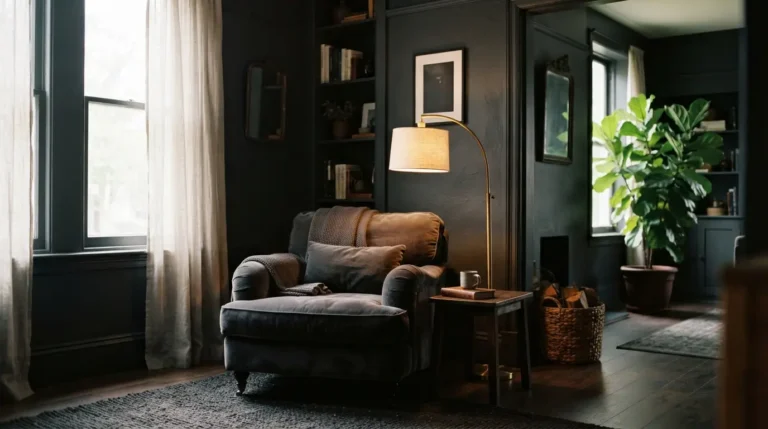
A warm charcoal, one with a brown or grey-brown undertone rather than a flat, cool grey, gives you the drama of a dark neutral without the slightly clinical feel a pure cool grey can bring to a bedroom. It reads as grounded and calm rather than stark.
This shade works especially well wrapped floor to ceiling with the trim kept in the same colour, creating a seamless, enveloping effect rather than breaking the room up with contrasting white woodwork. Add one pale anchor piece, a linen headboard or a cream rug, to stop the room feeling entirely one-note.
3. Deep Bottle or Forest Green for a Moody, Natural Feel
Deep bottle or forest green brings the same cocooning depth as navy or charcoal but with a warmer, more natural undertone that pairs beautifully with wood furniture, brass fittings, and layered textiles. It’s a strong choice if you want drama that still feels organic rather than urban or industrial.
This colour needs decent light, natural or artificial, to avoid reading as murky rather than rich, so it suits a bedroom with a reasonably sized window or good lamp coverage better than a genuinely dim, small room. Pair it with warm wood tones rather than cool metals to keep the effect grounded.
4. Black or Near-Black for Maximum Drama
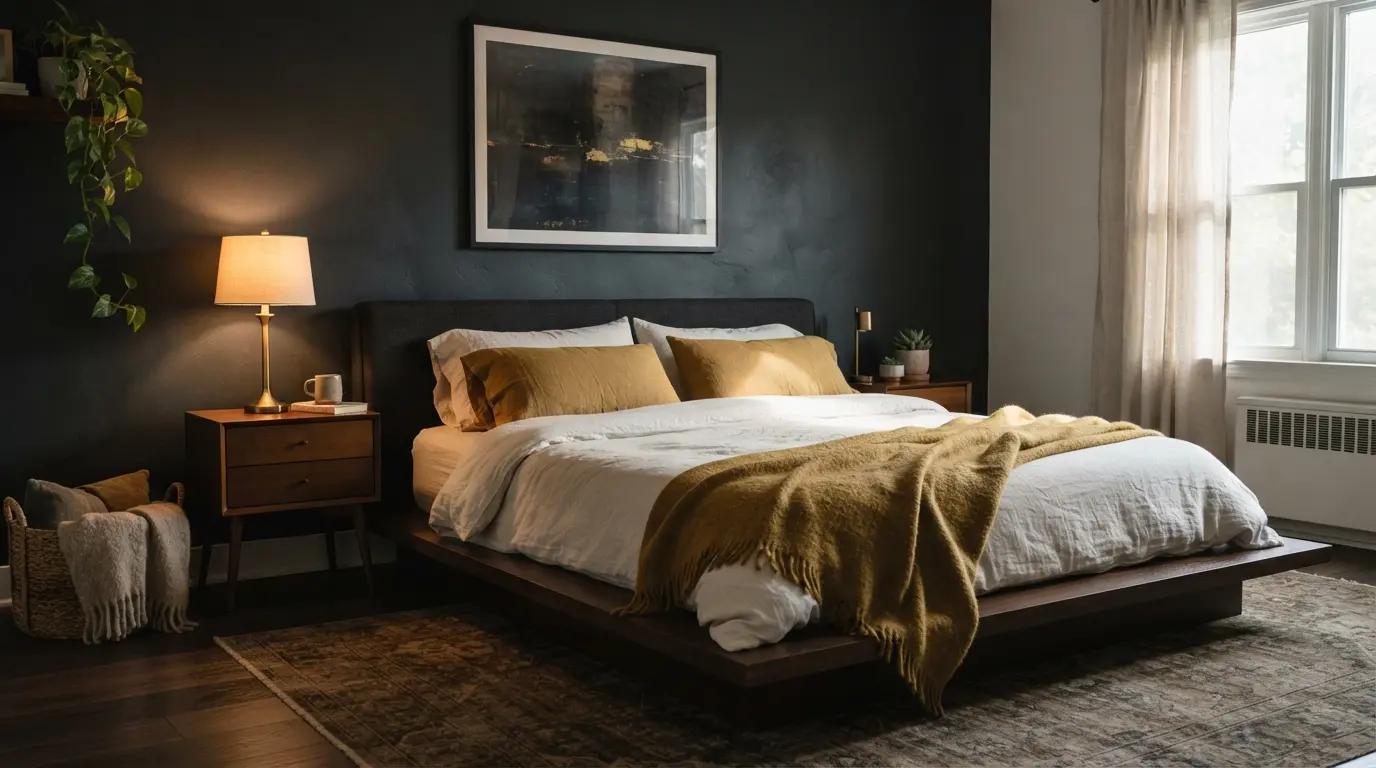
True black or a near-black charcoal gives the most dramatic, enveloping result on this list, and it works surprisingly well in a bedroom precisely because you want the walls to recede into the background once the lights are off. Used with intention, it reads as considered rather than heavy.
This is the shade where lighting and contrast matter most. Keep bedding, a rug, or a headboard genuinely pale, and layer in warm lamp light rather than relying on a single overhead fitting, or the room can tip from dramatic into simply dark. It’s also the colour most likely to show streaking without proper prep, so don’t skip the primer step covered further down.
5. Deep Plum, Aubergine, or Oxblood for a Romantic Look
Deep plum, aubergine, or oxblood brings warmth and a slightly romantic, jewel-toned depth that reads as softer than navy or black, even at a similarly dark value. It suits a bedroom where you want moody drama with a bit more personality than a straightforward neutral.
These reddish-dark tones tend to look richer under warm lamp light in the evening than under cool daylight, which actually works in a bedroom’s favour, since most of your time in the room happens after dark anyway. Pair with brass or warm gold accents rather than silver or chrome to keep the warmth consistent.
6. Charcoal Blue for More Depth Than Plain Navy
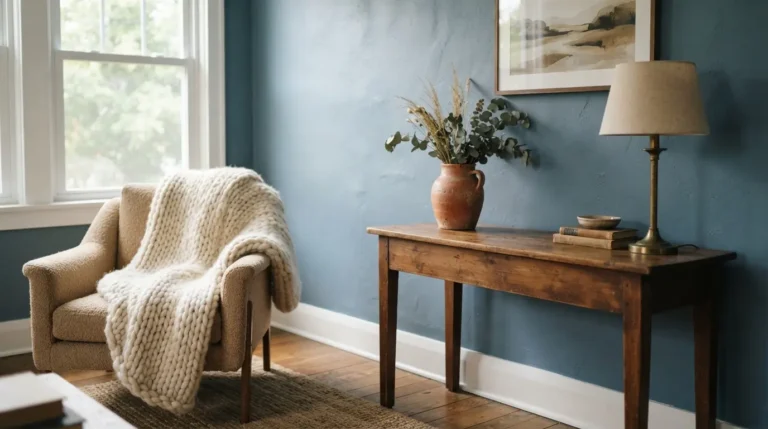
Charcoal blue, a navy with added grey undertones, gives more complexity and depth than a straightforward navy without swinging all the way to black. It photographs and lives slightly differently depending on the light, reading more blue in daylight and more charcoal in the evening.
This shade pairs especially well with copper or aged brass accents and warm wood furniture, which bring out the warmth hiding underneath the grey. It’s a good middle-ground choice if plain navy feels a little too classic and full black feels like too big a jump.
7. Warm Terracotta or Umber for a Dark Room That Isn’t Navy or Black
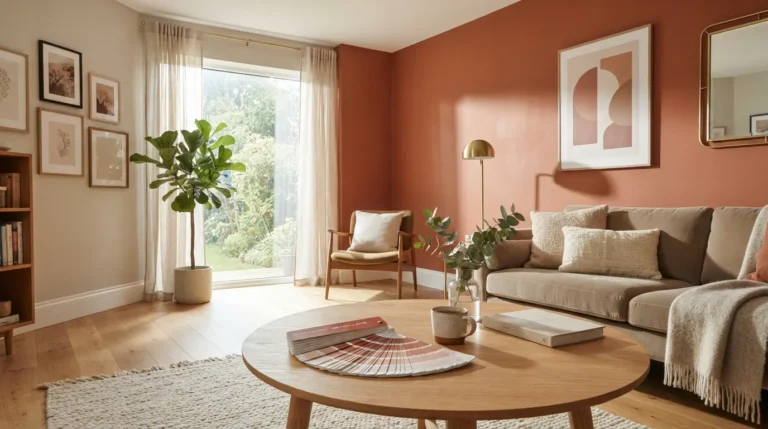
Dark doesn’t have to mean cool. A warm terracotta or umber brown gives you the same enveloping, cosy effect as navy or charcoal but leans entirely into warmth rather than moodiness, and it suits a bedroom that gets decent natural light particularly well.
This is a genuinely underused option compared to the navy-charcoal-black trio that dominates most dark bedroom guides, and it pairs beautifully with checked or patterned textiles, wood furniture, and warm brass fittings for a look that feels closer to a sun-drenched European apartment than a moody cave.
8. Colour-Drenching Walls, Trim and Ceiling in One Shade
Colour-drenching, painting the walls, trim, and ceiling all in the same dark shade rather than breaking them up with contrasting white woodwork, genuinely helps a room feel larger by erasing the visual edges between surfaces. Counterintuitively, this often works better in a smaller bedroom than a partial treatment does.
This is a bigger commitment than a single accent wall, so it’s worth testing your chosen colour on a large sample board first and checking it under both daylight and lamp light before covering the whole room. Once committed, it delivers one of the most cohesive, considered-looking results on this entire list.
9. A Dark Ceiling with Lighter Walls for Drama Without Heaviness
Painting just the ceiling in a dark shade, navy or charcoal work particularly well, while keeping the walls a crisp white or pale neutral gives you real drama and a cocooning effect overhead without committing the whole room to a dark palette. The dark ceiling draws the eye upward and adds a genuine sense of intimacy while you’re lying in bed.
This works especially well in a room with higher ceilings, where a plain white ceiling can otherwise feel like wasted visual space. It’s also a lower-commitment way to try a dark colour if you’re not ready to cover every wall.
10. Dark Panelling or Wainscoting Instead of a Flat Painted Wall
Adding panelling or wainscoting in a dark colour, rather than a flat painted wall, brings genuine texture and shadow-play into a dark bedroom, since the grooves and raised sections catch light differently throughout the day and evening. This adds depth that a flat colour alone can’t fully replicate.
Panelling in a dark shade also tends to hide minor wall imperfections better than a flat painted surface, since the broken-up lines distract the eye from small dents or uneven plaster. It’s a higher-effort option than paint alone, but it’s the one most likely to make a dark bedroom feel genuinely bespoke rather than simply repainted.
How to Keep a Dark Bedroom From Feeling Like a Cave
The single biggest mistake with dark bedroom paint is relying on one overhead light and expecting the room to still feel warm and inviting once the sun goes down. Layer in bedside lamps, a wall sconce or two, and where possible some warm LED strip lighting behind the headboard, so the room has depth and warmth from multiple angles rather than one flat source.
Keep at least one genuinely pale anchor in the room, bedding, a rug, or a single piece of furniture, so the eye has somewhere to rest against the dark backdrop. Warm metals, brass, copper, or aged gold, consistently read better against dark paint than cool chrome or silver, which can tip the whole scheme toward feeling cold rather than cosy.
Prep and Application Reality: Primer and Coats
Dark paint colours need a proper tinted primer and at least two full coats to achieve an even, streak-free finish, and skipping this step is the most common reason a dark bedroom looks patchy rather than rich. A pale primer under a genuinely dark topcoat will show through unevenly, especially on a ceiling or under directional light.
Budget for the extra time and paint this requires. A dark colour typically needs one additional coat compared to a mid-tone, which adds both material cost and a day to the overall job compared to a lighter repaint. This is a genuine reason dark bedroom paint jobs sometimes cost more than the room size alone would suggest, not a myth to dismiss.
What Does It Cost to Paint a Bedroom Dark?
Costs vary by country, room size, and whether you’re doing the work yourself, and a dark colour generally sits at the higher end of a standard repaint due to the extra primer and coats involved.
| Job Type | Typical UK Cost (approx.) | Notes |
| DIY paint only, standard bedroom | £60–£150 | Includes tinted primer plus two topcoats |
| Professional paint job, standard bedroom | £350–£600 | Extra coat and primer factored into labour and materials |
| Professional job with premium paint brand | £450–£800+ | Higher-end brands, deeper pigment coverage |
| Panelling or wainscoting added before paint | £300–£1,200+ | Depends on wall coverage and material |
A standard bedroom in dark paint typically takes a professional painter one and a half to two and a half days, slightly longer than a lighter repaint of the same room due to the extra coat and drying time between layers.
Common Mistakes With Dark Bedroom Paint
The most common mistake is skipping a proper tinted primer, which almost guarantees an uneven, patchy finish once the topcoat goes on, particularly with black or near-black shades. Always prime for the colour you’re covering with, not just whatever primer happens to be left over from a previous job.
The second mistake is relying entirely on natural light or a single ceiling fitting to judge the colour and then living with poor evening lighting once the room is finished. Test any dark shade specifically under lamp light before committing, since that’s when you’ll actually be looking at these walls most. If your bedroom already has limited natural light, an attic conversion is a common example, our guide on designing an attic bedroom covers additional lighting and layout considerations worth reading alongside this one.
Conclusion
Dark bedroom paint delivers real cosiness and drama when the colour, the prep, and the lighting all work together, not just the shade on its own. Choose a depth of colour that suits your room’s natural light, prime and coat it properly, and layer in warm lighting before you judge the final result. Get those three things right, and any of these ten dark bedroom ideas will feel like a genuine retreat rather than a room you regret painting.
FAQs
Is a dark bedroom a good idea for a small room?
Yes, provided you colour-drench the trim and ceiling in the same shade rather than breaking the room up with white woodwork. Erasing the contrast between surfaces often makes a small room feel larger, not smaller.
Does a dark bedroom need more paint or coats than a light one?
Generally yes. Dark colours usually need a tinted primer plus at least two topcoats to avoid streaking, compared to one or two coats for a mid-tone colour over a standard primer.
What is the easiest dark colour to start with if I’ve never painted a room dark before?
Ink navy is usually the most forgiving choice, since it reads as dramatic without feeling as intense as true black, and it works with a wide range of existing wood tones and metals.
How do I stop a dark bedroom from feeling gloomy?
Layer your lighting with bedside lamps, sconces, and warm accent lighting rather than relying on one overhead fitting, and keep at least one pale anchor piece, like bedding or a rug, in the room.
Should the ceiling be painted the same dark colour as the walls?
Either works. Colour-drenching the ceiling in the same shade creates a cohesive, cocooning effect, while keeping the ceiling white and only painting the walls or trim dark gives a lighter, less enclosed feel.
Is dark paint harder to maintain than lighter colours?
Not significantly, though matte finishes in very dark colours can show dust and light marks more visibly than a mid-tone. A wipeable eggshell finish helps if the room sees heavy daily use.