How to Choose the Best Paint Colour for a Bedroom

Choosing the best paint colour for a bedroom starts with the direction your windows face and how much natural light the room actually gets, not with a colour chart or a photo you liked online. Get the orientation and undertone right first, and the shade itself becomes a much easier decision.
The real problem most people run into isn’t a lack of nice colours, it’s picking one that looks completely different once it’s on the wall, warm and inviting in the shop’s lighting, then flat or oddly cold once it’s up under your own bedside lamp at 9pm. Here’s how to avoid that.
Start With Your Room’s Orientation, Not the Colour Chart
Work out which direction your bedroom’s main window faces, since that single factor changes how almost every colour reads more than any other decision you’ll make. A north-facing room gets consistent, cool, muted light all day, while a south-facing room gets warm, strong light that makes most colours easier to work with.
East-facing bedrooms get bright, cool morning light and softer, warmer light by evening, which suits colours that can hold their own in the morning without feeling flat later. West-facing rooms are the reverse, cool and quiet in the morning, then warm and golden in the evening, so a colour that leans slightly cool tends to balance that shift better than something already warm.
Check the Light Reflectance Value Before You Commit
Light Reflectance Value, or LRV, measures how much light a colour bounces back into the room, on a scale of 0 (absorbs almost everything, reads as black) to 100 (reflects almost everything, reads as white). A north-facing bedroom generally needs a higher LRV than a south-facing one to avoid feeling flat or gloomy, even if the two paint swatches look similar in a shop.
Most paint brands list the LRV on the product page or swatch card, so check it rather than judging purely by eye under shop lighting. As a general guide, anything below LRV 20 reads as genuinely dark in most rooms, while LRV 50 and above reads as a mid-tone that still reflects a reasonable amount of light even in a dimmer room.
Match the Undertone to Your Existing Wood Tones and Flooring
Every neutral or pastel paint colour carries an undertone, a faint underlying warmth or coolness that only becomes obvious once it’s next to your actual furniture and flooring. A grey with a blue undertone can look genuinely cold next to warm oak flooring, while the same grey with a pink or yellow undertone sits far more comfortably in the same room.
Hold your paint sample directly against your existing wood furniture, flooring, or door frames before deciding, not just against a white wall in the shop. This is the step most people skip, and it’s the single biggest reason a colour that looked great on a card looks slightly wrong once it’s actually painted and standing next to the bed frame you already own.
Decide How Bold You Want to Sleep In
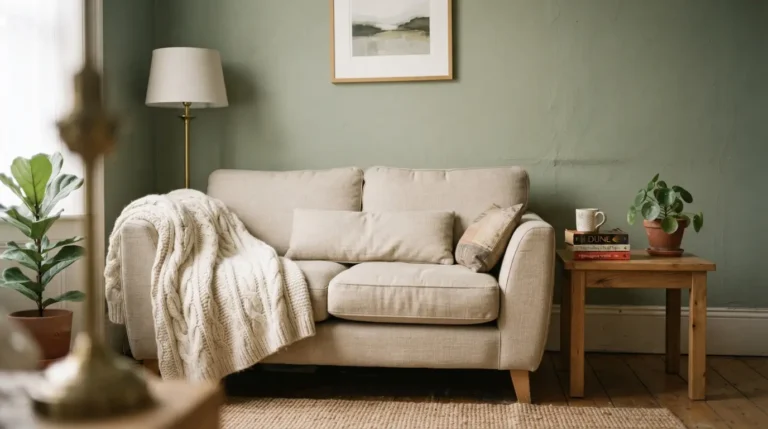
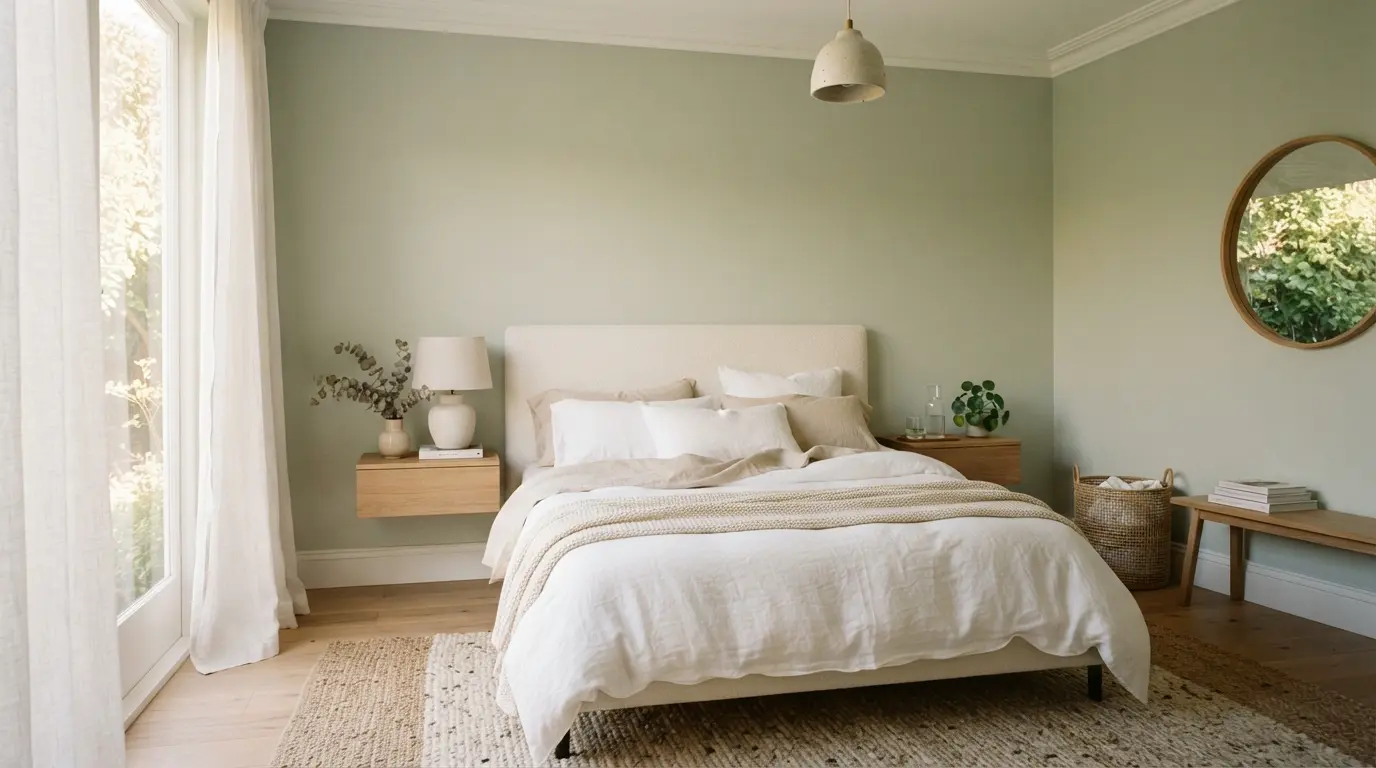
Muted, lower-saturation colours generally feel calmer to fall asleep in than bright, highly saturated ones, which is why soft blues, sages, and warm neutrals remain the most common bedroom choices rather than a fashion accident. That doesn’t mean bold colour is off the table, it just tends to work better used with intention rather than across every wall.
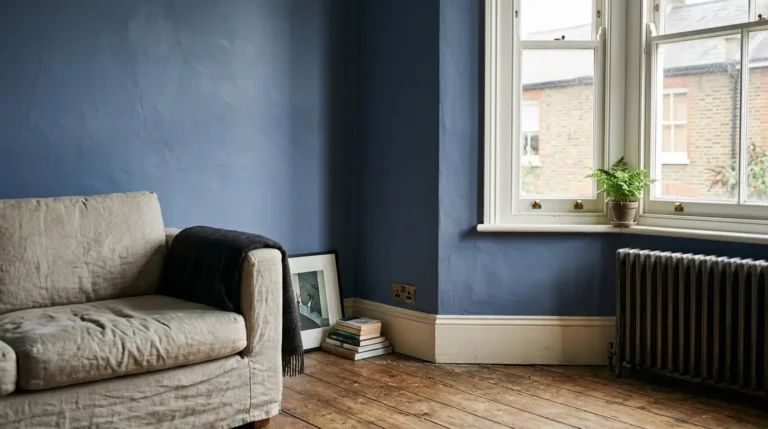
A popular and genuinely practical approach is painting just the wall behind the headboard two to four shades darker than the other three walls, which creates a cocooning, anchored feel without affecting the room you actually see while lying in bed looking toward the ceiling or the opposite wall. This gives you the drama of a bolder colour with a lower risk of it feeling overwhelming once it’s up.
Choose the Right Finish for Bedroom Walls
A matte or flat finish hides minor wall imperfections and old filler marks better than any other sheen, which makes it the more forgiving choice if your walls aren’t perfectly smooth. The trade-off is that matte finishes mark more easily and are harder to wipe clean, so they’re less forgiving around light switches or a headboard that touches the wall.
An eggshell finish has a slight sheen and wipes clean far more easily, making it a better practical choice for a bedroom with kids, pets, or anyone prone to leaning against the wall. Ceilings are almost always painted in a flat finish regardless of what you choose for the walls, since sheen on a ceiling tends to highlight every roller mark under any angled light.
Test Properly: Sample Boards, Not Just a Wall Patch
Paint a sample onto a piece of card or lining paper at least 40cm square, rather than directly onto the wall, so you can move it around the room and hold it against different surfaces and lighting conditions. A fixed patch on one wall only shows you that single spot under whatever light happens to hit it at the moment you look.
Check the sample morning, afternoon, and again in the evening with your bedside lamp or main light on, since bedrooms are one of the few rooms genuinely used under both natural daylight and warm artificial light at night. A colour that looks perfect at midday can shift noticeably once the sun goes down and only a lamp is lighting the room, so don’t commit until you’ve seen it under both.
What Does It Cost to Repaint a Bedroom?
Cost depends on room size, whether you’re doing it yourself, and how much prep work the walls need before painting, and prices vary a good deal by country and region.
| Job Type | Typical UK Cost (approx.) | Notes |
| DIY paint only, standard bedroom | £40–£100 | Standard emulsion, two coats, minimal prep |
| Professional paint job, standard bedroom | £300–£500 | Walls, ceiling, and woodwork, straightforward prep |
| Professional job with premium paint brand | £400–£700+ | Higher-end brands, more colour depth per coat |
| Extra prep (filling, sanding, stripping wallpaper) | £50–£200+ | Added to either DIY or professional cost above |
A standard bedroom in reasonable condition typically takes a professional painter one to two days to complete, including walls, ceiling, and woodwork.
Common Bedroom Paint Colour Mistakes
The most common mistake is testing a colour only in daytime light and never checking it again once the lamps are on at night, which is exactly when most people actually spend time looking at their bedroom walls. Always test under both conditions before committing to a full room.
The second mistake is ignoring undertone entirely and choosing a colour that looks neutral in isolation but clashes once it’s next to existing wood furniture or flooring. Third, people often copy a colour straight from a photo taken in someone else’s house, without accounting for the fact that their own room’s orientation and light are almost certainly different, which is why the same paint code can look noticeably different from one home to the next. If your bedroom has limited natural light or an unusual layout, an attic conversion is a common example, our guide on designing an attic bedroom covers additional considerations worth reading alongside this one.
Conclusion
Choosing the best paint colour for a bedroom comes down to working with your room’s actual light and orientation, not fighting against it with a colour that looked great somewhere else. Check the LRV, match the undertone to what’s already in the room, and test properly under both daylight and lamp light before you commit to a full wall. Get that groundwork right, and almost any shade you’re drawn to will genuinely work once it’s up.
FAQs
What is the best paint colour for a bedroom that doesn’t get much light?
Choose a colour with a higher LRV and a warm undertone, such as a soft warm neutral, blush, or warm-toned grey, rather than a cool grey or pale blue, which can read as flat and cold in a north-facing room.
Should bedroom walls be a light or dark colour?
Either can work well, depending on the room’s orientation and how much light it gets. Darker colours generally suit rooms with good natural light or strong artificial lighting, while lighter, higher-LRV colours suit rooms with limited daylight.
What finish should I use for bedroom walls?
Matte or flat finish hides wall imperfections best but marks more easily, while eggshell has a slight sheen and wipes clean more easily. Ceilings are almost always painted in a flat finish regardless of the wall choice.
Should the accent wall behind the bed be darker than the other walls?
It’s a popular and effective approach. Painting the headboard wall two to four shades darker than the rest of the room creates a cocooning feel without affecting the walls you actually see while lying down.
How do I know if a paint colour has a warm or cool undertone?
Hold the swatch or sample against a plain white sheet of paper in natural daylight. Warm undertones will show a hint of yellow, pink, or orange, while cool undertones lean toward blue, green, or grey.
How much does it cost to repaint a bedroom in the UK?
A DIY job typically costs £40 to £100 in paint alone, while a professional job for a standard bedroom generally runs £300 to £500, including walls, ceiling, and woodwork. Costs vary by country and region.