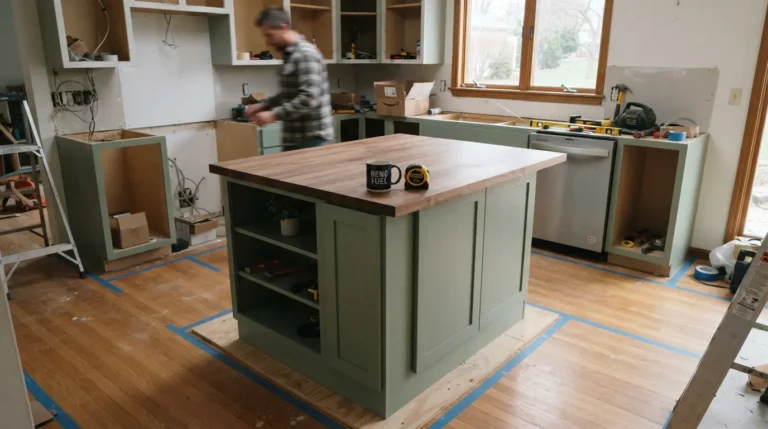

12 Bar Stool Ideas for a Kitchen Breakfast Bar or Island

Bar stool ideas work best when style and the actual measurements of your counter get decided together, since even the most striking stool is a disappointment if it’s the wrong height or too tight to sit at comfortably. The 12 ideas below cover the materials and styles worth considering, along with the real height and clearance numbers most inspiration roundups leave out entirely.
1. Backless Stools for Maximum Flexibility
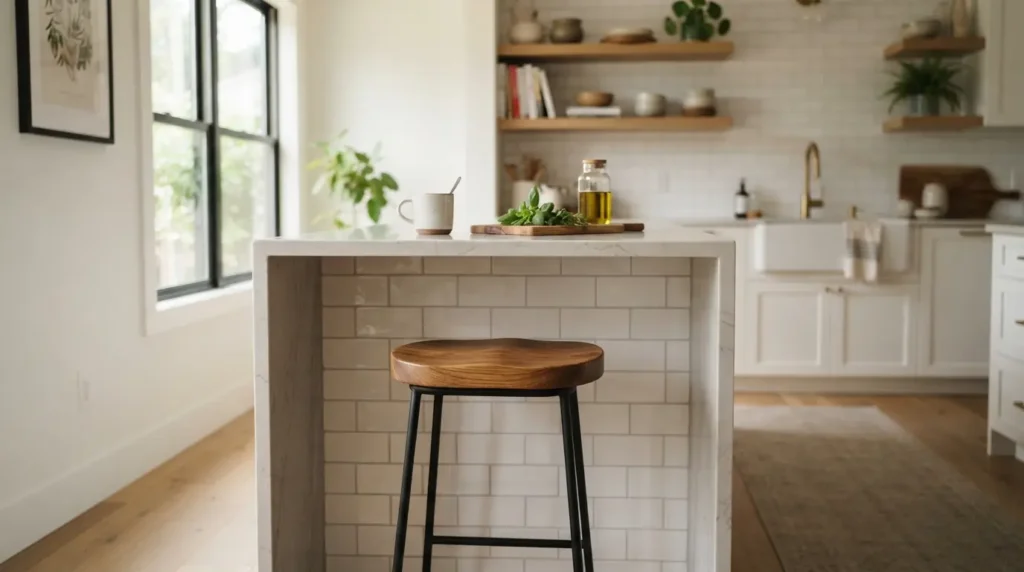
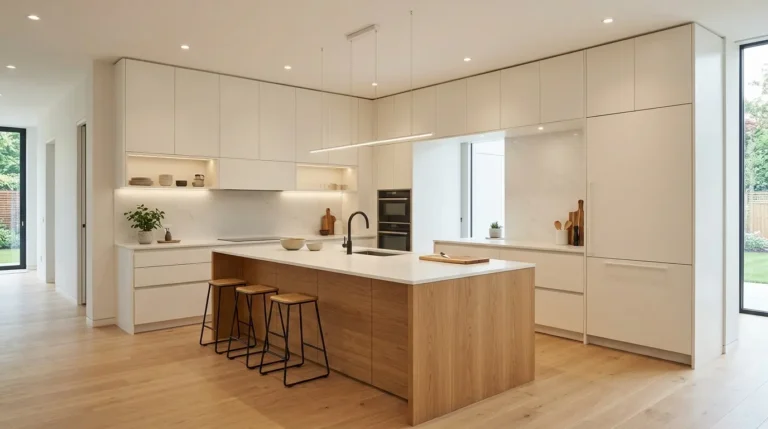
Backless stools are the most space-efficient option on this list, since they slide fully under the counter overhang and don’t take up visual weight when the kitchen isn’t in use. They suit an island that doubles as a food-prep and casual dining space particularly well, where you want the stools to genuinely disappear between uses rather than crowding the room. The trade-off is comfort over longer sits: without a backrest, they’re better suited to quick breakfasts and casual chats than lingering over a laptop for an hour. A saddle-shaped seat, slightly curved rather than flat, is worth looking for specifically in a backless design, since it gives a bit more genuine support to make up for the missing backrest.
2. Low-Back Stools for a Comfort-and-Space Compromise
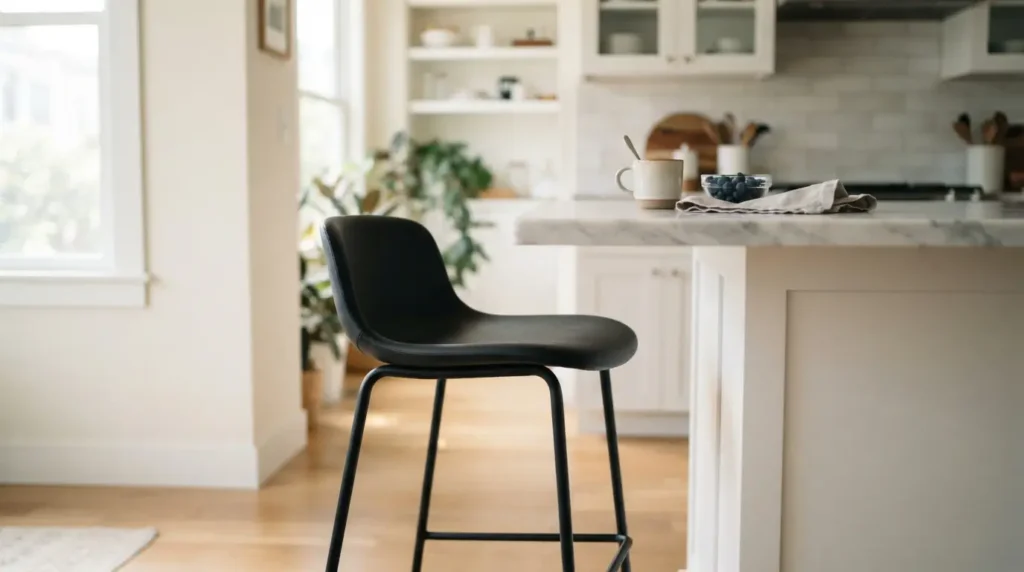
A low back, following the natural curve of your lower back without a full backrest, gives genuine support without the bulk of a full-back chair. These are shorter overall than full-back stools, so they still tuck away fairly neatly, making them a sensible middle ground if you want more comfort than a backless stool but don’t want the stools to dominate the kitchan visually when pushed in. This is often the option that suits a whole family best, comfortable enough for a lingering breakfast, compact enough not to overwhelm a moderately sized island.
3. Full-Back Stools for Genuine All-Day Comfort
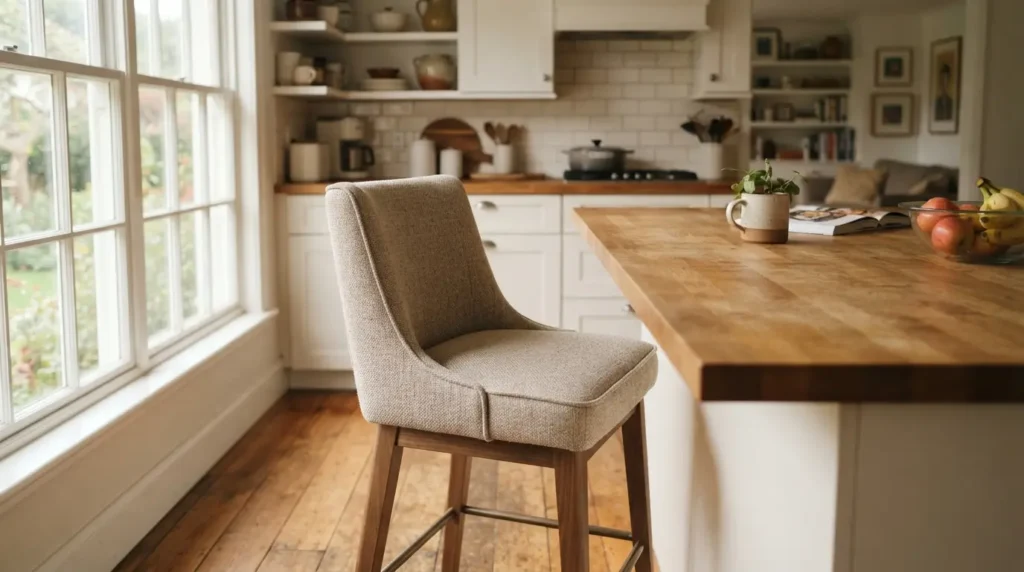
If your breakfast bar doubles as a home office spot, a homework station, or anywhere people genuinely sit for long stretches, a full-back stool is worth the extra floor space it takes up. It’s also the safer choice in a household with young children, since a full back reduces the chance of a tip-back accident that a backless or low-back stool doesn’t guard against at all. The one honest downside: a full-back stool doesn’t tuck away as neatly as the other two options, so it stays more visually present in the kitchen even when nobody’s sitting there, worth factoring in if you want the counter to look clear between meals.
4. Swivel Stools for a Multi-Use Kitchen
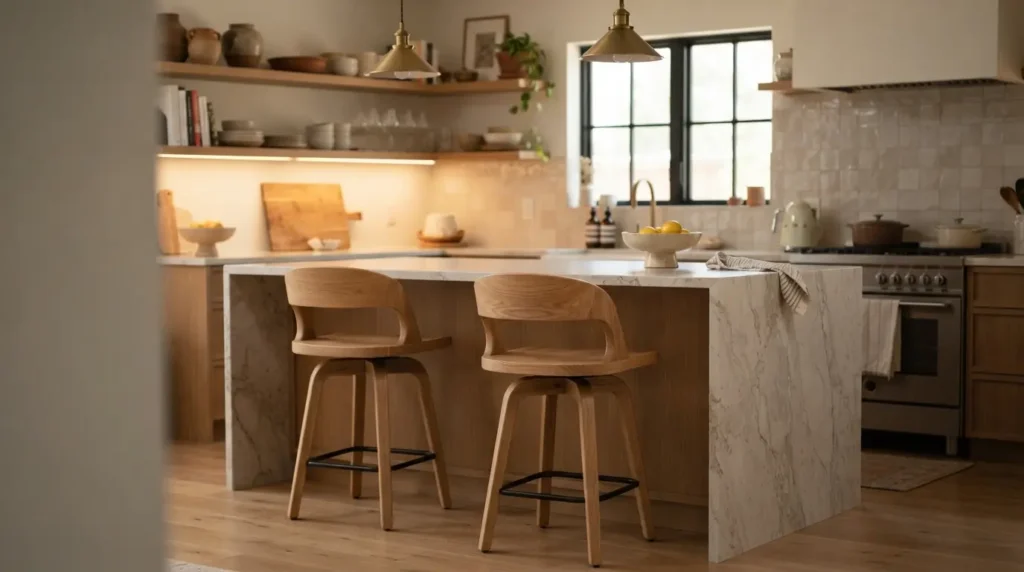
A swivel base is genuinely useful in a kitchen that serves more than one purpose, turning to face a conversation, the hob, or a TV without needing to reposition the whole stool. The detail worth planning for before buying: swivel stools need more clearance around them than stationary ones, since the seat rotates outward as someone sits down or stands up, so they suit a more open island layout better than a tight galley kitchen where a swinging stool could bump into a neighbouring seat or a cabinet. Check the swivel mechanism’s smoothness in person if you can, a cheaper mechanism can start to feel loose or catch after a year or two of daily turning, while a well-built base stays smooth for the life of the stool.
5. Adjustable-Height Stools for Mixed-Age Households
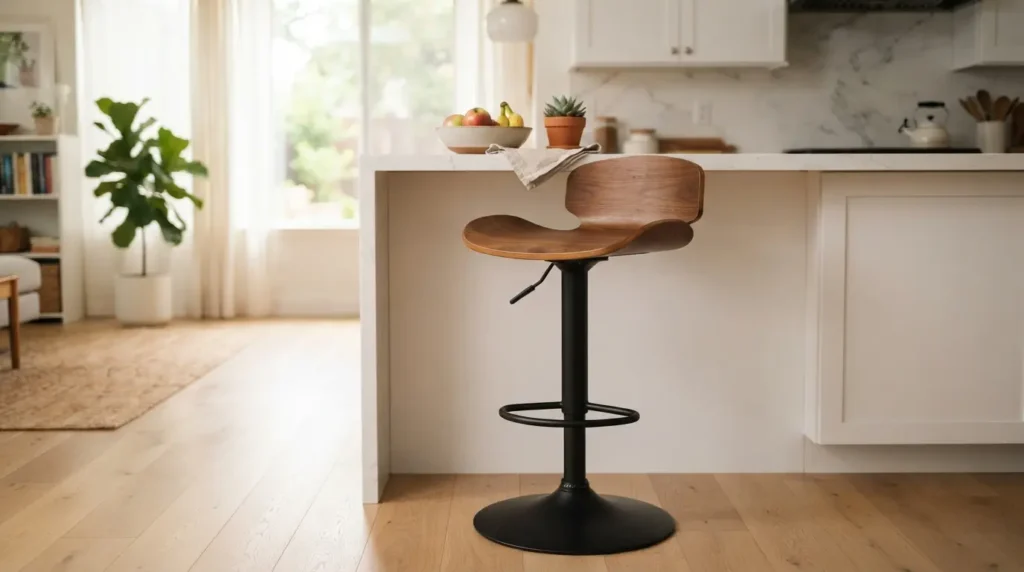
Height-adjustable stools typically offer a genuine range of around 15-25cm, which matters if your household spans different heights, shorter guests, growing children, or simply people who prefer sitting slightly lower or higher at the same counter. They’re a practical, one-purchase solution to a problem that otherwise means buying two different stool heights, though it’s worth checking the adjustment mechanism is smooth and doesn’t feel like it needs constant readjusting once it’s had a few months of regular use.
6. Leather or Faux Leather for a Wipe-Clean, Family Kitchen

Leather and good-quality faux leather seats wipe clean in seconds, which makes them a genuinely practical choice for a kitchen used daily by children or a household that cooks often. Real leather develops a soft patina with age rather than just wearing out, while faux leather offers a similar look at a lower cost but tends to show cracking at contact points sooner, worth knowing if the stools will see years of daily use rather than occasional guests. Either option beats fabric hands-down for a genuinely busy kitchen, since a quick wipe after breakfast or dinner is realistically the only maintenance most households will keep up with day to day.
7. Woven Rattan or Cane for Natural Texture
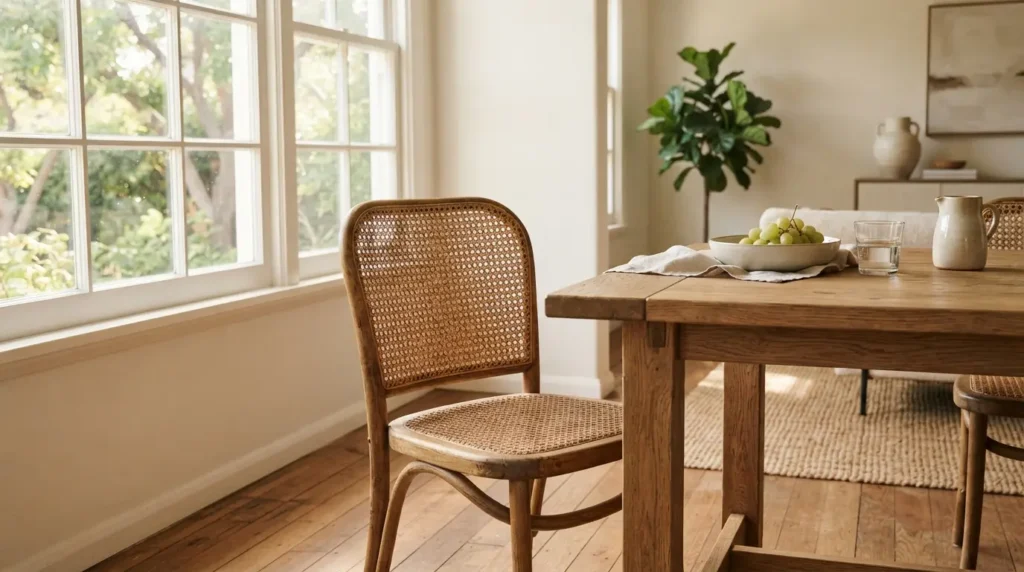
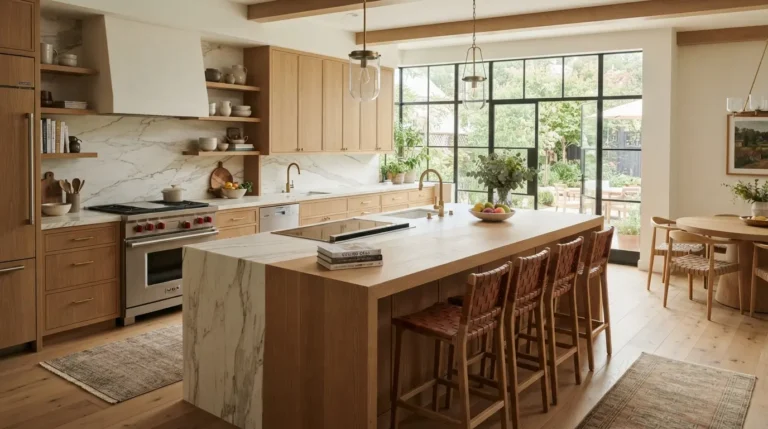
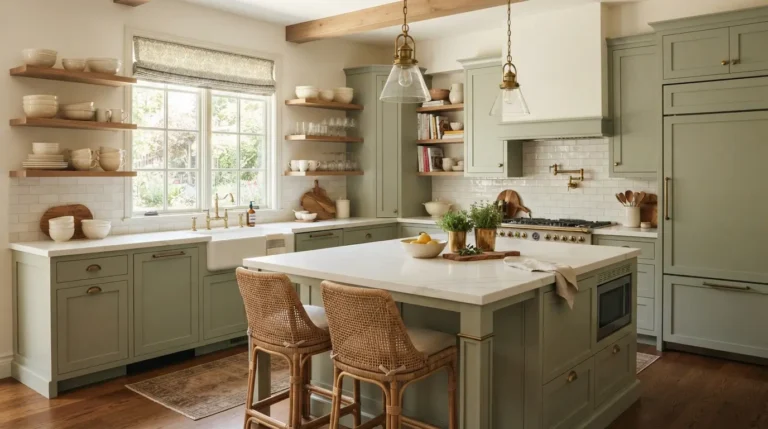
A woven rattan or cane seat brings warmth and texture that a smooth wood or metal stool can’t match, and it suits a kitchen that already leans toward natural materials, timber cabinetry, stone worktops, plants. It’s a lighter option to move around than most upholstered or solid wood alternatives, though natural cane can dry out and become brittle with prolonged direct sun, so a spot with good but not constant harsh light keeps it looking right for longer. A synthetic rattan alternative is worth considering if the stools sit near a genuinely sunny window, since it gives the same woven texture without the same risk of the material drying out over time.
8. Upholstered Fabric Seats for a Softer, Dining-Chair Feel
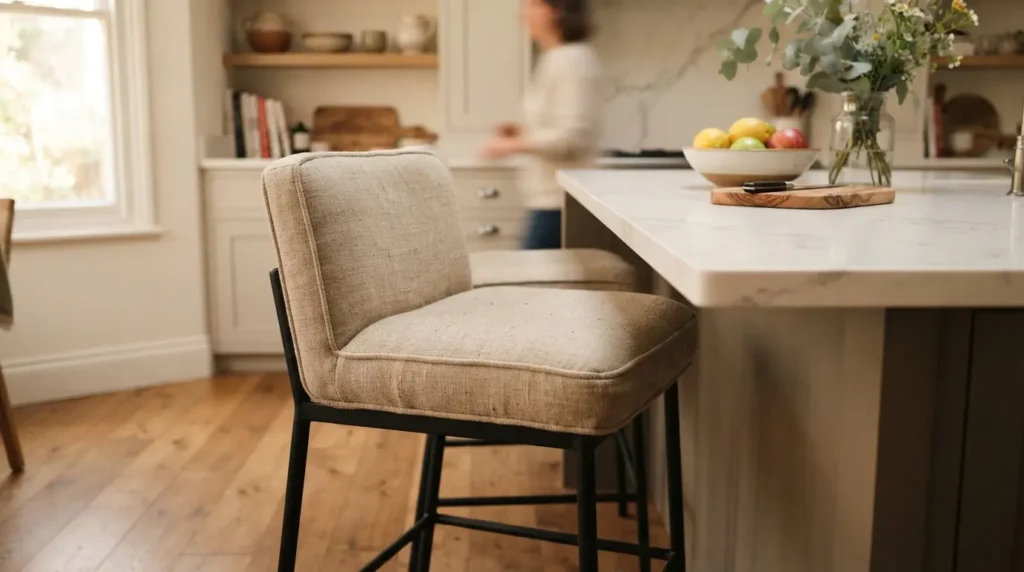
A fully upholstered stool brings the same softness and comfort as a dining chair to a breakfast bar, and it suits a kitchen where the island genuinely doubles as the main eating spot rather than a quick-stop counter. Choose a performance or stain-resistant fabric if the stools will see daily use, since standard decorative fabric marks and stains far more easily in a kitchen environment than it would in a living room. It’s also worth checking the seat’s foam density before buying if comfort matters more than looks here, a lower-density foam flattens noticeably within a couple of years of regular use, while a genuinely well-padded seat holds its shape for far longer.
9. Mixed Metal and Wood for an Industrial-Meets-Warm Look
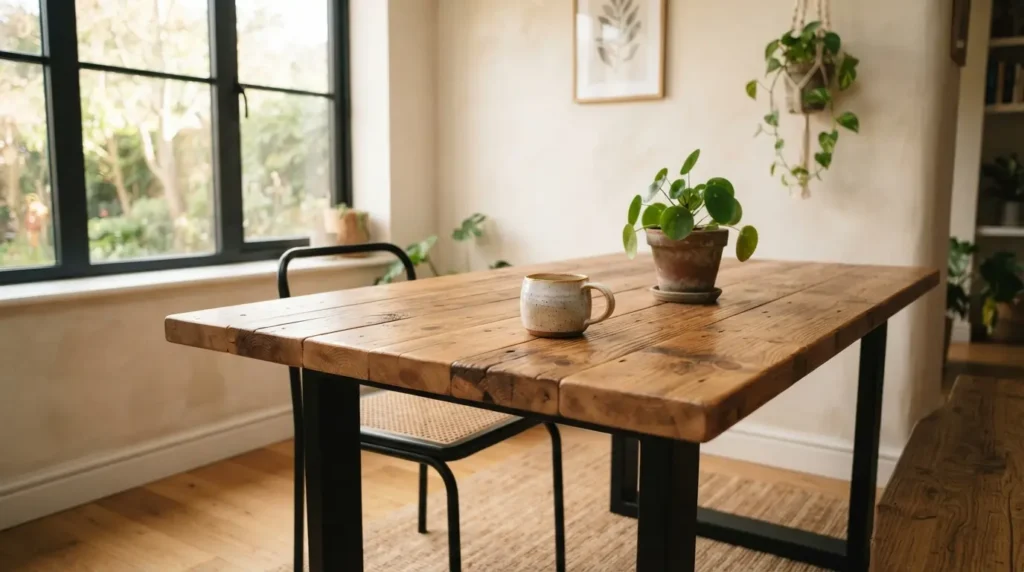
Pairing a metal frame with a solid wood seat softens the coolness a fully metal stool can bring, while still giving a slightly more architectural, contemporary edge than an all-wood design. This combination works particularly well against a kitchen that mixes materials already, a metal-framed island light fitting, wood open shelving, since it echoes that mixed-material palette rather than introducing a third unrelated look. It’s also a genuinely durable pairing day to day: the metal frame resists the knocks and scuffs a kitchen floor-level stool inevitably takes, while the wood seat softens the overall feel enough that the stool doesn’t read as purely utilitarian.
10. A Mismatched Set for a Curated, Collected Look
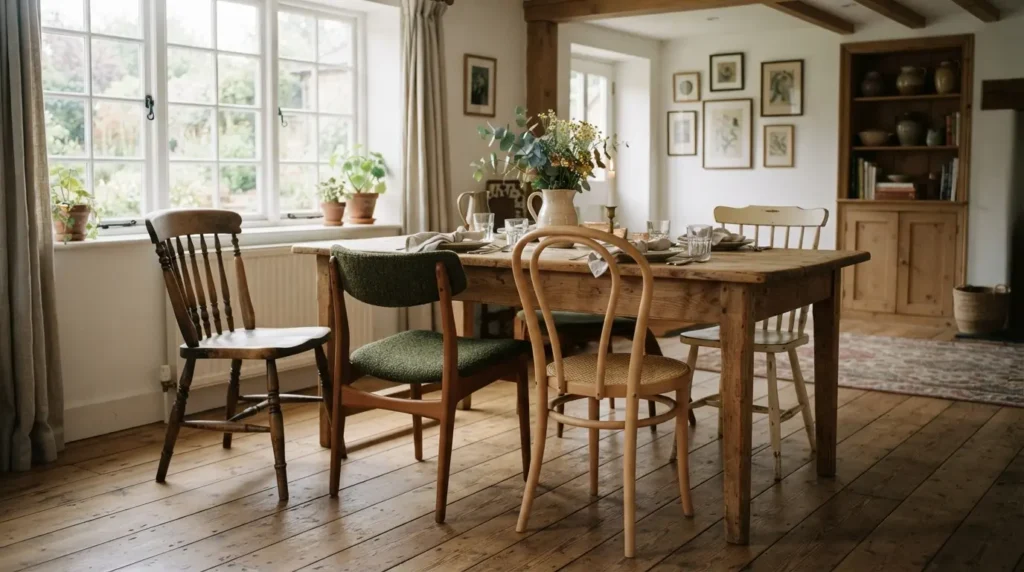
A deliberate mix of stools, different shapes tied together by a shared colour, material, or leg finish, reads as considered rather than accidental once there’s a consistent thread holding them together. This is a genuinely practical option if you’re furnishing a kitchen gradually or want a more relaxed, collected-over-time feel than a fully matching set of three or four identical stools.
11. A Vintage or Upcycled Find for Genuine Character
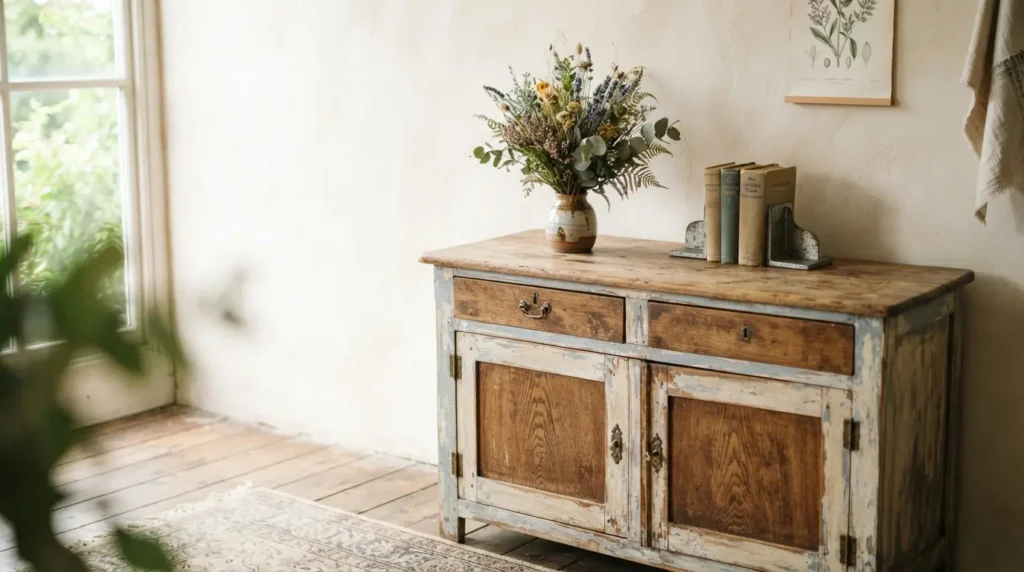
A single vintage stool, or a small set found secondhand and refinished, adds real character at a lower cost than buying new, provided the frame is genuinely sound. Check for wobble at the joints and test the seat for stability before committing, a solid vintage frame with tired paint or fabric is a good find worth restoring, while a shaky one is a repair project rather than a bargain. If the frame is sound but the seat has seen better days, a simple reupholster or a fresh coat of paint is usually a modest cost compared to buying an equivalent new stool, and it means the finished piece genuinely doesn’t match anything else on the market.
12. Get the Height and Clearance Right Before You Choose a Style
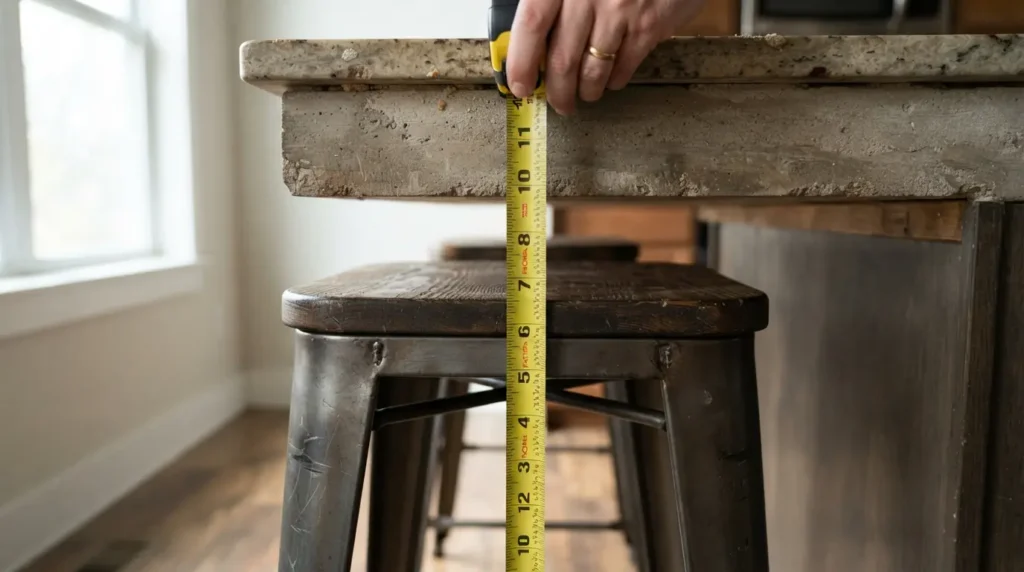
This is the detail that decides whether any of the previous eleven ideas actually work at your counter, and it’s worth getting right before you fall for a specific style.
| Counter Type | Typical Counter Height | Stool Seat Height | Knee Clearance Needed |
| Standard counter/island | Around 90cm | 65-66cm | Roughly 23-26cm |
| Raised breakfast bar | Around 105-110cm | 75-82cm | Roughly 23-30cm |
Beyond seat height, leave roughly 50-75cm of width per stool so elbows and hips aren’t competing, and check that any stool with arms clears the counter overhang with a few centimetres to spare, arms sitting too high stop a stool sliding fully under the counter. If your island has a walkway behind the seated stools rather than a wall, leave extra clearance there too, since a stool pulled out into an active path is a genuine daily annoyance rather than a one-off inconvenience.
It’s also worth checking your counter’s overhang depth specifically, the amount the countertop extends beyond the cabinets or island base below. A shallow overhang under roughly 25cm can leave even a correctly-sized stool feeling like it’s sitting too far from the counter surface, while a deeper overhang of 30-35cm gives knees genuine room without pushing the seated position too far back. If you’re designing an island from scratch rather than working with an existing one, this overhang measurement is worth confirming with your kitchen fitter before the counter goes in, since it’s far easier to get right at that stage than to compensate for afterward with stool choice alone.
Final Thoughts
The best bar stool ideas balance genuine style with the height and clearance numbers most guides treat as an afterthought. Measure your counter and settle on the right seat height and spacing first, then choose the material, back style, and finish that suits your kitchen, and the stools you pick will be as comfortable to actually sit at as they are to look at. A stool that looks perfect in a photo but sits at the wrong height, or leaves no room to actually pull it out, isn’t a style mistake, it’s a measurement one, and it’s the easiest of the two to avoid.
FAQs
What height bar stool do I need for my kitchen island?
Measure your counter height first. A standard island around 90cm needs a stool with a seat height of roughly 65-66cm, while a raised breakfast bar around 105-110cm needs a taller stool around 75-82cm, both aiming for 23-26cm of knee clearance underneath. If your counter falls somewhere between these two common heights, an adjustable-height stool is often the simplest fix rather than trying to find an exact match by label alone.
How much space should I leave between bar stools?
Aim for roughly 50-75cm of width per stool, measuring centre to centre, so elbows and hips have room without stools crowding each other.
Are swivel bar stools a good idea for a kitchen?
Yes, particularly in a multi-use space, but they need more clearance around them than stationary stools since the seat rotates outward when someone sits or stands. They suit an open island layout better than a tight galley kitchen.
Do I need bar stools with backs?
It depends on how long people actually sit there. A quick-stop breakfast counter works fine with backless stools, while a spot used for longer periods, homework, working from home, benefits from a low or full back for genuine comfort.
What’s the difference between counter height and bar height stools?
Counter height stools, typically 65-66cm, suit a standard island around 90cm high. Bar height stools, typically 75-82cm, suit a raised breakfast bar around 105-110cm. Checking your actual counter measurement matters more than trusting either label alone.