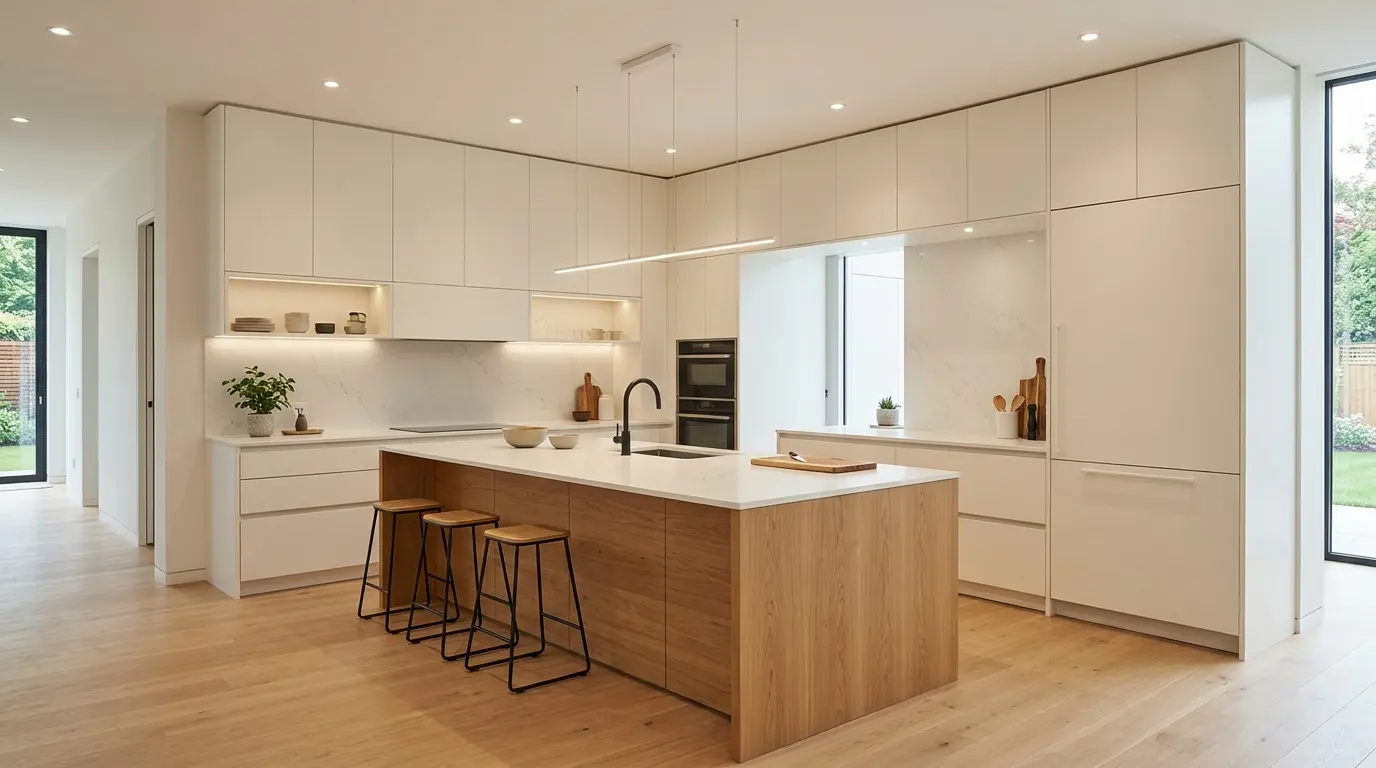
12 Modern Kitchen Ideas for a Clean and Contemporary Space

A modern kitchen is defined by clean lines, reduced ornament and materials that feel honest rather than decorative. In 2026 the look has warmed up: warm whites, natural wood grain, matte finishes and layered lighting have replaced the cold all-white schemes of the previous decade. The goal is a space that photographs well but, more importantly, stays easy to clean and use every day.
These twelve ideas focus on choices that create that clean contemporary feel without requiring a full custom build. They work in both fitted and modular kitchens and can be adapted to most UK homes.
1. Choose Handleless or Slim Recessed Handles
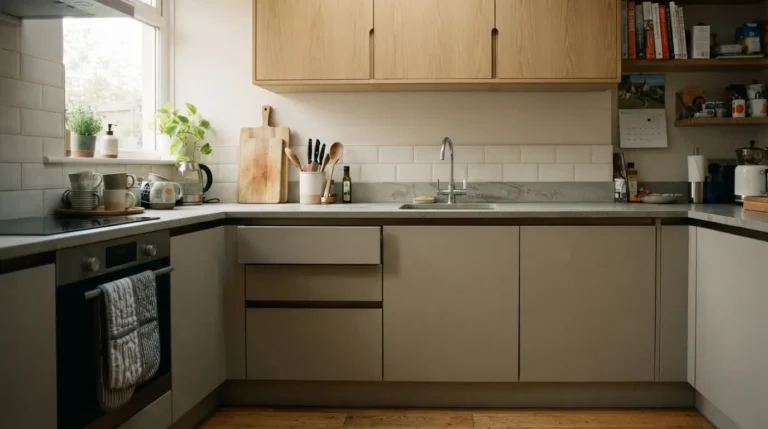
Visible knobs and thick pulls interrupt the clean planes of modern cabinetry. Handleless doors with a finger-pull groove or very thin recessed handles keep the elevation simple. Most UK suppliers (Howdens, Wren, Magnet) offer handleless ranges at mid-market prices; the doors themselves cost more but the overall look is calmer.
If full handleless is outside the budget, use slim black or brass bar handles on slab doors. The key is consistency: one style of hardware throughout the kitchen.
2. Use Warm Neutrals Instead of Pure White
Stark white cabinets can feel clinical under UK daylight. Soft warm white, greige or a light mushroom tone reads as modern but feels more forgiving and less stark. Pair with a honed or matte quartz worktop in a similar temperature so the surfaces do not fight each other.
For contrast, introduce one deeper tone on the island or the tall units. Navy, deep green or a stained oak all work. Our colour scheme article covers reliable combinations that still look current.
3. Integrate Appliances Behind Cabinet Fronts
A continuous run of doors with the fridge, dishwasher and oven hidden behind matching fronts is one of the quickest ways to make a kitchen look considered. Integrated appliances cost more upfront but the visual payoff is high. Check the door thickness and hinge type when ordering so the fronts align perfectly.
If full integration is not possible, choose appliances with a matching finish to the cabinets or keep freestanding pieces the same colour as the tall units so they recede.
4. Specify a Matte or Honed Worktop
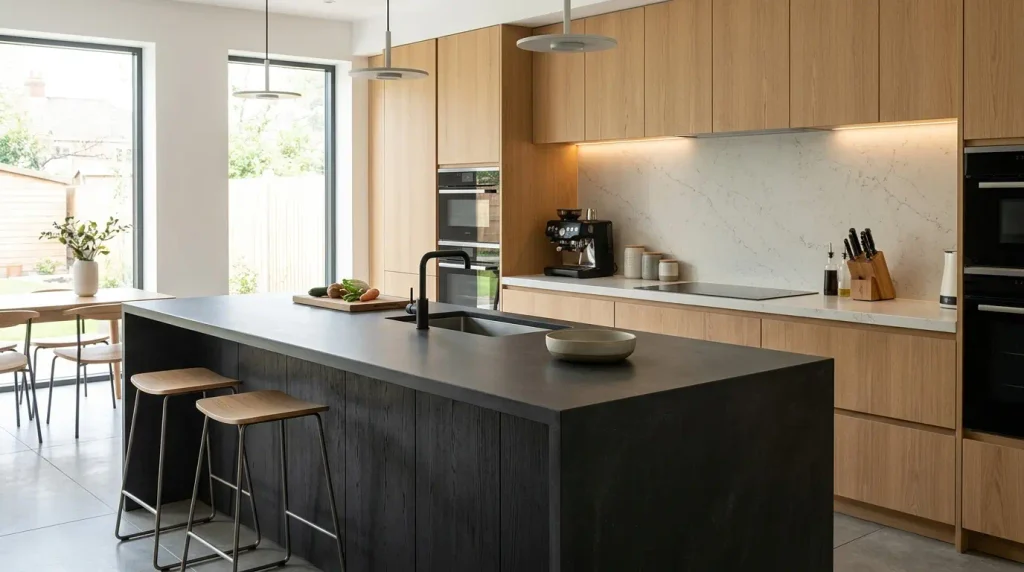
High-gloss worktops show every fingerprint and water mark. Matte quartz, honed stone or a solid-surface material in a low sheen stays cleaner looking and feels more contemporary. Light tones with subtle veining are still popular; darker charcoal or concrete-look surfaces give a stronger modern statement.
Budget £250–£500 per linear metre for good mid-range quartz. Order a sample and view it next to the cabinet doors under your own lighting before committing.
5. Layer Lighting with Under-Cabinet Strips and Recessed Spots
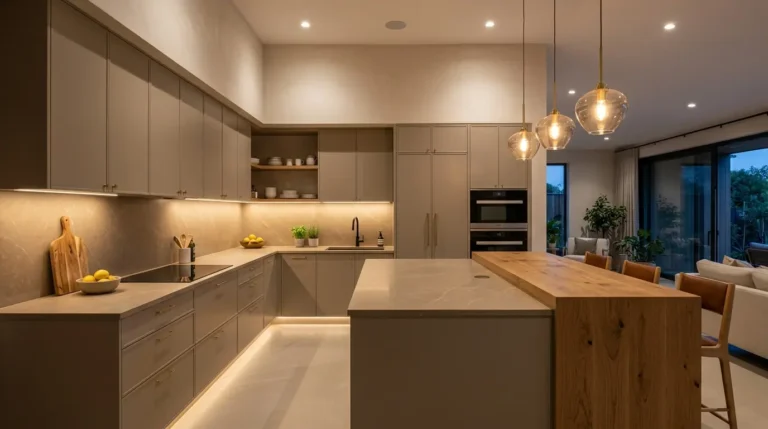
A single central ceiling light is not enough for a modern kitchen. Recessed downlights on a grid give even ambient light; LED strips under the wall units remove shadows on the work surface. Add one or two linear pendants or a slim bar light over the island if you have one.
Use 2700–3000 K throughout so the light feels warm rather than clinical. Put the task lighting on a separate circuit. See how to layer kitchen lighting for the full sequence.
6. Keep the Splashback Simple and Continuous
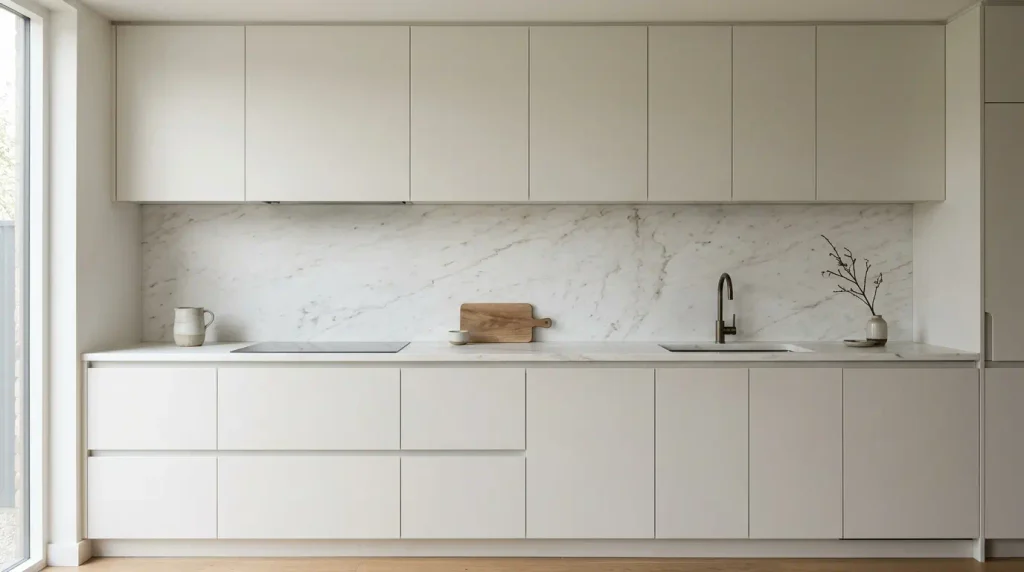
A busy patterned tile fights the clean cabinet lines. Large-format porcelain, a single slab of the same material as the worktop, or a simple painted glass panel keeps the elevation calm. Run the splashback the full length of the worktop and up to the underside of the wall units so there are no awkward cut-offs.
If you want texture, a subtle ribbed or fluted tile in a matching tone adds interest without pattern. Avoid high-gloss tiles if your worktop is also glossy; the reflections multiply.
7. Introduce Natural Wood as an Accent
A fully painted kitchen can feel cold. One run of oak or walnut doors, an oak island end panel, or a timber breakfast bar brings warmth and texture. Use the wood on the lower cabinets or the island so it is grounded; painted uppers keep the eye line light.
Choose a clear or lightly tinted oil finish so the grain shows. Avoid very dark stains if the rest of the kitchen is light; the contrast can look dated rather than modern.
8. Use Full-Height Units for a Taller Appearance
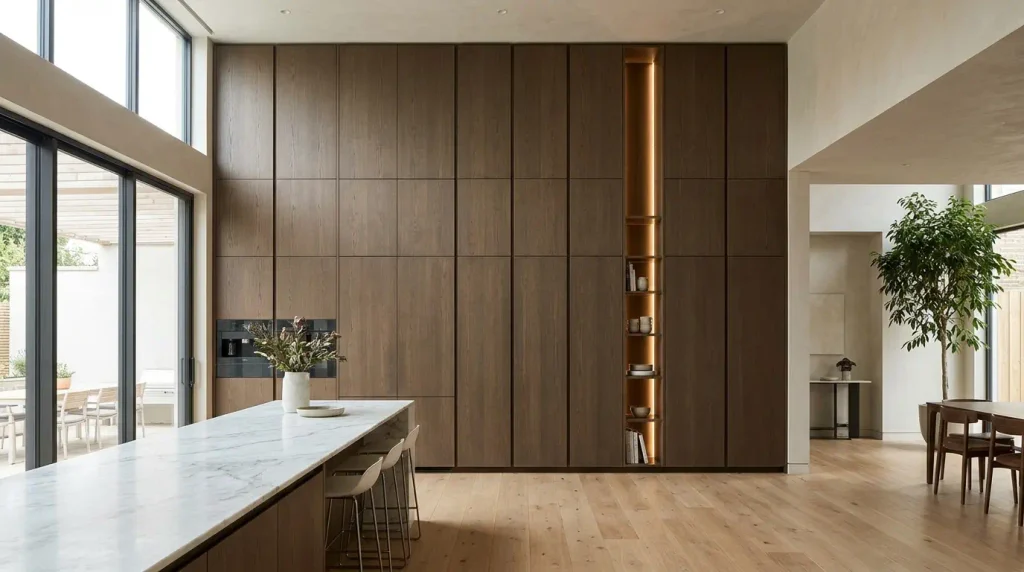
Running wall cabinets to the ceiling removes the dust-collecting gap and makes the room feel taller. In a modern kitchen this also creates a cleaner vertical line. Most suppliers offer 720 mm or 900 mm wall units; stacking a standard unit with a filler panel to the ceiling is a common workaround.
Leave a small shadow gap or use a slim cornice if the ceiling is uneven. The result looks more architectural than a row of cabinets that stop short.
9. Plan Storage So Surfaces Stay Clear
A modern kitchen only looks clean if the worktops are mostly empty. Deep drawers instead of base cupboards, pull-out larder units and appliance garages keep everyday items hidden. A single open shelf or a small tray for oils and salt is enough visual interest.
Specify soft-close on every drawer and door. It costs little extra and removes the noise that makes a kitchen feel unfinished.
10. Choose a Floor That Continues the Calm Palette

Large-format porcelain tile, wide-plank engineered oak or a good LVT in a neutral tone keeps the floor from competing with the cabinets. Avoid busy patterns or high-gloss finishes. In an open-plan space the same floor running into the living area makes the kitchen feel larger.
Underfloor heating pairs well with tile or LVT and removes the need for radiators that break the clean wall lines. See our kitchen flooring ideas for practical comparisons.
11. Add One Statement Piece Rather Than Many
A modern kitchen can feel flat if every surface is the same. One strong element, a coloured island, a sculptural tap, a linear pendant or a textured splashback, gives the eye a place to rest. Keep everything else quiet so the statement reads clearly.
The island is the most effective place for this because it sits in the middle of the room. A different door colour or a contrasting worktop edge is usually enough.
12. Prioritise Easy-to-Clean Surfaces
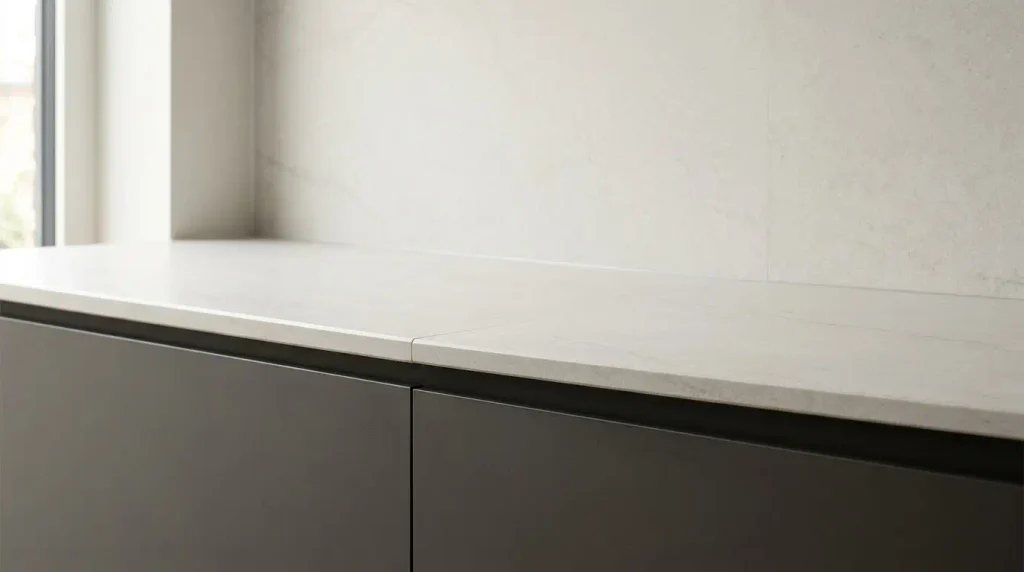
Matte cabinet doors, seamless worktops and a continuous splashback are easier to wipe down than traditional profiles with raised panels and mouldings. Choose materials that do not require special cleaners. This practicality is what keeps a modern kitchen looking modern after the first year of real use.
Avoid open shelving for items that collect grease; reserve it for crockery you use and wash regularly.
Typical Cost Bands for a Modern Kitchen
| Level | What you get | Approx. supply & fit |
| Budget modern | Slab doors, laminate worktop, basic integrated | £8,000–£12,000 |
| Mid modern | Handleless, quartz, good appliances | £15,000–£25,000 |
| Higher end | Custom colours, stone, full integration | £30,000+ |
Practical Considerations for a Modern Kitchen
Modern does not mean fragile. Choose materials that can be wiped clean without special products. Matte cabinet doors hide fingerprints better than high gloss. Quartz worktops resist staining better than marble. Soft-close hardware is worth the small extra cost because it removes the constant noise of doors and drawers. When specifying integrated appliances, confirm the exact door thickness and hinge type with both the cabinet supplier and the appliance manufacturer so the fronts align. In UK homes with limited natural light, warm white lighting (2700–3000 K) prevents the space from feeling cold even if the palette is light. A single statement element, whether a coloured island, a textured splashback or a linear pendant, is usually enough; more than one competes for attention and the clean contemporary feel is lost.
Lighting is the element that most often separates a good modern kitchen from a mediocre one. Plan the positions of recessed downlights so they light the worktops rather than the middle of the floor. Under-cabinet strips are non-negotiable for task light. If the kitchen is open plan, consider how the lighting relates to the adjacent living area so the two spaces feel connected but distinct. Dimmer switches on the ambient and pendant circuits give flexibility. For a full explanation of the three layers, see our guide on how to layer kitchen lighting. With the lighting right, even a simple palette of warm white cabinets and a matte worktop feels considered and current.
Colour choices in a modern kitchen benefit from restraint. A warm off-white or soft greige on the main cabinets with one deeper tone on the island or tall units creates interest without busyness. Natural oak or walnut as an accent on the island end or breakfast bar adds warmth that pure painted surfaces lack. The worktop should sit in the same colour temperature as the cabinets so the surfaces feel related. Test samples under your own lighting; showroom lights are often cooler and brighter than a typical UK kitchen. Our kitchen colour scheme ideas explore combinations that remain current without following short-lived trends. The modern look lasts longer when the palette is calm and the materials are honest.
A clean contemporary kitchen comes from restraint in the details and attention to how the space is used. Handleless or slim hardware, warm neutrals, integrated appliances, matte surfaces and layered lighting do most of the work. Add one material accent and plan the storage so the worktops stay clear. The result looks current, feels calm and remains practical for years.
What defines a modern kitchen in 2026?
Clean lines, warm rather than stark colours, matte finishes, natural wood accents and layered lighting. The all-white high-gloss look has largely given way to softer, more tactile schemes.
Are handleless kitchens more expensive?
The doors usually cost more than standard slab doors with handles, but the difference is often less than people expect. The main saving is visual rather than financial.
How do I keep a modern kitchen looking tidy?
Deep drawers, pull-out storage and appliance garages keep everyday items off the worktop. A single open shelf for items you use daily is usually enough.
Can I achieve a modern look on a budget?
Yes. Slab doors, a good laminate or entry-level quartz, under-cabinet lighting and integrated appliances on the main units create most of the effect without custom joinery.