How to Choose the Right Dining Room Furniture for Your Space

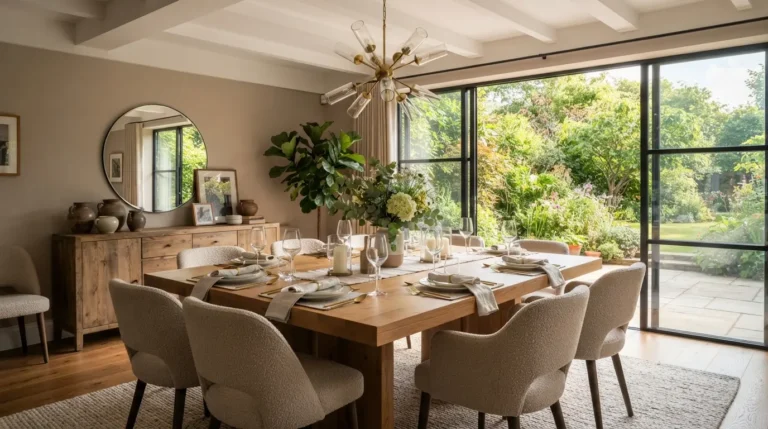
Choosing the right dining room furniture starts with the table, sized with real confidence rather than caution, since a table genuinely reads smaller in a finished room than it looks on a floor plan. This is the mistake behind more disappointing dining rooms than any material or style choice, a table that seemed reasonably sized on paper ends up looking swamped and undersized once it’s actually in the room with chairs pulled up around it.
Choose Your Table Size With Confidence, Bigger Often Reads Better
A dining table is visually light compared with a piece like a sofa, it doesn’t read as a solid block covering the floor, it effectively floats in the space, which is exactly why it can look considerably smaller in reality than its dimensions suggest on a plan. The practical guidance worth following: choose as large a table as your room genuinely allows, since most households find they want more table space rather than less once they’re actually using it regularly. As a working clearance figure, aim for a minimum of 70cm between the table’s edge and the nearest wall or furniture, extending to around 90cm where you want the room to feel genuinely spacious rather than merely adequate.
Check the Leg and Frame Structure Before You Commit to Seating Capacity
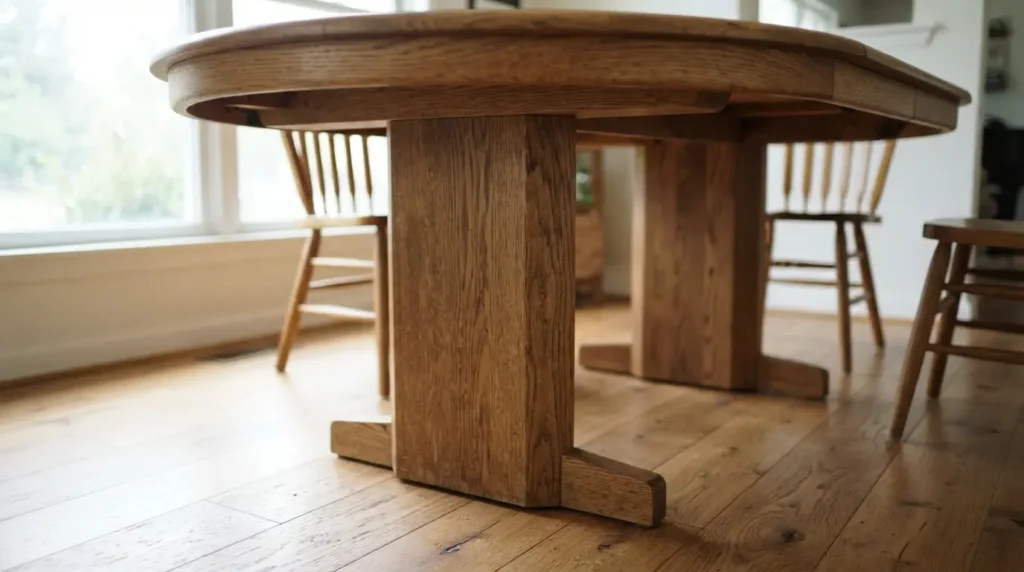
This is a detail worth checking in person or in real product photos rather than assuming any table advertised as seating a certain number will actually deliver that comfortably. Table legs positioned too close to the edges, or a bulky structural element at either end, genuinely limits how many people can sit around the table without knocking knees or struggling to get in and out. Look for a table with legs set well back from the edges, and consider an oval shape or one with gently rounded ends specifically if you need to squeeze in extra seating, since these shapes make it easier for people to move in and out without catching clothing on sharp corners.
Choose a Material That Ages Well Rather Than One That Shows Every Mark
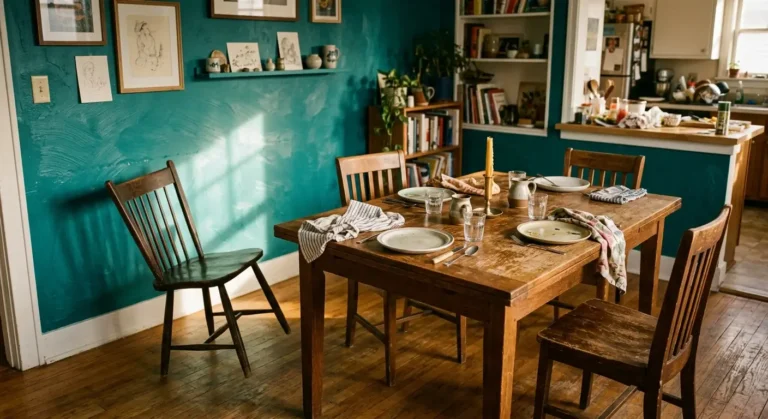
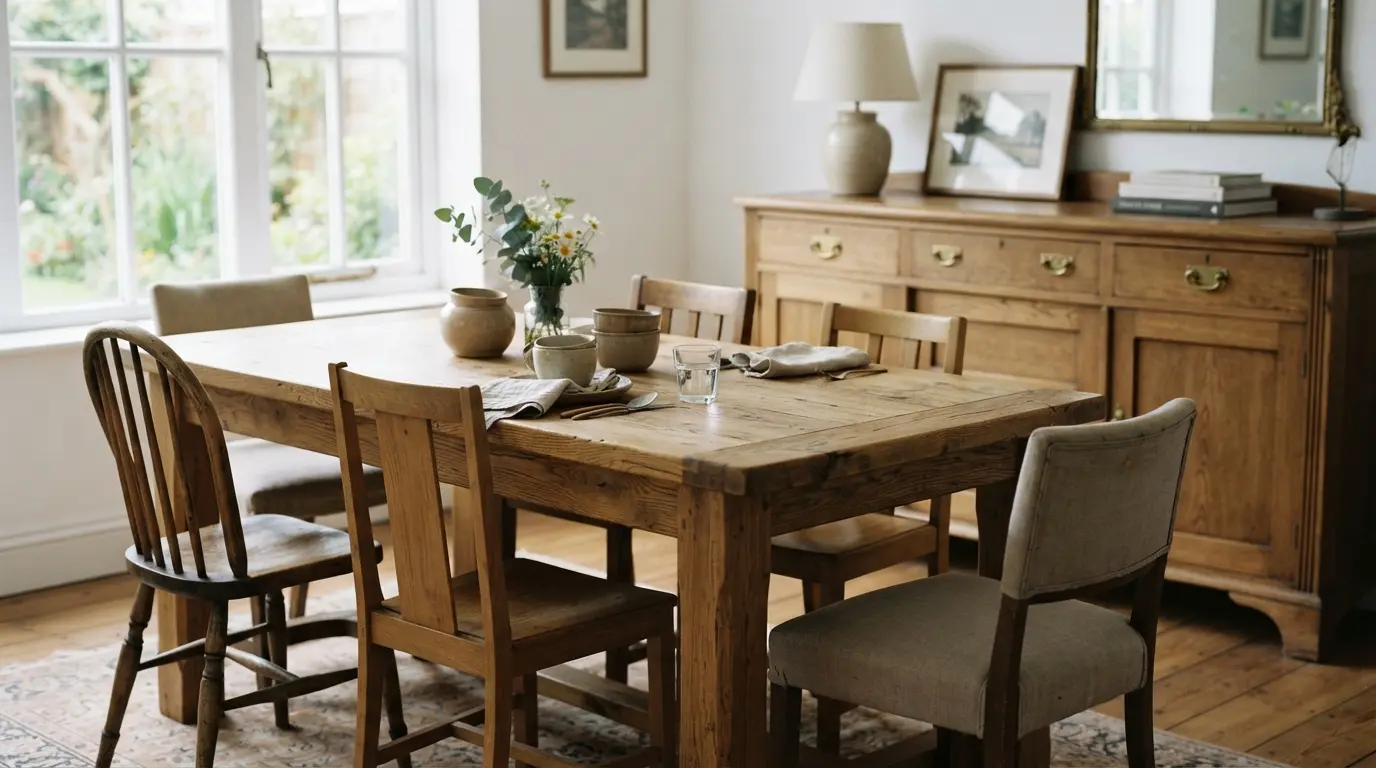
A genuinely good dining table is a piece of furniture your household will live with for years, possibly decades, so it’s worth choosing a material with that timeline in mind rather than purely how it looks on delivery day. Solid wood with a natural finish ages with real character, developing a genuine patina from the knocks and scrapes of daily use rather than simply looking worn out. If you’re someone who’s honestly bothered by visible marks or staining, a naturally resilient wood like oak is a sensible, forgiving choice, since it handles the reality of daily family life considerably better than a more delicate finish that shows every mark from day one.
Consider a Small, Versatile Table If Your Space Is Genuinely Tight
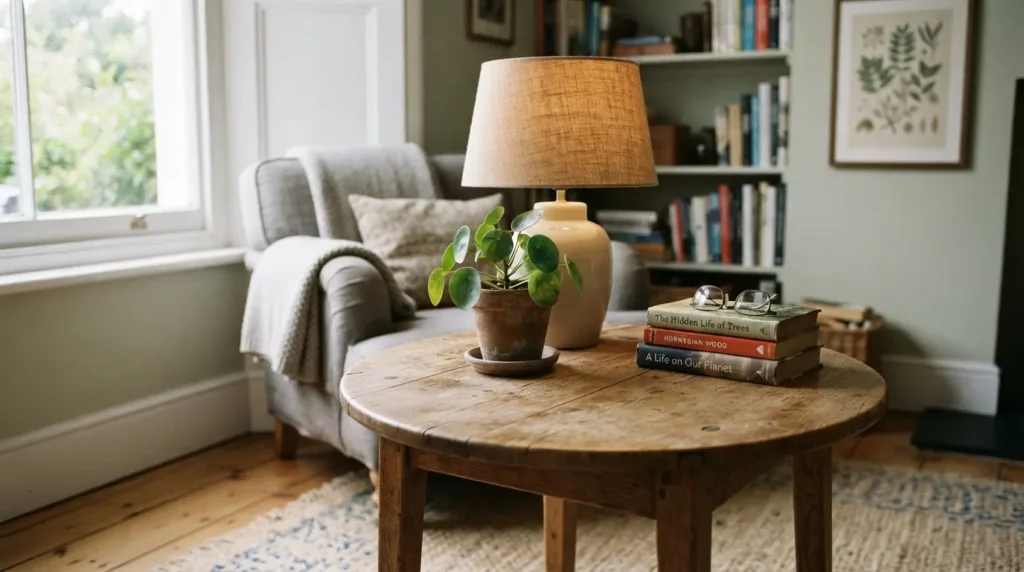
In a smaller home or an apartment where the dining area blends into the kitchen or living space, a compact round table, roughly 120cm in diameter comfortably seats 4-6, offers genuine versatility beyond a single fixed dining role. A table this size works equally well tucked into the corner of a living room, positioned in a kitchen, or even as a considered centre table in a hallway or entrance, and it can double as a side table styled with a lamp and a plant when it’s not actively being used to eat at. This flexibility is genuinely useful in a household that needs furniture to work harder across multiple functions rather than sitting idle between meals.
Select Chairs for Comfort First, Then Style
Once your table is chosen, select chairs that are genuinely comfortable to sit in for the length of a full meal, this matters more long-term than whether they match the table exactly. Chairs don’t need to be an identical matching set, mixing styles that share a common material, colour, or overall feel reads as considered rather than mismatched, and it gives you real flexibility to add or swap chairs individually over time rather than needing to replace an entire matching set if one style is discontinued or simply falls out of favour.
Add Storage Furniture That Suits How You Actually Use the Room
A sideboard, buffet, or console genuinely earns its place in a dining room beyond decoration, giving you somewhere to serve from during a meal, store table linens and extra glassware, and display a few considered accessories when it’s not in active use. Choose the piece based on how you actually entertain, a household that hosts regularly benefits from genuine serving surface and storage capacity, while a smaller household eating mainly day to day might prioritise a more compact piece that doesn’t dominate a modestly sized room.
Bring the Pieces Together With a Consistent Style Thread
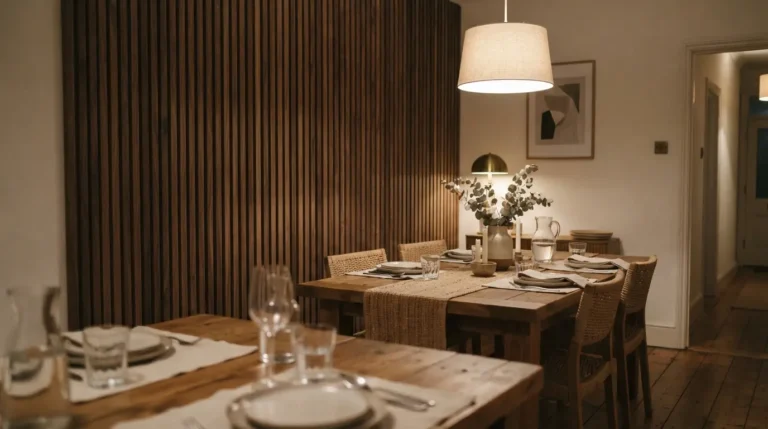
Rather than buying every piece from one matching collection, aim for a consistent thread running through the room instead, a shared wood tone, a repeated metal finish on hardware and light fixtures, or a coordinated colour palette across chairs and any upholstered pieces. This gives the room a genuinely put-together feel without requiring every single item to come from the same range, and it makes the room far easier to update gradually over time as individual pieces need replacing.
Sequence Your Budget Around the Table First
If your budget doesn’t stretch to everything at once, prioritise the table itself as the piece worth the greatest investment, since it’s the item you’ll use most, keep longest, and build the rest of the room’s furniture and styling around. Chairs, storage furniture, and accessories can reasonably be added or upgraded gradually afterward, but a table chosen as a compromise purely to save money upfront is the piece most likely to leave you wishing you’d sized up or chosen a more durable material from the start.
Final Thoughts
Choosing the right dining room furniture really comes down to sizing your table with genuine confidence, checking its leg structure for real seating comfort, and choosing a material built to age well rather than simply look good on delivery day. Prioritise the table as your main investment, build chairs and storage around it with a consistent style thread rather than a strict matching set, and the room will function properly and look considered for years, not just in the first few months.
FAQs
Should I buy the biggest dining table my room can fit?
Generally yes, within reason, since a table reads visually smaller in a finished room than it appears on a floor plan, and most households find they want more table space rather than less once they’re using it regularly. Keep at least 70-90cm of clearance to the nearest wall or furniture as your guide.
What’s the best material for a long-lasting dining table?
Solid wood with a natural finish, oak in particular, ages well and develops genuine character from daily use rather than simply looking worn. It’s a particularly sensible choice if you’re likely to be bothered by visible marks or staining over time.
Do dining chairs need to match the table exactly?
No, chairs that share a common material, colour, or overall style with the table and the rest of the room read as considered rather than mismatched, and this approach gives you genuine flexibility to update or add chairs individually over time.
What furniture do I actually need in a dining room beyond a table and chairs?
A sideboard, buffet, or console is genuinely useful for serving, storage, and display, particularly in a household that entertains regularly. The right size and style depends on how often you host and how much storage capacity your household actually needs.
Should I buy dining furniture as a matching set?
Not necessarily. A consistent style thread, a shared wood tone, a repeated metal finish, or a coordinated palette, ties the room together just as effectively as a fully matching set, while giving you more flexibility to update pieces individually as needed.