15 Coffee Table Ideas for Every Living Room Style

The best coffee table for your living room depends on your seating layout, your style, and how the table actually gets used day to day. A low walnut table suits a mid-century sofa the way a mirrored one never will, and a family room with kids needs different proportions than a formal sitting room. Here are 15 coffee table ideas built around real living room styles, not just what looks good in a single photo.
How to Choose the Right Coffee Table Before You Style It
Get the size and height right first, because no amount of styling fixes a table that’s wrong for the room. As a general rule, the tabletop should sit level with your sofa seat or up to 5cm lower, and you want roughly 40 to 45cm of clearance between the table edge and the sofa so legs can pass without knocking it. For length, aim for a table around two thirds the length of your sofa. A table that’s too small reads as an afterthought, and one that’s too large blocks the walking path around it.
Budget varies enormously by material. A basic laminate or veneer coffee table starts around £80 to £150. Solid wood, rattan, or a well-made ottoman coffee table typically runs £200 to £500. Marble, travertine, or designer pieces in burl wood or lacquer can run £600 upward, sometimes well into four figures for a statement piece. These figures are approximate and vary by country and retailer, so treat them as a starting point rather than a fixed budget.
1. Low-Slung Glass Table for Modern Minimalist Living Rooms
A glass coffee table with slim metal legs keeps a minimalist room feeling open, since the surface barely registers visually against the floor. It works best with a low, streamlined sofa and very little else competing for attention in the room.
The honest trade-off here is maintenance. Glass shows every fingerprint and water ring, so this table needs wiping down more than any other option on this list. Households with young children or pets often find the upkeep more than they bargained for.
2. Pale Ash or Birch Round Table for Scandinavian Living Rooms
Scandinavian rooms lean on pale, tactile timber to keep spaces feeling calm and uncluttered, and a round table in ash or birch fits that brief without adding visual weight. The rounded edges also soften a room built mostly from straight lines, like shelving and simple sofa frames.
Pair it with a neutral wool rug and one sculptural object rather than a full tabletop display. Scandinavian styling relies on restraint, and an overstyled table undercuts the whole look.
3. Reclaimed Wood and Black Metal Table for Industrial Living Rooms
Industrial living rooms call for materials that look like they’ve done actual work: reclaimed wood tops with visible grain and knots, set on a black powder-coated metal frame. The contrast between the raw timber and the utilitarian metal base is what sells the style, so avoid anything with a glossy, refined finish.
This combination holds up well day to day, since reclaimed wood is usually already sealed and metal frames don’t scratch the way lacquer does. The main downside is weight. These tables are genuinely heavy, so think through the room layout before committing, since rearranging isn’t a quick job.
4. Vintage Trunk for Farmhouse and Rustic Living Rooms
A vintage or antiqued trunk brings genuine character to a farmhouse living room, and it does double duty as hidden storage for blankets or games. It’s one of the few coffee table ideas on this list that isn’t technically a table at all, which is part of the appeal.
A common mistake with trunks is choosing one purely for looks without checking the lid opens flat and locks in place, since a wobbly or loose lid becomes a hazard once you’re using it as a surface for drinks. Look for a trunk with a flat, stable lid and reinforced corners if you plan to use it daily rather than as a decorative piece.
5. Woven Rattan Table for Coastal Living Rooms
Rattan brings texture and warmth to a coastal or beach style living room without feeling heavy, and it pairs naturally with linen sofas and jute rugs. A rattan coffee table with a glass or wood insert on top adds a practical, easy to clean surface while keeping the woven base visible.
Rattan does need a stable indoor climate. In very dry, centrally heated homes the weave can loosen or crack over years, so keeping the piece away from direct radiator heat helps it last.
6. Tapered-Leg Walnut Table for Mid-Century Modern Living Rooms
Warm walnut with slim, angled legs is the defining look of mid-century modern design, and it remains one of the most requested styles among homeowners updating a living room. The dark wood tone that’s back in favour for 2026 works especially well here, replacing the pale, gray-washed finishes that dominated the past several years.
Solid walnut is genuinely durable and only improves with age if it’s oiled occasionally, though it does cost more upfront than a veneer version. For most homeowners, the long-term durability justifies the extra spend, since a well-made walnut table can outlast several sofas.
7. Nested Tables in Mixed Materials for Bohemian Living Rooms
A set of two or three nested tables in different materials, like rattan, brass, and reclaimed wood, gives a bohemian living room the collected-over-time feel that defines the style. Nested tables also solve a practical problem: you can pull one out for extra surface space when hosting, then tuck it away again.
This is a genuinely flexible option for smaller living rooms too, since the footprint shrinks when you don’t need the full set out.
8. Mirrored or Brass Table for Glam Living Rooms
A mirrored coffee table or one with a polished brass frame adds the reflective, high-shine finish that glam living rooms are built around. It works especially well in smaller rooms, since the mirrored surface bounces light around and makes the space feel larger than it is.
Like glass, mirrored surfaces need frequent cleaning to avoid looking smudged, and brass will need occasional polishing unless you choose a lacquered finish that resists tarnishing.
9. Carved Wood Table for Traditional Living Rooms
Traditional living rooms suit a coffee table with some visible craftsmanship: turned or carved legs, a warmer wood tone, and classic proportions rather than anything low-slung or minimal. This style pairs naturally with chesterfield sofas, patterned rugs, and antique or antique-style side tables.
Solid wood in this style holds its value well and is easy to repair if scratched, since a light sand and re-oil usually restores the finish.
10. Upholstered Ottoman Coffee Table for Transitional Living Rooms
An upholstered ottoman coffee table bridges the gap between a formal traditional room and a more casual modern one, which is exactly what transitional style is built to do. It also softens a room with a lot of hard surfaces, like a stone fireplace or wood flooring.
The trade-off is durability with kids and pets. Light fabrics show stains quickly, so a performance fabric or a darker colourway is worth the extra cost if the table will see daily use as a footrest.
11. Tiled or Mosaic Table for Maximalist Living Rooms
Textured, tiled coffee tables are one of the standout trends for 2026, and they suit a maximalist living room that already embraces pattern and colour elsewhere. A tiled top gives you a genuine focal point without needing to add more accessories on top of it.
Keep styling on this table minimal, since the tabletop itself is already doing the visual work. One plant or a single stack of books is enough.
12. Low Wood Table for Japandi Living Rooms
Japandi style blends Japanese minimalism with Scandinavian warmth, and a low, unadorned wood table with clean joinery captures both halves of that brief. Keep the wood tone light to mid, avoid ornate detailing, and leave generous negative space around whatever you place on top.
This is a style where less genuinely is more. A table that gets fully styled with trays and objects starts to fight against the calm the room is meant to create.
13. Cluster of Small Tables for Small Living Rooms
In a tight living room, a single large coffee table can block the walking path entirely. A cluster of two or three small tables, or a set of nested tables, gives you the same surface area while staying easy to shift out of the way when you need the floor space.
This is one of the most requested solutions from homeowners in smaller flats and apartments, since it solves a genuine layout problem rather than just a style preference.
14. Storage Coffee Table for Family Living Rooms
A coffee table with a lift-top, drawers, or a shelf underneath earns its keep in a family living room where remotes, toys, and blankets need somewhere to go. A lift-top version doubles as a laptop or dinner tray surface, which matters in homes where the sofa doubles as a workspace some evenings.
The trade-off is scale. Storage tables tend to run larger and heavier than a simple open-leg table, so measure your space carefully before ordering, especially if the room also needs to fit a rug and side tables.
15. Sculptural Burl Wood or Stone Table for Statement Living Rooms
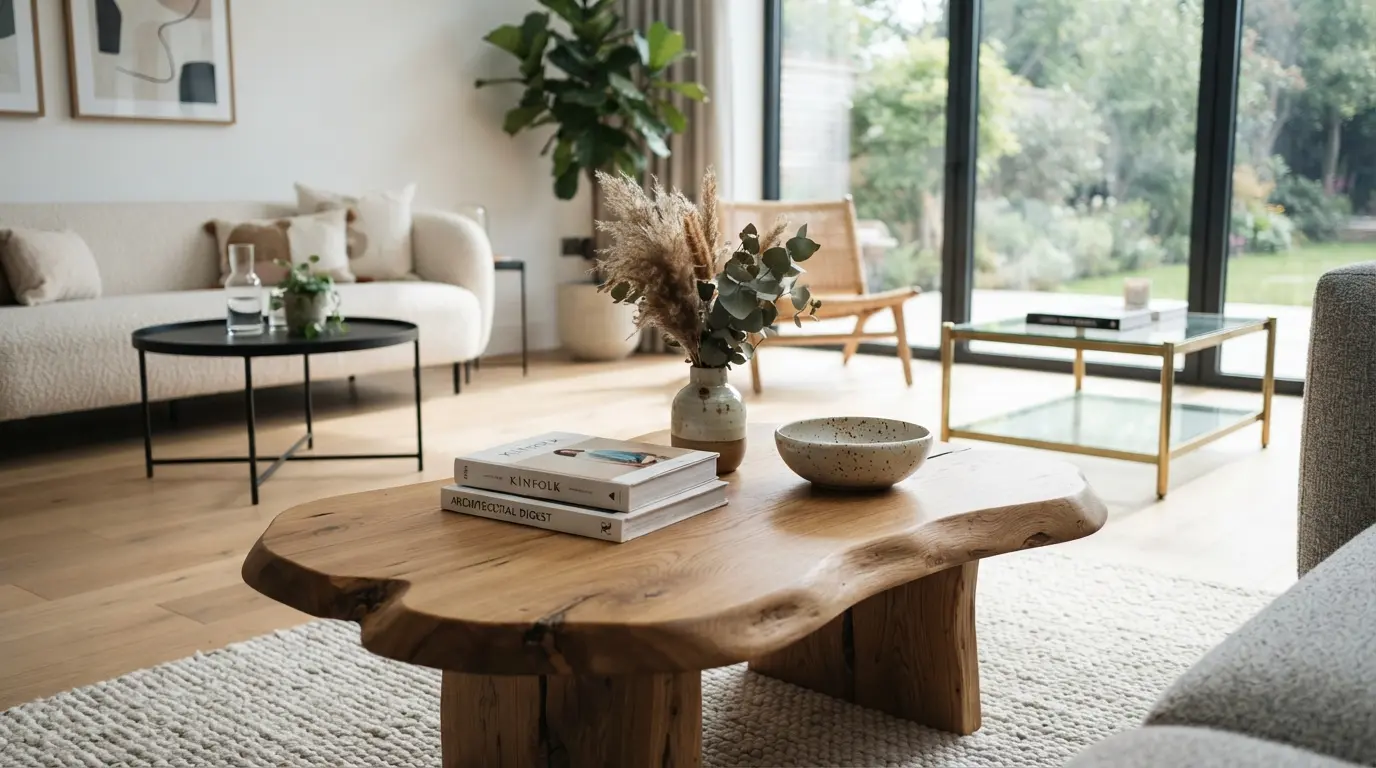
For a living room built around one showpiece, a sculptural table in burl wood, marble, or travertine delivers real presence through material and shape alone, without needing a busy tabletop display. This is the look most associated with higher-end interiors for 2026, and it works because the table itself is the decoration.
Marble and travertine do need sealing and are prone to staining from wine or citrus if left unwiped, so factor in that upkeep before choosing stone over a sealed wood alternative. Most homeowners find the trade-off worth it for the visual impact, but it’s not a low-maintenance choice.
Conclusion
Choosing from these 15 coffee table ideas for every living room style comes down to matching the table to how the room actually gets used, not just how it photographs. Get the size and height right first, be honest about how much maintenance a material like glass, marble, or light upholstery will realistically get in your home, and let the table support your existing style rather than fight it. Once those basics are sorted, styling the top is the easy part.
FAQs
What is the standard height for a coffee table?
Most coffee tables sit between 40 and 45cm tall, roughly level with or slightly lower than a standard sofa seat.
How far should a coffee table be from the sofa?
Leave about 40 to 45cm of clearance so people can walk past and stretch their legs without bumping the table.
What size coffee table do I need for my living room?
Aim for a table around two thirds the length of your sofa. For an L-shaped sectional, a rectangular table centred in the seating area usually works best.
Do I need a coffee table at all?
No. Ottomans, nested tables, or even a styled stack of books work as coffee table alternatives, especially in smaller living rooms where a full-sized table doesn’t fit the layout.
What coffee table shape works best with a sectional sofa?
Round or oval tables soften the straight lines of a sectional and reduce sharp corners, which matters if the table sits close to a walking path.
What’s the biggest coffee table trend for 2026?
Natural materials are leading, including burl wood, travertine, marble, and rattan, along with a shift back toward warmer, darker wood tones after years of pale, gray-washed finishes.
Is glass or wood better for a coffee table?
Wood is more forgiving day to day and hides wear better. Glass looks sharper but needs far more frequent cleaning, so the right choice depends on how much upkeep you’re willing to do.