How to Decorate Your Living Room on Any Budget

Decorating your living room on any budget comes down to prioritising a few high-impact changes, like paint, lighting, and layering, over trying to update everything at once. The order you tackle things in matters just as much as what you actually buy.
Most people decorating on a budget either spend their whole pot on one big furniture piece and run out of money for the details that actually finish a room, or they buy a dozen small accessories that never quite add up to a cohesive look. This guide walks through exactly how to decorate a living room properly at any budget level, starting with the changes that genuinely move the needle before you spend a penny on anything else.
What Should You Prioritise First When Decorating a Living Room on a Budget?
Prioritise paint, lighting, and layout before buying any new furniture or accessories, since these three changes cost the least relative to the visual impact they deliver. A room can look completely transformed just from a repaint and a better lighting plan, even with the same furniture still in place.
New furniture is almost always the most expensive line item in a living room refresh, yet it’s rarely the thing actually holding a room back. A tired colour scheme, flat overhead lighting, and furniture arranged purely for TV viewing rather than conversation do more to make a room feel unfinished than the sofa itself usually does. Fixing those three things first means any money left over for furniture or accessories goes further, since it’s building on a stronger foundation rather than trying to distract from one.
How Much Does It Cost to Decorate a Living Room on a Budget?
A genuine budget living room refresh typically costs £150 to £400 for paint, accessories, and small styling updates, while a mid-range refresh incorporating some new furniture or lighting runs £500 to £1,500, and a fuller room decoration project with new flooring or a feature wall can reach £2,000 or more.
[Cost Table: Living Room Decorating Budget Tiers]
| Budget Tier | What It Typically Covers | Approximate Cost |
| Low budget | Paint, cushions, a rug, lighting swap | £150–£400 |
| Mid budget | Above, plus one new furniture piece or lamps | £500–£1,500 |
| Higher budget | Above, plus flooring, feature wall, or new sofa | £2,000+ |
These figures vary considerably by country, room size, and whether you’re doing the work yourself or hiring help, so treat them as a starting point rather than a fixed quote. A common mistake at every budget level is spending the bulk of the money on one statement piece, like an expensive sofa, and having nothing left for the paint, lighting, and styling details that actually make that piece look intentional rather than isolated in an otherwise unfinished room.
How Do You Choose Paint Colours That Make the Biggest Impact for the Least Money?
Choosing a paint colour that reads as considered rather than default is one of the cheapest ways to transform a living room, typically costing £30 to £60 per tin of quality emulsion for a full room’s worth of paint.
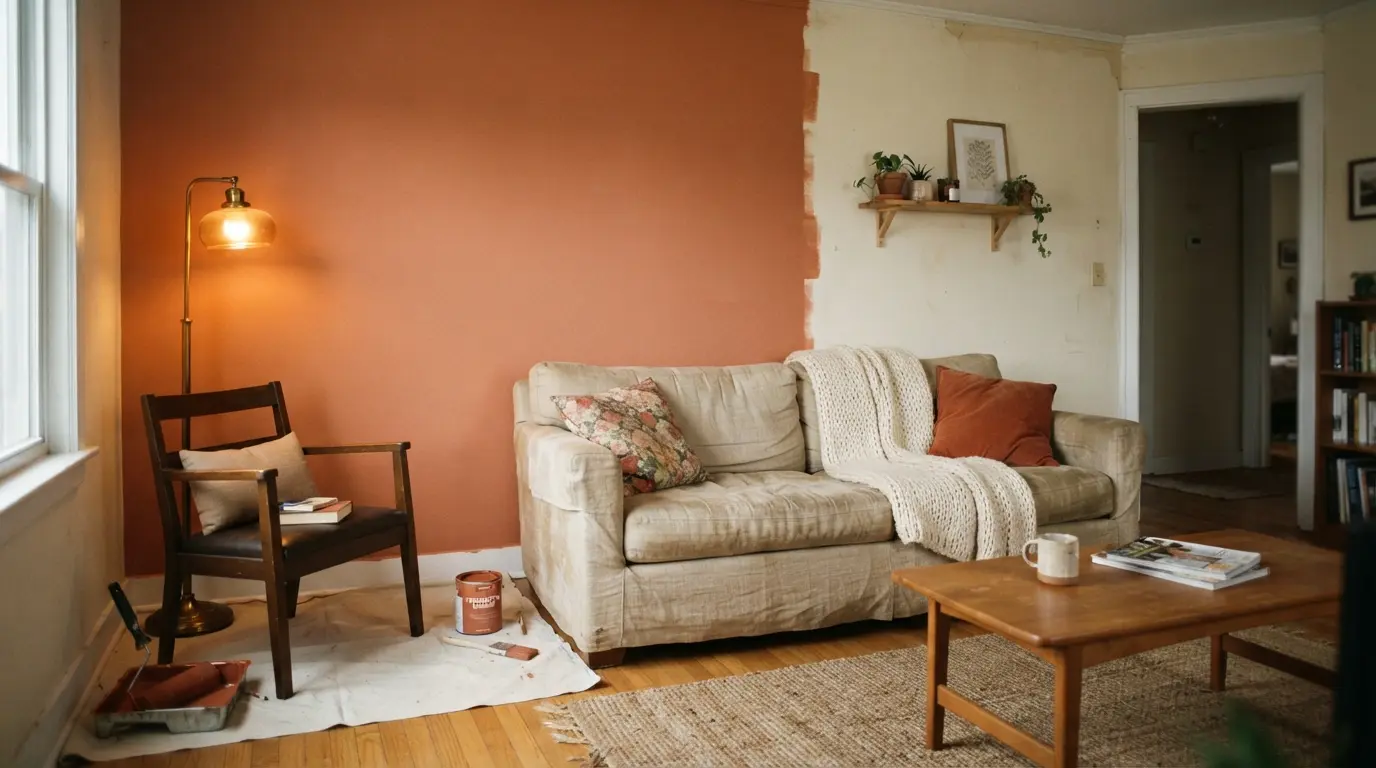
A single feature wall in a bolder or richer tone, rather than repainting the whole room, keeps costs down while still delivering a genuine visual change, generally needing only one or two tins depending on wall size. Testing a large sample directly on the wall before committing to the full tin avoids a wasted repaint, since a colour can look completely different once it’s on your actual wall in your room’s specific light compared to a small swatch card under shop lighting.
What Lighting Changes Make a Living Room Feel More Finished?
Layering lighting with table lamps, floor lamps, and warmer bulb tones instead of relying on a single central overhead light is one of the most effective and affordable ways to make a living room feel finished and considered.
A single overhead light creates flat, uneven shadows across a room, while two or three lamps placed at different heights create the kind of warm, layered glow associated with a well-designed space. Budget lamps typically cost £15 to £40 each, and swapping cool white bulbs for warm white ones, generally under £10 for a pack, makes an immediate difference to how inviting a room feels in the evening without touching the furniture or paint at all.
How Do You Rearrange Furniture Without Buying Anything New?
Rearranging existing furniture to create a proper seating layout, rather than pushing everything against the walls, is a genuinely free way to make a living room feel more intentional and better suited to actual conversation.
Pulling a sofa slightly away from the wall and angling armchairs toward each other rather than solely toward the television creates a more social, considered layout. A common mistake in smaller living rooms is assuming furniture has to hug the walls to save space, when in reality a slightly pulled-in arrangement often makes a room feel larger by creating clearer walking paths and a more defined seating area.
What Are the Best Budget Ways to Decorate Living Room Walls?
The best budget ways to decorate living room walls include a gallery wall of affordable framed prints, a single large piece of art, or simple floating shelves, all of which cost considerably less than a full wall treatment like panelling or wallpaper.
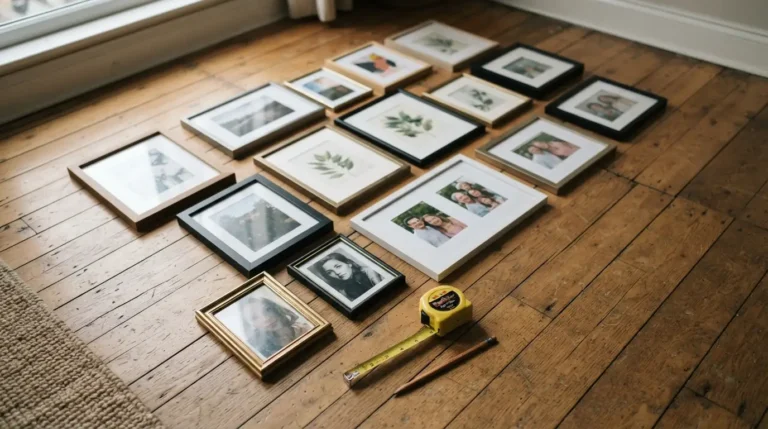
A gallery wall using budget frames and prints typically costs £50 to £150 depending on how many pieces you include, and laying the arrangement out on the floor first before hanging anything avoids the uneven, drifting layout that happens when people start hanging and adjusting as they go. Floating shelves, whether bought ready-made or built from simple bracket kits, run £20 to £60 per shelf and add both storage and a place to layer smaller decorative objects like books, plants, or candles.
How Do You Style a Living Room with Cushions, Throws, and Textiles?
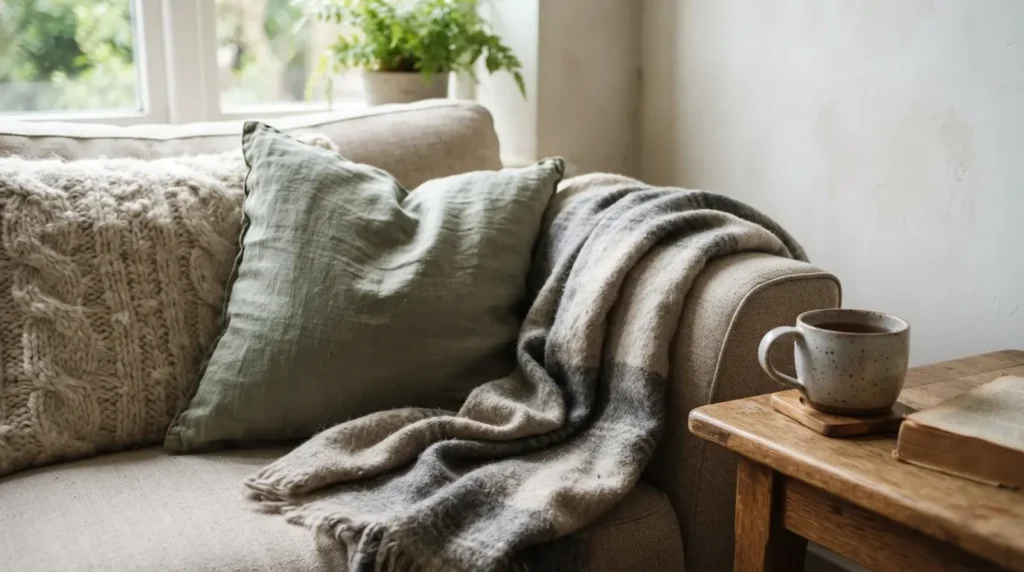
Layering cushions, throws, and textiles in varying textures rather than matching everything from the same set is one of the lowest-cost ways to make a living room feel considered rather than sparse.
A genuine textile refresh, covering a handful of cushions, one or two throws, and a smaller accent rug, typically costs £80 to £200 depending on fabric quality and whether you buy new or source secondhand. Most homeowners find that mixing at least two or three different textures, like a chunky knit throw against a smoother linen cushion, reads as far more intentional than an entire matching set bought together, since matched sets tend to look staged rather than gathered over time. A rug placed too small for the seating area is one of the most common budget decorating mistakes, since a rug that only the coffee table sits on, rather than reaching under at least the front legs of the sofa, makes the whole layout look disconnected rather than pulled together.
How Do You Add Plants and Greenery Without Overspending?
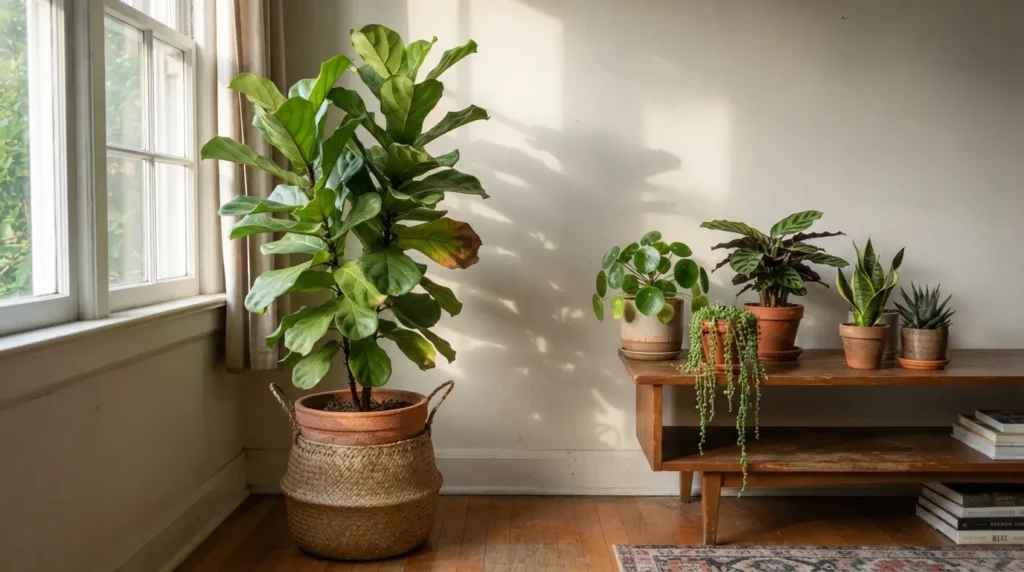
Adding a mix of real and faux plants at different heights is one of the most affordable ways to bring life and texture into a living room, without needing a large budget or particular gardening skill.
A larger floor plant, whether real or a realistic faux version, generally costs £20 to £60 and adds significant visual height to a corner that might otherwise feel empty. Smaller potted plants on shelves or side tables cost considerably less, often under £10 each, and grouping a few together at varying heights creates more visual interest than a single plant placed alone.
What Should You Splurge On If You Have a Slightly Higher Budget?
If you have a slightly higher budget, splurging on one statement piece, such as a well-made accent chair, a good rug, or a quality piece of art, tends to deliver more lasting impact than spreading the same money across several smaller items.
A good rule of thumb is spending more on items that get daily physical use or sit at eye level, like a rug underfoot or art on the main wall, and saving money on items that matter less for day-to-day durability, like decorative trinkets or seasonal accessories. A quality wool or wool-blend rug typically costs £150 to £400 for a mid-size living room and holds up considerably better over years of foot traffic than a budget synthetic option, which tends to flatten and shed noticeably within a year or two of regular use.
Common Living Room Decorating Mistakes to Avoid
The most common mistake at any budget level is buying accessories before addressing the room’s paint, lighting, or layout, resulting in nice individual pieces that still sit inside an unfinished-feeling room. Fixing the bones of the room first, even on the smallest budget, makes every accessory purchase afterward work harder.
The second frequent mistake is treating a budget decorating project as a single weekend task rather than a staged process. Most successful budget refreshes happen in layers over several weeks or months, starting with paint and lighting, then adding textiles, then finally a bigger furniture piece if the budget stretches that far, rather than trying to source everything from a single big shopping trip.
Conclusion
Decorating your living room on any budget works best when you tackle the foundational changes first, paint, lighting, and layout, before spending money on furniture or accessories. A genuinely budget-friendly refresh can transform a room for a couple hundred pounds, while a larger budget simply lets you extend the same principles further with better quality pieces. Start with what costs the least and delivers the most visible change, layer in textiles and greenery as you go, and save any bigger splurge for the one piece you’ll actually use and see every day.
FAQs
How can I decorate my living room with no money?
Rearranging existing furniture into a better seating layout, decluttering, and swapping to warmer light bulbs are all free or very low-cost changes that noticeably improve how a living room feels.
What is the cheapest way to update a living room?
A feature wall of paint, a few new cushions, and a lighting change using lamps instead of relying on the overhead light are the cheapest updates with the biggest visible impact.
How do I make my living room look expensive on a budget?
Focus on layered lighting, a properly sized rug, and one or two considered accent pieces rather than filling the room with many small decorative items, since restraint generally reads as more expensive than clutter.
What order should I decorate a living room in?
Start with paint and lighting, then rearrange furniture for a better layout, then add textiles and accessories, and finally consider bigger furniture purchases if budget allows.
Is it worth buying cheap furniture for a living room?
It depends on the piece. Budget-friendly cushions, lamps, and decor are generally fine, but items with heavy daily use, like a sofa or rug, tend to be worth spending slightly more on for durability.
How do I decorate a small living room on a budget?
Use lighter paint colours, keep furniture pulled slightly away from walls rather than pushed flush against them, and choose a few larger accessories rather than many small ones to avoid visual clutter.