7 Kitchen Paint Colour Ideas to Transform Your Cooking Space

A fresh paint colour can update a kitchen without a full renovation. In UK homes the walls must handle steam, grease and frequent cleaning, so the colour and finish need to be both attractive and practical. These seven kitchen paint colour ideas focus on shades that work with common cabinet colours, worktops and the typical light levels found in British kitchens. Each idea notes the best finishes, what to watch for with undertones, and practical checks before ordering. Typical UK kitchen ceilings sit at 2.4 metres, and many rooms are under 3 metres wide, so the colour must support the scale rather than fight it.
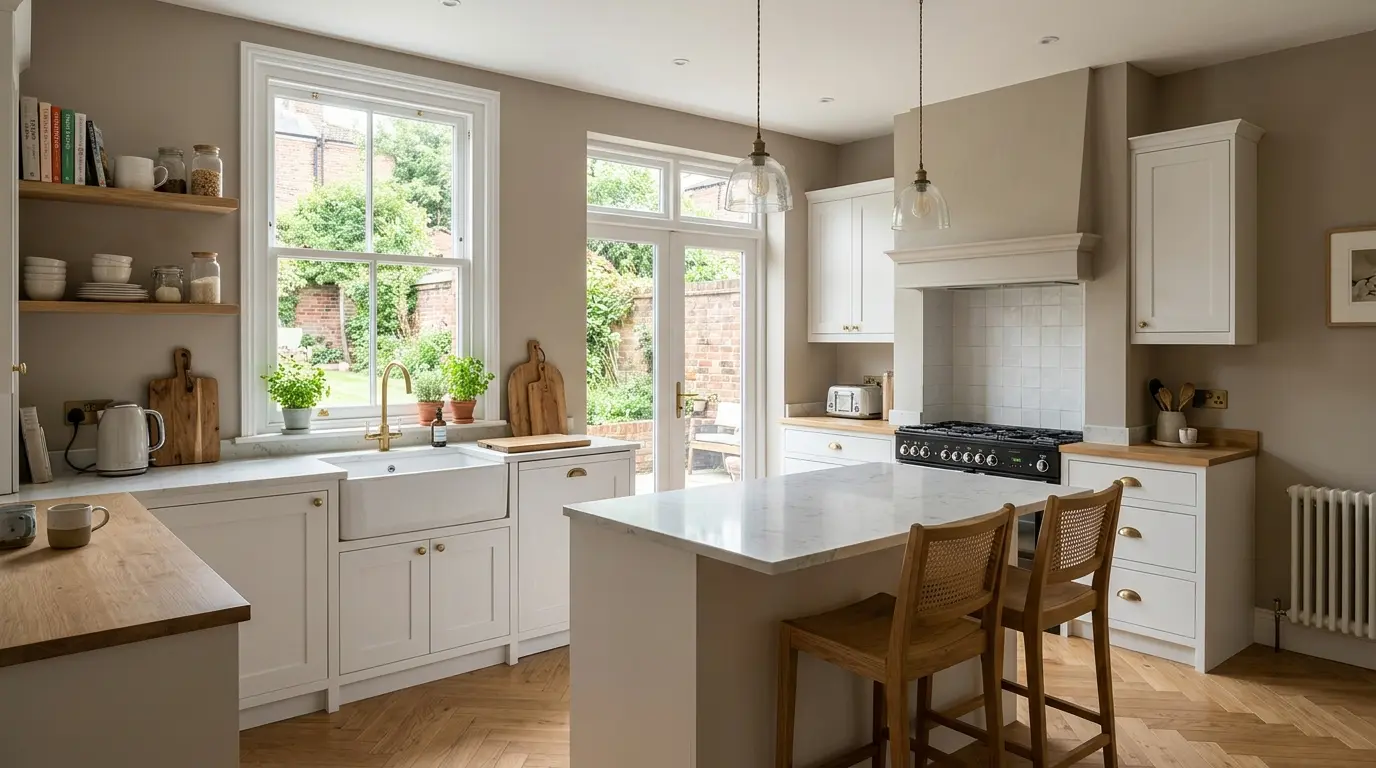
1. Warm Greige for Everyday Ease
A warm greige sits quietly beside most cabinet colours and hides everyday marks better than pure white. Choose a mid-tone with beige undertones so the kitchen feels welcoming under both daylight and LEDs. Use eggshell for wipeability. In galley layouts under 2 metres wide it keeps the space feeling open. Test next to your worktop; some greiges can look pink or green depending on the light. Measure the full wall area including the sides of any chimney breast so you order enough paint. This pairs well with broader schemes in 15 kitchen colour schemes that always look stunning. Always check the coverage rate on the tin, as mid-tone neutrals can vary between brands.
When ordering, buy all the paint from the same batch. Warm greiges can shift slightly between batches, and a join will show on a long run of wall. Allow extra for cutting in around worktops and window reveals. In high-use kitchens near the sink, the eggshell finish will still need occasional wiping, so choose a brand that states it is scrubbable.
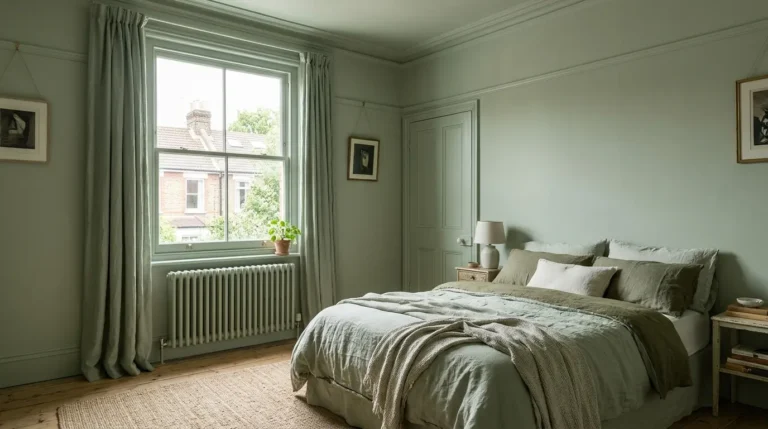
2. Soft Sage for a Calm Kitchen
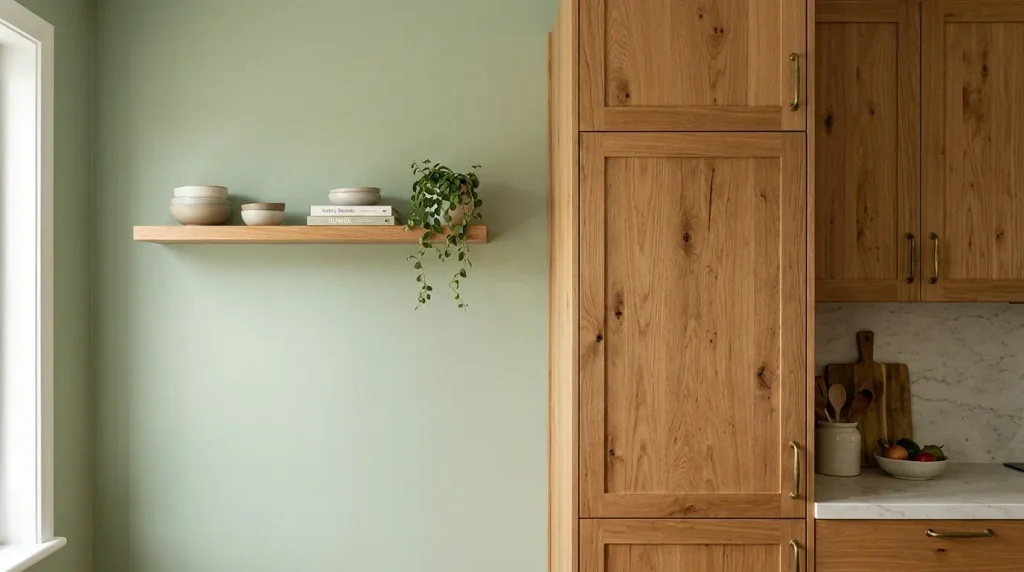
Muted sage green brings a natural, restful feel that works with both white and timber cabinets. Select a soft, greyed sage rather than a bright version. Eggshell finish is practical near the sink and cooker. Keep the ceiling white if the room is small or north-facing. Check the colour against stainless steel appliances; some sages can look blue next to cool metals. Sample large areas before committing. More sage ideas appear in 8 sage green paint ideas for a calming and trendy interior.
In a standard UK kitchen the sage works best when the cabinets are either white or a warm wood. If the cabinets are already grey, test carefully so the two greys do not clash. Allow the sample to dry fully, as sage can appear brighter when wet. Confirm the paint is suitable for walls that receive occasional steam.
3. Pale Blue-Grey for a Fresh Look
A light blue-grey feels clean and contemporary. Choose a version with a slight warm or green undertone so it does not feel cold in a north-facing kitchen. It works well with white cabinets and pale worktops. Use a scrubbable eggshell. In kitchens with limited windows, keep the shade light so the room stays bright. Always view samples under your evening lighting. Related blue guidance is in how to use blue paint in your home without it feeling cold.
Measure the window reveals and include them in your area calculation. Blue-greys can show brush marks if applied too thickly, so keep coats thin and even. In homes with underfloor heating the drying time may be slightly shorter, but still allow full curing before wiping the walls.
4. Warm Stone with Darker Accents
A warm stone or putty colour creates a classic backdrop that never dates. Pair it with darker cabinet handles or a deeper colour on one wall for interest. The finish should be eggshell or satin near high-use areas. This combination hides marks well and suits both modern and traditional kitchens. Measure the wall area carefully so you have enough paint for even coverage; warm neutrals show joins if thin. Check clearance around wall units so the colour does not make the workspace feel tighter.
When adding a darker accent wall, paint it first so any overlap can be cut in cleanly with the lighter colour. Use a quality brush for the edges. In period properties with original plaster, a mist coat may be needed before the main colour.
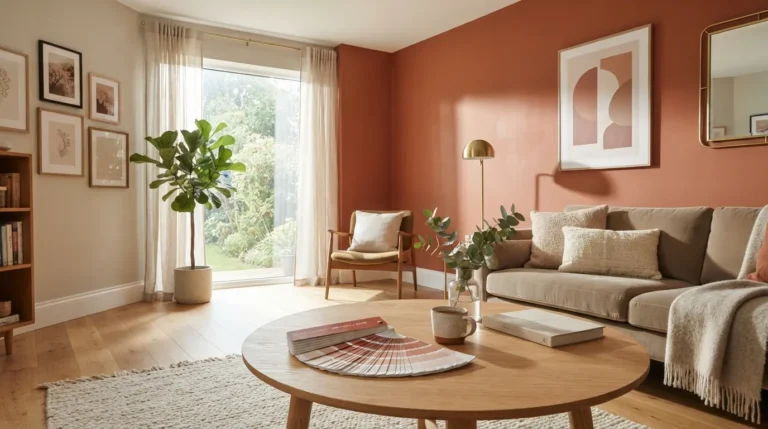
5. Soft Terracotta for Character
A muted terracotta or clay tone adds warmth and personality, especially in kitchens with wooden floors or worktops. Keep the shade subdued so it remains sophisticated. Use eggshell and ensure good ventilation during painting. In small kitchens limit the colour to one wall or the lower half. Test against your existing tiles and appliances. This works particularly well in older properties. Calculate extra paint because deeper earth tones often need a third coat for full opacity.
Terracotta can look orange under warm LED bulbs, so view the sample under the exact lights you will use. If the kitchen has a range cooker, keep the painted area a safe distance from the heat source or use a proper splashback.
6. Deep Green on One Wall
A rich forest or bottle green on a single feature wall creates drama while the other walls stay light. This approach suits kitchens with enough natural light or good artificial lighting. Use eggshell and keep the ceiling white. In standard 2.4-metre-high rooms the dark wall adds depth without closing the space if the other walls are pale. Check the green against your cabinets so the contrast feels intentional. More dark green ideas are in 7 dark green paint ideas for a rich and dramatic look.
Order a tinted primer if the wall is currently a light colour; it reduces the number of top coats needed. Ensure the feature wall is the one that receives the best light or is opposite a window so the colour reads clearly rather than flat.
7. Soft Cream with Navy Details
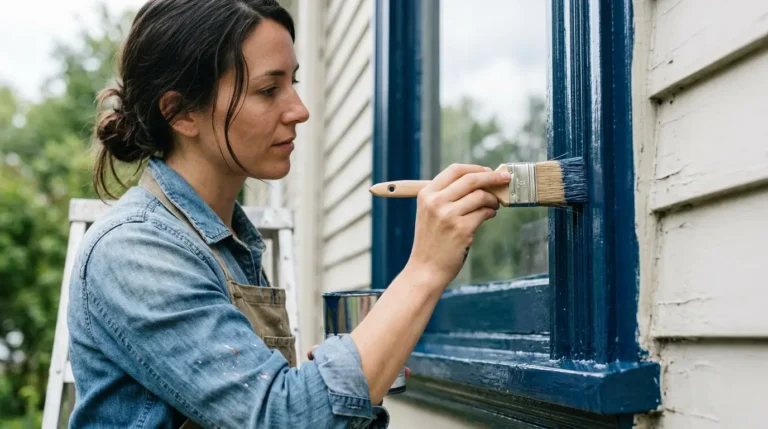
Warm cream walls with navy or deep green doors, window frames or a feature section create a smart, tailored kitchen. The light walls keep the space bright while the dark accents add definition. Use satin on the woodwork for durability. This combination works in both period and new-build kitchens. Always sample the cream next to the navy under your own lights. Further navy schemes can be found in 10 navy blue paint ideas for a bold and sophisticated interior.
Paint the woodwork after the walls so you can cut in cleanly. Allow full drying between coats on doors, as satin finishes show marks more easily if handled too soon. In high-traffic kitchens the satin on doors will wipe clean more easily than eggshell.
Conclusion
These seven kitchen paint colour ideas offer practical ways to refresh the space. Choose a durable finish, test large samples against your cabinets and worktops, and calculate quantities carefully. The right colour will make the kitchen feel more considered and easier to live with every day. Always confirm the paint is low-VOC and suitable for the humidity levels in a working kitchen.
FAQs
What finish is best for kitchen walls?
Eggshell or satin. Both wipe clean and resist grease better than matt.
Can dark colours work in a small kitchen?
Yes, on one wall only, provided the other walls and ceiling stay light and lighting is good.
Should I paint the ceiling the same colour?
Only in larger kitchens with good light. In compact or north-facing rooms a white ceiling keeps the space feeling taller.
How do I match paint to existing cabinets?
Hold large samples next to the cabinets in both daylight and evening light. Match the undertones rather than trying for an exact colour match.
Is special kitchen paint necessary?
A good-quality washable eggshell is usually sufficient for walls. Cabinet doors need a dedicated furniture paint.
How much paint do I need?
Measure wall area, subtract openings, and add 15–20 per cent. Deep colours often need an extra coat.