15 Living Room Furniture Ideas for Every Budget

The best living room furniture ideas follow one order: buy the sofa first, then a coffee table, then storage, then extra seating. Spend most on pieces you sit on every day, and save on anything that mainly holds a lamp or a mug.
Most budget guides fill their lists with cushions, plants and paint, then leave you to guess which sofa or table to buy. That is where money goes wrong. A cheap sofa with a weak frame can need replacing within a few years, while a good second-hand table can last decades. The 15 ideas below start with the big pieces and move to the supporting cast. Prices are in pounds, approximate, and they vary by country and retailer.
How Much Should You Spend on Living Room Furniture?
Put roughly half your budget into the sofa, a quarter into tables and storage, and the rest into seating extras and lighting. Most homeowners find this split keeps the room comfortable now and easy to upgrade later. A good rule of thumb is to pay more for anything with moving parts, foam or upholstery.
Whether you call the room a lounge or a living room, these lounge furniture ideas follow the same logic. The table shows typical price bands so you can see where each piece sits.
| Piece | Budget | Mid-range | Investment |
| Three-seater sofa | £350 to £700 | £800 to £1,600 | £1,800 to £4,000+ |
| Modular or corner sofa | £600 to £1,000 | £1,200 to £2,500 | £2,800+ |
| Accent chair | £80 to £200 | £250 to £500 | £600 to £1,200 |
| Coffee table | £50 to £150 | £180 to £450 | £500 to £1,200 |
| Side table | £25 to £70 | £80 to £200 | £250 to £500 |
| TV unit | £100 to £250 | £300 to £650 | £700 to £1,500 |
| Sideboard | £150 to £350 | £400 to £900 | £1,000 to £2,500 |
| Bookcase | £60 to £150 | £200 to £500 | £600 to £1,500 |
1. Start With a Hardwood-Framed Sofa
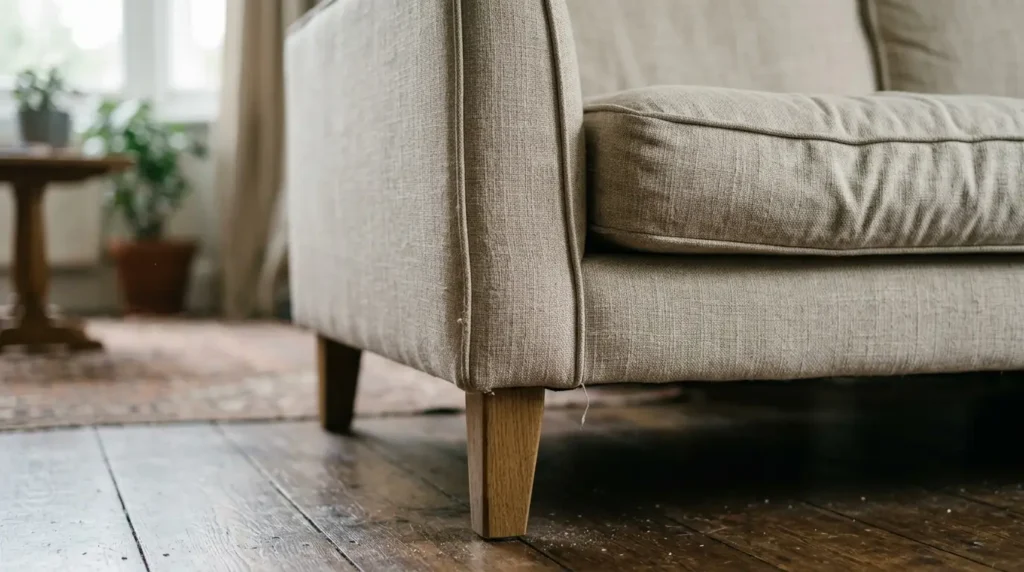
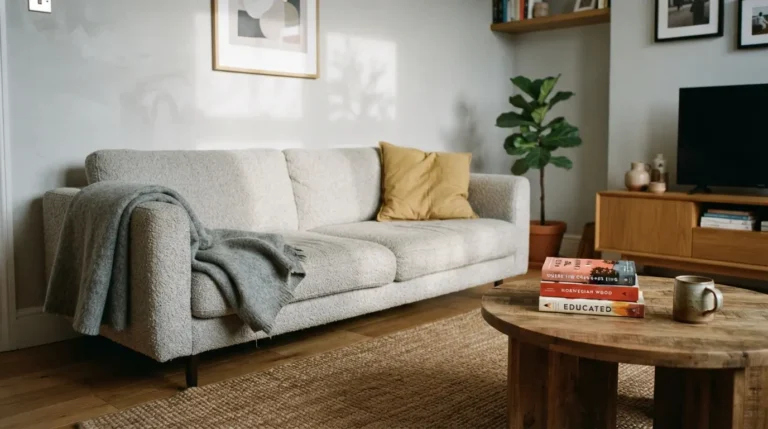
A sofa with a solid hardwood frame is the smartest place to spend your money. The frame decides how long the sofa lasts, while covers and cushions can be changed later. Check the frame material before the colour, and ask whether the cushion covers come off.
Expect to pay about £350 to £700 for a basic three-seater and £800 to £1,600 for a well-built mid-range one. Stock sofas often arrive within days to a couple of weeks, while made-to-order models commonly take six to twelve weeks. The trade-off with budget sofas is foam, which softens and sags sooner. Rotate and plump the seat cushions weekly to slow that down.
2. Choose a Modular Sofa for a Room That Changes
A modular sofa suits open-plan rooms, rentals and families who move furniture around. You can start with two sections and add a corner or chaise later, so you spread the cost over time. Measure your doorways and stairs first, because modular pieces are much easier to deliver than one big sofa.
Budget modular sets start around £600 to £1,000, and mid-range ones run £1,200 to £2,500. The catch is the joins. Cheaper connectors can drift apart on hard floors, so look for locking brackets and add a rug to hold the sections still. Matching extra sections can also be hard to find years later, so buy the full layout early if you can.
3. Add a Sofa Bed If the Room Works Overtime
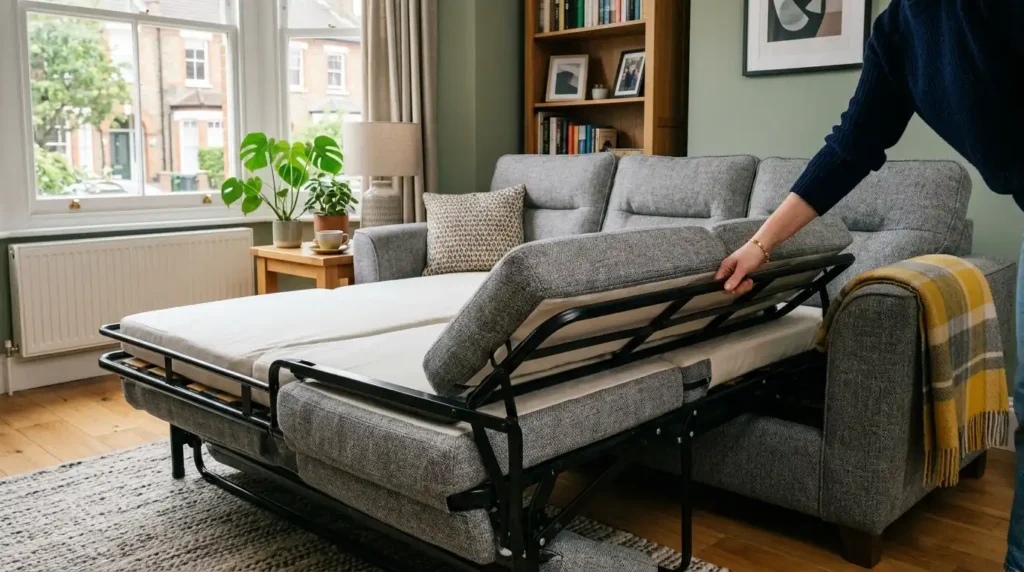
A sofa bed turns a living room into a guest room without a spare bedroom. It costs more than a standard sofa of the same quality, so only choose one if you will genuinely use the bed. Test the mechanism in person where possible, since that is the part that fails first.
Budget sofa beds sit around £450 to £900, but the mattress is often thin and you may feel the frame bar through it. Better models cost £1,000 and up, with a proper sprung or foam mattress. If guests stay more than a couple of nights, spend more on the mattress than the fabric.
4. Pick One Statement Accent Chair
One accent chair adds personality and extra seating for far less than a second sofa. Choose a shape that contrasts with your sofa, such as a curved chair beside a boxy sofa, and keep the upholstery neutral if your cushions change often. Buy chairs singly so you can upgrade them one at a time.
Prices run about £80 to £200 for budget chairs, £250 to £500 mid-range, and £600 or more for designer or hand-made frames. Sit in it for ten minutes before buying. Chairs that look great in photos often have seats that are too shallow or backs too upright for an evening of TV.
5. Use a Storage Ottoman Instead of a Second Table
A storage ottoman works as a footrest, extra seat, coffee table and hidden storage in one piece. It is one of the best-value buys for a small living room because it replaces three items. Choose a firm lid so it can hold a tray and drinks.
Most cost £60 to £250. Check the lid hinge and the box base, because flimsy ones sag when sat on. Fabric shows marks sooner than leather, and faux leather can crack at the edges after a few years of heavy use. Homes with young children should skip very pale fabrics.
6. Invest in a Solid Timber Coffee Table
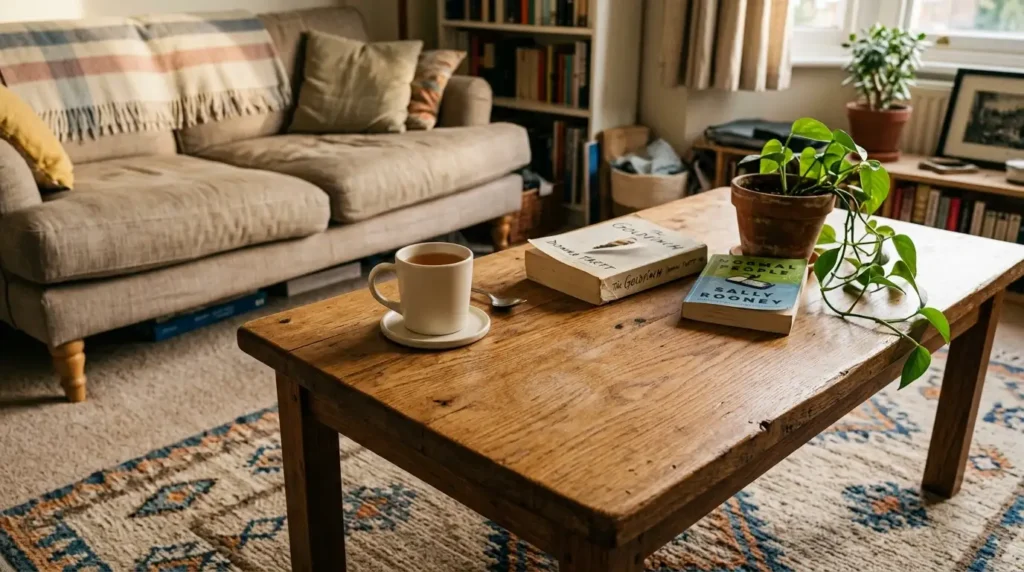
A coffee table should sit level with your sofa seat or slightly lower, usually around 40 to 45 cm high. Solid timber ages well and can be sanded and refinished. Leave about 40 cm between the table and the sofa so your knees and drinks have room.
Budget tables at £50 to £150 are usually veneer or laminate over particleboard. They look fine but chip at the corners and swell if water sits on them. Solid timber starts around £250 to £450 and shrugs off wear, though it marks from hot mugs, so keep coasters handy. Pair it with a rug big enough for the front legs of your sofa and chairs to sit on, which in most living rooms means around 200 by 300 cm or larger.
7. Layer in Slim Side Tables

Side tables keep lamps, books and drinks within reach without crowding the floor. Pick a height close to the sofa arm, and choose slim or nesting designs if space is tight. Two small tables of different heights usually look better than one large one.
Budget options run £25 to £70 and mid-range £80 to £200. Metal frames are light and cheap but can wobble on uneven floors, so check for adjustable feet. Nesting sets are great value because they tuck away when you do not need them, though thin glass tops show every fingerprint.
8. Float a Console Table Behind the Sofa
A console table behind a sofa defines the seating area, adds a surface for lamps, and hides the sofa back in an open-plan room. Keep it slim, about 30 to 40 cm deep, so the walkway stays clear. Allow at least 90 cm for people to pass.
Consoles start around £80 to £250 and reach £600 for solid wood. This works best when the sofa faces away from an entrance or dining area. It is less useful in a small, boxy room, where it eats into walking space. It can also move to the hallway later, which makes it a safe buy.
9. Choose a TV Unit With Closed Storage
A TV unit with closed doors hides cables, consoles and remotes, which keeps the room calmer. Pick storage over decoration when money is tight, and choose a unit wider than the TV so the screen does not look top-heavy. Check that the back has cable holes.
Budget units cost £100 to £250 and are mostly flat-pack, taking one to three hours to build. Mid-range units run £300 to £650. Wall-mounting the TV above a low sideboard can look more expensive for the same money, but it needs a proper fixing for your wall type and a careful cable plan.
10. Repurpose a Sideboard or Dresser

A sideboard or bedroom dresser works as living room storage and a display surface. It hides games, throws and paperwork behind doors or drawers, and gives you a top to style with lamps and plants. Check the depth, since many dressers are deeper than a TV unit.
New sideboards run £150 to £350 at the budget end and £400 to £900 mid-range, while second-hand solid wood dressers are often cheaper still. Swapping the handles takes minutes and can change the whole look. Test that drawers slide smoothly, because sticking runners are hard to fix on cheap carcasses.
11. Use a Bookcase as a Feature Wall
A tall bookcase adds storage and a focal point, and it pulls the eye upward so low ceilings feel taller. Open shelving suits books and plants, while doors suit clutter. Anchor tall units to the wall, especially in homes with children or pets.
Flat-pack bookcases cost £60 to £150 and take an hour or two to build, but thin shelves can bow under heavy books within a year or two. Look for thicker boards or a centre support. Mid-range solid units start near £200 to £500. Leave a few gaps empty so the shelves look styled rather than stuffed.
12. Slip in a Bench for Flexible Seating
A bench gives you extra seating for guests, a place to rest a tray, or a window seat. It usually costs less than a chair and tucks away when not needed. Choose a storage bench if the room lacks cupboards, and keep the seat height near 45 cm.
Prices run about £60 to £250. Upholstered tops are comfortable for short sits, but long evenings need back support, so treat a bench as occasional seating rather than a chair replacement. Under a window or at the end of a sofa, it also frames the room nicely.
13. Buy Second-Hand and Upcycle

Second-hand furniture often gives the best quality for the money, especially solid wood tables, sideboards and chairs. Look for good structure, ignore tired finishes, and plan on cleaning, sanding or repainting. Test drawers, wobble the legs and check for woodworm holes before paying.
New handles and a coat of paint typically cost £15 to £60 in materials and take a weekend, including drying time. Hunting for the right piece can take several weeks of checking listings. Be cautious with second-hand sofas and upholstered chairs. Check them for smells, pests, tired foam and fire safety labels where your country requires them.
14. Mix Pieces Instead of Buying a Matching Set
Mixing separate pieces usually costs less than a matching set and looks more personal. Tie them together with one repeated element, such as the same wood tone, metal finish or colour. Buy the largest piece first, then choose the rest to suit it.
Sets can be good value when you want everything delivered at once, but you pay for pieces you may not need and you are locked into one style. Mixing lets you spend more on the sofa and less on side tables. Avoid the trap of five different woods, which looks accidental rather than collected.
15. Check the Layout and Delivery Route First
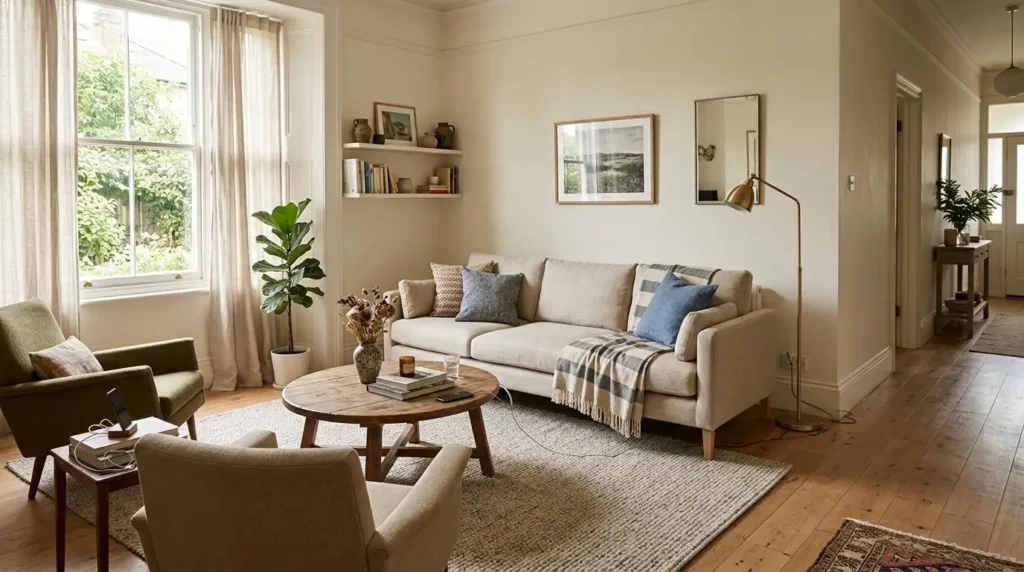
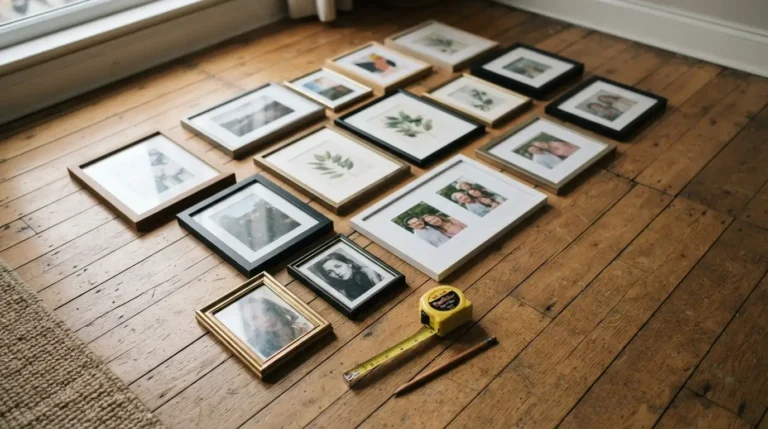
Measure the room, mark furniture outlines on the floor with masking tape, and check walkways before you order. Leave about 90 cm for main paths, and consider floating the sofa off the wall so the room feels more sociable. A wrong-sized sofa is the most expensive mistake in a living room.
Smart furniture for living room spaces of any size starts with a tape measure. Leave the tape outlines down for a day or two and walk around them. Measure doorways, hallways and stairwells too, since many sofas need a turn that is tighter than it looks on paper. Returns on bulky items can carry collection or restocking charges at some retailers, so read the policy before you pay.
Conclusion
These living room furniture ideas work at any price because they put money where it lasts: the frame, the foam and the pieces you touch every day. Save on side tables, shelving and decorative extras, and upgrade them one at a time. Measure twice, check the frame, and buy the sofa first. Your room will feel finished long before your budget runs out.
FAQs
What furniture do I need for a living room, and what should I buy first?
Most living rooms need a sofa, a coffee table, a side table or two, storage and a TV unit if you watch TV there. Buy the sofa first, because it sets the size, colour and style for everything else. The best living room furniture is the piece you use most, so comfort should win over looks.
How much does it cost to furnish a living room?
At the budget end, a sofa, coffee table, TV unit, side table, rug and lamps typically total about £700 to £1,700. A mid-range version often lands between £1,800 and £4,000. Prices vary a lot by country, sales and whether you buy new or second-hand.
How do I make a small living room feel bigger with furniture?
Choose pieces with raised legs so light and floor show underneath, and pick multi-use items like storage ottomans and nesting tables. Keep large pieces to one side of the room and leave a clear path of about 90 cm. A light rug and a mirror opposite a window also help.
How can I tell if a sofa frame is good quality?
Ask what the frame is made from and look for solid hardwood rather than chipboard or thin panels. Lift one front corner a few centimetres: if the opposite leg lifts almost at once, the frame may flex. Many retailers offer a frame guarantee, so ask how long it lasts.
Which sofa fabric lasts best with kids and pets?
Tightly woven performance fabrics and good-quality leather usually cope best. Loose weaves like bouclé can snag on claws, and delicate velvet can mark and flatten. Removable, washable covers make life easier, and a darker mid-tone hides everyday wear better than very pale shades.
How long should living room fq6wurniture last?
It varies with quality and use. Budget sofas may need replacing sooner, while well-built mid-range and investment sofas typically last much longer. Solid timber tables and sideboards can last for decades because they can be repaired and refinished.