12 Accent Chair Ideas to Add Character to a Living Room

The fastest way to add character to a living room is with an accent chair chosen for contrast, not conformity: a bold colour, an unexpected texture, or a distinctive shape against an otherwise calm scheme. The 12 ideas below balance that character with the scale, fabric, and frame choices that actually make it last, because a striking chair that falls apart in a year or clashes the moment the trend passes isn’t adding character, it’s adding a problem.
| Idea | Best For | Cost Tier |
| 1. Bold saturated colour | A quick, low-commitment focal point | Budget-Mid |
| 2. Symmetrical pair | Formal rooms, flanking a fireplace | Mid-High |
| 3. Vintage find | Eclectic rooms, tight budgets | Budget (check frame) |
| 4. One bold pattern | Rooms that already have a calm base | Budget-Mid |
| 5. Luxe texture (velvet/bouclé) | Low-traffic corners | Mid |
| 6. Reading nook chair | A genuinely unused corner | Mid |
| 7. Open-plan anchor | Loft or open-concept layouts | Mid |
| 8. Natural/organic materials | Sunlit rooms, warm wood tones | Budget-Mid |
| 9. Sculptural shape | Rooms that can take one bold piece | Mid-High |
| 10. Performance fabric | Households with kids or pets | Mid |
| 11. Reupholstered frame | An existing chair with good bones | Mid (cheaper than new investment piece) |
| 12. Seasonal textile swap | Refreshing character without new furniture | Budget |
1. Go Bold with a Single Saturated Colour
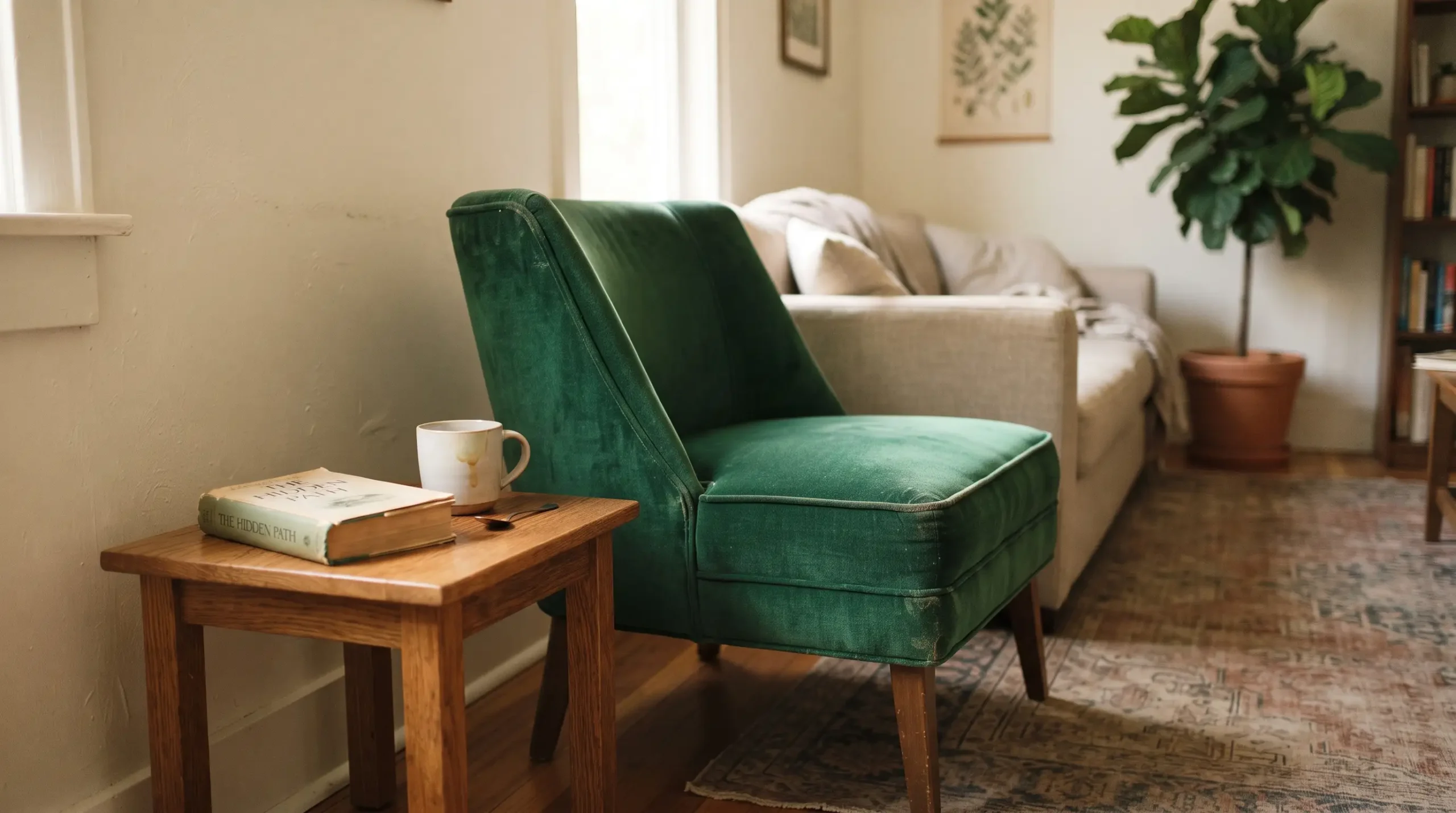
A single accent chair in a genuinely saturated colour, mustard, emerald, deep blue, does more to change a room’s character than almost any other single purchase. Keep the walls and sofa neutral so the chair reads as a deliberate statement rather than a clash. This is the lowest-risk idea on the list: one chair, one strong colour, everything else left alone. It’s also the easiest to budget for, since a bold-coloured chair in a mid-range fabric usually costs the same as the same chair in a neutral tone; you’re not paying extra for the colour itself. If the shade ever starts to feel dated, reupholstering it later (see idea 11) resets the look without starting over.
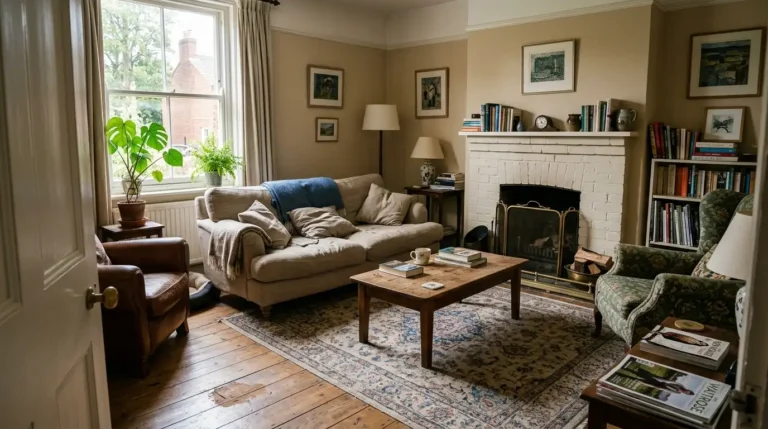
2. Pair Two Chairs Symmetrically
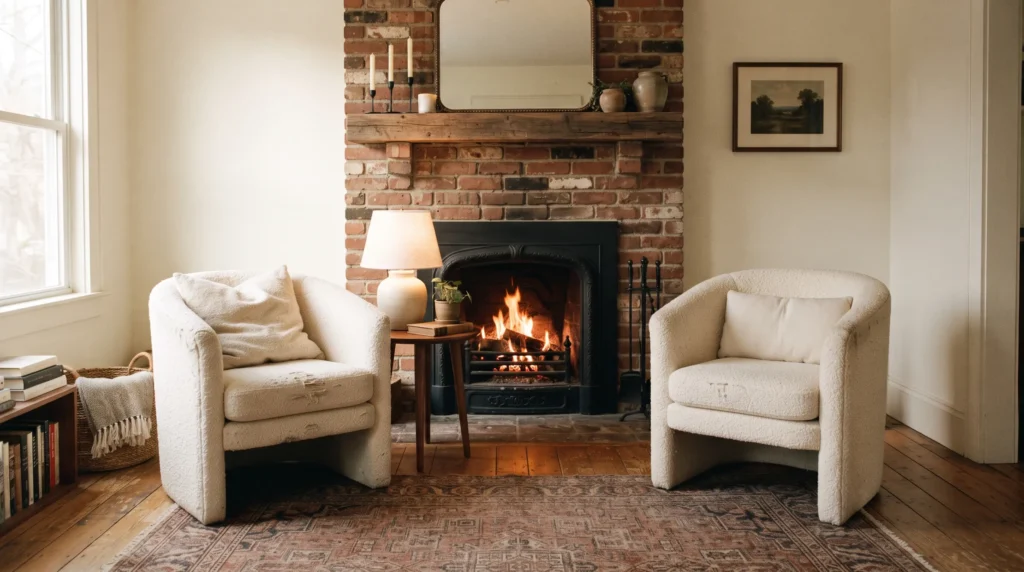
Flanking a fireplace or a large window with a matching pair of accent chairs creates a formal, balanced conversation area that a single chair can’t. It genuinely needs more floor space than one chair, though, so check walkway clearance (roughly 45-60cm around the seating area) before committing, and keep the pair’s seat height close to your sofa’s so the room still feels level when everyone’s seated. Because you’re buying two of the same piece, this is usually the most expensive idea on the list, so it pays to test one chair in person before ordering the second; a shape that looks right in a photo doesn’t always feel right once you’re sitting in it for a real conversation.
3. Mix a Vintage Find with Modern Furniture
A genuine vintage or charity-shop chair placed beside contemporary furniture adds character that money alone can’t buy, and it’s often the cheapest idea on this list. The catch: a bargain price only stays a bargain if the frame is sound. Check for wobble at the joints and press down on the seat to feel for collapsed webbing or broken springs before buying; a solid frame with tired fabric is a good find, a shaky frame is a future repair bill. Genuine mid-century and vintage pieces also tend to have narrower proportions than modern reproductions, so measure the actual chair rather than assuming it will match the scale of a newer sofa, and budget separately for reupholstery if the existing fabric is beyond a simple clean.
4. Layer One Bold Pattern, Not Three
A single chair in a striking geometric or floral print reads as an intentional design choice. Three patterned pieces in the same room reads as clutter. Keep the sofa, rug, and walls solid or quietly textured so the one patterned chair actually gets to be the statement it’s meant to be. Large-scale prints tend to age better than small, busy repeats, since they read as more graphic and less obviously “of a trend year,” which matters if the chair is a longer-term investment rather than a piece you’re happy to replace in a couple of years.
5. Choose a Luxe Texture for a Low-Traffic Spot
Velvet, bouclé, and corduroy bring a depth and warmth that plainer fabrics can’t match, but they’re not the most practical daily-use materials. Velvet shows pressure marks over time and both velvet and bouclé attract pet hair more readily than a tighter weave. Put a luxe-texture chair somewhere it’s admired more than sat in constantly, a corner, a reading spot used occasionally, rather than the main everyday seat. Corduroy sits in between the two: it’s more hard-wearing than velvet and cleans up more easily, so it’s a reasonable compromise if you want the texture but the chair will still see regular use.
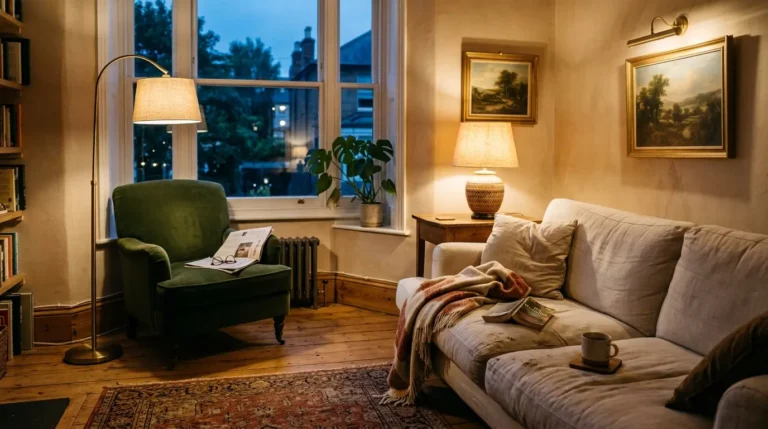
6. Build a Reading Nook Around a Wingback or Barrel Chair
A wingback chair’s tall sides genuinely block draughts and distraction, and a curved barrel chair offers a similar sense of enclosure with a softer silhouette. Either one, paired with a side table for a drink or book and a floor lamp for actual reading light, turns an ignored corner into a spot people actually use, which is the real test of whether a “character” chair earns its space. Position the lamp so light falls over the shoulder rather than straight down; it’s a small detail most styling photos skip, but it’s the difference between a nook that looks good and one that’s genuinely comfortable to read in for an hour.
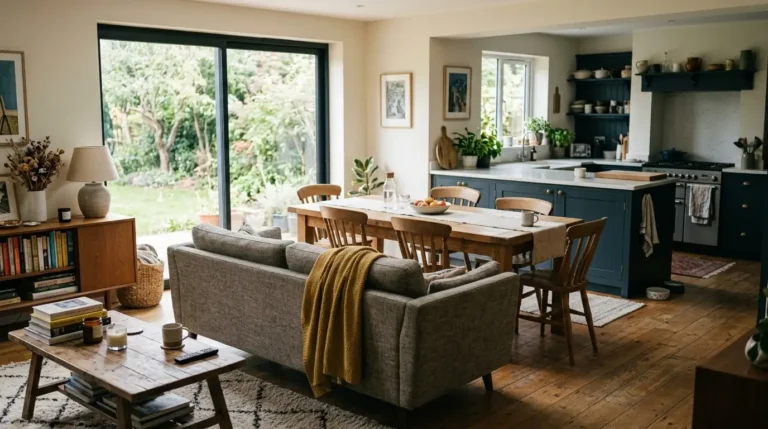
7. Use an Accent Chair to Anchor an Open-Plan Zone
In an open-plan layout, a single accent chair placed at the edge of the seating area does real work: it marks where the living zone ends and the dining or hallway space begins, without needing a wall. This is a genuinely underused idea, most open-plan advice reaches for rugs or lighting first, but a chair placed deliberately at a zone’s edge is often the simpler, cheaper fix. Angle it slightly toward the seating area rather than facing straight out into the room; a chair angled inward reads as part of the conversation, while one facing outward can accidentally look like it’s turning its back on the space.
8. Bring in Natural, Organic Materials
A rattan or wicker-framed accent chair adds texture and warmth, particularly in a sunlit spot near a window. It suits rooms that already lean toward natural wood tones and plants rather than a strictly modern, hard-edged scheme, where it can look out of place instead of complementary. Natural rattan can dry out and become brittle in direct, prolonged sun or very dry heating, so a spot with good light but not constant direct glare keeps it looking right for longer, and a cushion adds both comfort and a softer colour note against the woven frame.
9. Go Sculptural with One Architectural Shape
A chair with a genuinely unusual silhouette, curved, asymmetrical, oversized, works as art as much as furniture. The key discipline: it has to be the only sculptural piece in the room. Surround it with simpler, quieter furniture so it has room to actually read as a statement rather than competing with other bold shapes for attention. Unusual shapes often trade off some everyday comfort for their silhouette, a very low arm or an asymmetrical back can look striking but sit awkwardly for a long stretch, so this is another idea worth testing in person before committing, especially if it’s meant to be a genuinely used seat rather than a purely decorative one.
10. Choose Performance Fabric for a Busy, Pet-Friendly Household
For a household with kids or pets, performance fabric or leather resists stains, scratches, and daily wear far better than velvet, bouclé, or loose-weave linen, without forcing a compromise on colour or pattern, most performance fabrics now come in the same bold shades as the more delicate options. This is the practical choice when the room needs character but also needs to survive real life. Most performance fabrics are treated so spills bead on the surface rather than soaking in, giving a genuine window to blot a mess before it sets, and a tightly woven weave resists snagging from claws far better than a looser linen or bouclé.
11. Reupholster a Well-Built Frame Instead of Replacing It
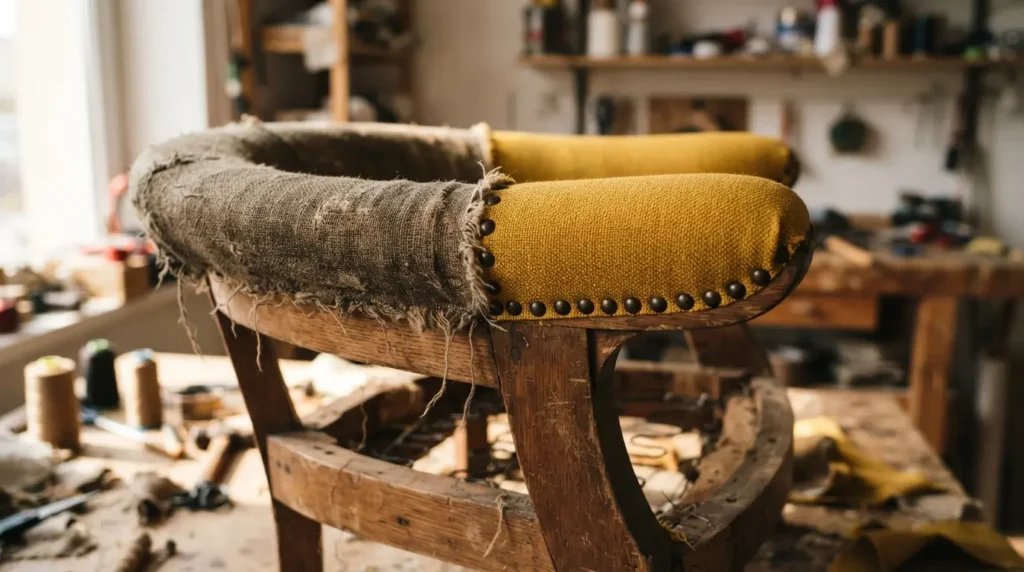
If an existing chair has a solid hardwood frame and springs that still have bounce, reupholstering it in a bold new fabric is often cheaper than buying an equivalent new piece, and it gives more genuine character than most off-the-shelf options, because nobody else has that exact chair. Check the frame before committing to reupholstery costs: a good frame makes this the smartest idea on the list; a weak one means the money’s better spent on something new. Get a quote before choosing the fabric, since labour is usually the larger part of a reupholstery bill, not the material, so upgrading to a bolder or more expensive fabric than you’d planned often adds relatively little to the total cost once the chair is already booked in.
12. Swap Seasonal Textiles Instead of Buying a New Chair
Changing a chair’s cushion covers and throw between seasons, wool and heavier, richer tones for winter, linen and lighter shades for summer, refreshes a room’s character without buying new furniture at all. It’s the lowest-cost idea here and the easiest to reverse if a colour choice doesn’t work out. Buy a spare cushion cover in a neutral tone alongside the seasonal one, so the chair still has a fallback look on the weeks between putting one set away and bringing the next one out, rather than sitting bare or mismatched while you wait.
Final Thoughts
The best accent chair ideas balance genuine character with practical honesty about scale, fabric durability, and frame quality. Not every bold idea on this list suits daily use or every room, but each of these twelve has a specific room and situation where it’s the right call. Pick the one that matches how the space actually gets used, not just how it looks in a photo, and it’ll still be adding character in five years rather than looking like a phase.
FAQs
What is the difference between an accent chair and a regular armchair?
An armchair is generally built for regular, comfortable daily use with a deeper seat. An accent chair prioritises visual character and often suits occasional rather than all-day sitting, though the two overlap.
Do accent chairs need to match the sofa?
No. A deliberate contrast in colour or material, tied together with a shared leg finish or a repeated cushion colour, usually adds more character than an exact match.
What size accent chair works in a small living room?
Look for a compact chair with slim arms and raised, visible legs rather than a skirted base, since visible floor space underneath keeps a small room feeling open.
Can I mix two different styles of accent chairs in one room?
Yes, as long as they share a common thread, a similar colour, leg style, or era, so the mix reads as curated rather than accidental.
Which accent chair fabric is best for pets or kids?
Performance fabric and leather are the most practical choices. Velvet and loose-weave linens are the ones to be cautious with in a busy, pet-friendly household.
Where should I place an accent chair in an open-plan living room?
At the edge of the seating area, where it can visually mark the boundary of the living zone without needing a wall or rug alone to do that job.
Is it worth reupholstering an old accent chair instead of buying new?
Yes, if the frame is solid hardwood and the springs still have bounce. A weak frame isn’t worth the reupholstery cost; a good one usually makes it the better-value option.
How many accent chairs are too many for one living room?
Beyond one true statement piece (or one symmetrical pair), additional bold chairs tend to compete rather than complement. Keep supporting seating simpler so the main piece still reads as the focal point.