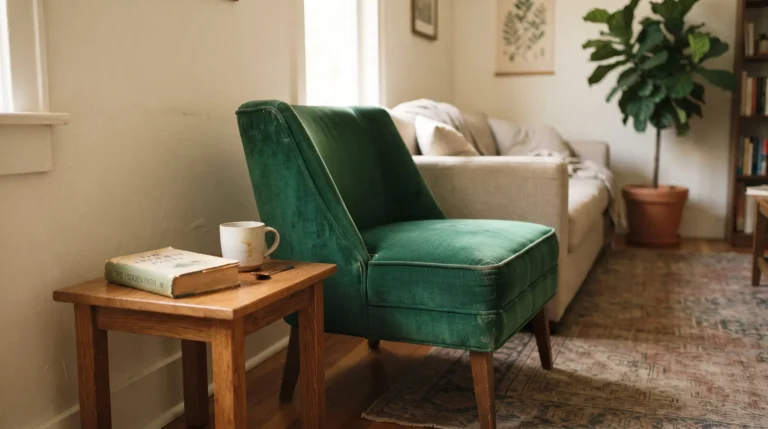
15 Living Room Decor Ideas to Refresh Your Space

The fastest way to refresh your living room is to fix the basics before buying anything new: rug size, layered lighting, curtain height and hidden storage. These 15 living room decor ideas start there, then move to colour, texture and accessories, with realistic costs. Most people do it backwards, spending on cushions while a small rug and one ceiling light keep the room flat.
1. Start With One Clear Focal Point
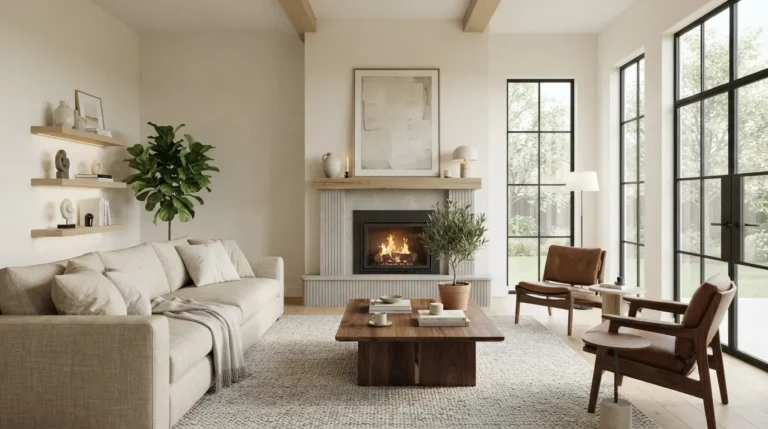
Pick one anchor, such as a fireplace, a large window, a media wall or oversized art, and angle the seating towards it. A single focal point cuts visual noise and makes every later styling choice easier, because the room has something to point at.
Most homeowners find that floating the sofa slightly off the wall makes lounge decor feel more sociable. Leave a walkway of roughly 75 to 90 cm (30 to 36 in). Trial the new layout for a weekend before you commit to any purchase. It costs nothing but time.
2. Get the Rug Size Right

Choose a rug big enough that at least the front legs of every seat sit on it. In most rooms that means around 200 x 300 cm or larger. Undersized rugs make a room feel smaller and disjointed, so go bigger than feels natural in the shop.
Expect roughly £80 to £600 for a decent wool or jute rug, with hand-knotted pieces costing more. Wool copes with traffic better, while jute looks great but sheds fibres and can feel rough underfoot. Add a rug pad so it does not creep. A good rug also softens echo on hard floors.
3. Layer Your Lighting
Combine three layers: ambient overhead light, task light for reading, and accent light for shelves or art. Put at least two layers on dimmers and use warm 2700 to 3000K bulbs so the room flatters skin and fabric. One ceiling fitting on its own flattens any space.
Floor and table lamps are the cheapest fix at about £30 to £150 each, and they need no electrician. Wiring in wall lights or fitting dimmers should be done by a qualified electrician, usually in half a day. LED strips behind a TV unit or shelf add depth for a small outlay, but cheap ones can look harsh, so check the colour temperature.
4. Stick to One Colour Story
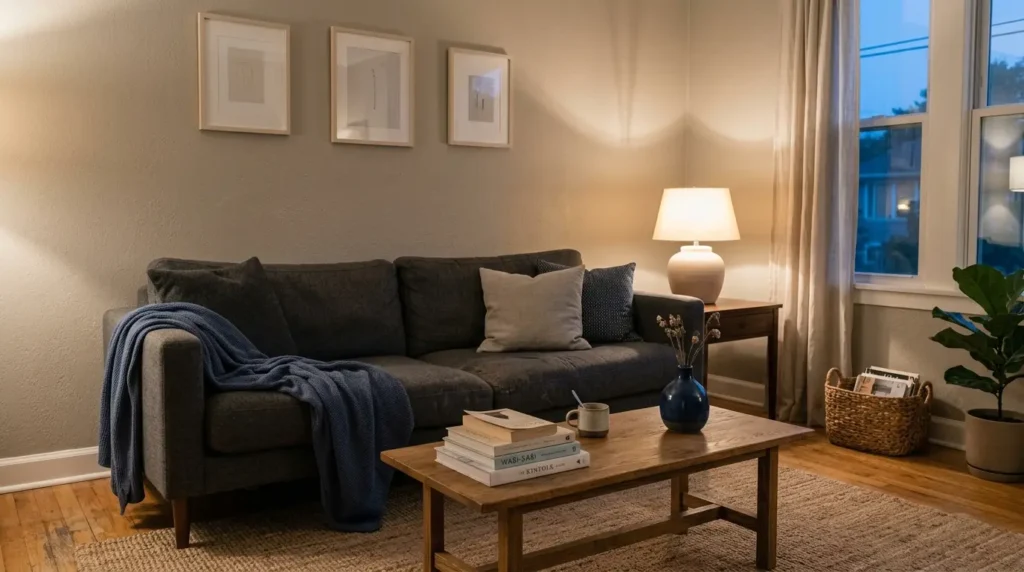
Choose one wall colour, one dominant neutral for large upholstery and one accent shade for cushions, throws or a single chair. A tight palette makes small rooms calmer and large rooms look planned. The 60-30-10 split of dominant, secondary and accent colour is a reliable starting point.
Warm neutrals such as cream, greige and oat are forgiving, but an all-neutral room turns flat without contrast in tone and texture. Test paint on two walls and check it morning and evening, because north-facing light turns many greys cold. A tester pot costs around £5 to £10, far less than repainting.
5. Mix Three Textures
Combine natural wood or rattan, a tactile fabric such as bouclé, linen or velvet, and one metal such as brass or matte black. Texture adds richness without busy pattern, and repeating each material at least twice makes the mix look deliberate.
This is the cheapest luxury upgrade in the room. New cushion covers and a throw typically cost £40 to £150 in total. The trade-off is practicality: bouclé snags with pets and velvet shows pressure marks, so choose washable covers where kids or animals share the sofa.
6. Hang Curtains High and Wide
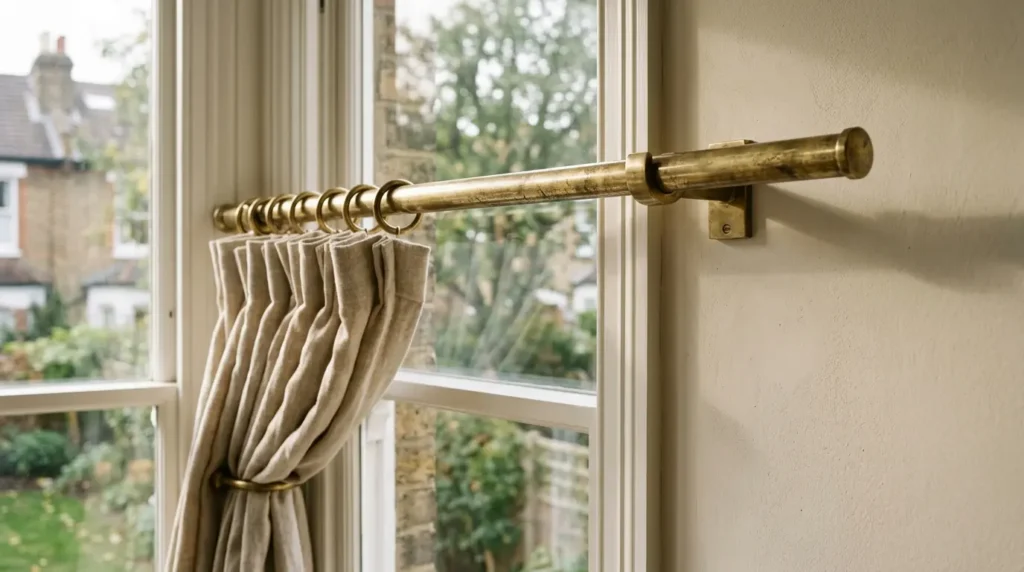
Mount the rod above the window frame, roughly 10 to 25 cm (4 to 10 in) higher, and extend it 15 to 30 cm past each side so the panels clear the glass. This makes ceilings look taller and windows larger, and it is one of the best-value changes in any lounge.
Lined panels that just brush the floor look tailored, while a hem stopping short looks like a mistake. Ready-made curtains and a rod usually cost £60 to £300, and made-to-measure costs far more. Heavy lined curtains also keep the room warmer and quieter in winter. Measure twice, because short panels are the commonest error.
7. Go Big With Art or Build a Gallery Wall
One oversized piece modernises a room faster than a cluster of small frames. Hang the centre at about 145 to 152 cm (57 to 60 in) from the floor. For a gallery wall, keep gaps of 5 to 8 cm and plan the layout with kraft paper templates first.
Art hung too high is the usual mistake. Above a sofa, it should sit roughly 15 to 25 cm over the back. In rented homes, picture ledges let you swap pieces without more drilling. Large prints and framing typically cost £60 to £400.
8. Choose a Coffee Table That Works Hard
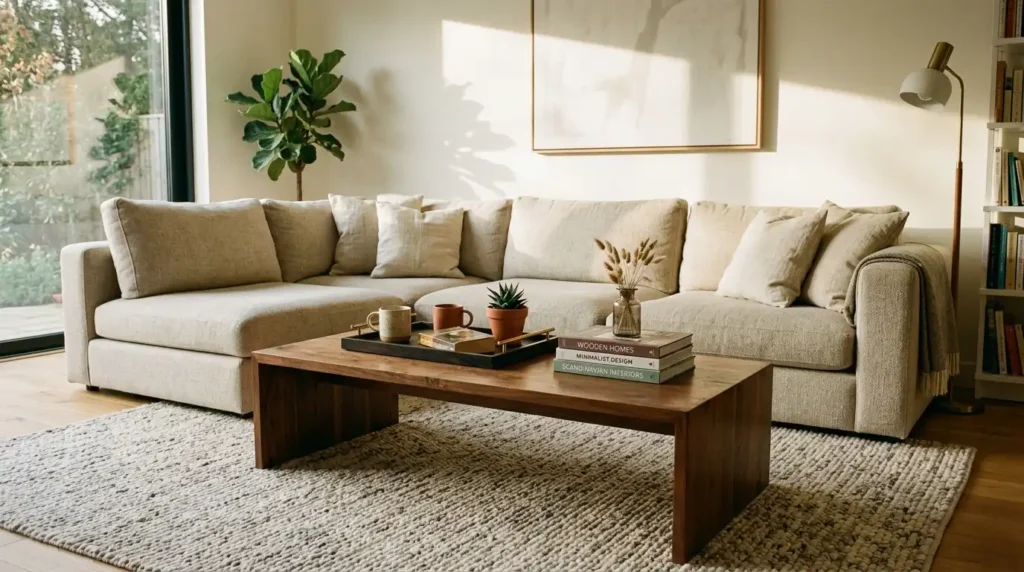
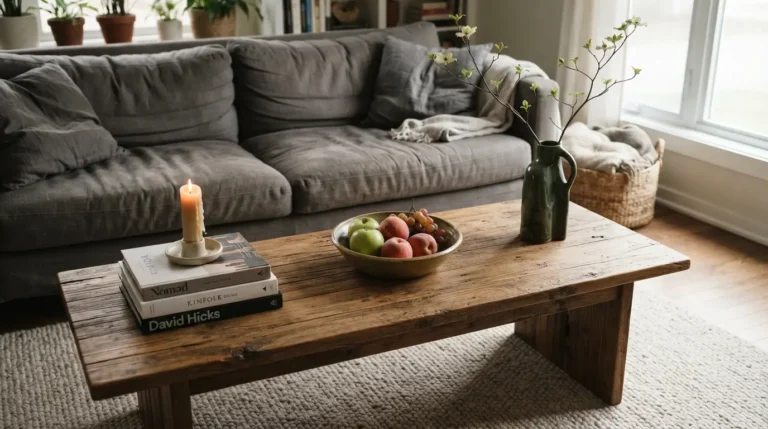
Leave about 40 to 46 cm (16 to 18 in) between the sofa and the table edge. Aim for a height level with, or slightly below, the seat cushions, usually 40 to 45 cm. Round tables ease flow in tight rooms, and rectangular ones suit long layouts.
Style it with a tray, a couple of books and one living element rather than a crowd of objects. Lift-top tables or a storage ottoman add hidden storage, which helps in small rooms. Expect £100 to £700. Glass tops show every fingerprint, and marble can stain with wine or citrus.
9. Hide the Clutter With Closed Storage
Closed cabinets, a sideboard or a storage ottoman keep remotes, chargers and toys out of sight. That does more for a room than another accessory, because visible clutter undoes a good scheme faster than anything else.
Pair closed storage below with open display above, and use matching baskets to calm busy shelves. A low credenza with wall-mounted picture ledges works well in rentals. Budget around £150 to £900 for a sideboard. Flat-pack assembly usually takes one to three hours.
10. Style Shelves Like a Designer
Remove everything, then return only items you love or use. Group in odd numbers, vary heights and materials, and leave a few gaps so the eye can rest. Edited shelves look expensive, while packed shelves look chaotic at any budget.
Mix books stacked flat and upright, lean a framed print against the back, and add a trailing plant to soften straight lines. It takes an hour or two and costs almost nothing. Colour-sorted books photograph well but make finding a title slow, so use that look sparingly.
11. Use Mirrors to Bounce Light

Place a large mirror opposite a window, or behind a lamp, to push light deeper into the room and extend sightlines. Arched or panel styles add architectural interest, and leaners work where wall mounting is difficult. Keep the frame simple so it does not compete with your art.
Placement matters, because a mirror reflecting a cluttered corner or the TV adds mess rather than light. Large mirrors are heavy, so use fixings rated for the weight, often heavy-duty plugs or a stud. Typical cost is £80 to £500.
12. Add Greenery That Will Survive
A tall plant in an empty corner and a few smaller ones on a shelf add height and life. Choose low-maintenance species such as snake plants or ZZ plants, and repeat their leaf tones in cushions or art so the palette ties together.
Be honest about light. A dim corner suits very few living plants, and a struggling one looks worse than none. Good faux stems are a fair fallback in low-light rooms, though they need dusting monthly. Use pots with saucers to protect timber floors. Plants cost about £10 to £120 each, depending on size.
13. Add an Accent Wall Without Committing
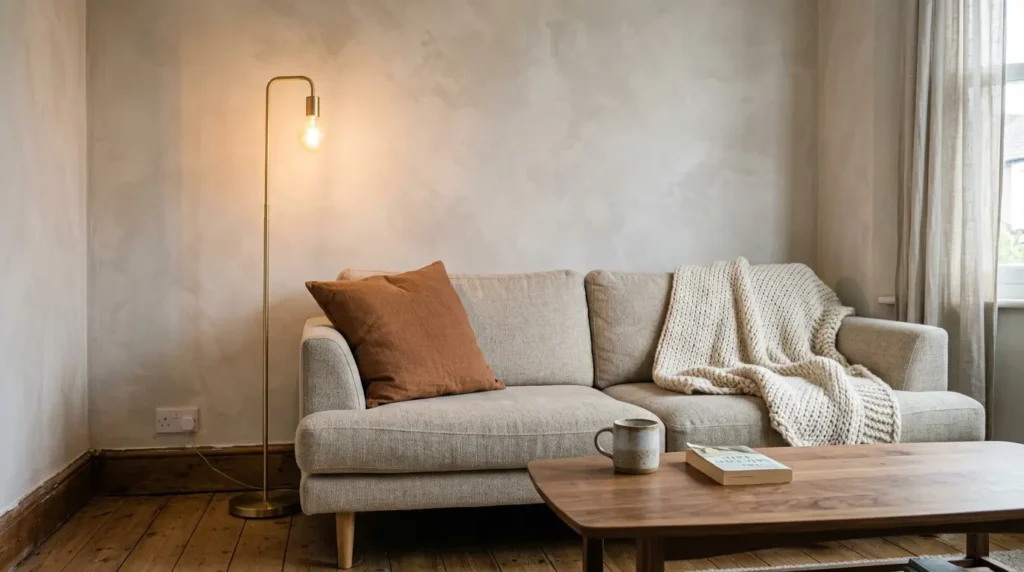
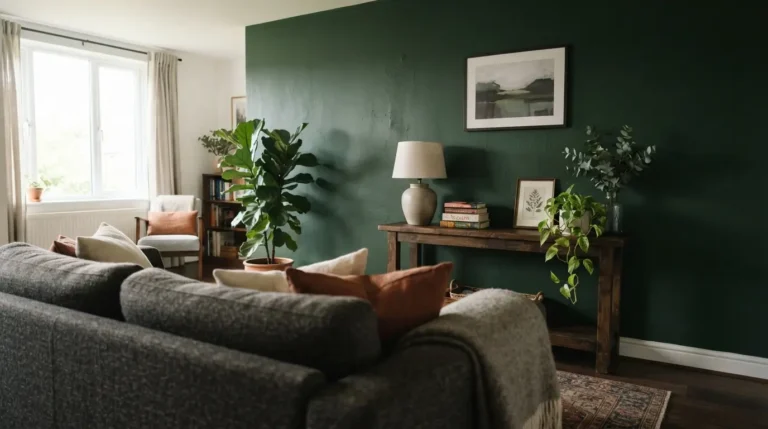
Paint or limewash the wall behind the sofa in a mid-tone for depth, or use peel-and-stick panelling or oversized fabric art in a rental. Balance a dark wall with lighter curtains, a pale rug and metallic accents so the room stays bright.
A painted feature wall takes a weekend and roughly £30 to £80 in materials. Limewash costs more, about £60 to £150 for one wall, and needs a confident hand because brush marks are part of the look. Peel-and-stick panels vary in quality and can lift in humid rooms, so test a sample first.
14. Tidy Up the Media Wall
Mount the TV at a comfortable seated eye level, hide cables in wall raceways, and anchor it with a low, long console. Flank it with sconces or art for balance. A neat media wall removes the biggest eyesore in most lounges.
A slatted wood or slab backdrop looks custom and softens echo. DIY kits usually cost £300 to £1,500 and take a weekend or two. Any in-wall wiring, especially power, is a job for a qualified electrician. A projector suits film nights but needs controlled light.
15. Build a Seasonal Styling Kit
Keep a box with spare cushion covers, a lightweight throw, candle holders and a few faux or dried stems. Rotating these living room accessories each season refreshes the room without new furniture. Lighter linens suit summer, and velvets, knits and warmer tones suit autumn and winter.
Photograph the room after styling. If it looks calm on camera, it will read well in person. A starter kit costs about £50 to £150. Store it under a bed or in the loft so the kit does not become clutter itself.
How Much Do These Living Room Decor Ideas Cost and How Long Do They Take?
Most single ideas here cost under £300, and the whole list can be done in stages over a few weekends. Curtains, rugs and media walls take the biggest share of the budget. Layout changes, shelf styling and paint are close to free.
| Idea | Approx. cost (GBP) | Time | Skill level |
| Rearranged layout | £0 | 1 to 2 hours | None |
| Shelf styling | £0 to £50 | 1 to 2 hours | None |
| Painted accent wall | £30 to £80 | 1 weekend | Basic DIY |
| Cushions and throw refresh | £40 to £150 | 1 hour | None |
| Floor or table lamps | £30 to £150 each | 30 minutes | None |
| Rug | £80 to £600 | 30 minutes | None |
| Ready-made curtains and rod | £60 to £300 | Half a day | Basic DIY |
| Slatted media wall kit | £300 to £1,500 | 1 to 2 weekends | Confident DIY |
Prices are approximate and vary by country, retailer and quality.
Mistakes That Undo a Refresh
Most failed refreshes come from a handful of avoidable habits, and fixing them costs less than replacing furniture.
The first is buying a full matching set. Rooms where every piece matches look like a showroom, so aim for a shared timber, metal finish or tone instead. The second is shopping before measuring. Check doorways, walkways and window widths first, because a sofa that fits the shop floor may swamp your room.
The third is choosing paint from a screen, which rarely matches what you see on the wall. The fourth is over-styling, where every surface holds something. Leave deliberate empty space. The last is ignoring how you really use the room. If you work from the sofa, a small desk zone with a comfortable chair beats a scheme that looks lovely but never gets used.
Conclusion
The best living room decor ideas fix function first: a properly sized rug, layered lighting, high curtains and closed storage. Colour, texture and accessories then finish the room rather than rescue it. Start with the free changes, spend on the pieces you touch every day, and add one new element at a time so you can see what works. A refreshed room comes from a handful of good decisions, not a full overhaul.
FAQs
What is the cheapest way to refresh a living room?
Rearrange the furniture, edit your shelves and swap cushion covers. These cost close to nothing and change the feel quickly. Add one warm lamp next, since lighting changes a room more than most purchases at the same price.
How do I make a small living room look bigger?
Use a large light rug, hang curtains close to the ceiling, and choose furniture on raised legs so light passes underneath. Add a big mirror opposite a window and keep the palette light and consistent.
What colours work best for interior decor in a living room?
Warm neutrals such as cream, greige and oat make the most flexible base. Add one deeper accent, such as navy, forest green or terracotta, through cushions, a chair or one wall. Test samples in both daylight and evening light.
Is lounge decor different from living room decoration?
No. In many regions, lounge and living room mean the same space, and the same principles apply: comfortable seating, layered lighting, a clear focal point and enough storage. The wording simply changes by country.
How often should I change living room accessories?
Refreshing cushions, throws, stems and candles every season or two is plenty. Keep core pieces like the sofa, rug and storage for years, and change only the accessories for variety.
How do I zone an open-plan living room?
Use a rug under the seating area, a console or bookcase behind the sofa, and different lighting for each zone. Floating the sofa to face the lounge area gives a natural boundary without building anything.
Can I work from the living room without it looking like an office?
Choose a slim desk or console with a comfortable chair, and keep it on a wall rather than mid-room. Closed storage hides paperwork at the end of the day, and a lamp with its own switch helps you wind down.
How do I decorate a dark or north-facing living room?
Lean into warmth rather than fighting the light. Use warm bulbs, creamy or earthy paint, mirrors opposite windows and pale curtains hung wide of the frame. A deep, moody wall can also look intentional if you commit to it.