

How to Choose the Right Mattress for a Good Night’s Sleep

Choosing the right mattress for a good night’s sleep comes down to matching firmness to your actual sleep position and body weight, checking genuine thickness rather than marketing claims, and reading the warranty’s fine print before you buy, not after something goes wrong. Most people choose based on how a mattress feels lying down in a showroom for two minutes, which tells you almost nothing about how it performs across a genuine eight-hour night, night after night, for years.
Start With Your Sleep Position, Not the Showroom Feel
Your sleep position genuinely determines the firmness and sinkage level that will actually support you properly through the night.
| Sleep Position | Recommended Firmness | Recommended Sinkage |
| Side | Soft to medium-firm (4-6 out of 10) | Deeper sinkage, more than around 6cm |
| Back | Medium to slightly firm (5-7 out of 10) | Less sinkage, under around 6cm |
| Stomach | Medium to slightly firm (5-7 out of 10) | Less sinkage, under around 6cm |
Side sleepers need genuine pressure relief at the shoulders and hips, since more weight concentrates there, a mattress too firm creates real pressure buildup, while one too soft lets the body sink too far and pulls the spine out of alignment. Back and stomach sleepers need the opposite, a mattress with less give keeps the hips from sinking too deeply and dragging the lower back into an unnatural curve. Since a genuinely large proportion of people move between positions through the night, a medium-firm mattress around the middle of the scale suits the widest range of sleepers if you’re not confidently in one camp.
Factor In Body Weight Alongside Sleep Position
Body weight interacts with sleep position to shift your ideal firmness slightly. Heavier sleepers generally do better on a medium-firm to slightly firm mattress, since more weight compresses softer materials further than intended, while lighter sleepers often find a softer mattress gives genuinely better pressure relief without needing to bottom out through the comfort layers just to reach adequate support underneath. This isn’t a separate decision from sleep position, it’s a genuine adjustment on top of it, so use both together rather than picking one factor and ignoring the other.
Understand the Three Main Mattress Types
Most mattresses fall into one of three genuine categories. All-foam mattresses use a foam comfort layer over a foam support base, generally the most budget-friendly option with a thinner overall profile. Hybrids combine a foam comfort layer with a supportive coil base underneath, delivering a more balanced, even feel that suits a genuinely wide range of sleepers without polarising preferences the way pure foam or pure coil can. Coil, or innerspring, mattresses use a thinner comfort layer over a coil support system, giving a more traditional, bouncier feel and generally sitting at a lower price point, though they tend to transfer motion more readily than foam or hybrid options.
Check Genuine Thickness, Not Just the Marketing Copy
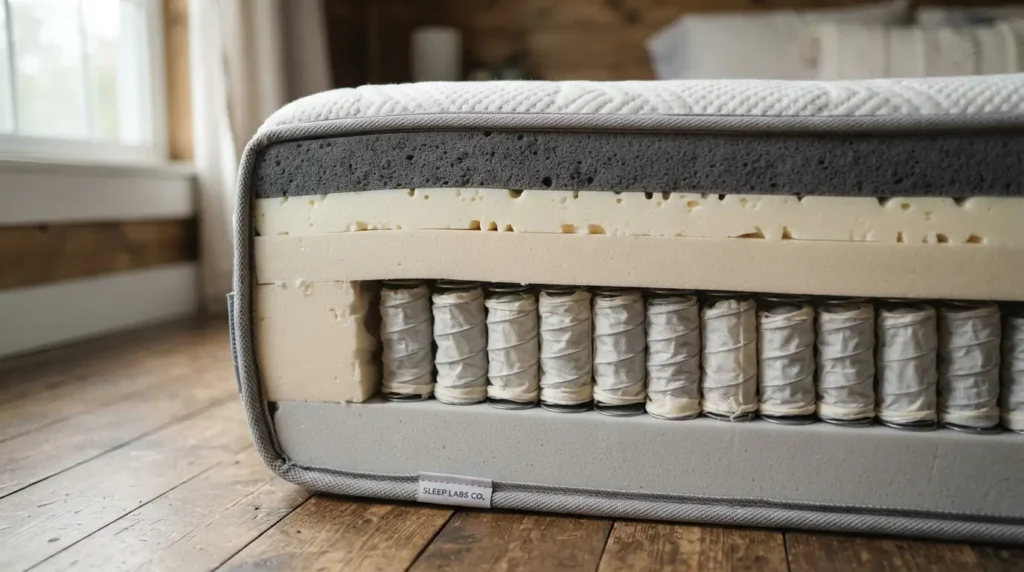
Thickness matters more to genuine comfort and support than most buying guides suggest. A mattress under around 25cm thick typically underperforms compared with thicker options, since there simply isn’t enough material for a genuinely supportive base layer alongside an adequate comfort layer on top. Aim for at least 30cm overall for solid, reliable performance, this generally allows for a support layer of around 20cm and a comfort layer of roughly 10cm, a combination that consistently delivers better pressure relief and support than a thinner profile. If you’re a heavier sleeper specifically, lean toward 35cm or more, since a thicker mattress handles greater weight without compressing through to the firmer support layer as quickly.
Consider Motion Transfer If You Share the Bed
This matters considerably more for couples, especially if one partner moves around more during sleep, works different hours, or you share the bed with a pet. Memory foam and well-constructed hybrid mattresses generally absorb movement most effectively, since the material’s structure genuinely dampens motion rather than letting it ripple across the surface. Coil mattresses struggle here specifically, their taller, springier construction carries motion more readily, so a lighter sleeper or a couple prone to disturbing each other overnight is generally better served by foam or hybrid options.
Read the Warranty’s Fine Print Honestly
This is the detail most people skip entirely, and it’s genuinely worth understanding before you buy. Warranty length varies considerably, some brands offer lifetime cover, others a fixed term commonly around 10 years, but the terms matter as much as the length. A standard, shorter warranty typically offers full replacement if the mattress develops excessive sagging or a manufacturing defect. A longer or “lifetime” warranty, however, often shifts to a prorated replacement schedule the further you get into it, meaning you may still need to pay a meaningful percentage of a new mattress’s cost even years into a technically valid claim. Check specifically what’s covered, what void the warranty (misuse, using the wrong base or lacking a mattress protector are common exclusions), and whether a later-stage claim is genuinely a full replacement or a partial-cost one before assuming a long warranty means decades of worry-free cover.
Check the Real Trial Period and Return Terms
Most mattresses today come with a genuine at-home trial period, commonly somewhere in the region of 100-120 nights, though some extend to a full year. This matters because a mattress that feels right for a brief lie-down in a showroom can feel completely different after several weeks of actual sleep. Check whether returns are genuinely free or come with a return fee, and watch for the difference between a proper refund and a “comfort exchange,” which some retailers offer instead, letting you swap for a different model within their own range rather than genuinely getting your money back if nothing in their range suits you.
Weigh Buying In-Store Against Buying Online
Buying in person lets you physically feel a mattress before committing, genuinely useful for getting an initial sense of firmness and sinkage, but in-store prices are often higher due to the overhead of running a physical showroom, and sales staff aren’t always working purely in your interest. Buying online typically costs less for a comparable mattress and usually comes with a genuinely longer trial period and more straightforward returns, though you’re committing before ever lying on the actual product, which is exactly why a generous trial period matters so much with an online purchase specifically.
Final Thoughts
Choosing the right mattress for a good night’s sleep really comes down to matching firmness and thickness to your actual sleep position and body weight, then reading the warranty and trial terms honestly rather than assuming the headline length tells the whole story. Take the time on these details rather than judging purely from a brief showroom lie-down, and the mattress you choose will genuinely support the kind of sleep you’re actually looking for, not just look good on the spec sheet.
FAQs
What firmness mattress is best for side sleepers?
Generally soft to medium-firm, around 4-6 out of 10 on a standard firmness scale, with deeper sinkage to relieve pressure at the shoulders and hips where side sleepers carry more concentrated weight.
How thick should a good mattress be?
Aim for at least 30cm overall for solid, reliable support and comfort, mattresses under around 25cm tend to underperform. Heavier sleepers benefit from an even thicker mattress, 35cm or more, for genuinely adequate support.
Does a lifetime mattress warranty really mean free replacement forever?
Not necessarily. Many lifetime or long-term warranties shift to a prorated replacement schedule the further into the warranty period you are, meaning you may still pay a meaningful percentage of a new mattress’s cost even under a technically valid claim.
How long should a mattress trial period be?
Commonly somewhere between 100-120 nights is standard, though some brands offer up to a full year. A longer trial gives you genuine time to adjust and properly assess the mattress beyond the first few nights.
Is it better to buy a mattress online or in-store?
Online typically costs less and comes with longer trial periods and more straightforward returns, while in-store lets you physically test the mattress before buying, at generally higher prices. Neither is universally better, it depends on whether trying before buying or value and trial flexibility matters more to you.






One Comment