
How to Design the Perfect Dining Room from Scratch

Designing the perfect dining room from scratch comes down to working through decisions in a genuine sequence, room and purpose first, styling last, rather than starting with a paint colour or a Pinterest board before the practical groundwork is settled. Most dining rooms that end up redecorated within a year or two weren’t badly styled, they were planned in the wrong order, with the fun, visual decisions made before the structural and functional ones that should have come first.
Start With the Room’s Location and Purpose, Not a Colour Scheme
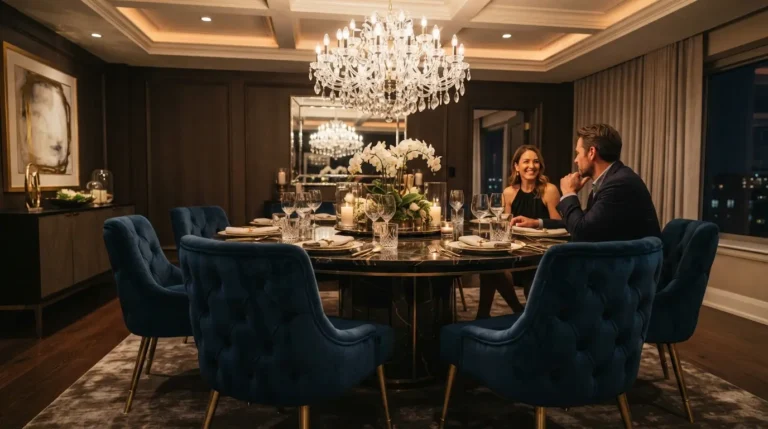
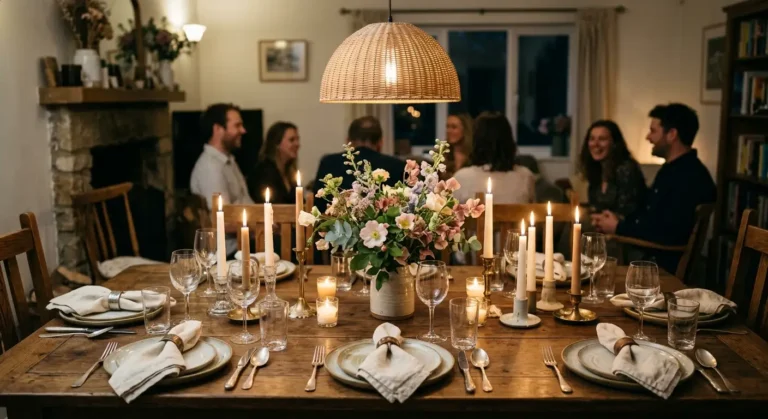
Before choosing anything visual, be honest about how this specific room actually sits within your home and how it’s genuinely going to be used. A dining room that opens directly off the kitchen, used for daily family meals, has different practical needs to a more formal, separate room used mainly for entertaining and special occasions. This distinction shapes almost everything that follows, a daily-use room needs genuinely durable, easy-to-clean choices throughout, while an occasional formal room can carry more delicate materials and bolder styling since it simply won’t take the same daily wear.
Decide Your Genuine Seating Capacity Before Anything Else
This is the first real decision, and it’s worth being honest rather than aspirational about it. Think about your actual household size and how often you genuinely entertain larger groups, rather than planning around the biggest gathering you might host once a year at the expense of how the room feels for daily use. An extendable table is worth considering specifically if this tension exists, comfortable for everyday use at its smaller size, with the capacity to grow for occasional larger gatherings, rather than compromising on either scenario permanently.
Choose Your Table and Chairs as the Anchor Decision

Once you know your seating capacity, the table and chairs become your genuine anchor decision, the piece everything else in the room responds to rather than a decision made in isolation once the walls are already finished. This is worth settling before choosing wall colours, flooring, or accessories, since the table’s material, tone, and style will influence, and ideally coordinate with, every decision that comes after it. Treating the table as an afterthought once the room’s already decorated is one of the most common ways a dining room ends up feeling like several unrelated decisions rather than one cohesive space.
Plan Electrical and Lighting Before the Walls Are Finished
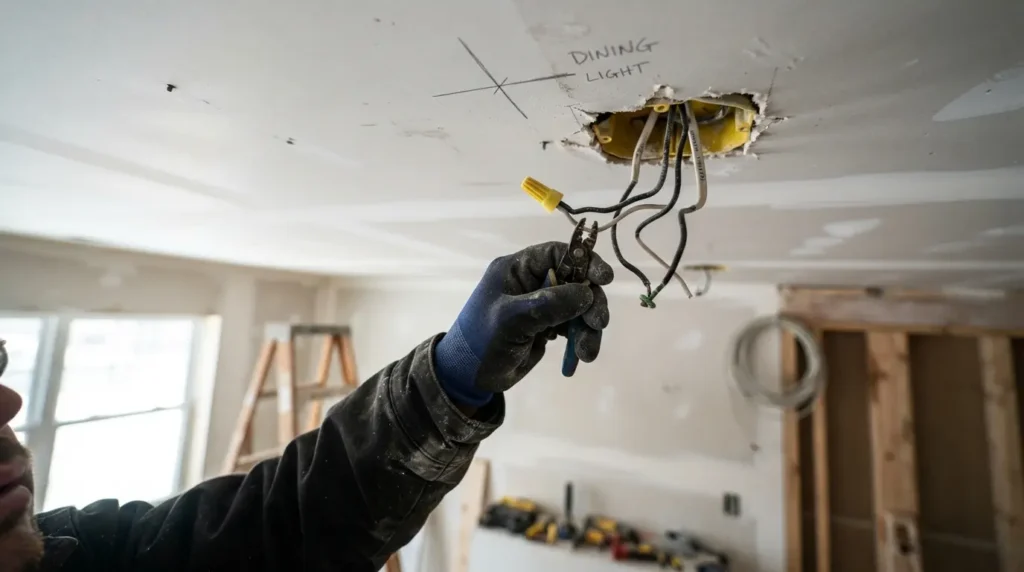
This is the sequencing detail most people genuinely get wrong, and it’s expensive to correct later. Decide where your main light fixture will hang, and whether you want a dimmer switch, additional wall lighting, or accent lighting elsewhere in the room, before the walls are plastered and decorated, not after. Running new wiring or adding a dimmer circuit into an already-finished room means disturbing walls you’ve just decorated, a genuinely avoidable cost and disruption if lighting is planned at the same early stage as the room’s basic structure rather than treated as a finishing touch.
Decide What Storage You Actually Need
Before you start thinking about how the room will look, work out what it genuinely needs to store, everyday crockery, table linens, glassware, serving pieces, and whether that storage needs to live in the dining room itself or can sit elsewhere in an adjoining kitchen. This decision affects your floor plan directly, a sideboard or storage cabinet needs its own wall space and clearance, so settling this before you’re choosing wall treatments or planning where art will hang prevents a beautiful scheme having to awkwardly accommodate a storage piece squeezed in as an afterthought.
Choose Flooring and Rug Together, Not as an Afterthought
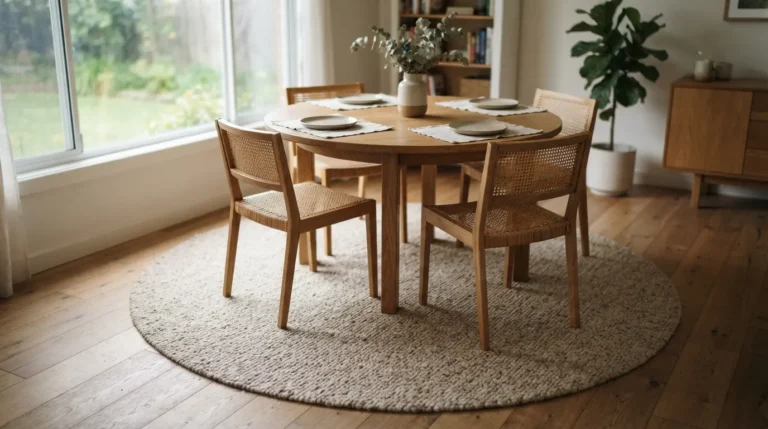
Flooring and any rug you’re planning should be decided together as one decision, not flooring chosen first with a rug added later purely because the floor looks a bit bare. The two need to genuinely work together, in tone, texture, and practicality, particularly in a room that sees regular spills and moving chairs. Settling this alongside your table and seating capacity, rather than after the walls are already painted, means you’re choosing wall colours and other finishes to complement a floor plan you’ve actually confirmed, rather than guessing at what might eventually go underfoot.
Treat the Walls as the Next-to-Last Decision, Not the First
This is genuinely counter-intuitive if you’re used to starting a room design with a colour or wallpaper you love, but walls work better as a near-final decision once your furniture, lighting, and flooring are settled. A wall colour or pattern chosen in isolation, before you know your table’s wood tone or your flooring’s undertone, risks clashing with decisions made later, while a wall treatment chosen once everything else is confirmed can be selected specifically to complement what’s already in the room. This doesn’t mean the walls matter less, it means they work harder and look more considered when they’re responding to genuine constraints rather than dictating decisions that come after them.
Style and Accessorise Only Once Everything Else Is In Place
The final layer, art, table dressing, accent lighting, seasonal accessories, genuinely comes last, once every structural and furniture decision is settled. This is the enjoyable, visible part of designing a dining room, but it’s also the part most likely to need editing and refining over time regardless of how well you plan it, so there’s little value in finalising it before the room’s actual bones, table, lighting, storage, flooring, walls, are confirmed and in place.
Final Thoughts
Designing the perfect dining room from scratch really comes down to sequencing, room and purpose, seating capacity, furniture, lighting, storage, and flooring settled before you ever choose a wall colour or reach for the styling accessories. Follow that order rather than starting with the fun, visual decisions, and the finished room will feel genuinely considered and cohesive, not like a collection of choices made in the wrong sequence and patched together afterward.
FAQs
What order should I plan a dining room in?
Start with the room’s location and purpose, then seating capacity, then your table and chairs, followed by lighting and electrical planning, storage needs, flooring and rug together, walls, and finally styling and accessories. Working backwards from this order is the most common reason a room ends up needing early revisions.
Should I choose the table or the room colour first?
The table, genuinely. It’s your anchor piece and everything else, particularly wall colour, should be chosen to complement it rather than the reverse, which risks a beautiful wall scheme clashing with a table chosen afterward.
When should I plan dining room lighting?
Before the walls are plastered and decorated, ideally at the same stage as any other structural or electrical work. Adding a dimmer switch or repositioning a light fitting after the room is finished means disturbing decoration you’ve only just completed.
How many people should my dining room seat?
Base this on your genuine household size and how often you actually entertain larger groups, rather than planning permanently around an occasional big gathering. An extendable table is worth considering if you regularly need both a comfortable everyday size and occasional larger capacity.
What’s the biggest mistake people make designing a dining room?
Starting with the visual, enjoyable decisions, a wall colour, a wallpaper, an accent piece, before the practical groundwork, seating capacity, furniture, lighting, storage, is settled. This sequencing mistake is what leads to a room needing revision within a year or two rather than one planned properly from the start.