Types of Kitchen Cabinet Doors Explained: From Shaker to Slab

Kitchen cabinet door types fall into a handful of distinct categories, shaker, slab, raised panel, inset, and glass-front among the most common, each built differently and suited to a different kitchen style. The door style you choose sets the tone for everything else in the room, the hardware, the worktop, even the lighting, so it’s worth understanding how each one is actually made, not just what it looks like in a showroom photo.
How Cabinet Doors Are Actually Built
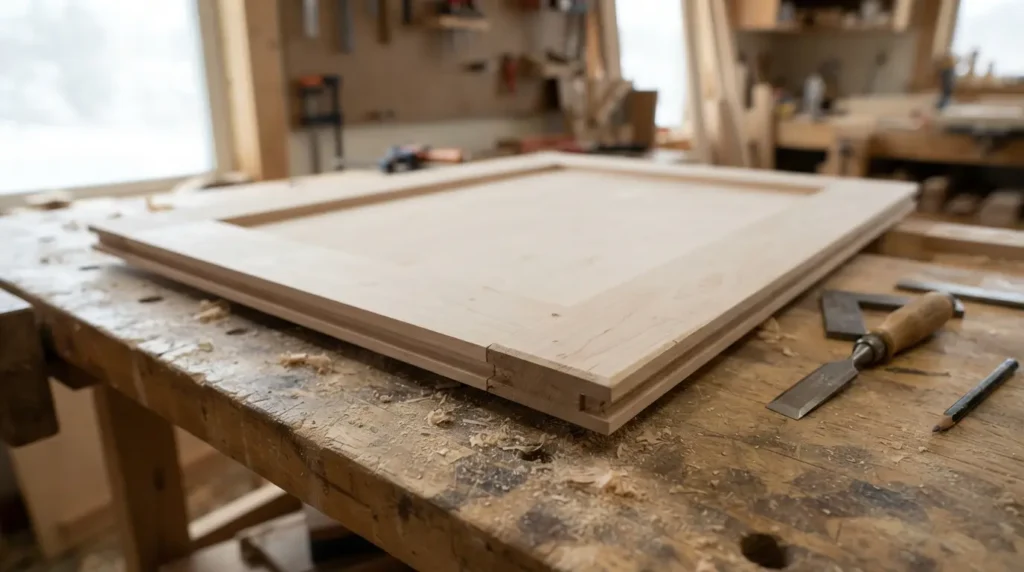
Before comparing styles, it helps to understand the two main construction methods behind them. Five-piece doors have a frame, two vertical stiles and two horizontal rails, surrounding a centre panel that can be flat, recessed, or raised. Shaker and raised panel doors are both five-piece constructions, and this design has a genuine practical advantage: the centre panel can expand and contract slightly with humidity and temperature changes without cracking, which matters more in a kitchen than almost any other room in the house. Slab doors, by contrast, are a single unbroken surface with no frame or panel detail at all. They’re simpler to produce, but because there’s no detail to hide imperfections behind, they demand a flawless finish in a way five-piece doors don’t.
Shaker: The Style That Works Almost Anywhere
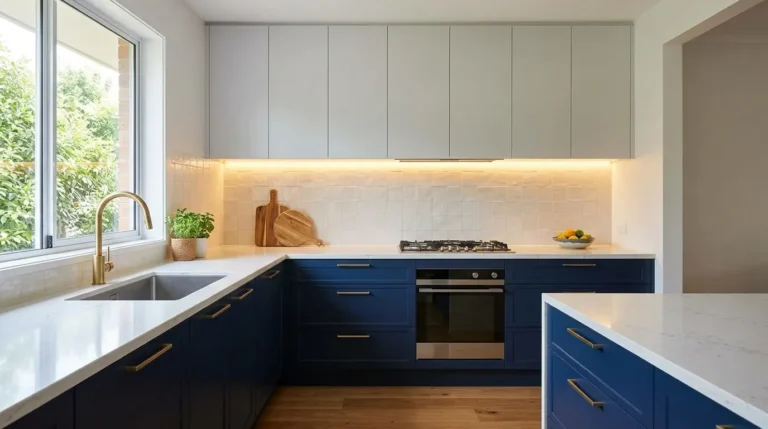
A shaker door is defined by a flat centre panel surrounded by a clean, square frame with no ornamental detail. Its enduring popularity comes down to genuine versatility, it works in traditional, transitional, farmhouse, and even fully contemporary kitchens, and it’s simple enough not to compete with bold colours or statement hardware while still having enough visual structure to feel considered rather than plain. Current design leans toward slimmer shaker profiles, narrower rails and stiles that read as more tailored and less boxy than the wider, chunkier versions common a decade ago. If you’re choosing a door style that needs to suit a broad range of tastes, or hold its appeal if you ever come to sell, shaker remains the safest, most universally liked starting point.
Slab: Clean, Modern, and Unforgiving of Imperfection
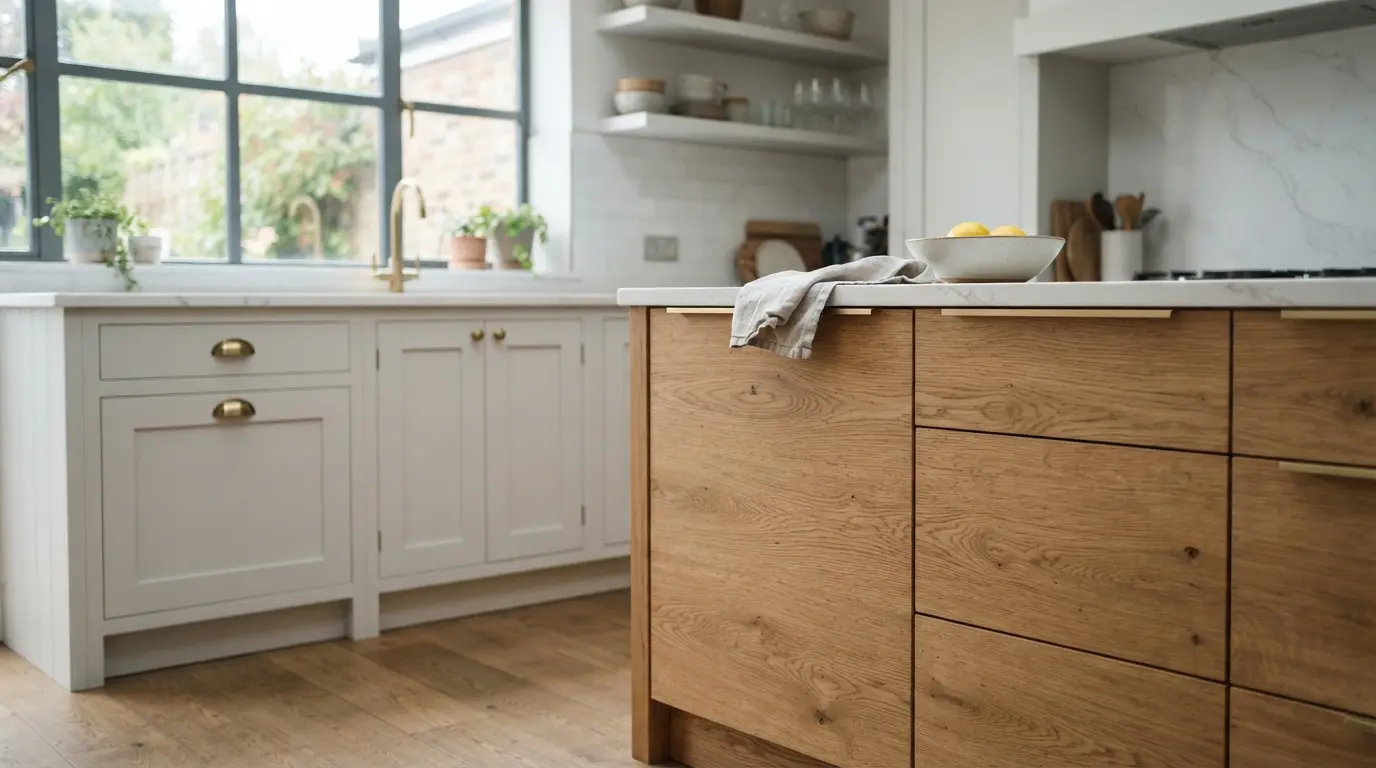
Slab doors strip everything back to a flat, unbroken surface, and in the right kitchen the effect is genuinely striking, the material itself becomes the design. A slab door in natural oak lets the wood grain do all the visual work, while a slab in matt lacquer creates a sleek, gallery-like finish. The honest trade-off: slab doors show fingerprints and surface marks far more readily than a five-piece door, since there’s no panel detail to distract the eye or hide a smudge, and a matt finish is noticeably more forgiving day to day than a high-gloss one. Slab also works well as a contrast element rather than throughout an entire kitchen, slab on an island paired with shaker on the surrounding cabinetry creates genuine visual hierarchy without feeling like two unrelated kitchens pushed together.
Raised Panel: Traditional Depth and Detail
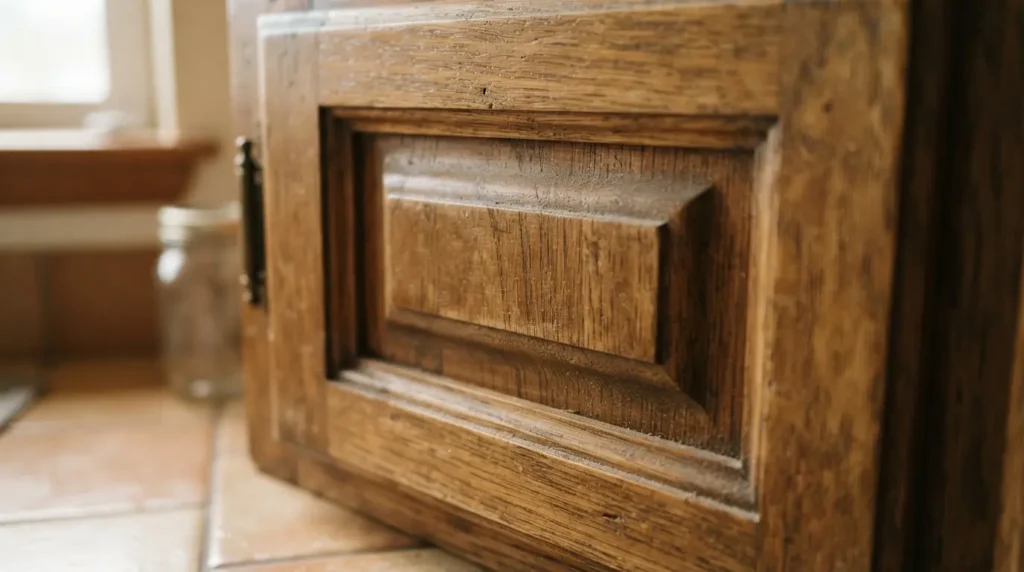
A raised panel door has a contoured or bevelled centre panel that sits proud of the surrounding frame, creating real dimension and depth rather than the flat surface of a shaker or slab door. It suits a formal or traditional kitchen particularly well, and paired with warm wood tones and detailed hardware, it brings a genuine sense of craft that flatter styles don’t attempt. The honest maintenance reality: the grooves and contours that give raised panel doors their character are also where dust and grease genuinely accumulate faster than on a flat surface, so it needs a bit more regular attention to stay looking sharp than a shaker or slab equivalent.
Inset: The Premium, Furniture-Like Option
Inset doors sit flush within the cabinet’s face frame rather than overlaying it, so when closed, the door sits perfectly level with the surrounding frame, no reveal, no overhang. The result reads as genuinely furniture-like, closer to a fitted piece of joinery than a standard cabinet door. This precision comes at a cost: inset construction needs considerably tighter manufacturing and installation tolerances than an overlay door, which is why it typically costs more, and wood movement from humidity can cause an inset door to stick or bind slightly if it wasn’t fitted with enough allowance in the first place. It’s worth the investment specifically where a genuinely custom, high-end finish matters more than budget, but it’s not the door style to choose if a completely fuss-free daily experience is the priority.
Glass-Front Doors: Used Selectively, Not Everywhere
Glass-front doors replace the solid panel with clear, frosted, reeded, or patterned glass, breaking up a run of solid cabinetry and creating a sense of openness, along with a place to display glassware or dishware intentionally. Reeded and fluted glass in particular offers a good middle ground, adding texture and softening the view through while giving more privacy than clear glass. The detail worth knowing before specifying a whole kitchen this way: glass fronts work best used selectively, two or three doors within an otherwise solid run reads as a considered design choice, while an entire kitchen of glass fronts asks a lot of your ongoing tidiness and cleaning routine, since everything behind the glass is genuinely on display.
Beadboard and Other Styles Worth Knowing
Beadboard doors, with narrow vertical grooves running across the centre panel, bring a relaxed, coastal or cottage character that suits a more casual kitchen than shaker’s cleaner lines or raised panel’s formality. Handleless doors, whether achieved through a routed pull groove or an integrated system, aren’t a panel style so much as a hardware approach, and they can be applied to a slab or shaker profile alike for an especially streamlined look. Neither is as universally applicable as shaker or slab, but both are worth knowing about if your kitchen’s overall style leans specifically toward one or the other.
Which Door Style Should You Choose?
| Consideration | Best Match |
| Broadest appeal, easiest to live with | Shaker |
| Modern, minimalist, material-led look | Slab |
| Traditional, formal character | Raised panel |
| Premium, furniture-like custom finish | Inset |
| Openness and display without full commitment | Glass-front (used selectively) |
Design direction is the natural starting point, modern and minimalist points toward slab, transitional and broadly appealing toward shaker, traditional and formal toward raised panel, and a genuinely custom, high-end project toward inset. Maintenance matters more than most people expect at the outset: slab shows fingerprints most readily, raised panel collects dust in its grooves, and shaker is generally the easiest of the main styles to keep clean day to day. Budget tends to follow construction complexity, slab is typically the least expensive to produce, shaker sits in the mid-range, and raised panel and inset cost more due to the additional labour and tighter tolerances each requires.
Final Thoughts
Choosing between types of kitchen cabinet doors really comes down to matching the construction and finish to how your kitchen actually gets used, not just which style photographs best. Shaker remains the safest, most broadly appealing choice if you’re not certain, while slab, raised panel, inset, and glass-front each earn their place in a kitchen built around a more specific design direction and a genuine understanding of the maintenance that comes with it.
FAQs
What is the difference between shaker and slab doors?
A shaker door has a flat centre panel surrounded by a distinct frame, a five-piece construction. A slab door is a single flat, unbroken surface with no frame or panel detail at all.
Are shaker doors more expensive than slab?
Generally shaker sits in the mid-range, more than a basic slab door but less than raised panel or inset, since it involves more components and labour than a slab but far less than the tighter tolerances raised panel and inset construction require.
What cabinet door style shows the least fingerprints?
Shaker and raised panel doors tend to hide fingerprints and light marks better than slab, since the panel detail breaks up the surface and distracts the eye. A matt slab finish is considerably more forgiving than a high-gloss one if you want the slab look specifically.
Do inset cabinet doors stick over time?
They can, if they weren’t fitted with enough allowance for wood movement from humidity and temperature changes. This is one of the genuine trade-offs of inset’s precise, flush fit, and it’s worth discussing directly with whoever fits them.
What is a five-piece cabinet door?
A door built from a frame, two vertical stiles and two horizontal rails, surrounding a separate centre panel. Shaker and raised panel doors are both five-piece constructions, which allows the centre panel to expand and contract slightly without cracking.