How to Choose the Right Paint Colour for a Bathroom

Choosing the right paint colour for a bathroom means starting with a moisture-resistant, mould-resistant paint formulated for bathrooms, then picking a shade based on how much natural light the room gets, not just what looks good on a colour card. Get the paint type right first; the colour is the easy part once you know what the room can actually support.
Most bathroom colour guides show you a wall of paint swatches and call it done. What they leave out is the part that determines whether your bathroom still looks good in eighteen months: standard emulsion peeling near the shower, a beautiful dark colour that turns a windowless bathroom into a cave, or a shade that looked warm on the card and reads grey the moment the extractor fan kicks in. If you’ve ever picked a bathroom colour that looked perfect in the tin and wrong on the wall, this is the guide that explains why.
Start With the Paint Type, Not the Colour
Bathrooms need a paint formulated to resist moisture and mould, not standard wall emulsion. Ordinary matt emulsion absorbs steam, and over a few months of daily showers it starts to bubble, flake, or grow mould at the ceiling line and around the shower enclosure, however good the colour looked when you painted it.
Look for paint specifically labelled for bathrooms or kitchens, sometimes marketed as an “easycare” or moisture-resistant bathroom range. These typically cost slightly more per litre than standard emulsion, roughly £25 to £45 for 2.5 litres depending on brand and finish, but the difference in how the wall performs over two to three years is significant. A trade-off worth knowing: budget standard emulsion in a bathroom colour you love can look identical to the specialist product on day one. The gap only shows up after repeated exposure to steam, which is exactly when it’s most annoying to fix.
Work Out How Much Natural Light Your Bathroom Actually Gets
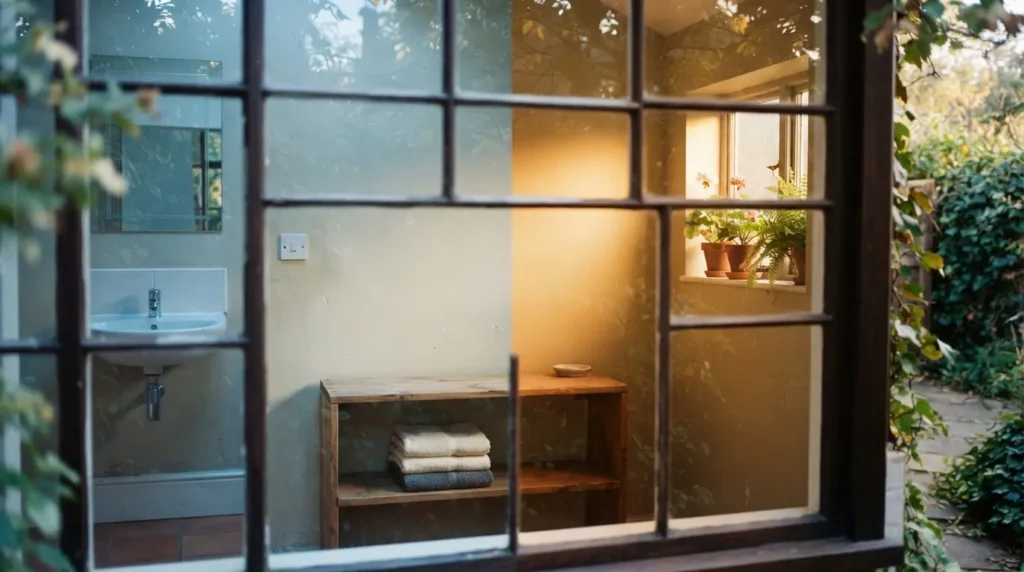
The direction your bathroom faces and how much daylight it gets changes how any colour actually reads on the wall, sometimes dramatically from how it looks on a swatch under shop lighting.
North-facing bathrooms get cooler, flatter light throughout the day, which can make colours look duller or more grey than expected. Choosing a shade with a warm undertone, soft yellows, warm greys, or gentle terracotta tones, helps counteract that flatness and stops the room feeling cold. South-facing bathrooms get warmer, stronger natural light, so cooler tones like blues and soft greens tend to balance that warmth nicely rather than fighting it.
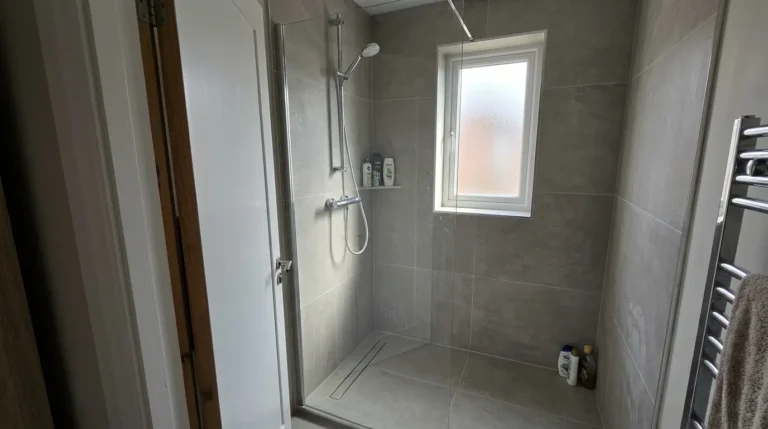
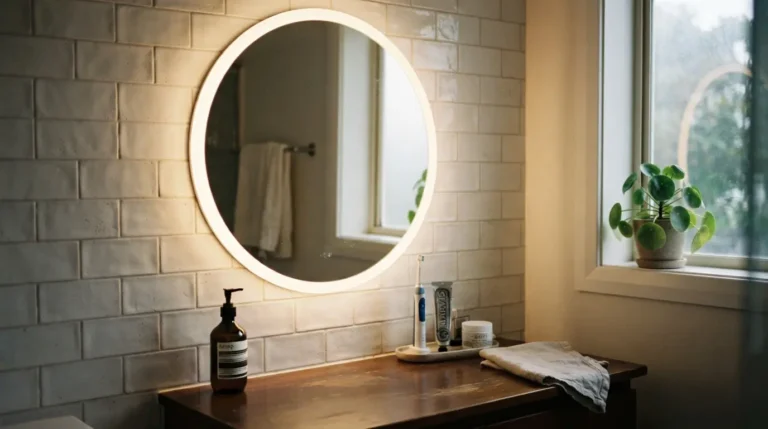
If your bathroom has no window at all, the paint colour is doing all the work under artificial light alone. Pale pastels and light neutrals generally work best here, since they reflect artificial light rather than absorbing it, but the paint colour matters less than the quality of the lighting itself. A windowless bathroom in a rich, saturated colour under weak, cold-toned bulbs will always feel smaller than the same colour under warm, well-placed LED lighting.
Choose a Colour Based on the Mood You Want
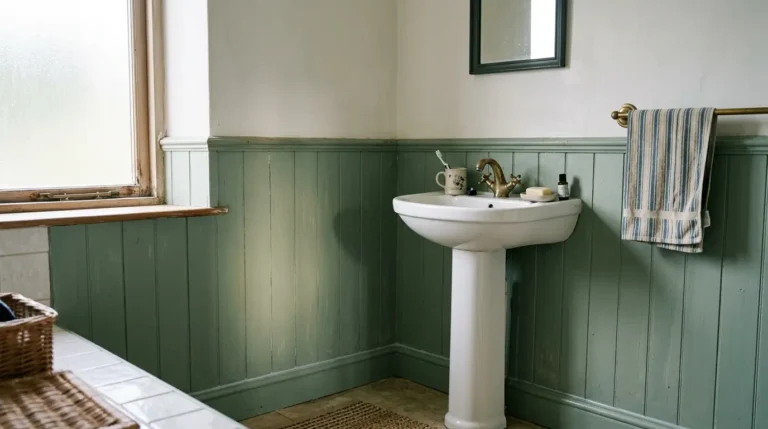
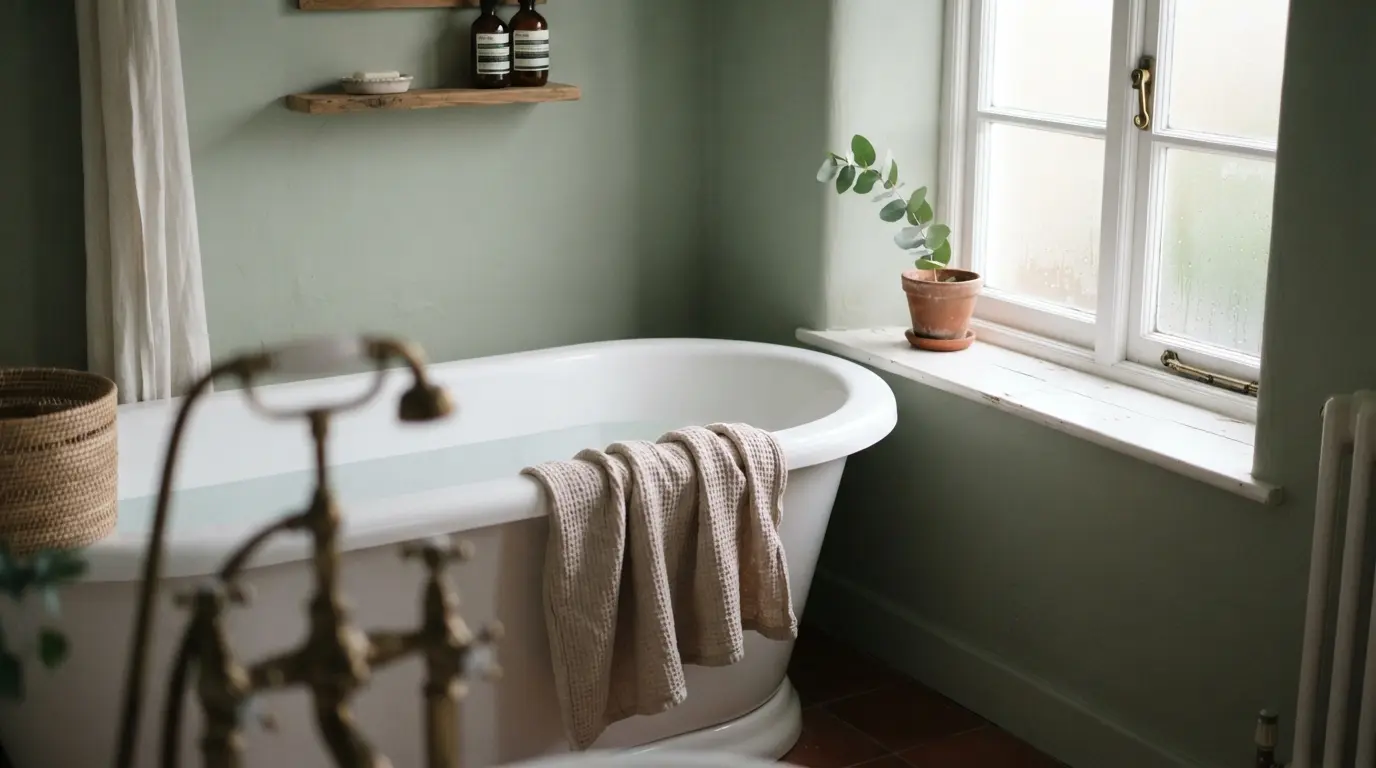
Colour choice in a bathroom comes down to whether you want the room to feel energising or calming, and that’s a genuinely useful filter before you get lost in individual shades. Blues and greens are the most consistently popular best colour bathroom choices for a reason: they echo water and tend to read as calming and spa-like, especially when paired with natural materials like wood, stone, or plants.
If mornings in the bathroom need to feel more like a wake-up than a wind-down, brighter, slightly more saturated tones, a clear turquoise or a fresh sage, add energy without tipping into a colour that’s hard to live with long-term. For a softer, spa-like feel, darker greens and warm browns layered with natural textures create a more grounded, restful atmosphere. Neither is objectively correct; it depends on whether this bathroom is where you start your day or end it.
Best Bathroom Colours for Small Bathrooms
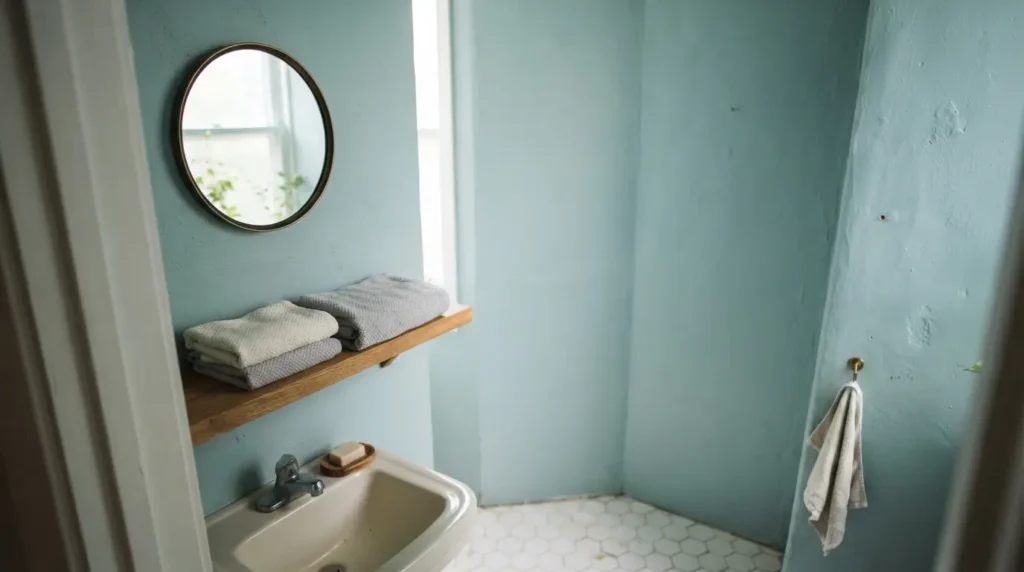
Small bathrooms generally benefit from colours that make walls feel like they recede rather than close in. Cooler, receding shades of blue and green tend to make a small bathroom look larger than warm, advancing colours like strong reds or oranges, which visually pull walls closer.
Keeping the same colour on walls and ceiling, rather than defaulting to white overhead, also removes the visual break where wall meets ceiling and helps a small room feel more continuous rather than boxed in. If a fully saturated colour feels risky in a tight space, painting the lower half or the walls only in a soft neutral or white and reserving the stronger tone for a feature wall behind the basin or bath keeps the room feeling open while still adding personality.
Test Your Colour Properly Before Committing
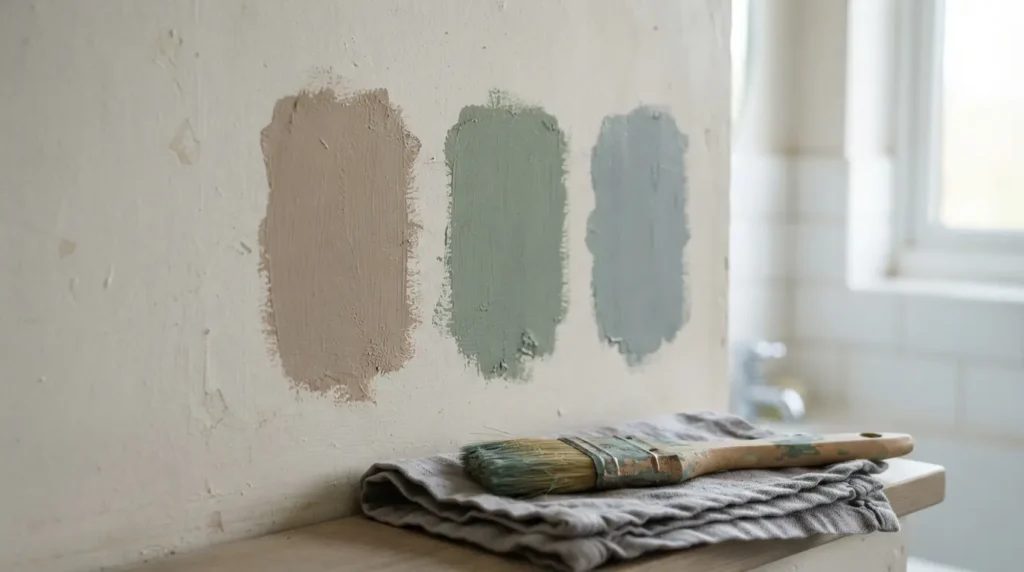
Bathroom lighting, both natural and artificial, changes a colour more than in almost any other room, so testing on the actual wall matters more here than anywhere else in the house.
- Buy a tester pot rather than judging from the paint card or an online swatch; screen colours and printed cards are rarely accurate.
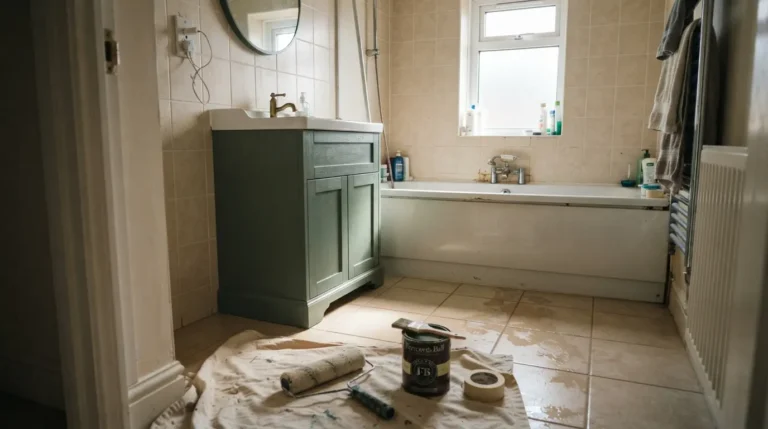
- Paint a patch at least 30cm square directly on the bathroom wall, not on paper, since paper doesn’t reflect light the way plaster or tile-adjacent wall does.
- Check the patch at three different times: morning daylight, midday, and evening with just the bathroom’s normal artificial lighting on, since bathroom colour choices often look completely different under each.
- View it wet and dry, since steam and humidity in the room slightly affect how saturated a colour appears once the shower has been running.
- Compare it against your fixtures, tiles, taps, bath panel, before finalising, since a colour that works alone can clash once it’s beside existing sanitaryware.
Finish and Sheen: What Actually Holds Up in a Bathroom
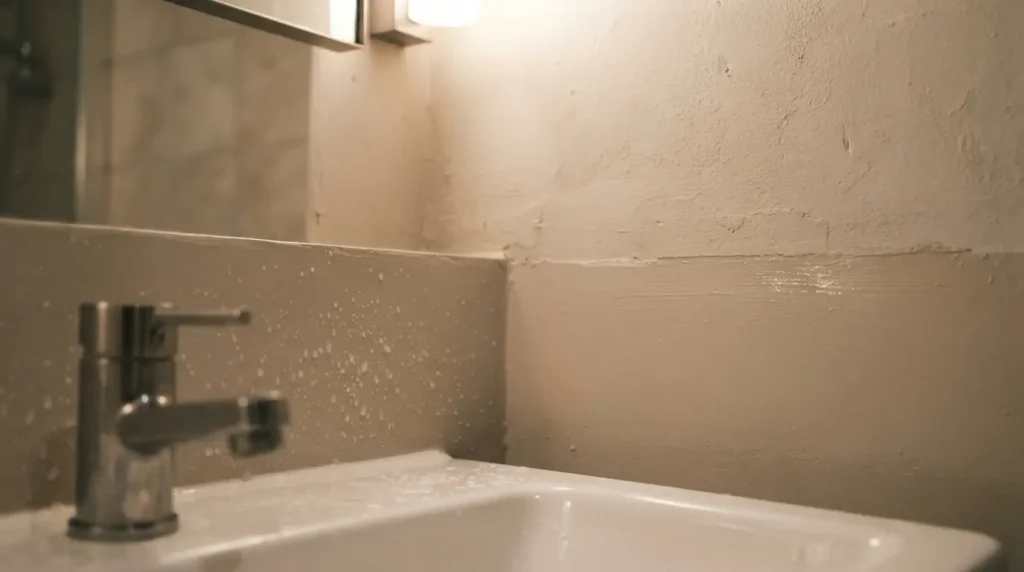
The finish matters as much as the colour itself in a room that deals with daily steam and regular cleaning.
| Finish | Look | Bathroom Suitability |
| Matt | Flat, no shine, hides minor wall imperfections | Least moisture-resistant; best reserved for bathrooms with good ventilation and away from direct splash zones |
| Soft sheen / eggshell | Subtle low sheen, easy to wipe clean | Good all-round choice for most bathroom walls, balances durability and a soft look |
| Satin | Noticeably smoother, slight shine | Wipes clean easily, holds up well to condensation, shows more wall imperfections than matt |
| Semi-gloss | Distinct shine, very durable | Best for high-splash areas like around the bath or basin, though the shine highlights uneven plaster |
Most homeowners find soft sheen or eggshell strikes the right balance for full bathroom walls, reserving a slightly higher-sheen finish for the specific zone around the bath or shower where splashing is heaviest. A common trade-off: fully matt paint looks beautifully soft and current in photos, but it marks more easily and doesn’t wipe clean as well, which matters in a room that gets cleaned weekly.
Cost and Timeline to Repaint a Bathroom
Paint and materials for an average-sized bathroom: typically £30 to £80 for a moisture-resistant paint, tester pots, and basic prep materials like filler and masking tape, varying by country and brand.
DIY timeline: most bathrooms can be painted in a weekend, one day for prep, filling, and a first coat, a second day for a final coat and touch-ups around fittings, assuming the extractor fan or an open window keeps the room ventilated between coats.
Professional painter and decorator: costs vary considerably by country and region, but expect a bathroom-sized room to take a professional roughly one to two days including prep, with pricing reflecting local labour rates rather than the paint itself.
A mistake worth flagging: painting straight over an existing mould patch without treating it first. The mould will usually work its way back through even a good-quality moisture-resistant paint within months if the underlying spore growth isn’t cleaned and treated before the first coat goes on.
Common Mistakes When Choosing Bathroom Paint Colour
Using standard wall emulsion to save money. It’s the single most common reason bathroom paint jobs need redoing within a year or two.
Picking a colour from a screen or printed swatch alone. Bathroom lighting shifts colour more than most rooms; a tester patch on the actual wall is worth the extra day of waiting.
Choosing a dark, dramatic colour for a windowless bathroom without upgrading the lighting first. It can look stunning in a well-lit photo, but in reality it needs strong, warm artificial light to avoid feeling like a cave.
Ignoring ventilation before painting. Even the best moisture-resistant paint performs better with a working extractor fan or opened window; paint isn’t a substitute for airflow.
Matching the wall colour too closely to fixed elements like tiles or the bath panel. A near-identical match often looks like a mistake rather than a coordinated scheme; a deliberate contrast or complementary tone usually reads as more intentional.
Conclusion
Choosing the right paint colour for a bathroom really comes down to sequencing: get a proper moisture-resistant paint, understand how much natural light the room gets, and test your shortlisted colour directly on the wall at different times of day before committing. Once those fundamentals are sorted, picking between a calming sage green or an energising turquoise becomes the fun part rather than the risky one. Buy the tester pot before you buy the tin, and you’ll avoid the single most common bathroom paint regret.
FAQs
What is the best colour to paint a bathroom?
There’s no single best colour, it depends on the room’s light and the mood you want. Blues and greens are the most consistently popular choice for their calming, spa-like feel, while warmer tones suit north-facing or windowless bathrooms that need to feel brighter.
What is the most relaxing colour for a bathroom?
Soft, muted blues and greens are widely considered the most relaxing, since they echo water and pair naturally with materials like wood and stone for a spa-like feel.
What colour should I paint a bathroom with no window?
Pale pastels and light neutrals generally work best in a windowless bathroom, since they reflect artificial light rather than absorbing it. Strong, warm LED lighting matters just as much as the colour choice here.
Can I use normal paint in a bathroom?
Standard emulsion can be used but tends to bubble, flake, or develop mould faster than paint specifically formulated for moisture and steam. A dedicated bathroom or kitchen paint range is worth the small price difference for how much longer it lasts.
What finish is best for bathroom walls?
Soft sheen or eggshell finishes suit most bathroom walls, offering a good balance between an easy-clean surface and a look that isn’t too glossy. Higher-sheen finishes like satin or semi-gloss are worth reserving for splash zones around the bath or basin.