How to Create a Feature Wall in a Bedroom

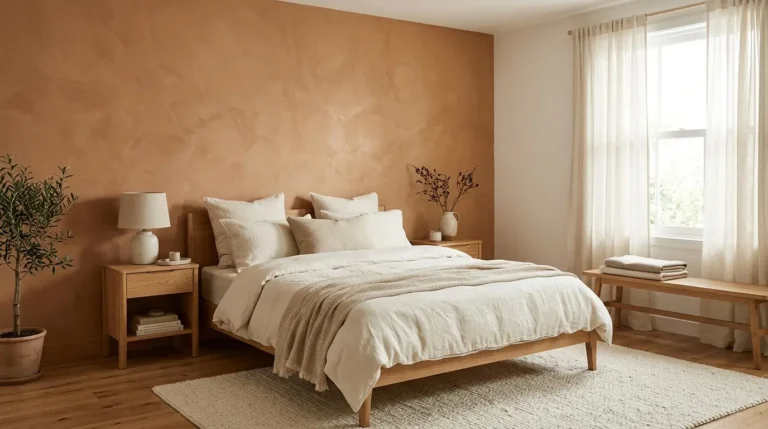
A bedroom feature wall works when it anchors the bed and leaves the rest of the room quiet. It fails when it is the first wall you see from the door, painted in a colour that fights the light, or covered in a pattern you are already tired of after a week. The job is simple: pick the right wall, pick a treatment you can finish well, and stop before the room looks decorated rather than slept in.
Choose the wall that already does the work
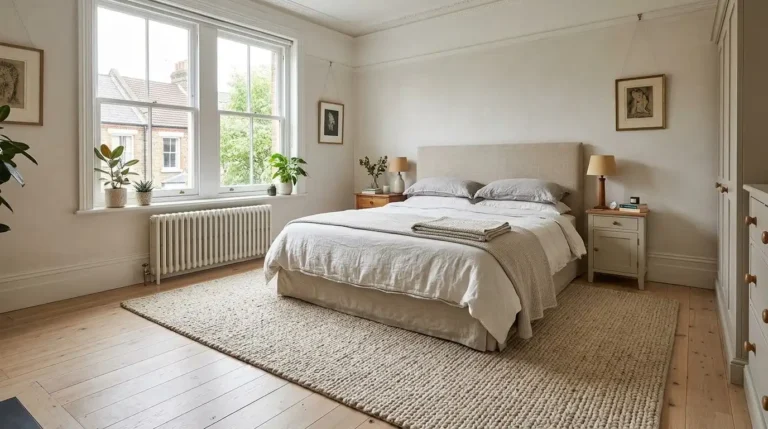
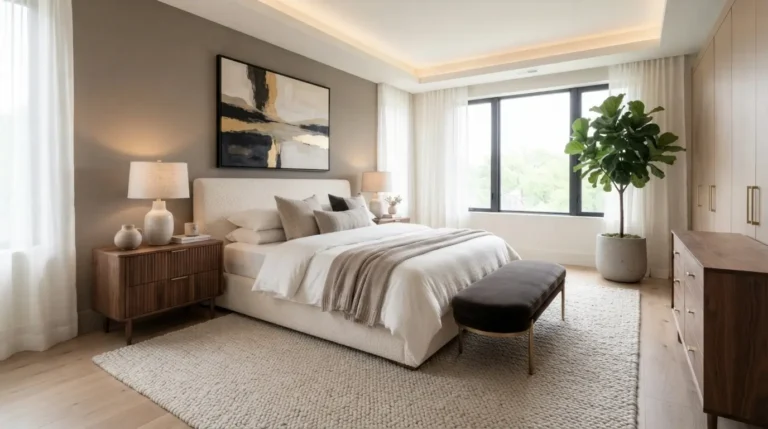
In almost every bedroom, the wall behind the bed is the feature wall. It is the surface you face when you walk in, and it is the one the pillows sit against. A side wall can work if the bed is on a short wall and the long wall is blank, but do not feature the wall with the window. Pattern and deep colour around a window make the glass look smaller and the curtains harder to hang.
Check what is on the wall before you commit. Sockets, a radiator, a sloping ceiling, and a built-in wardrobe all interrupt a pattern. Wallpaper with a large repeat is a poor choice on a wall full of switches. Paint is more forgiving. Panelling needs a reasonably flat wall and enough depth that the bed does not knock the trim.
If the room is an awkward loft, sort the shape first. The notes on how to design an attic bedroom matter more than a feature wall when the ceiling is already the main event.
Decide paint, paper, or panelling

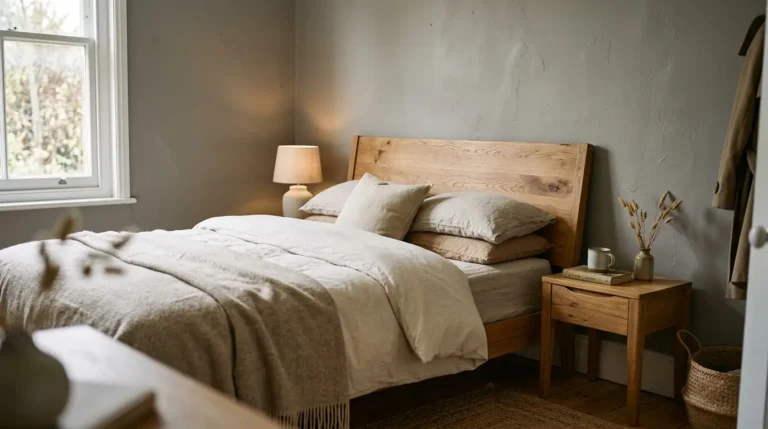
Paint is the fastest and the easiest to reverse. A deeper colour on the bed wall, with the other walls in a lighter version of the same family, is enough of a feature for most rooms. You can do it in a weekend, and you can repaint it when you change your mind.
Wallpaper earns its cost when you want texture or a pattern paint cannot copy: a small botanical, a grasscloth, a quiet stripe. It asks for a sound wall, a decent paste job, and patience around sockets. One wall is usually the right amount. Papering the whole bedroom is a different project.
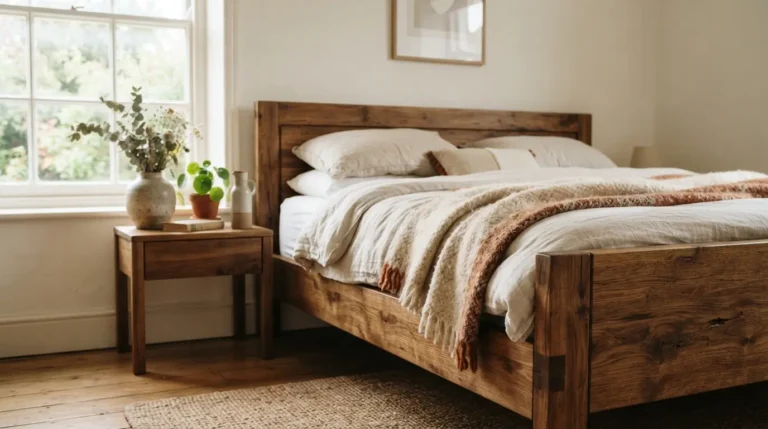
Panelling suits a bed wall if you want shadow and structure. Shaker panels, a simple board and batten, or a framed panel behind the pillows all work. The practical route is in how to add wall panelling to a bedroom, including how to stop the panels catching the headboard.
| Treatment | Best for | Typical materials cost for one wall | Reversible? |
| Paint | Colour, rental-friendly change, uneven walls | About £15 to £60 | Yes, with another coat |
| Wallpaper | Pattern and texture | About £40 to £250, more for designer paper | Harder, especially paste-the-wall |
| Peel-and-stick paper | Short-term and rentals, if the wall is smooth | About £30 to £120 | Often, test a corner first |
| Timber panelling | Structure behind the bed | About £40 to £200 in timber and paint | Possible, leaves fixings |
| Painted arch or headboard shape | Rooms with no headboard | About £15 to £40 | Yes |
Test the colour in the bedroom, not the tin
A feature colour looks stronger than the same colour on a small card. Paint an A2-sized patch on the bed wall and on a side wall, and look at it morning and night. The guide on how to choose the best paint colour for a bedroom covers light direction in more detail. North light cools colour. Warm lamps push it yellow or pink.
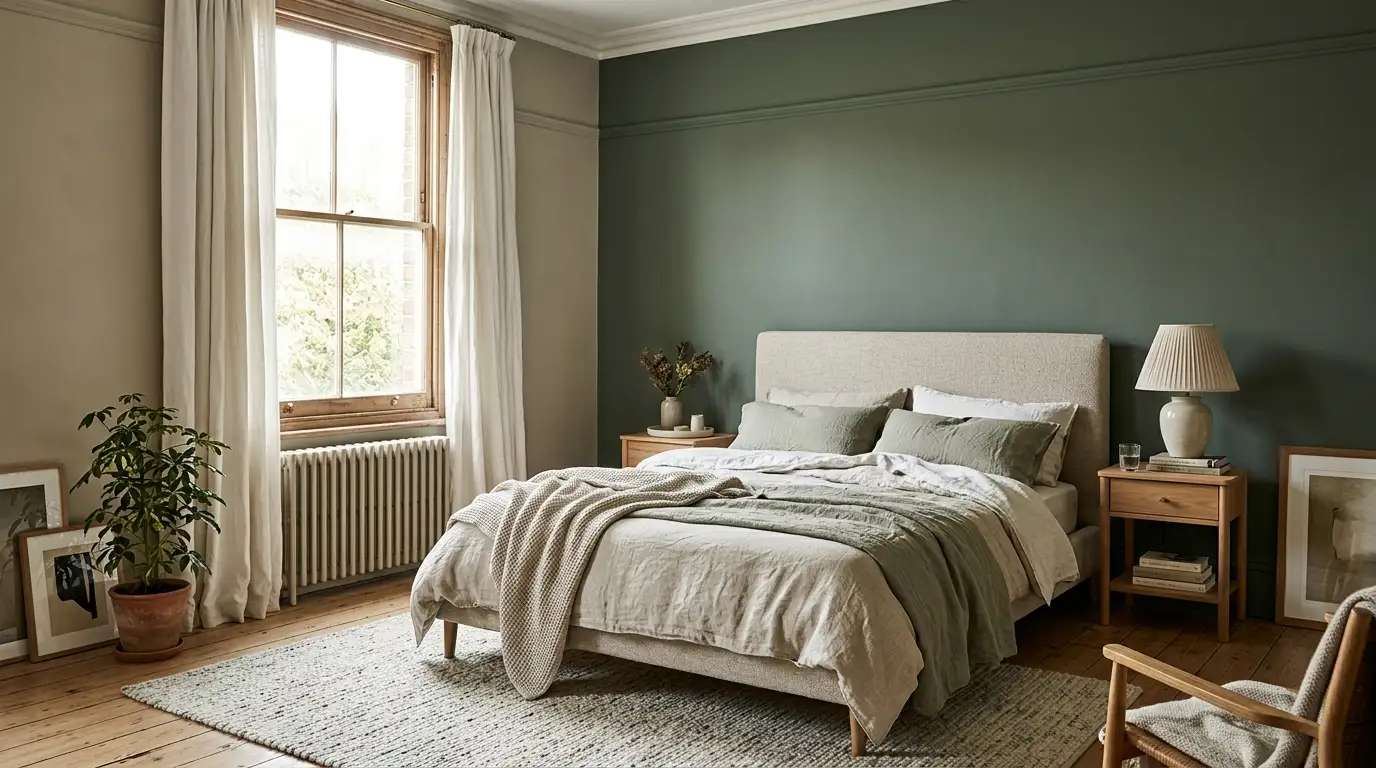
Keep the other walls related. A navy bed wall with mint side walls looks like two rooms. A navy bed wall with a warm greige on the other walls looks deliberate. Woodwork can match the side walls, or match the feature wall if you want the bed end to feel wrapped.
Prep the wall properly
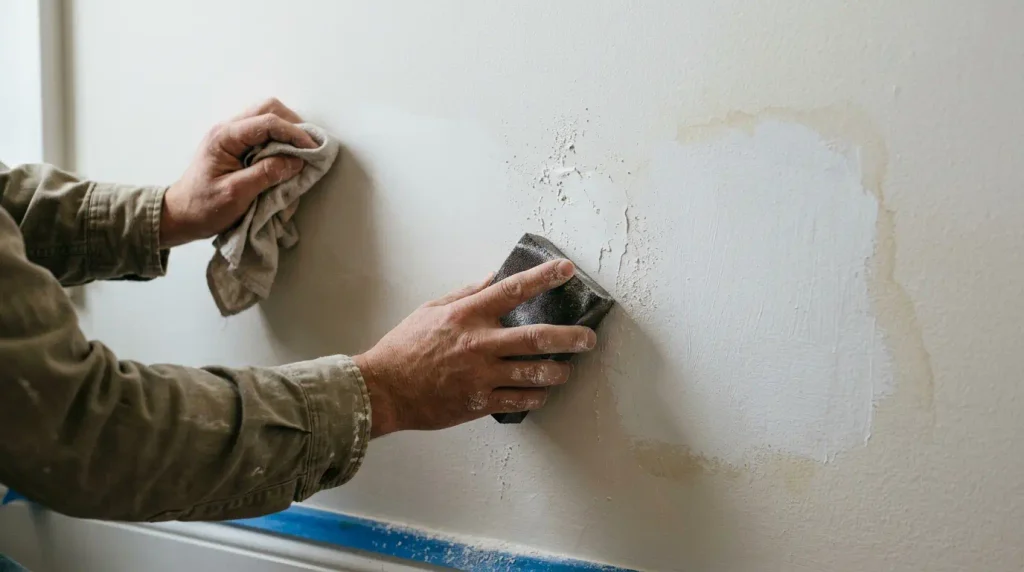
Fill dents, sand the filler flat, and wipe the dust off. Glossy old paint needs a light sand so the new coat grips. Stains from old leaks need a stain-block primer or they will show through emulsion, especially pale colours. If the wall was papered, strip it back for a paint finish. Painting over old paper often bubbles.
Move the bed far enough that you can reach the skirting. Mask sockets, but paint the wall first and cut in by hand if you can. Tape left on too long lifts fresh paint. For wallpaper, mark a plumb line. Bedroom walls are rarely straight, and a pattern that drifts is the mistake you see every night.
Paint the feature wall
Use a matt or eggshell emulsion. Matt hides flaws. Eggshell wipes clean more easily, which matters behind a bed where hands rest. Cut in the edges with a brush, then roll in even sections from the top down. Two coats is the normal plan. Deep reds, blues, and greens often need a third, or a tinted primer underneath.
Paint in daylight if you can, and check the wall with the bedside lamp before you call it finished. Missed patches show up at night, which is when you notice them. Let the paint harden before you push the bed back. A pillow against tacky paint leaves a mark you cannot rub out.
Hang paper on one wall only
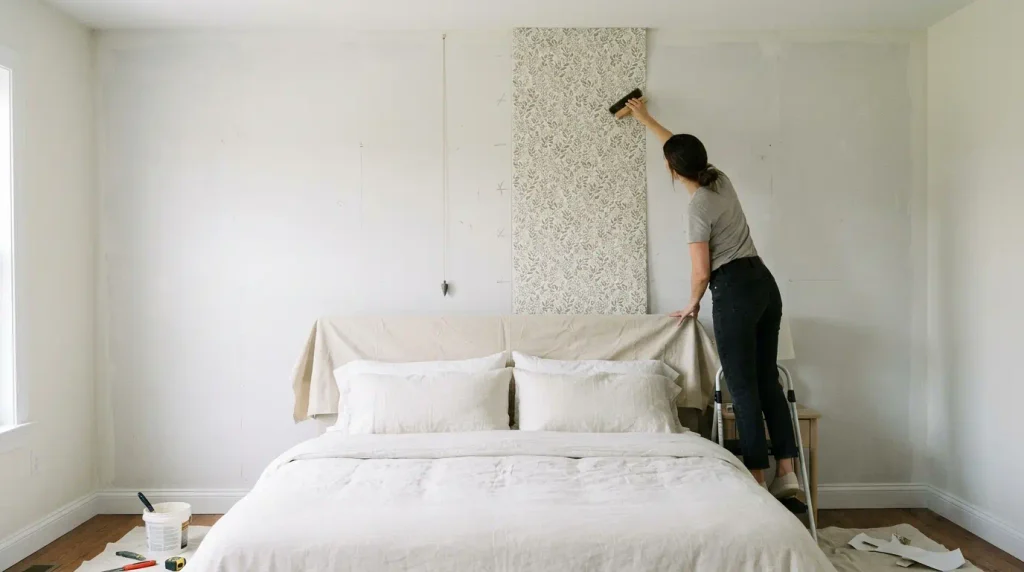
Order an extra roll. Pattern repeat, socket cut-outs, and a mistake at the corner use more paper than the calculator suggests. Start from the centre of the wall behind the bed so the pattern sits evenly over the pillows, not from a corner that leaves a sliver above the headboard.
Turn the radiators off and let the room sit at a normal temperature. Paper hung in a cold, damp room can fail at the seams. Smooth each length from the middle out. Do not overwork paste-the-wall papers, or the surface stretches and the seams open later.
Style the wall after it is finished
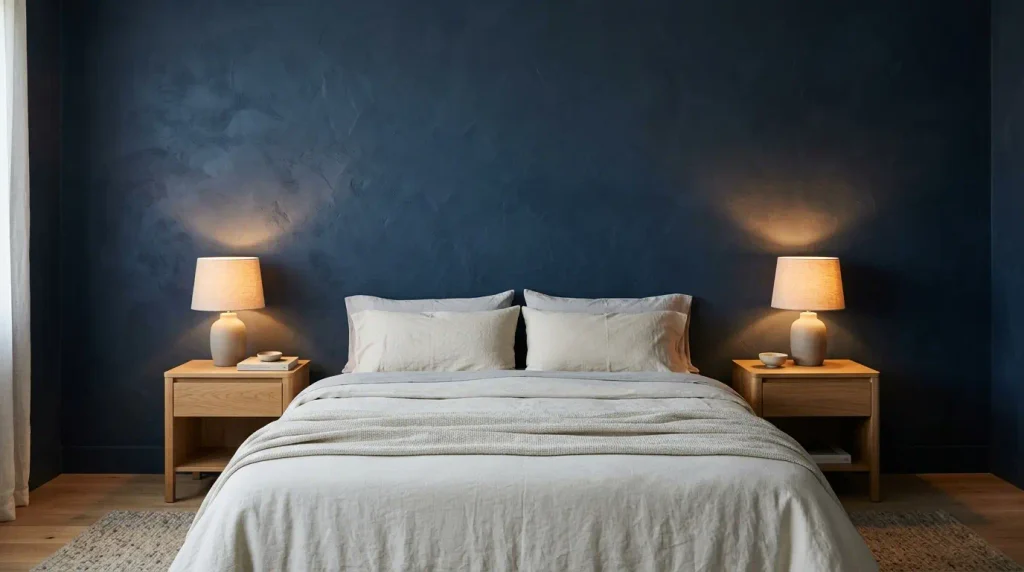
The bed is the styling. A strong feature wall does not need a gallery of frames as well. One picture centred above the headboard, or nothing at all, is often better. Lamps should be warm. A cool bulb flattens a colour you chose carefully.
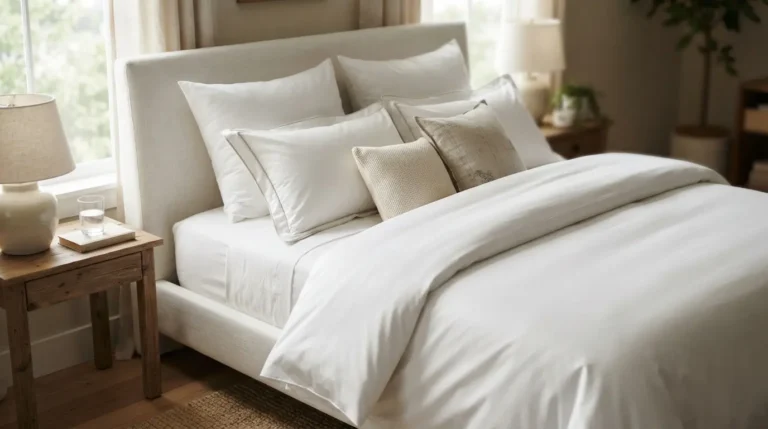
Curtains should agree with the side walls more than with the feature wall, or the window becomes a second feature. The practical choices are in bedroom curtain ideas. Bedding in a plain linen or cotton keeps the wall as the pattern.
Conclusion
Create the feature wall on the bed wall, in a treatment you can finish neatly, and keep the other three walls quieter. Paint is the sensible default. Paper and panelling are worth it when you want texture the paint cannot give. Test the colour in the room, prep the surface, and leave the styling simple once the wall is done.
Which wall should be the feature wall in a bedroom?
The wall behind the bed, in almost every layout. It is the wall the room faces. Avoid the window wall, and think twice about a wall broken up by wardrobes or a run of sockets if you plan to use wallpaper.
Is a dark feature wall a good idea in a small bedroom?
It can work behind the bed if the other walls stay light and the bedding is pale. Painting every wall dark is often calmer in a very small room than one dark wall, which can look like a block. If daylight is poor, test the dark colour at dusk before you buy the full tin.
Can you put a feature wall in a rented bedroom?
Paint is fine if your agreement allows it and you can return the wall to the original colour. Peel-and-stick paper can work on a smooth, sound wall, but test a small piece. Some adhesives mark paint. Panelling is a poor rental choice unless you are happy to make good the fixings when you leave.
Do you need a headboard if you have a feature wall?
No. A painted block, a panel, or a papered wall can stand in for a headboard. If you do use a headboard, keep it visually quieter than the wall, or the two will compete. An upholstered headboard in a plain fabric is the easy pairing.