12 Grey Bedroom Paint Ideas for a Sleek and Timeless Space

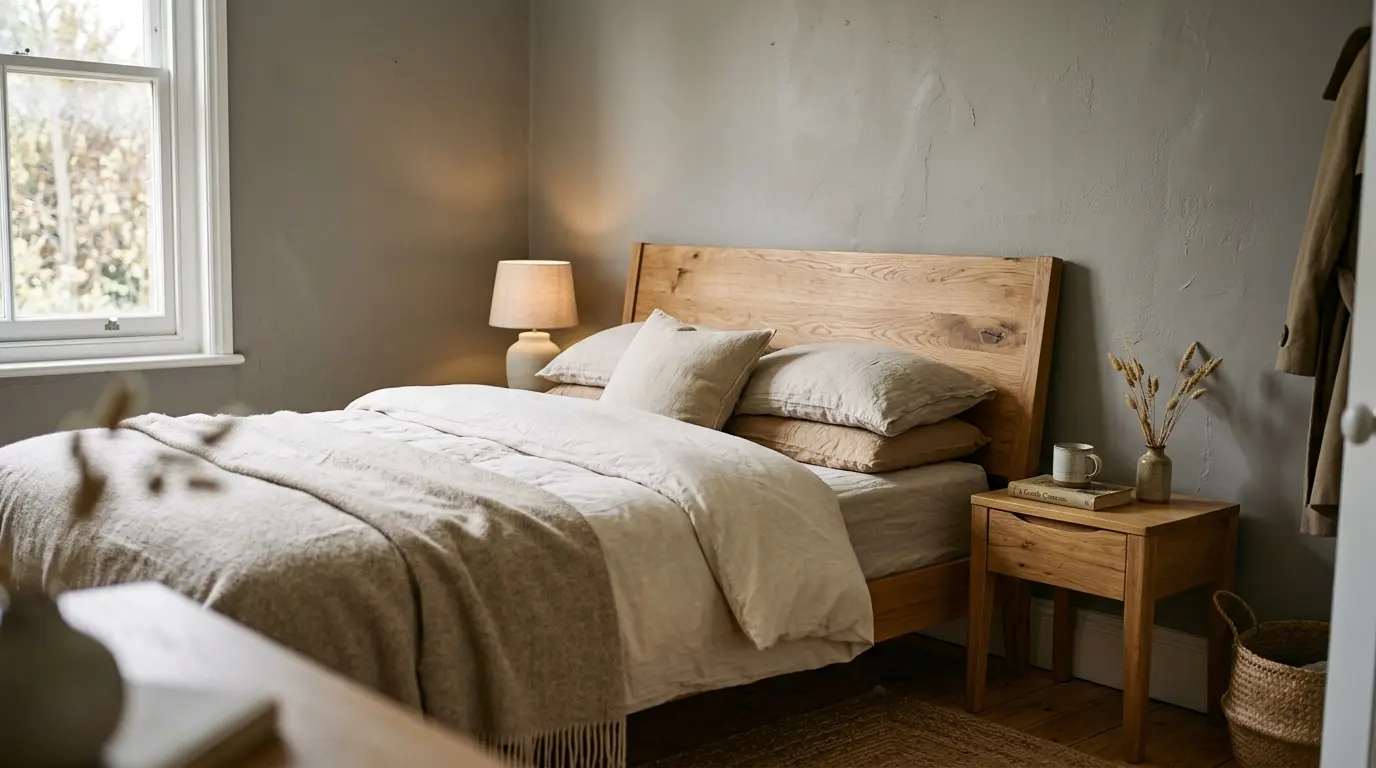
Grey bedroom paint ideas work because this colour genuinely strikes a balance few others manage, calm without being dull, modern without feeling cold, and versatile enough to suit almost any bedroom style or size. The 12 ideas below cover the shades and pairings worth considering, along with the honest undertone testing that decides whether your specific grey reads as sophisticated or simply flat.
1. Cool Grey With Blue or Green Undertones for a Bright, Light-Filled Room
If your bedroom already gets plenty of natural light, a cool grey with a subtle blue or green undertone genuinely balances that brightness rather than fighting it, keeping the room feeling calm rather than overly stark. This works particularly well in a room with large windows or a south-facing aspect, where a warmer grey can occasionally feel slightly muddy against strong daylight.
2. Warm Grey With Beige or Taupe Undertones for a Cosier, Darker Room
A smaller or naturally darker bedroom benefits from the opposite approach, a warm grey with beige or taupe undertones brings genuine cosiness that a cooler grey can struggle to achieve in low light. This is worth prioritising specifically if your room doesn’t get much sun, since a cool-toned grey in a dim space can read as flat or slightly cold rather than the sophisticated neutral you’re aiming for.
3. Light Grey for an Airy, Spacious Small Bedroom
A genuinely pale grey keeps a compact bedroom feeling open and airy, since lighter colours visually recede rather than closing a small space in. This suits a room where maximising the sense of space matters more than making a bold style statement, and it pairs easily with almost any accent colour you introduce afterward through bedding or accessories.
4. Charcoal for a Genuinely Dramatic, Enveloping Feel
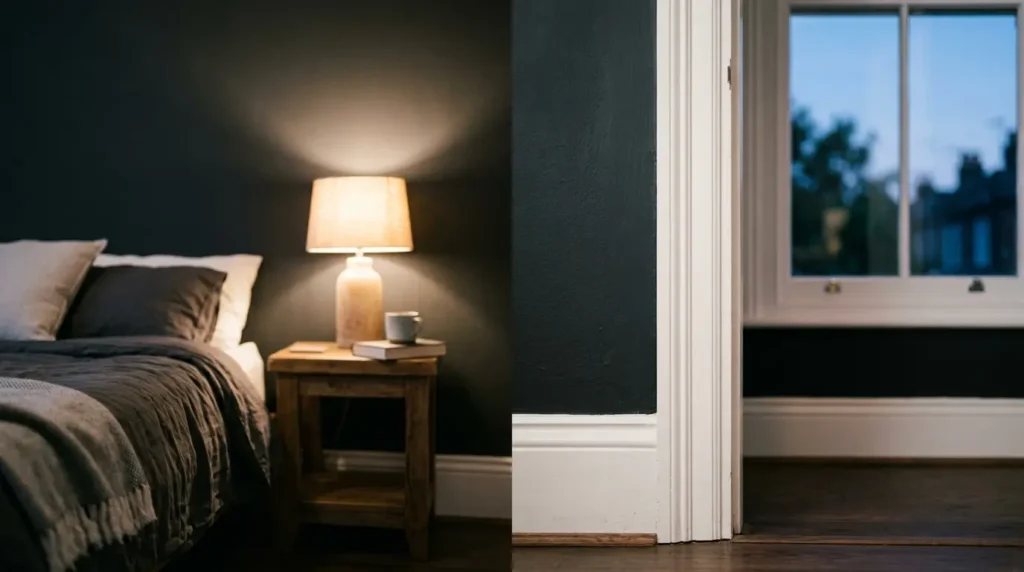
At the opposite end of the spectrum, a confident charcoal brings real drama and a sense of enclosure that suits a larger bedroom or one used mainly in the evening, where the depth of colour feels protective rather than heavy. This works particularly well against white trim or woodwork for genuine contrast, and it’s worth pairing with warm lighting specifically, since a cool light source against a dark wall can tip the room toward gloomy rather than atmospheric.
5. Grey and White for a Timeless, Classic Pairing
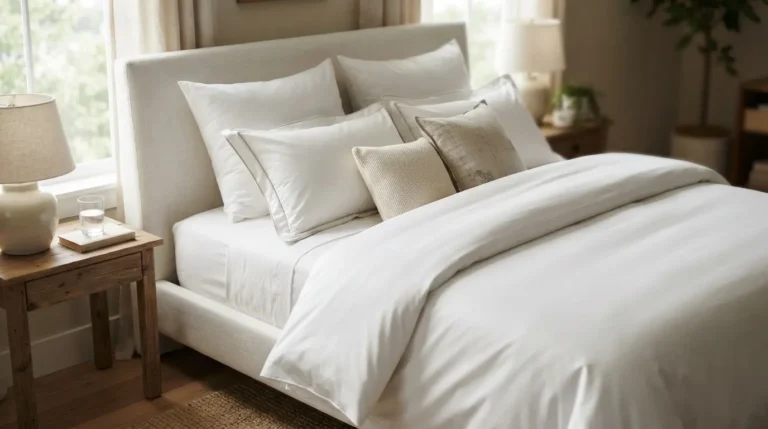
Soft grey walls combined with crisp white bedding or curtains create a genuinely neat, timeless look that suits almost any bedroom style without needing to be trend-driven. This pairing works as a reliable, long-term choice precisely because it never feels dated, giving you a calm, uncomplicated backdrop that other accessories and accent colours can change around over the years without needing to repaint.
6. Grey Paired With Warm Wood to Avoid a Cold Look
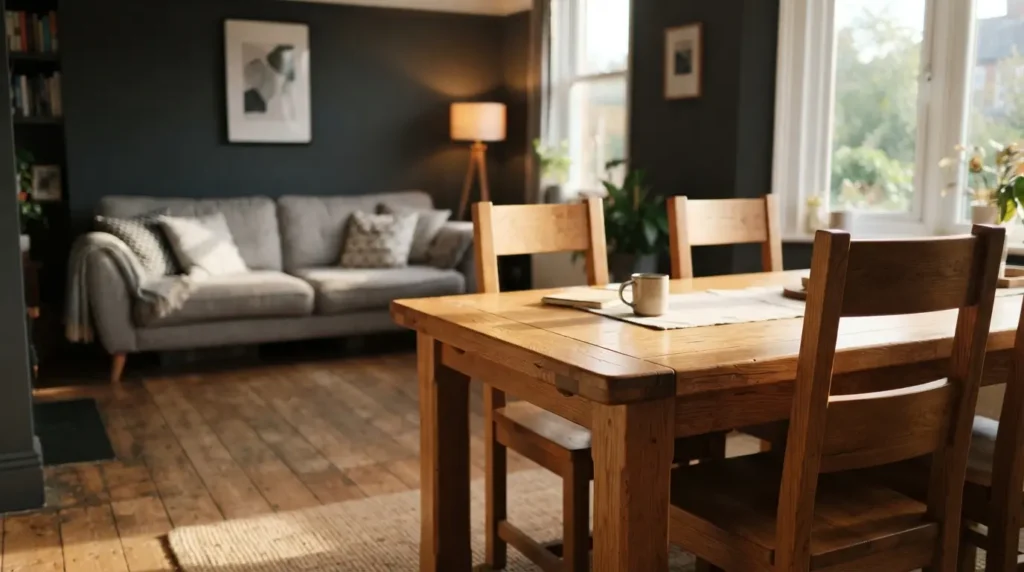
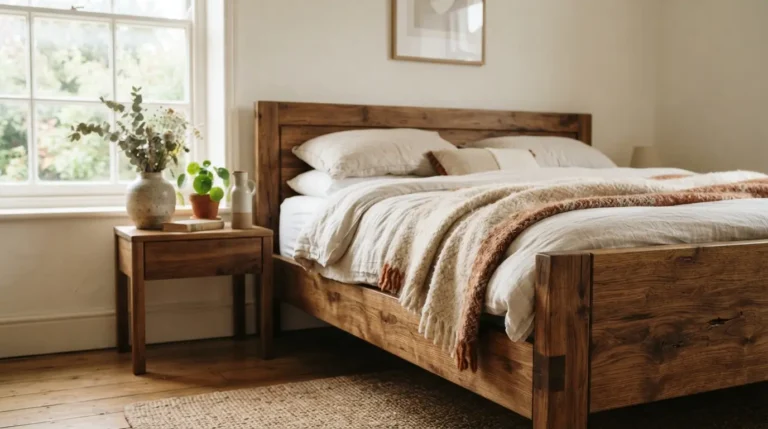
This is worth treating as a genuine safeguard against grey’s occasional reputation for feeling cold or clinical. Introducing warm wood tones, through furniture, flooring, or a headboard, brings real natural warmth into the room and keeps a grey scheme feeling inviting rather than sterile. This pairing works especially well with a cooler grey specifically, since the wood’s warmth does genuine work balancing out the coolness the paint alone might otherwise bring.
7. Grey and Navy for Rich, Relaxed Depth
Combining grey with navy blue, through bedding, a feature wall, or curtains, adds genuine richness and depth without making the room feel heavy, since both colours share enough tonal restraint to work together comfortably. Silver accents and a considered pendant light finish this pairing nicely, giving the room a calm but genuinely bold mood rather than a purely muted one.
8. Grey and Black for Bold, Balanced Contrast
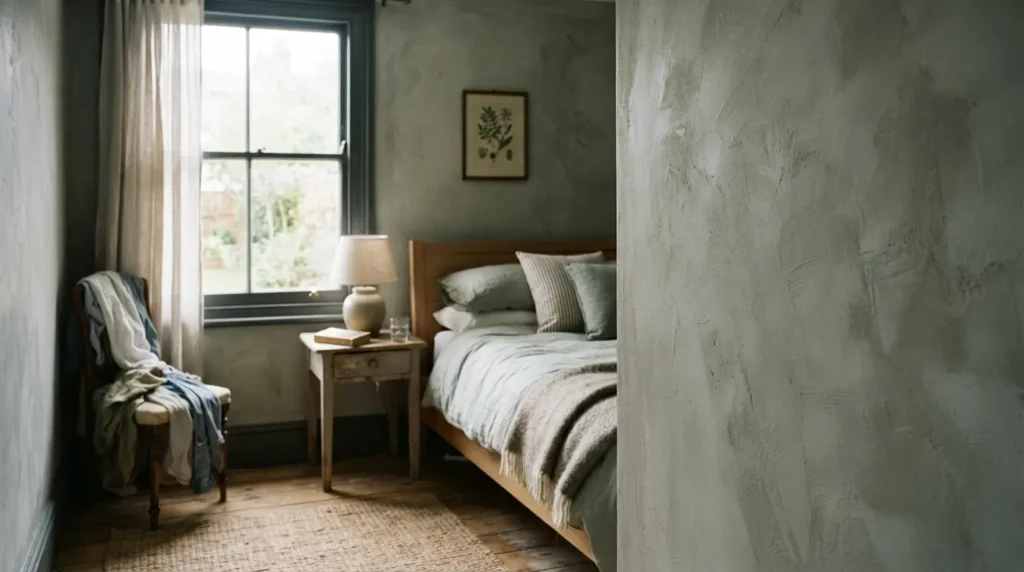
Mixing black furniture or accessories into a softer grey bedroom creates a genuinely striking yet balanced look, the intensity of black against the calm neutrality of grey reads as considered rather than harsh, particularly when paired with warm lighting or natural wood elsewhere in the room to soften the overall contrast.
9. Grey Paired With Teal or Muted Blue-Green for a Fresh Accent
If you want a genuine pop of colour without overwhelming a calm grey backdrop, teal or a muted blue-green through cushions, a throw, or artwork adds real vibrancy while keeping the overall scheme balanced. This suits a bedroom where you want personality and colour without committing an entire wall to something bolder.
10. A Textured Grey Wallpaper Feature Wall for Genuine Depth
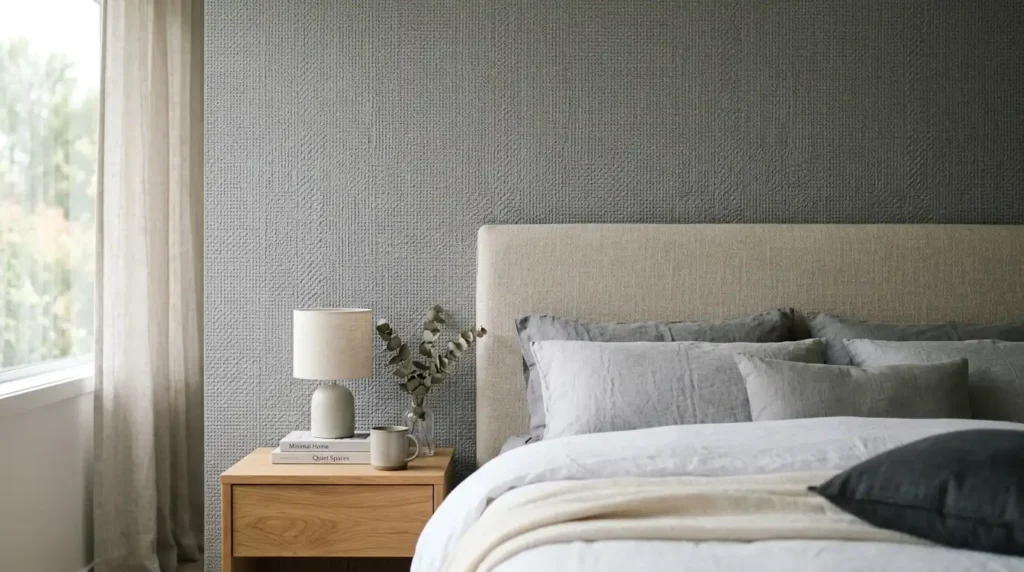
Rather than flat paint throughout, a subtly patterned or textured grey wallpaper on one wall, typically behind the bed, adds genuine visual interest and depth that a single flat colour can’t achieve on its own. This is worth pairing with warm lighting specifically, since it takes the edge off any coolness in the grey and lets the wallpaper’s texture read properly rather than disappearing under flat, cool light.
11. Match Wardrobes and Storage to Your Grey Wall for a Cohesive Small Room
In a smaller bedroom specifically, choosing wardrobe or storage furniture in a matching or closely complementary grey keeps the whole room feeling open and cohesive rather than visually broken up by a contrasting storage piece. This approach genuinely helps a compact room read as larger and more considered, since the eye isn’t interrupted by a jarring colour change between the walls and the furniture against them.
12. Test Your Grey Properly Before Committing to the Whole Room
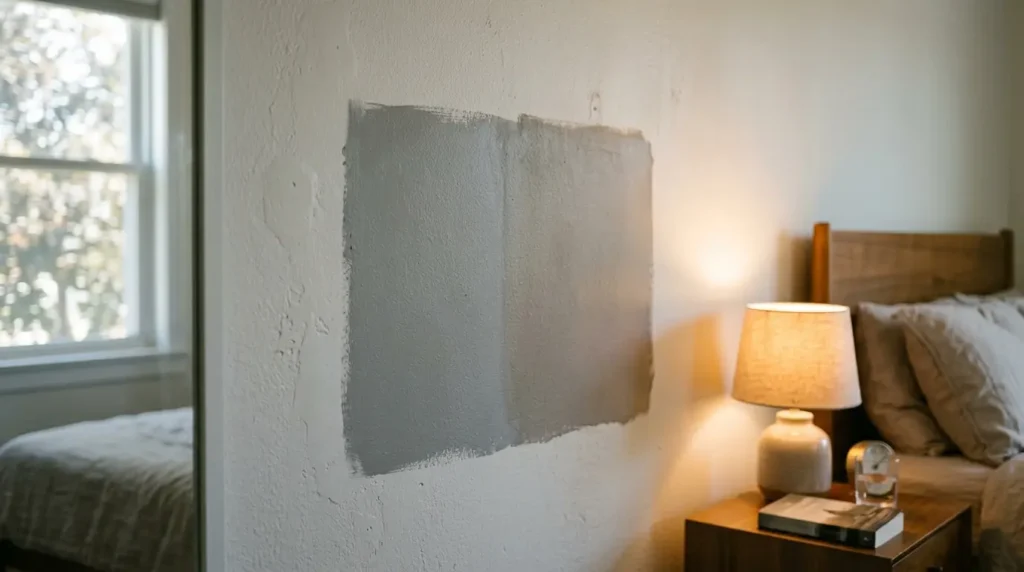
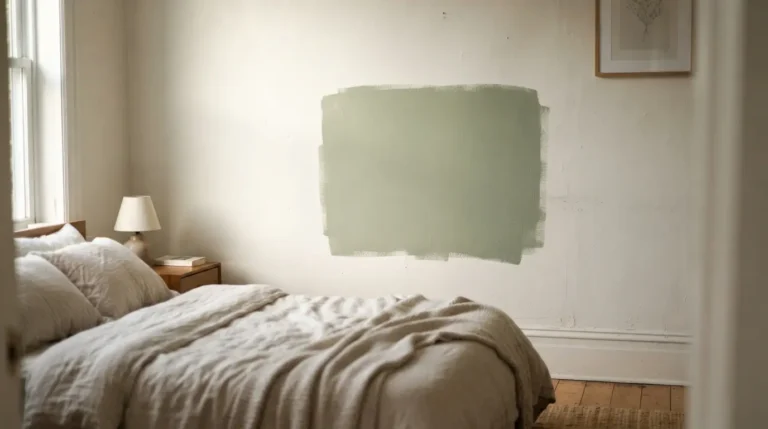
This is worth treating as a mandatory final step rather than an optional extra, since grey shifts more visibly under changing light than most other colours. Paint a genuine sample directly on the wall and observe it across a full day, morning, midday, and evening, since the same grey can read distinctly cooler or warmer depending on the light hitting it at any given moment. Once you’ve confirmed the shade holds up the way you want across these different conditions, choosing furniture and accessories to complement it becomes considerably more straightforward than trying to correct course after the whole room is already painted.
Final Thoughts
The best grey bedroom paint ideas balance genuine undertone awareness with the pairing choices that keep the colour feeling warm, considered, and never accidentally cold. Match your grey’s temperature to your room’s actual light levels, test it properly across a full day before committing, and choose pairings, wood, navy, black, or teal, deliberately, and the finished bedroom will feel sleek and timeless for years, not just until the next colour trend arrives.
FAQs
What’s the difference between warm and cool grey for a bedroom?
Cool greys carry a subtle blue or green undertone and suit a bright, naturally lit room, balancing that light rather than competing with it. Warm greys carry a beige or taupe undertone and suit a smaller or darker room, bringing genuine cosiness that a cool grey can struggle to achieve in low light.
Does grey make a bedroom feel cold?
It can, particularly a cool-toned grey in a room without much natural light or warm materials elsewhere. Pairing grey with warm wood tones, soft textures like velvet or linen, and warm-toned lighting genuinely counters this and keeps the room feeling inviting rather than clinical.
What colours pair well with grey in a bedroom?
White for a timeless, classic look, navy for rich depth, black for bold contrast, and teal or muted blue-green for a fresh accent all work well, depending on whether you want the pairing to feel calm and neutral or genuinely bold.
Is charcoal too dark for a small bedroom?
Not necessarily, but it’s worth being deliberate about it. Charcoal tends to suit a larger room or one used mainly in the evening better than a very small, naturally dark space, where a lighter grey is generally the safer choice for keeping the room feeling open.
How do I test grey paint properly before committing?
Paint a genuine sample directly on the wall and observe it across a full day, morning, midday, and evening light all affect how a grey shade reads, and confirming this before painting the whole room prevents committing to a shade that only looks right under one specific lighting condition.