8 Green Paint Ideas for Every Room and Every Shade

Green paint works in every room if you match the shade to the light, the function and the materials already there. Soft sage suits living rooms and bedrooms, olive works in kitchens, and deeper forest or bottle greens create drama in dining rooms and small bathrooms. The key is testing undertones, using the right finish, and balancing with warm neutrals. Coverage rates vary; dark greens often need a tinted primer and extra coats. Here are eight practical ideas that cover different rooms and different depths of green, with clearances, materials and common mistakes included.
1. Soft Sage in the Living Room
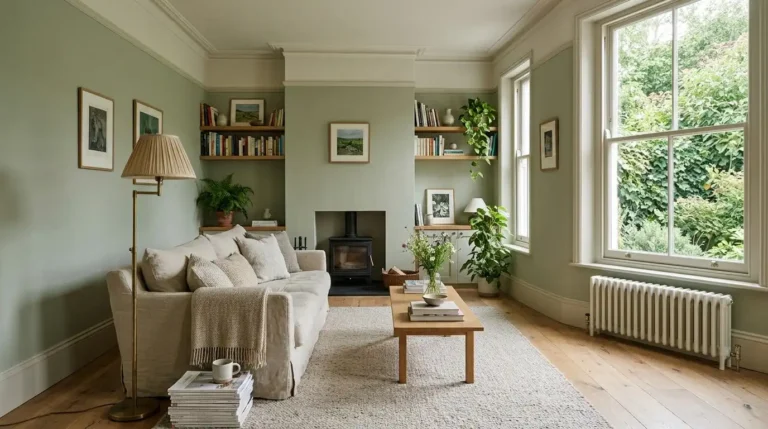
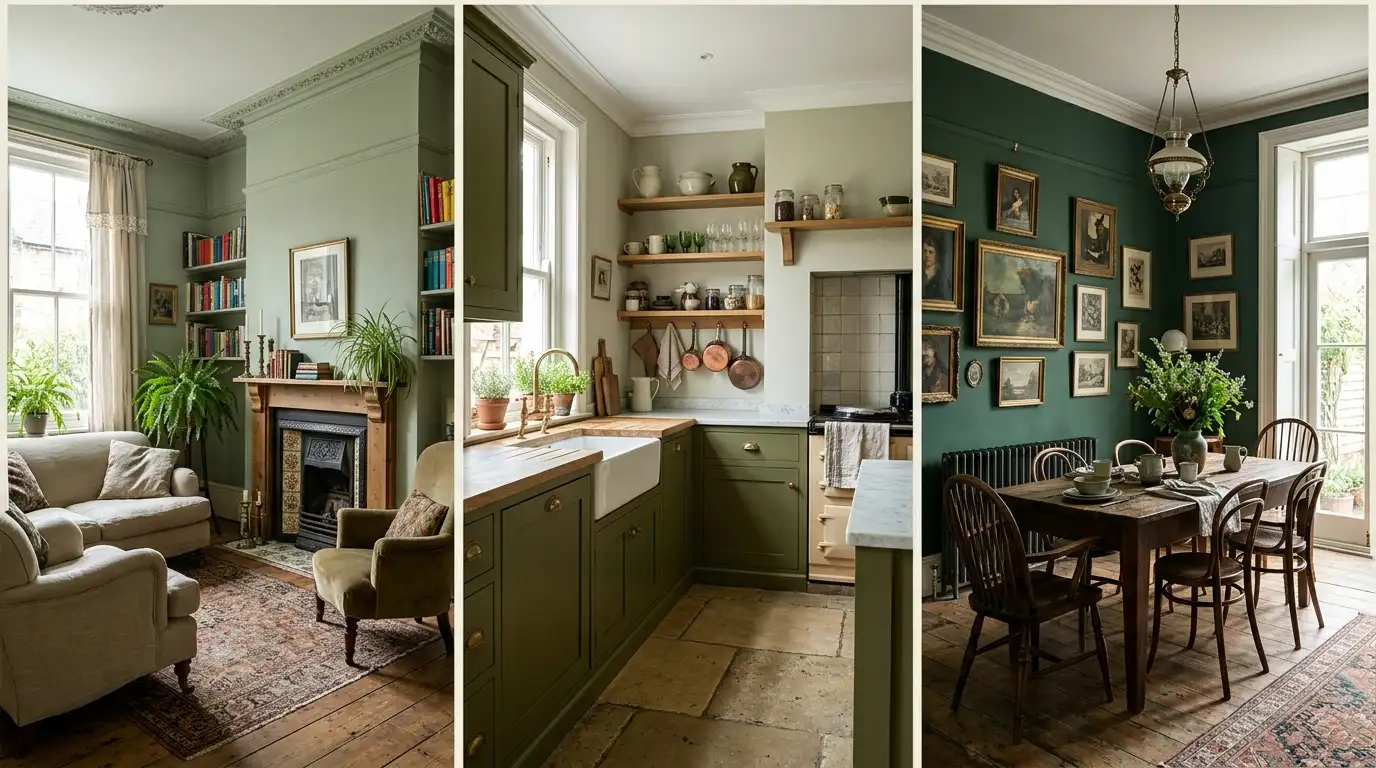
A soft sage on all walls or one feature wall makes a living room feel calm and settled. Pair with oak flooring, cream linen and brass. In a 4–5 m room keep the ceiling warm white and leave 90 cm clearance in front of the sofa for comfortable movement. Test the sage against the floor so it does not go cool under north light. This is one of the most flexible options and appears in many living room colour schemes.
Common mistake: buying from a chip only. Paint a large sample and view it morning and evening. A slightly warmer sage usually sits better with oak than a cool blue-green.
2. Olive Kitchen Cabinets
Olive or mid-green cabinets hide marks and pair well with white or stone worktops and brass handles. Keep walls lighter. Measure door swings and allow 90 cm working space in front of the run. Use eggshell or satin and apply two or three coats over a primer for even coverage. Check samples under kitchen lighting because olive can shift with warm or cool bulbs. Many of the best Dulux greens work for this.
If painting existing cabinets, sand, clean and prime thoroughly so the green does not show previous colour or brush marks. Standard base units are 720 mm high; confirm clearances before you start.
3. Deep Forest Green Dining Room
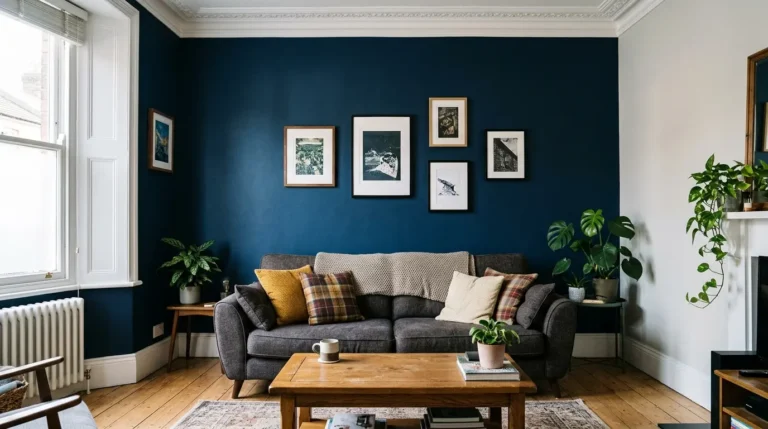
A deep forest or bottle green on the walls makes a dining room feel rich in evening light. Pair with warm wood furniture, brass lighting and cream or oat soft furnishings. Keep 90 cm clearance around the table so chairs pull out easily. In a 3.5 m by 4 m room the full walls or the longest wall both work. Test under the actual bulbs you will use so the green does not read as black. See dark paint ideas.
Add picture lights or a warm pendant to bring out the depth. A lighter woodwork colour usually defines the green better than matching everything.
4. Sage or Mid-Green Bedroom
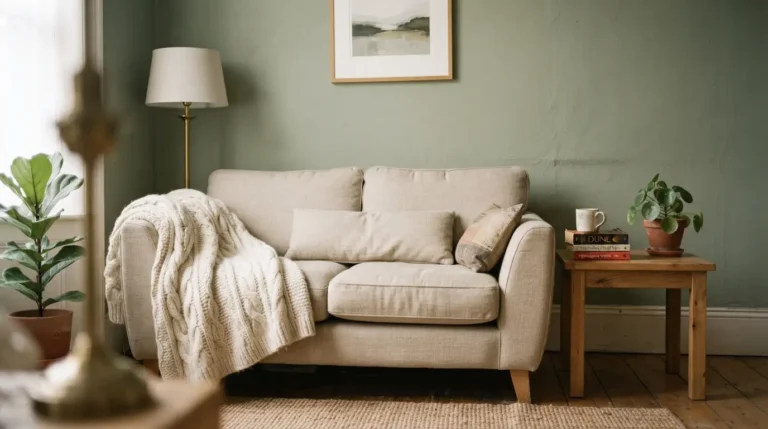
Use sage behind the bed or a mid-green on all walls for a restful bedroom. Warm bedding and oak or rattan furniture keep it balanced. In north-facing rooms choose a warmer undertone so the colour does not go grey. Leave 60–70 cm at the sides of the bed for access. Warm lighting at 2700K is essential at night. This approach is covered in bedroom paint colour guides.
5. Bottle Green Bathroom Wrap
In a small bathroom or cloakroom, wrap bottle green onto walls and ceiling for a cocoon effect. Use moisture-resistant paint in eggshell or satin. Brass taps and a white basin prevent it feeling cold. Ensure ventilation and good mirror lighting (warm or neutral white). The continuous colour works best in rooms under about 4 square metres. Standard basin height is 800–850 mm; paint carefully around fittings. Check bathroom paint ideas for suitable products.
6. Sage or Olive Hallway
A sage or soft olive hallway is welcoming and practical. Use wipeable eggshell. Add a mirror and warm lights. In narrow spaces (1–1.2 m wide) the soft colour softens the walls. Keep skirting and the front door either matching or in warm white. Test against daylight from the door so the shade stays inviting. Hallways take more wear, so a durable finish is worth the extra cost.
Measure the total wall area including any stairs if applicable so you order enough paint in one batch for colour consistency.
7. Green Feature Wall or Panelling
Use any depth of green on a feature wall or on panelling and keep the rest of the room lighter. This controls the amount of colour and adds texture. Measure panelling height carefully (often 900–1000 mm for dado height). The approach works in living rooms, bedrooms and hallways. Many Farrow and Ball green examples use this method.
Prepare the surface properly. Panelling needs priming so the green covers evenly and does not show join lines or previous colour.
8. Soft Green in a Home Office
A soft sage or light olive behind the desk supports focus without distraction. Keep the rest of the room light and add warm task lighting. Avoid cool LEDs that shift the green towards grey. In a small office (around 2.5 m by 3 m) full walls are fine; in larger spaces one wall is enough. The colour feels restful for long hours and pairs well with oak desks and natural materials.
How to Choose the Right Shade and Finish
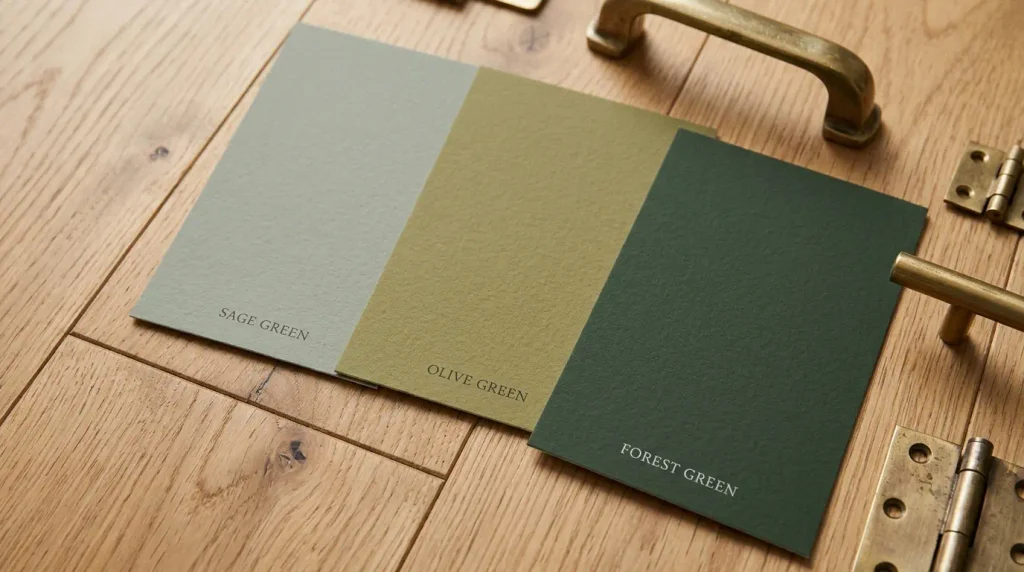
Order samples and test large areas in the actual room at different times of day. North-facing rooms usually need warmer (more yellow or olive) greens. South-facing rooms can take cooler versions. Check against flooring, worktops and tiles. Most interiors need two coats; dark greens may need three or a tinted primer. Eggshell or satin for walls, moisture-resistant in wet rooms, wipeable in halls and kitchens. Measure walls accurately and add 10 per cent for waste when ordering. A 5-litre tin of emulsion typically covers 60–70 square metres per coat, but dark colours cover less. Pair every green with warm materials so it stays inviting rather than cold or flat.
Also check the light reflectance value if available. Lower LRV colours absorb more light, which is useful for drama but can make small north rooms feel smaller without additional lamps or mirrors.
Conclusion
Green paint can work in every room when you match the shade to the light and the use, test properly, check clearances and finishes, and balance it with warm materials. Soft sage, olive, forest and bottle green each have a place. Follow the sampling, measuring and pairing steps above and the colour will feel intentional rather than forced.
FAQs
What green is best for every room?
There is no single best green. Soft sage works widely as a neutral; deeper olive and forest greens suit kitchens, dining rooms and feature walls. Always test in the specific room and light.
How do I stop green looking cold?
Choose warmer undertones, add oak or brass, use warm white woodwork and warm bulbs. Avoid cool grey and chrome if the room already has cool light.
What finish should I use?
Eggshell or satin emulsion for most walls. Moisture-resistant paint in bathrooms. Wipeable eggshell in hallways and kitchens. Full gloss is better for woodwork contrast.
Do I need a primer for green paint?
Often yes for darker greens over white, or when covering a strong existing colour. A tinted primer improves coverage and reduces the number of top coats needed.