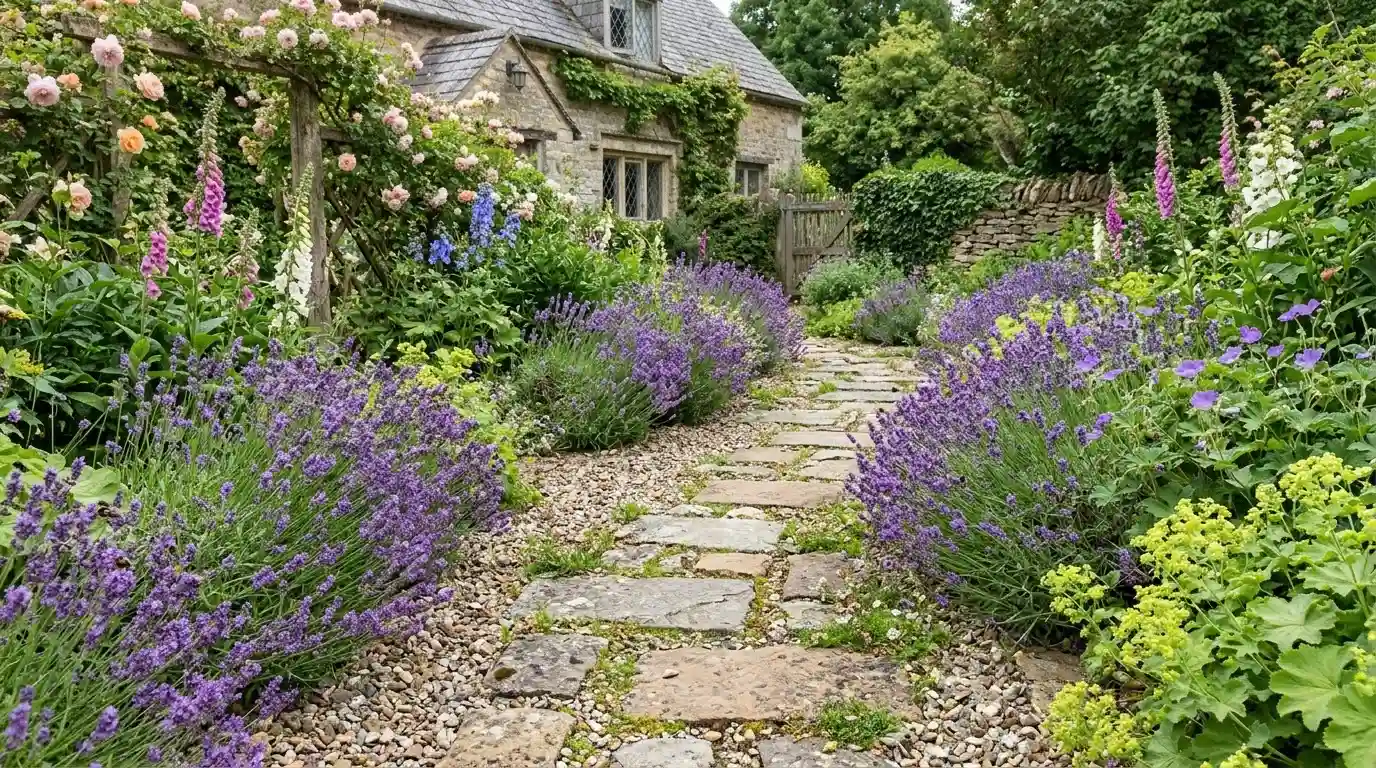
12 Garden Path Ideas to Add Structure and Charm

A garden path does more than get you from A to B. It organises the space, guides the eye and makes the garden usable in wet weather. The best ideas start with width, drainage and a material that matches the house and planting rather than a surface chosen only for looks.
In most UK gardens a main path needs to be around 900 mm wide and sit on a proper base if it is to stay level. The twelve ideas below cover practical options from gravel to brick that add structure without dominating the planting. For wider outdoor ideas see 15 garden ideas to transform your outdoor space.15 garden ideas to transform your outdoor space
1. Gravel Path with Steel Edging
Pale or honey gravel held by thin steel edging looks relaxed yet contained. Use angular stone and landscape fabric so the path stays firm and weed-free. It drains well in British rain and suits cottage or contemporary gardens. Keep the gravel just below the edging to stop scatter.
2. Brick Herringbone Path
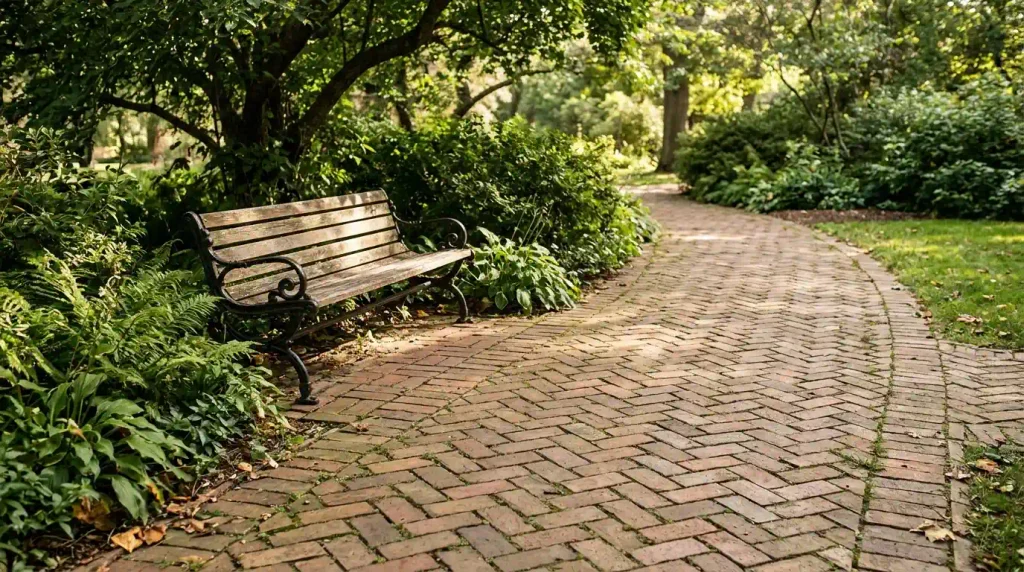
Clay brick laid in herringbone adds warmth and suits period houses. It follows gentle curves with little cutting and repairs easily if one brick moves. Bed on a compacted sub-base and sharp sand. The colour deepens with age and ties the path to brick walls or a house.
3. Stepping Stones in Lawn
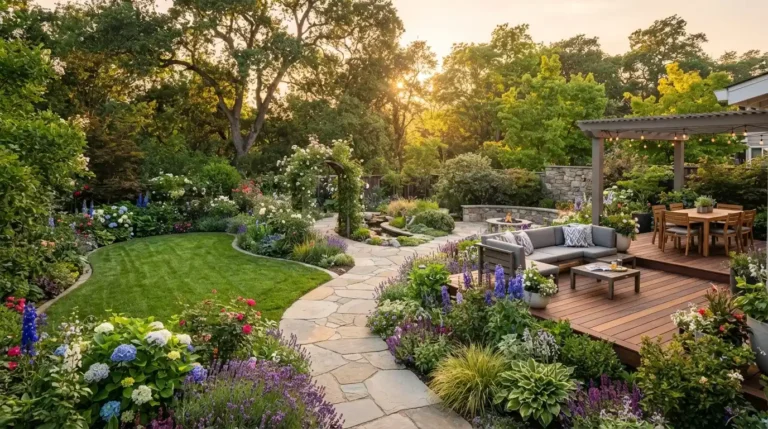
Large flat stones set flush into grass create a soft route that disappears visually from the house. Space them about 600 mm centre to centre for a natural stride. Dig each one into sharp sand so it sits level with the mower. This works well for light access to a shed or seating area.
4. Mixed Gravel and Slab Path
Stepping slabs set into a gravel bed give a firmer footing while the gravel fills the gaps and softens the look. The combination drains freely and is forgiving if levels are not perfect. Choose slabs with a textured surface for grip. Edge the whole run so gravel does not migrate into beds.
5. Self-Binding Gravel Path
Self-binding mixes compact into a firm, slightly springy surface that still looks natural. They suit long curving routes and country-style gardens. The surface is permeable and needs only occasional raking. A solid base and good edging stop it spreading.
6. Reclaimed Brick Path
Reclaimed bricks bring instant character and match older houses. Lay them on a proper base rather than directly on soil. Expect slight variation in colour and size. The patina improves over time and the path feels established from the first season.
7. Timber Sleeper Path
Railway sleepers or treated boards set into gravel or sand create a rustic boardwalk effect. Space them so they are not a trip hazard. They suit woodland or informal gardens and can be topped up with gravel between. Treat ends and check for movement after the first winter.
8. Natural Stone Flag Path
Irregular or sawn stone flags give a long-lasting surface that ages well. Choose local stone where possible so it sits with the landscape. A full mortar bed and consistent joints keep the path stable. Textured faces reduce slip risk when wet.
9. Curved Path Through Borders
A gently curving path that disappears around a corner makes a small garden feel larger. Use a hose to mark the line before digging. Plant low edging plants so the path reads clearly but the borders still billow. The curve also slows people down and encourages them to look at the planting.
10. Path with Low Lighting
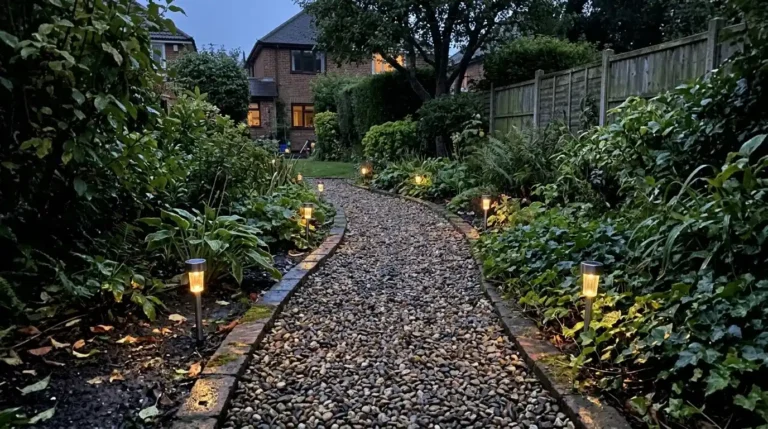
Spike lights or low bollards along one edge make the path usable after dark without flooding the garden. Solar options need little wiring. Place them so they light the walking surface rather than the plants. This pairs well with any of the hard materials above and extends evening use.
11. Narrow Side Path to Shed
A 600 mm path of slabs or gravel along a fence gives dry access to bins or a shed without taking much space. Keep the surface firm so a barrow rolls easily. Match the material to the main path for consistency or choose a simpler finish if the route is rarely seen.
12. Front Path That Matches the House
The path from gate to door sets the tone. Use the same material as any existing paving or choose brick that relates to the facade. Keep it wide enough for two people and clear of overhanging plants. A slight fall away from the house protects the walls.
Conclusion
The most successful garden paths combine a practical width and base with a material that belongs to the house and garden. Gravel, brick and mixed surfaces all work when the preparation is sound. Choose the idea that fits the route and the maintenance you are willing to do, then build it properly so it lasts.
What is the best material for a garden path?
It depends on use and style. Gravel is cheapest and drains well. Brick and stone last longer and suit formal or period gardens. Always prioritise a good base over the surface.
How do I stop gravel spreading?
Install firm edging and keep the gravel slightly below the top of the edging. Landscape fabric underneath reduces movement into the base.
Can I lay a path without digging?
Light stepping stones can sit on existing lawn or gravel, but any path that carries regular traffic needs excavation and a compacted base to avoid sinking.