Why Green Paint Is the Most Popular Interior Colour Right Now

Green paint has taken over UK homes this year. Lick reported it as their top-selling colour family, making up 17.4 per cent of sales while grey dropped to a tiny share. Homeowners are swapping cool minimal greys for warmer, nature-linked tones that feel calming without looking dated. From soft sage walls to deep olive feature rooms, green works across styles and budgets. It brings the outside in without copying the garden exactly, and it pairs easily with the wood, brass and linen already in most British houses. If you are planning a refresh, understanding why green keeps winning helps you choose a shade that lasts beyond the trend cycle.
The Shift Away From Grey and Cool Neutrals
For years grey walls dominated new builds and renovations. They photographed well and hid dust, but many rooms felt flat under the UK’s low winter light. Designers and paint brands now push warmer palettes. Green sits in the middle: it has enough depth to stop a room looking sterile, yet it does not shout the way a primary colour does. Crown Paints and Dulux have both highlighted sage-inspired shades as defining tones for 2025 into 2026. You can see the same move in living room colour schemes where people test green alongside warm whites instead of pure grey.
The practical reason is light. British homes often have north-facing rooms or small windows. A cool grey can go steely and cold. A green with a yellow or brown undertone (olive, sage, or muddied mid-green) picks up the warm end of daylight and feels more inviting after 4pm. That is why Farrow & Ball’s Calke Green and Studio Green keep appearing in both period and modern schemes.
Connection to Nature and Calm
Green is the colour we see most outside in the UK: grass, leaves, moss, yew hedges. Bringing a version of it inside creates a sense of restoration without needing houseplants on every surface. Colour psychology links green with reduced stress and better focus, which makes it useful in bedrooms, home offices and open-plan living areas. Edward Bulmer and Little Greene both lean into earth-mineral pigments that feel grounded rather than synthetic. When you look at Farrow and Ball greens, the popular ones are rarely pure bright green; they are greyed or browned so they sit quietly.
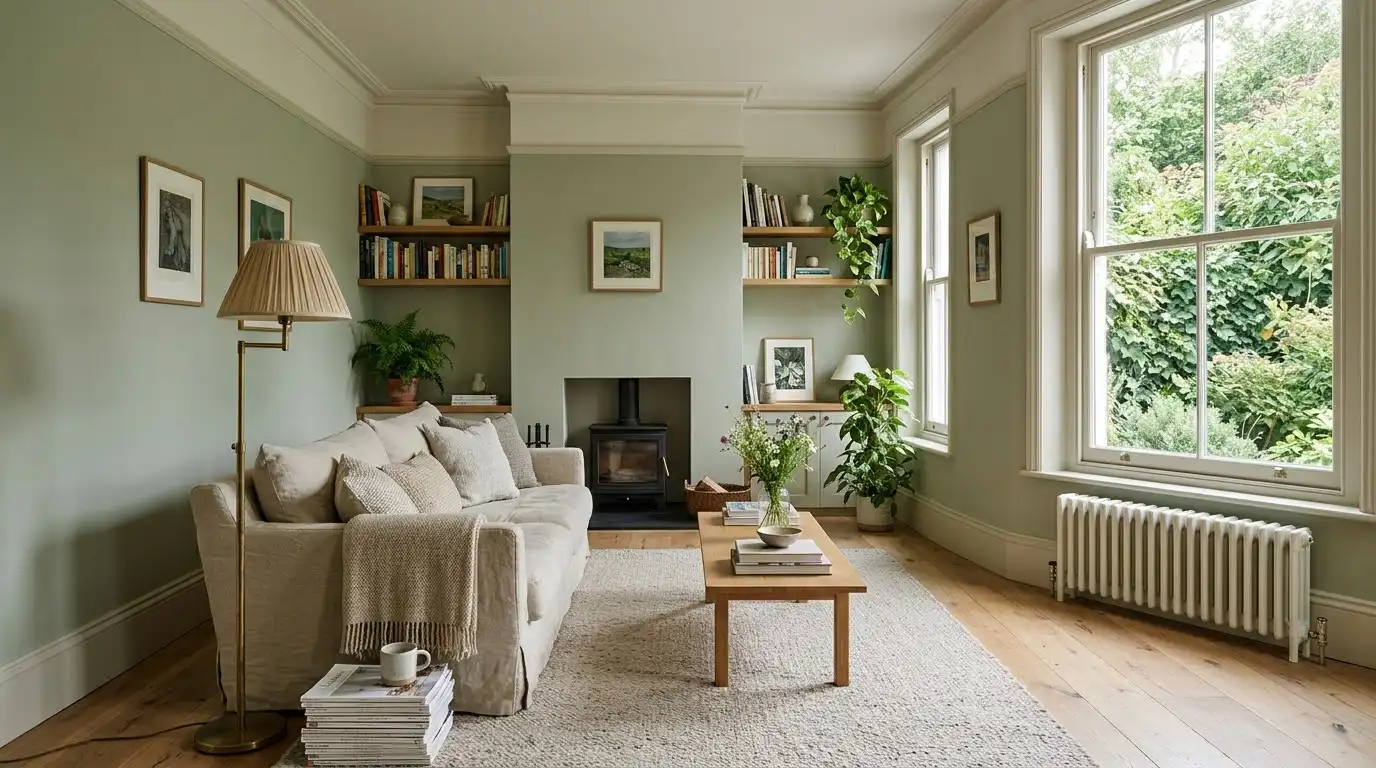
This is different from the 1970s avocado craze. Today’s greens are muddier and more flexible. A soft sage can act almost like a neutral next to oak floors. A deeper bottle green can wrap a small bathroom and make it feel cocooned rather than dark. The same pigment family works in a Victorian terrace and a new-build extension.
Versatility Across Rooms and Styles
One reason green stays popular is that a single shade can do different jobs. In a hallway it can make the entrance feel welcoming without being bright. In a kitchen, sage or olive cabinets hide fingerprints better than white and pair with marble or quartz worktops. In a bedroom, a mid-green wall behind the bed adds depth while the rest of the room stays lighter. Check bedroom paint colour ideas for how designers balance a green wall with lighter woodwork.
It also crosses periods. Georgian and Victorian houses have long used green in libraries and dining rooms. Modern schemes use the same tones with brass handles, linen curtains and simple oak furniture. Dulux’s Heritage range and Farrow & Ball’s classics (Lichen, Breakfast Room Green, Green Smoke) sit comfortably in both. You do not need to match the exact garden outside the window; a greyer or more olive version usually looks better indoors.
What Designers Actually Recommend
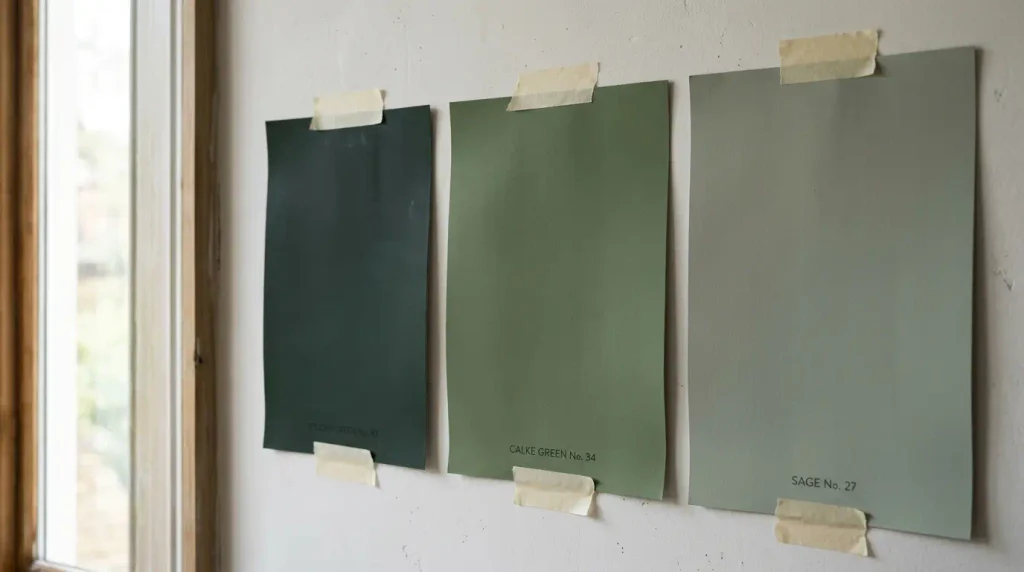
Interior designers repeatedly name certain greens because they change with the light rather than fighting it. Farrow & Ball’s Mizzle and Calke Green shift between green and grey depending on whether the room is north or south facing. Studio Green reads almost black in low light and reveals its depth in daylight. Little Greene and Coat Paints offer similar mid and dark options that feel less flat than pure black or navy. For a full overview of popular choices, see best Dulux paint colours.
The common advice is to order sample pots and paint large cards or patches on different walls. Move them around the room at different times of day. North-facing rooms often need a warmer (more yellow or brown) undertone so the green does not go blue-grey. South-facing rooms can take cooler or brighter versions without looking washed out. Always check the finish too: eggshell or satin on walls, full gloss on woodwork if you want contrast.
Practical Checks Before You Buy
Coverage and durability matter as much as the colour name. Most interior emulsion needs two coats; dark greens can need a third or a tinted primer if you are covering white. Check the light reflectance value (LRV) if the brand publishes it. Low LRV (under 20) means the colour will absorb light, which is useful for drama but can make a small north room feel smaller if you do not add mirrors or warm lighting. For bathrooms, choose a moisture-resistant or bathroom-specific paint even if the colour is the same family. Look at bathroom paint colour ideas for finishes that handle steam.
Common mistakes include buying the full tin after only a small chip, ignoring the undertone against your flooring, and painting woodwork the exact same shade without testing. A slightly lighter or warmer woodwork colour usually defines the green better. Also measure the room properly: a large open-plan space can take a deeper green on one wall only, while a box room benefits from the same colour on walls and ceiling for a cocoon effect.
Conclusion
Green paint is popular because it solves several problems at once. It replaces cold greys with something warmer and more grounded. It connects rooms to the natural world without requiring a full botanical scheme. And the best shades (sage, olive, Calke Green, Studio Green) are flexible enough for hallways, kitchens, bedrooms and living rooms. Test large samples in your own light, pair them with warm materials, and choose the right finish for the room. Done properly, a green wall looks intentional rather than trendy and should still feel right in a few years.
FAQs
Is green paint still in fashion in 2026?
Yes. Paint brands including Lick, Dulux and Crown have all highlighted green as a leading colour. Sage and olive tones in particular continue to sell strongly because they work as modern neutrals rather than bold statements.
Which green is best for a north-facing room?
Choose a warmer, more olive or brown-based green rather than a cool blue-green. Farrow & Ball Calke Green or similar muddied mid-greens usually stay inviting in low light. Always test a large sample on the actual wall.
Does green paint make a small room feel smaller?
A very dark green can if used only on walls with no other treatment. Wrapping the same colour onto the ceiling and woodwork, or using a lighter sage, often makes the space feel deeper and more settled. Add warm lighting and natural materials to balance it.
What finish should I use for green walls?
Eggshell or satin emulsion is the usual choice for walls because it is wipeable and softens the colour slightly. Full gloss is better reserved for woodwork if you want contrast. In bathrooms use a dedicated moisture-resistant paint.