8 Sage Green Paint Ideas for a Calming and Trendy Interior

Sage green has become the modern neutral for UK homes. Soft, greyed and easy to live with, it adds calm without the flatness of pure grey. Dulux’s Soulful Sage and similar shades from Farrow & Ball, Little Greene and Crown sit well with oak, linen and brass. The colour works in almost every room if you test the undertone in your light and keep the rest of the scheme warm. Coverage is usually good in two coats, but always check the LRV and test large samples. Here are eight practical ways to use sage green that stay trendy without dating quickly, with room sizes and material checks included.
1. Full Sage Walls in a Living Room
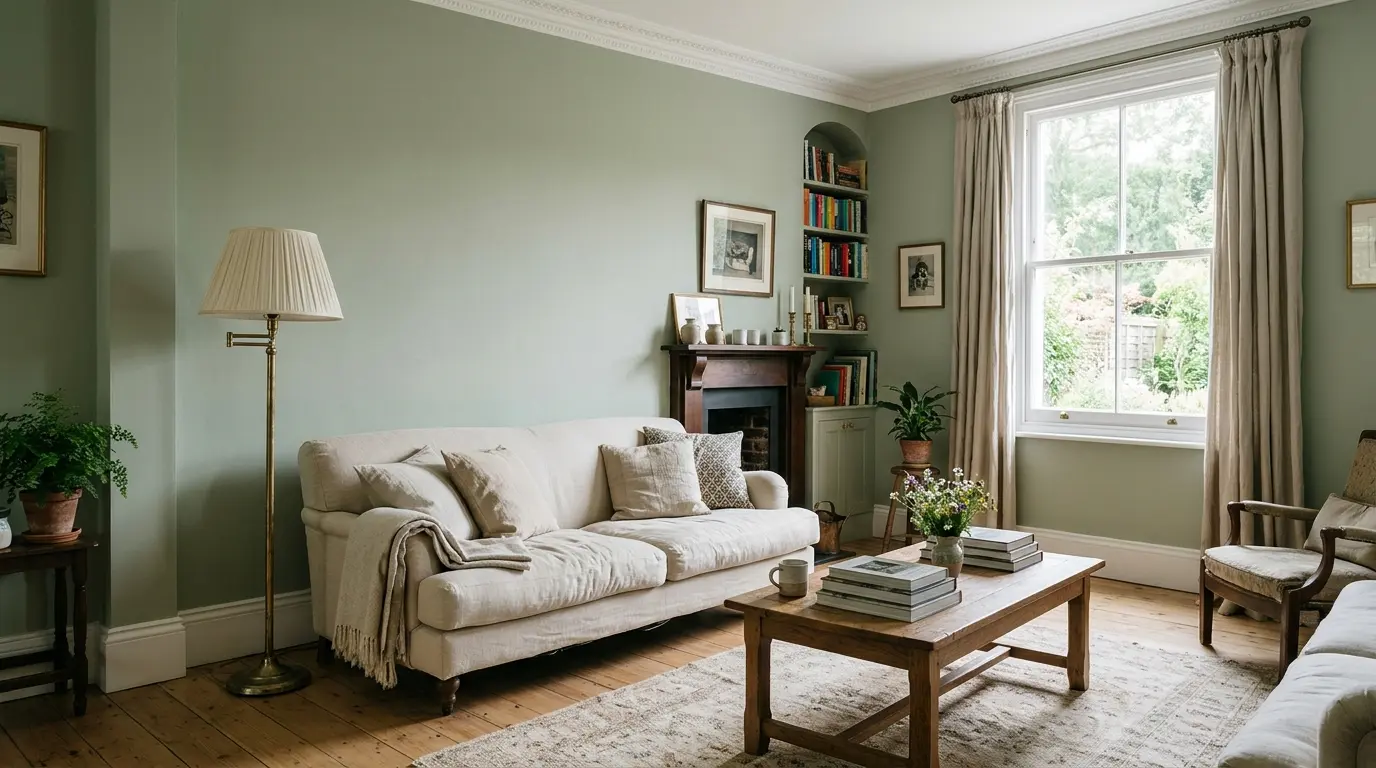
Paint all four walls a soft sage and keep the ceiling a warm white. The colour acts almost like a neutral and makes the room feel settled. Pair with an oak floor, cream linen sofa and brass lamps. In a standard 4 m by 5 m living room this gives depth without drama. Leave clearances of at least 90 cm in front of the sofa for movement. Check the shade against your flooring; warmer sages suit oak better than cool blue-greens. See living room paint colours for current favourites.
Common mistake: choosing a sage that looks blue under cool north light. Paint a large card and move it around the room at different times of day before buying the full tin.
2. Sage Kitchen Cabinets
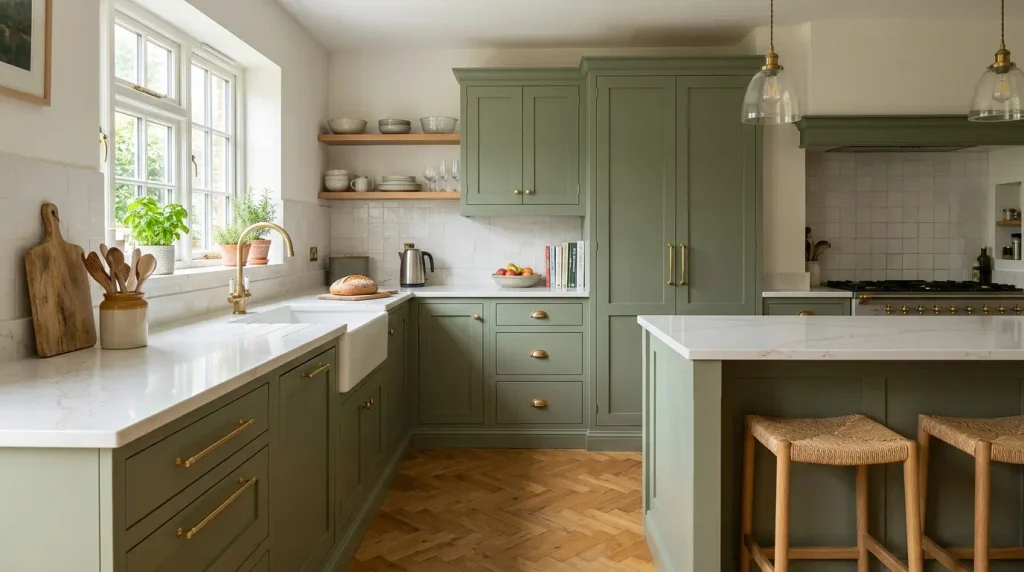
Sage cabinets with white or pale quartz worktops are a popular update. The colour hides fingerprints better than white and pairs with brass handles. Keep walls a warm off-white. Measure base unit heights (standard 720 mm) and door clearances before painting so the finish looks even. Eggshell or satin is practical for wipeability. Many Dulux and Farrow & Ball sage shades work here; always test a door sample under your kitchen lighting. Look at Dulux paint colours for close matches.
Allow at least 90 cm working space in front of the run. If you are painting existing cabinets, sand and prime properly so the sage covers evenly and does not show the old colour.
3. Sage Behind the Bed
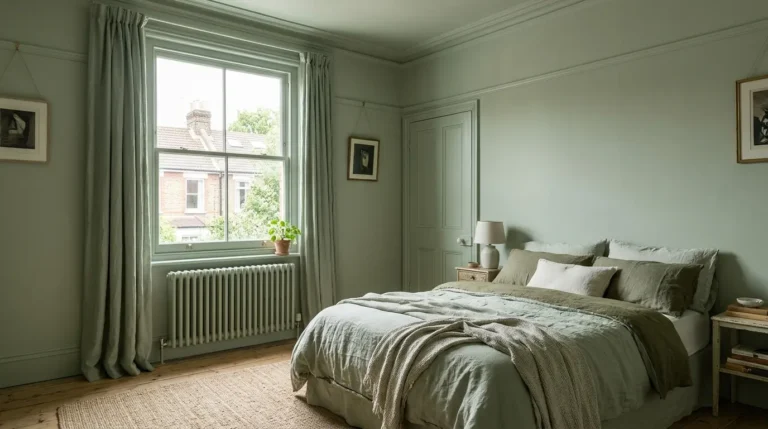
A single sage wall behind the bed creates a calm focal point. Leave the other walls lighter or the same shade if the room is small. Use warm bedding and an oak or rattan headboard. In north-facing bedrooms choose a slightly warmer sage so it does not go grey. Warm lighting at 2700K keeps the room inviting at night. Leave 60–70 cm either side of the bed for access. This is a low-risk way to try the colour. Check bedroom paint colour ideas.
4. Sage Bathroom Walls
Use a moisture-resistant sage in a bathroom for a spa-like feel. Pair with white sanitaryware and brass or chrome fittings. In small bathrooms you can paint the ceiling the same colour for a continuous look. Ensure good ventilation and task lighting above the mirror. Test the shade next to any tiles so the greens do not clash. Standard basin height is around 800–850 mm; keep the colour even around it. See bathroom paint ideas for finishes that handle steam.
5. Sage Hallway
A sage hallway feels welcoming and hides marks better than white. Use eggshell for wipeability. Add a mirror and warm lighting so the space stays bright. In narrow halls (often 1–1.2 m wide) the soft colour makes the walls feel less harsh. Keep skirting and doors a warm white or the same sage. Test against the light from the front door. A wipeable finish is essential because hallways take more wear.
Measure the length of the hallway so you order enough paint. Darker marks show less on sage than on pure white, which is useful in family homes.
6. Sage Dining Room
Sage walls in a dining room create a calm backdrop for meals and art. Pair with warm wood furniture and brass lighting. Keep the ceiling white so the room does not feel low. Clearance around the table should remain at least 90 cm so chairs pull out easily. The colour works well with both modern and traditional schemes because it is soft enough not to dominate. In a 3.5 m by 4 m room this usually means all walls or the longest wall.
7. Sage Feature Wall with Panelling
Paint panelling or a feature wall in sage and leave the rest of the room lighter. This adds texture and colour without covering every surface. The soft tone works with both painted and natural wood panelling. Measure the panelling height (often 900–1000 mm for dado) before you start so the colour break looks intentional. Many of the Farrow and Ball greens are shown this way.
Ensure the panelling is properly prepared and primed so the sage covers evenly. A slight sheen on the panelling can add subtle depth.
8. Sage in a Home Office or Study
Sage is linked with calm and focus, making it useful in a home office. Paint the wall behind the desk or all walls. Keep the desk in oak or white and add a warm lamp. Avoid cool LED task lights that can make the sage look grey. The colour is restful for long working days without being distracting. In a small study (around 2.5 m by 3 m) full walls work well; in larger rooms one feature wall is enough.
Practical Tips for Ordering and Applying Sage
Always order sample pots first. Paint large areas on different walls and view them at morning, midday and evening. Check the undertone against your floor, worktops and any fixed tiles. Most sage emulsions need two coats; darker versions may need a primer. A 5-litre tin typically covers 60–70 square metres per coat, but measure your walls and add 10 per cent. Choose eggshell or satin for walls in high-use rooms. Pair with warm whites, oak and brass so the sage stays soft and inviting rather than cold.
Conclusion
Sage green works across living rooms, kitchens, bedrooms, bathrooms and hallways because it is soft, greyed and flexible. Test large samples in your light, check clearances and pairings, and choose the right finish for each room. Done carefully, it gives the calm, trendy look people want without the risk of a bright or dated green.
FAQs
What is the best sage green paint?
Popular options include Dulux Soulful Sage, Farrow & Ball Lichen or similar greyed sages from Little Greene and Coat. Always test in your room against flooring and lighting.
Does sage green go with oak floors?
Yes, especially warmer or olive-based sages. Cooler blue-greens can clash; check a sample against the floor before ordering.
Is sage green still trendy?
Yes. It is one of the leading soft greens for 2026 and into 2027 because it works as a modern neutral rather than a bold statement.
What finish for sage walls?
Eggshell or satin emulsion. Moisture-resistant versions in bathrooms. Wipeable finishes in halls and kitchens. Full gloss is better reserved for woodwork.