How to Create Privacy in a Garden Without a Fence

You can create real privacy in a garden without a fence by breaking the sightline rather than trying to block it out. Standard trees, pleached screens, layered evergreen planting, climbers on trellis, and overhead structures like pergolas all work together to stop a garden feeling overlooked, often more effectively than a taller boundary ever could. The trick most people miss is that the problem usually isn’t the fence at all.
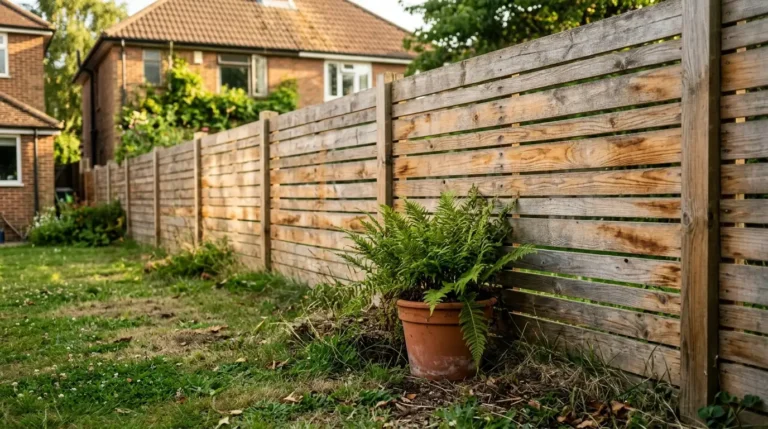
If your garden already has a perfectly decent fence and you still feel like you’re on display every time you sit outside, you’re not imagining it. Most UK gardens already have fencing that meets the boundary, yet the actual overlooking tends to come from somewhere a fence physically can’t reach: an upstairs bedroom window, a raised patio next door, or a block of flats behind your back wall. Building the fence higher rarely fixes this, and it often makes the garden feel darker and more closed in for no real gain.
Why Doesn’t My Existing Fence Already Solve This?
A fence only screens what’s at fence height. Once overlooking comes from a first-floor window, a sloped garden next door, or a nearby building set higher than yours, even a well-built two-metre fence does almost nothing to interrupt that line of sight. You’d need an impractically tall structure to physically block a view coming from six or seven metres up.
This is the part most privacy advice skips over. The instinct is always to build upward, but geometry works against you. A better approach is to stop thinking about height at the boundary and start thinking about where the sightline actually crosses your garden, then interrupt it at that specific point with planting or a structure, rather than along the entire perimeter.
Work Out Exactly Where the Overlooking Comes From
Before spending any money, stand in the spot where you actually sit or would like to sit, whether that’s a patio table, a bench, or a spot for a hot tub. From there, look around and note every window, balcony, or raised area that can see into that exact spot. Do this at different times of year if you can, since a window that feels exposed in winter might be almost fully screened by summer once deciduous planting comes into leaf.
It’s also worth being selective. Not every direction needs screening, and trying to enclose the whole garden defensively tends to make a small space feel smaller and darker rather than more private. Two or three well-placed solutions aimed at the specific windows causing the problem will usually outperform a wall of screening around the entire boundary.
The Best Plants for Privacy Without a Fence
Planting is the single biggest lever you have, because unlike a fence, it isn’t capped at a fixed height and it can be positioned exactly where a sightline needs breaking, not just along the boundary line.
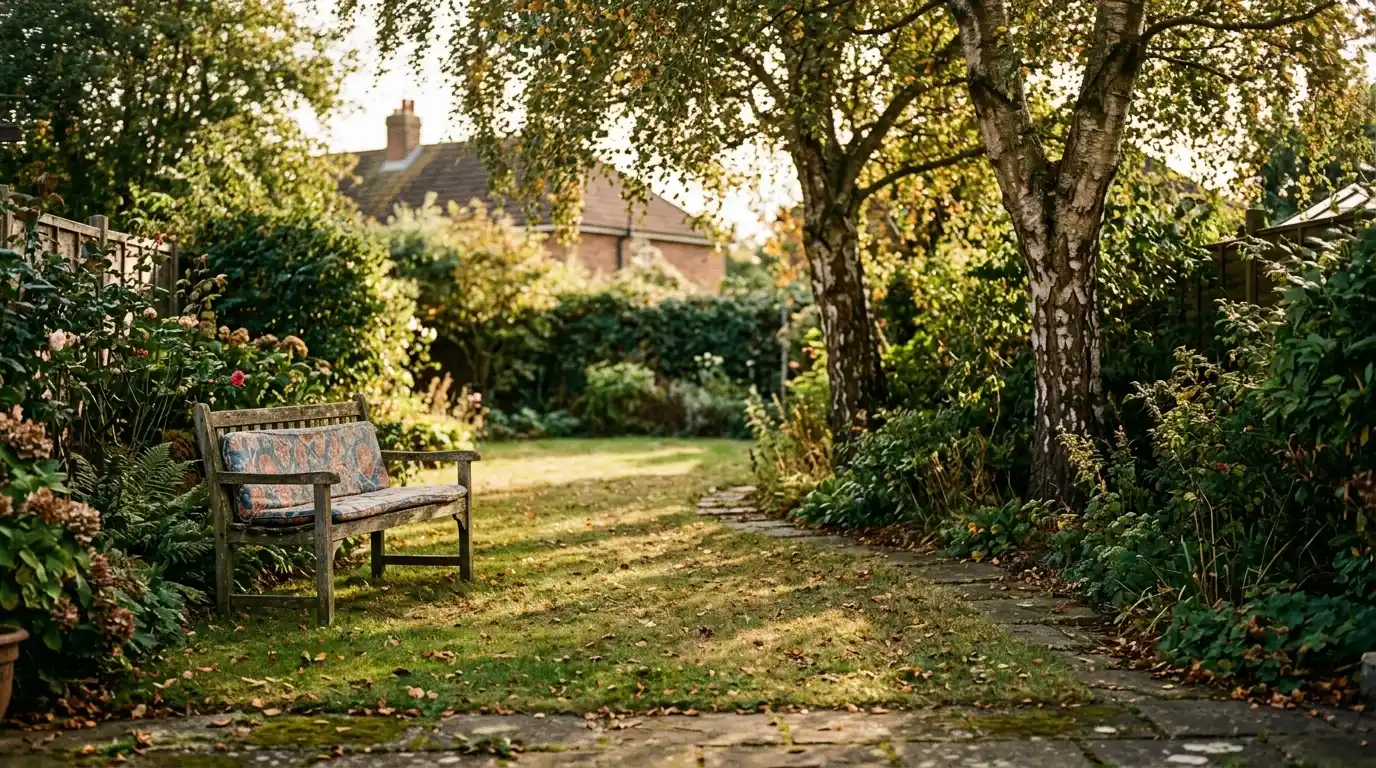
Standard trees are worth starting with. A standard tree has a clear trunk, usually 1.2 to 2 metres of bare stem, before the canopy begins, which means light and air still reach the border below while the canopy itself intercepts a sightline from an upstairs window. Two or three well-positioned standards, chosen for the specific window they need to block, generally work better than a dense row planted along the fence line. Photinia x fraseri ‘Red Robin’ is a popular evergreen choice for year-round screening, while Amelanchier and ornamental Acers offer a lighter, deciduous canopy with seasonal interest, though they’ll lose that screening effect in winter unless paired with evergreens elsewhere in the scheme.
Pleached trees solve a more specific problem: a screen at a precise height, without losing the border space below. The tree is grown on a clear stem with branches trained horizontally into a flat, hedge-like canopy up top, essentially a hedge on stilts. Hornbeam and lime are the classic species for this, and Hornbeam has a useful trait for winter privacy, since it holds its dead russet leaves through the coldest months rather than dropping them cleanly, giving you partial screening even when fully deciduous plants have gone bare. Pleached trees need a support frame, typically galvanised wire between posts, for the first three to four years while the framework establishes, and an annual prune after that to keep the shape tidy.
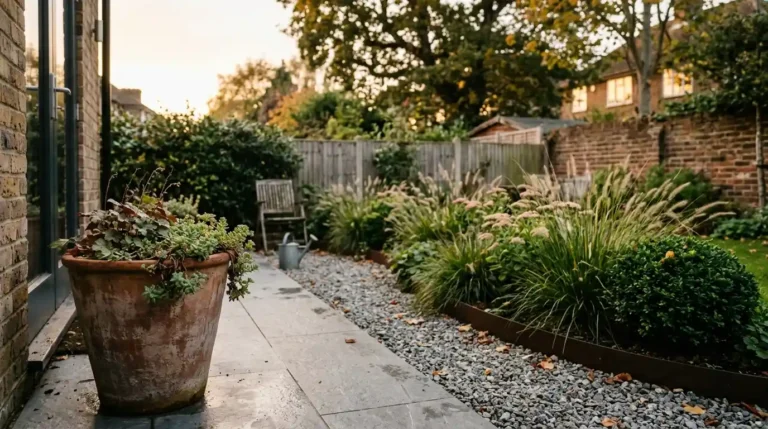
Evergreen shrubs fill the mid-layer and are what actually holds a privacy scheme together in winter, which is the season that exposes every gap in a planting plan built mainly around deciduous trees. Viburnum tinus tolerates shade and heavy soil and flowers from November through to spring. Skimmia japonica stays compact at around a metre, works well in shaded corners, and produces berries through autumn and winter. Aucuba japonica is about as tolerant of poor, shaded, urban conditions as any evergreen you’ll find.
Bamboo comes up constantly in this conversation, and it deserves a genuine caveat rather than blanket enthusiasm. Running bamboo species, particularly Phyllostachys, send out rhizomes that can travel several metres in a single season, damage paving, and invade a neighbour’s garden, which turns a privacy solution into an expensive dispute. If you want bamboo, use a clump-forming species like Fargesia murielae or Fargesia nitida, which stay contained, reach roughly two to three metres, and work brilliantly in a large pot beside a patio for near-immediate screening. Potted bamboo does dry out fast in summer, so it needs regular watering or the leaves will drop.
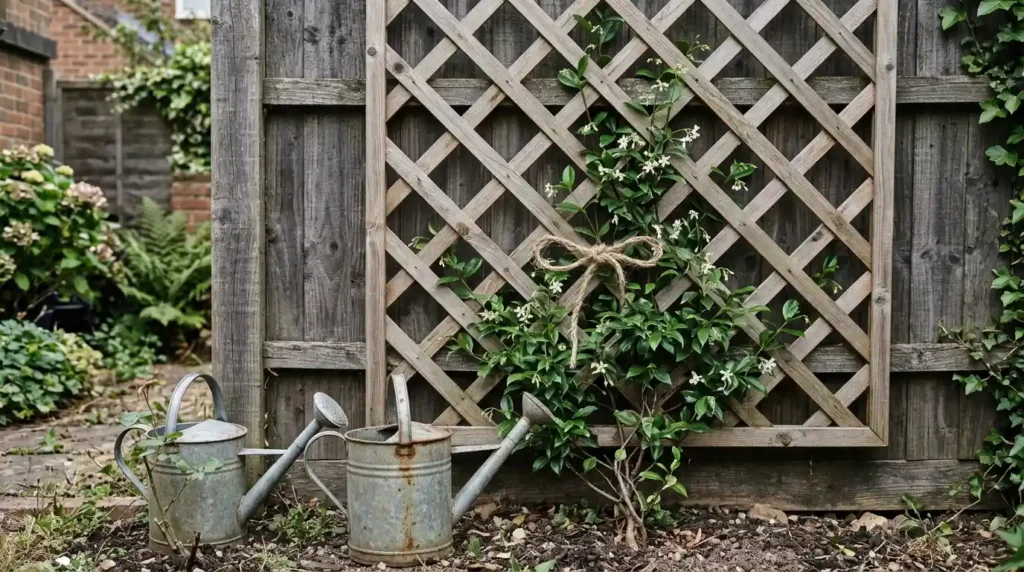
Climbers on trellis offer probably the best value-for-cost option on this whole list. A pressure-treated trellis panel fixed to an existing low fence extends the effective screening height without usually triggering planning rules, and gives you a structure for planting at the same time. Trachelospermum jasminoides (star jasmine) is a strong evergreen choice with fragrant summer flowers, though it’s genuinely slow in its first year or two before it takes off. For faster initial cover, Lonicera japonica (Japanese honeysuckle) can cover a couple of metres of trellis within a single growing season.
Ornamental grasses are underused for this purpose. Miscanthus varieties can reach two to three metres by midsummer and soften sightlines while also muffling sound around a seating area, which fencing alone can’t do. They die back in winter, so they work best as one layer among several rather than a sole solution.
Overhead Structures for Privacy From Above
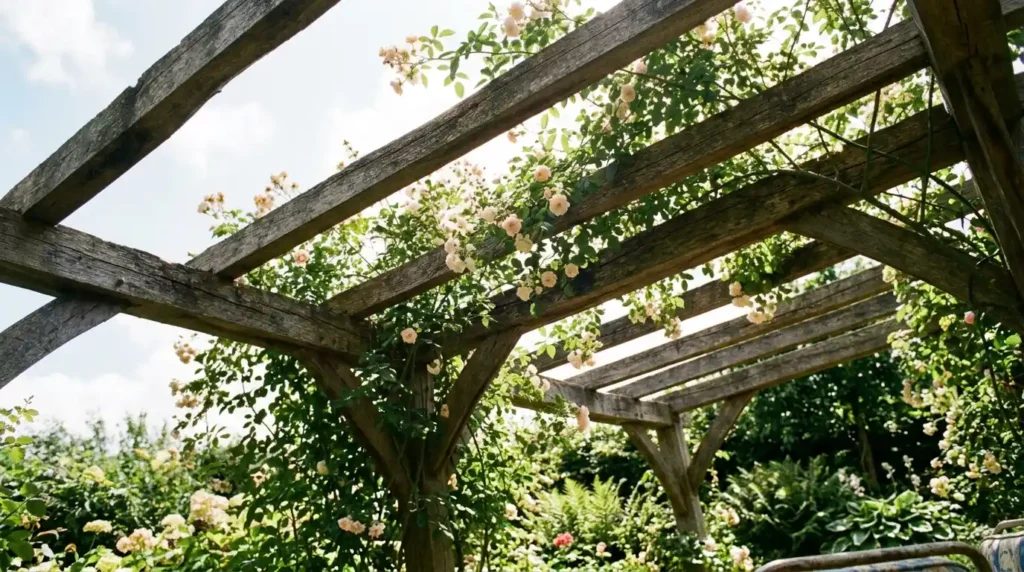
Trees and shrubs can’t easily solve overlooking that comes from directly above, such as a nearby apartment block or a garden on higher ground. This is where structures earn their place.
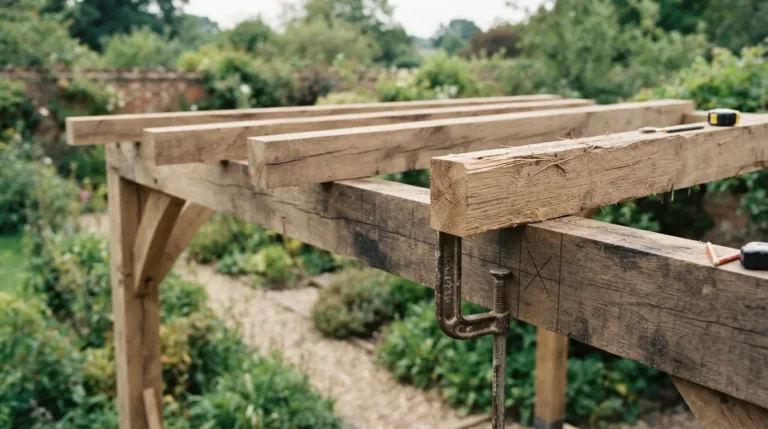
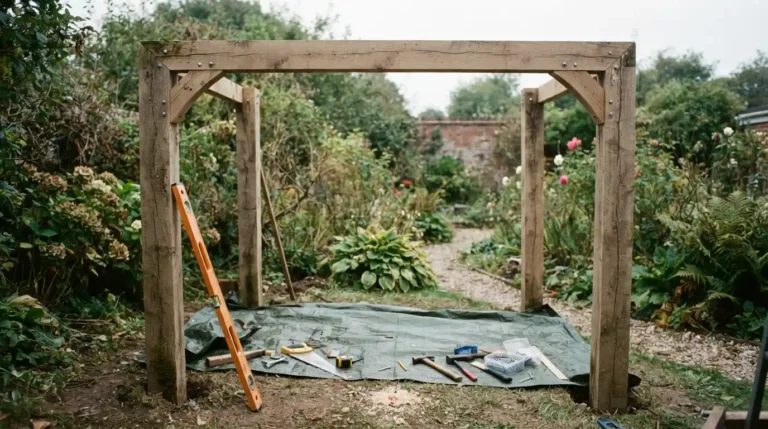
A pergola or arbour creates a defined “outdoor room” simply by adding a frame overhead, and you don’t need a fully solid roof for it to work. Even an open timber frame changes how exposed a space feels, and training climbers like wisteria, rose, or jasmine across it adds genuine overhead screening plus fragrance. A well-proportioned pergola typically needs a minimum clear height of around 2.4 metres to avoid feeling cramped, and it works best positioned over your main seating area rather than tucked into an unused corner.
For smaller budgets or spaces where a full pergola isn’t practical, freestanding screening planters, tall metal or timber planters holding bamboo or small trees, are a flexible alternative on patios, courtyards, or roof terraces where digging a border isn’t an option. They can be repositioned later if your layout changes, which a permanently planted border can’t offer.
Layering Your Planting So It Actually Works Year-Round
A single-height screen along the boundary rarely gives real privacy in every season. The most effective approach layers plants at three heights.
| Layer | Typical height | What it does | Example plants |
| Back layer | 3m and above | Intercepts sightlines from upstairs windows | Standard trees, pleached Hornbeam, Photinia |
| Middle layer | 1.2m to 2.5m | Fills the gap beneath tree canopies | Viburnum tinus, Skimmia, clump-forming bamboo |
| Ground layer | Under 1m | Softens the base, adds seasonal interest | Grasses, hardy geraniums, low evergreen perennials |
A good rule of thumb is to make sure your evergreen layer alone can provide most of the screening you need in the depths of winter, since that’s when deciduous planting disappears and a garden feels most exposed. Build the seasonal, flowering, and deciduous interest on top of that evergreen backbone rather than relying on it as your only defence.
How Much Does It Cost to Create Garden Privacy Without a Fence?
Costs vary enormously by country, supplier, and plant size, so treat the figures below as a general guide rather than a fixed quote. All prices are approximate and in GBP.
| Solution | Approximate cost | How quickly it works |
| Trellis panel plus a climbing plant | £30–£120 | 1–2 growing seasons for full coverage |
| Clump-forming bamboo in a large pot | £60–£150 | Immediate |
| Evergreen shrubs (three to five plants) | £80–£250 | 2–3 seasons to fill out |
| Small to medium standard tree | £80–£300 | Partial screening immediately, full canopy in 2–3 years |
| Large specimen standard tree | £400–£1,400+ | Immediate impact |
| Pleached tree, per tree | £300–£1,100 | Immediate structural screening |
| DIY timber pergola kit | £300–£800 | Immediate overhead structure |
| Professionally installed pergola | £2,000–£8,000+ | Immediate |
A sensible way to allocate a budget is to spend more on the trees, since a good specimen is a long-term asset that gains value as it grows, and save on the shrubs and ground layer, which fill in quickly and affordably from a garden centre regardless of size at planting.
Do You Need Planning Permission for Privacy Screening?
Rules vary significantly by country, so always check with your local planning authority, but in much of the UK a fence, wall, or screen does not usually need planning permission provided it stays at or below 2 metres in height, with lower limits, often around 1 metre, applying to front gardens or boundaries next to a road or footpath. Natural hedging has no fixed legal height limit, though a council can order a hedge over 2 metres to be reduced if it’s genuinely harming a neighbour’s enjoyment of their property under high hedges legislation. A pergola typically falls under permitted development in England provided it doesn’t cover more than half the garden and stays within height limits close to a boundary, but conservation areas and listed buildings change the rules, so it’s worth a quick check before you build anything permanent.
It’s also worth knowing that there’s generally no automatic legal right to privacy in a garden. You usually can’t force a neighbour to stop being able to see into your garden from a window that’s always overlooked it. This is exactly why planting and structures on your own side of the boundary, rather than legal action, tend to be the realistic route forward.
Common Mistakes to Avoid
A few mistakes come up again and again in gardens trying to solve privacy without a fence. Relying entirely on deciduous trees is the most common: they look wonderful in June and offer almost nothing in January, right when a garden feels most exposed. Planting running bamboo directly into open soil is another, since it can spread aggressively into paving and neighbouring gardens within a couple of seasons. Screening every direction defensively, rather than the specific windows identified through a proper sightline check, wastes budget and can make a small garden feel boxed in. And skipping soil preparation, especially on heavy clay, is a false economy, since plants that struggle to establish in poor soil often need replacing within a year or two, costing more in the long run than doing it properly the first time.
Conclusion
Creating privacy in a garden without a fence comes down to identifying exactly where the overlooking is coming from and addressing it at that specific point, rather than building upward along the whole boundary. A layered mix of standard trees, evergreen shrubs, climbers on trellis, and an overhead structure like a pergola will usually give you better, more attractive, and more year-round privacy than a taller fence ever could. Start with a proper sightline check, invest a little more in the trees that do the heavy lifting, and let the rest of the planting fill in around them.
FAQs
Can plants really give more privacy than a fence?
Yes, in many overlooking situations. A fence is fixed at one height, but trees, pleached screens, and tall shrubs can continue well above that line, which matters most when the overlooking comes from an upstairs window or higher ground.
What is the fastest way to get privacy without a fence?
Clump-forming bamboo in a large pot gives near-immediate screening, and a fast climber like Lonicera japonica on trellis can cover a couple of metres within one growing season. Full canopy privacy from trees typically takes two to three years.
Is bamboo a good choice for a natural screen garden?
Clump-forming species like Fargesia are excellent and low-risk. Running species such as Phyllostachys should never go directly into open ground without a deep root barrier, since they spread aggressively.
Will privacy planting make a small garden feel smaller?
Not if it’s chosen well. Plants with an open structure, like grasses and bamboo, let light and movement through while still screening a sightline, which often makes a small garden feel more enclosed and comfortable rather than boxed in.
How do I stop my neighbour’s upstairs window overlooking my garden?
A standard tree positioned between your seating area and that specific window is usually the most effective single fix, since the canopy sits at the right height to intercept the view while keeping the border below light and open.
Do I need to talk to my neighbour before adding privacy screening?
It’s not usually a legal requirement for planting or a modest structure on your own land, but a friendly conversation first tends to avoid misunderstandings, particularly if anything you’re adding will be visible from their side too.