12 Front Garden Planting Ideas to Welcome Visitors

Front garden planting sets the tone before anyone reaches your door, and the right combination of structure, colour, and scent does more for kerb appeal than any single showpiece plant. Most homeowners either overplant a small space until it looks cluttered by midsummer, or play it too safe with a single evergreen shrub that gives nothing back for ten months of the year.
This list covers twelve front garden planting ideas that hold up through a full growing season, with real costs, timelines, and the maintenance reality that most guides skip entirely.
1. Symmetrical Planting Either Side of the Front Door
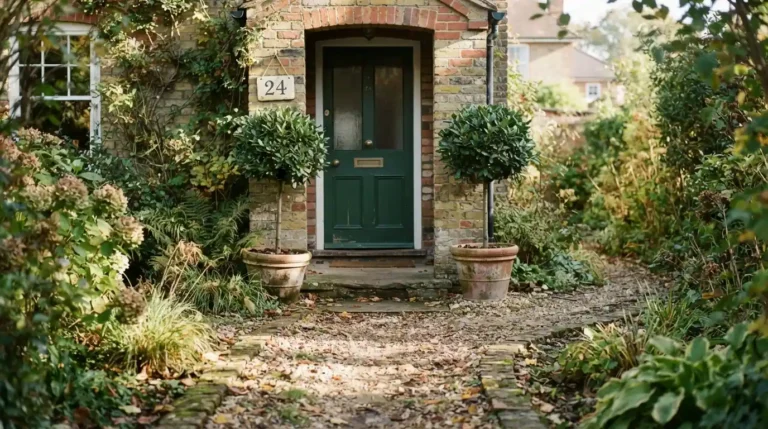
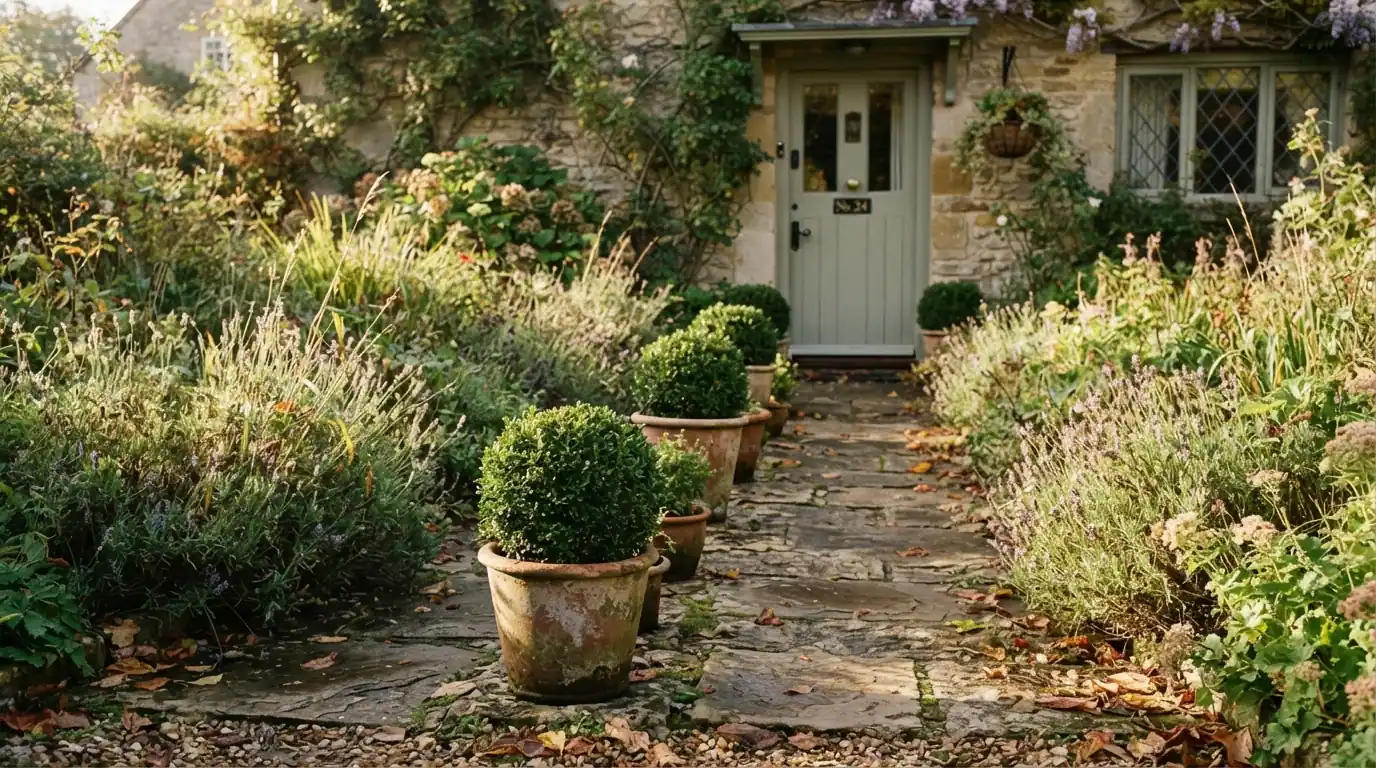
Matching pairs of pots or plants placed either side of the front door create an immediate sense of order, and it’s one of the simplest ways to make even a narrow entrance feel considered rather than leftover space.
Clipped box balls have been the classic choice here for decades, but box blight and box tree moth caterpillar have made genuine box a riskier long-term investment in much of the UK over the past several years. Ilex crenata (Japanese holly) and Euonymus japonicus both clip to a similar dense, rounded shape and resist the same pests, typically costing £25 to £45 per mature plant in a decent-sized pot compared to £20 to £35 for box of the same size. A good rule of thumb is choosing a container at least 40cm wide for anything you intend to keep clipped long term, since a root-bound plant in a small pot will need repotting within two to three years regardless of species.
2. Low Hedging to Line the Path
A low hedge running along either side of a front path gives definition without blocking the view of the house, and it works particularly well on properties where the garden itself is small enough that a full border would feel cramped.
Given the ongoing box blight and box moth pressure across much of the UK, most planting plans now specify an alternative from the start rather than treating box as the default. Ilex crenata and dwarf lavender (Lavandula angustifolia ‘Hidcote’) both work as low hedging, though lavender needs a hard trim after flowering to stay compact and won’t hold as crisp a line as Ilex through winter. Expect to pay £8 to £15 per young plant when buying enough to form a continuous run, and budget for a full growing season before the hedge fills in properly rather than expecting an instant effect from newly planted stock.
3. A Cottage-Style Mixed Border Along the Path
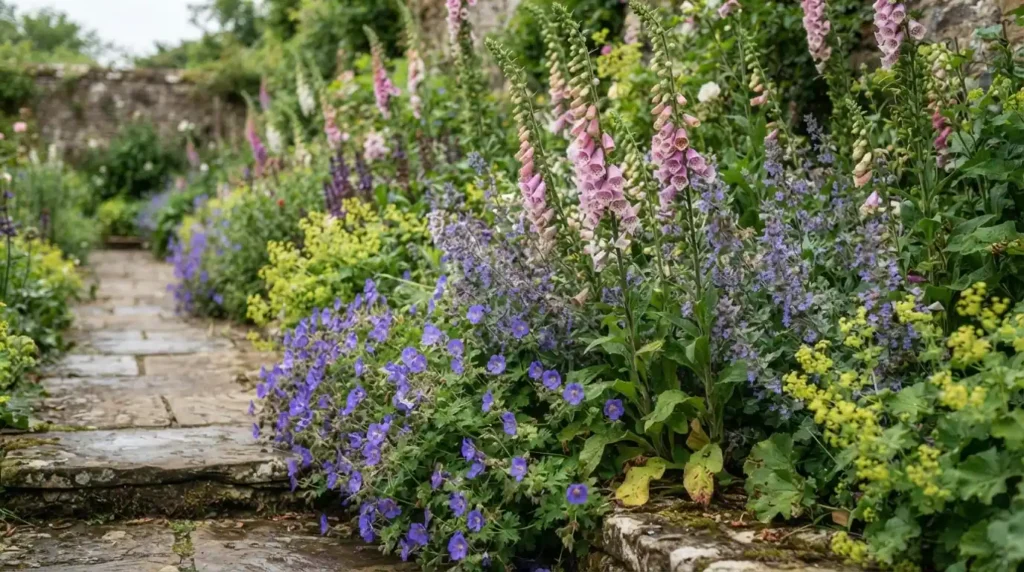
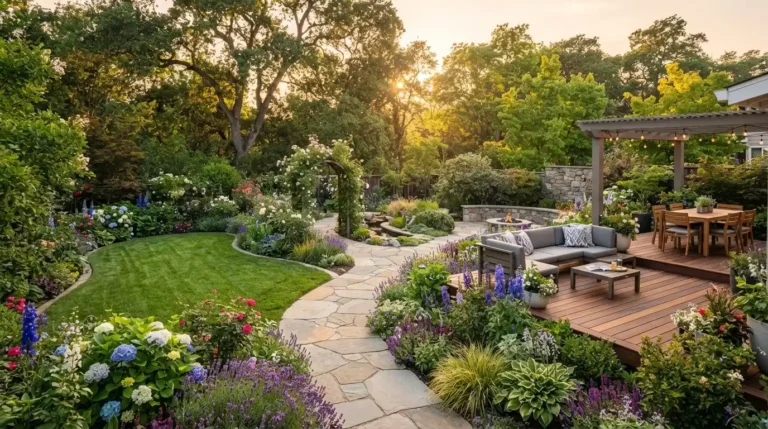
A mixed cottage-style border combining perennials, low shrubs, and seasonal flowers gives a front garden genuine depth and colour through spring and summer, in contrast to the flatter, single-note look of hedging alone.
This style relies on layering height, with taller plants like foxgloves or delphiniums toward the back and lower ground cover such as hardy geraniums or catmint spilling toward the path edge. A common mistake first-time planters make is spacing everything too tightly based on how small the plants look in their starter pots, which leads to overcrowding and poor airflow within two seasons. Checking each plant’s mature spread before planting, and genuinely leaving that gap even though it looks sparse on day one, saves a considerable amount of thinning out and disease trouble later.
4. Evergreen Structure for Year-Round Appeal
Evergreen shrubs and small trees give a front garden something to look at through winter, when herbaceous borders have died back and seasonal bulbs haven’t yet emerged.
Pittosporum, Choisya (Mexican orange blossom), and compact varieties of holly all hold their shape and foliage year round, generally costing £30 to £60 for a decent-sized specimen depending on the variety and pot size. Most homeowners find that one or two evergreen anchor plants, rather than filling the whole space with them, strikes the right balance, since an entirely evergreen front garden can end up looking static rather than welcoming once the novelty of the planting wears off.
5. Scented Planting Near the Entrance
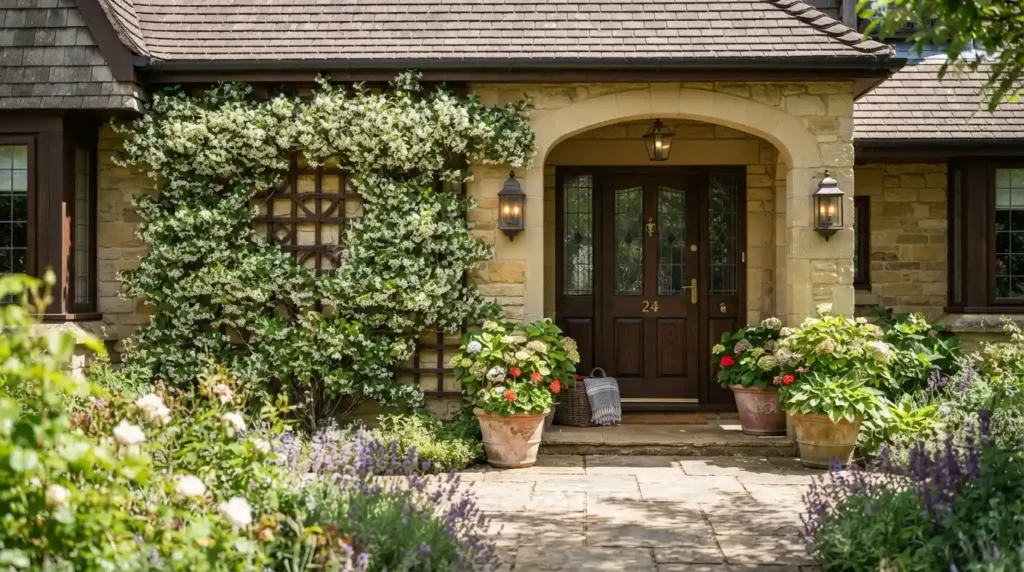
Placing scented plants directly beside the front door or along the final stretch of path means visitors experience the fragrance at exactly the point they arrive, rather than somewhere they’ll walk past without noticing.
Sarcococca (sweet box) flowers in the depths of winter and carries a genuinely strong, sweet scent from small, unremarkable flowers, making it one of the better choices for cold-weather fragrance near an entrance. Star jasmine and climbing roses cover the warmer months, though star jasmine needs a sheltered, sunny spot to flower reliably and will sulk in a cold, exposed position. A good rule of thumb is planting for at least two different flowering windows so the entrance carries scent across more of the year rather than just a few weeks in early summer.
6. Seasonal Bulbs for Spring Colour
Spring bulbs planted in autumn deliver colour at one of the bleaker points in the gardening calendar, when most other front garden planting is still dormant or just beginning to show growth.
Daffodils, crocuses, and tulips all work well planted in drifts through a border or naturalised in a small area of grass if the front garden includes any lawn. Bulbs typically cost £10 to £20 for a bag of 50 to 100, depending on variety, and they need planting from September through November for flowering the following spring, so this is one idea that requires planning several months ahead of the display itself. A common mistake is planting bulbs in a single straight line, which reads as noticeably more formal and less natural than loose, irregular drifts of the same bulbs.
7. Climbing Plants for Walls, Porches, and Arches
Climbing plants trained up a wall, porch, or simple arch add height to a front garden without taking up ground space, which matters considerably in smaller plots where every square metre of border counts.
Clematis and climbing roses both need supporting wires or trellis fixed to the wall before planting, and retrofitting support after a climber is already established is far more difficult than installing it first. Expect to pay £15 to £30 per climbing plant and budget two to three growing seasons before a rose or clematis reaches full coverage of a porch or arch, since these plants establish their root system in year one before putting significant energy into top growth.
8. A Gravel Garden for Low Maintenance Planting
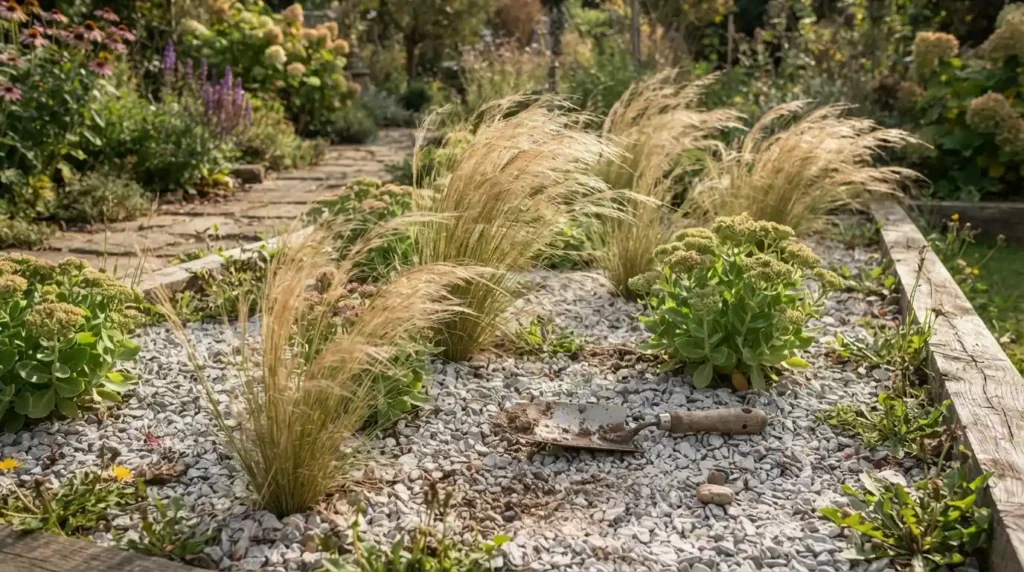
Gravel gardens combine a permeable gravel surface with drought-tolerant planting pushed directly through it, and this approach has grown in popularity specifically because it needs less weeding and no mowing compared to a traditional lawn and border combination.
Lavender, Stipa tenuissima (feather grass), and sedum all thrive in gravel conditions, since the free-draining surface suits plants adapted to drier soil far better than a standard border mix would. Installing a gravel garden from scratch typically costs £40 to £70 per square metre once you factor in the membrane, gravel depth, and planting, though this drops considerably if you’re converting an existing bed rather than starting from bare ground. The trade-off worth knowing upfront is that gravel gardens still need an annual weed check, since seeds blow in and germinate through gravel just as readily as through soil, even if the overall maintenance load is lower.
9. Ornamental Grasses for Movement and Texture
Ornamental grasses add movement to a front garden that static shrubs and perennials can’t replicate, catching wind and low light in a way that changes the garden’s character through the day rather than looking the same from every angle.
Miscanthus, Pennisetum, and the smaller Stipa varieties all work well in a front garden setting, with most reaching their full display by late summer and holding attractive seed heads well into winter before needing a cut back in early spring. Most homeowners find grasses pair particularly well with gravel or minimalist planting schemes, since their loose, informal habit contrasts well against harder landscaping materials.
10. A Single-Colour or Limited Palette Planting Scheme
Restricting a front garden’s planting to one or two colours, rather than a full mixed palette, creates a more cohesive look that reads as considered rather than accidental, particularly on smaller properties where a busy mix of colours can feel chaotic in a limited space.
White and green schemes using plants like white hydrangea, Alchemilla mollis, and white-flowering hellebores suit period properties particularly well, while a hot palette of reds and oranges suits a more contemporary house. This approach costs no more than a mixed border in terms of plants, but it does require more discipline when choosing individual varieties at the garden centre, since it’s easy to be tempted by an unrelated colour that then throws off the whole scheme.
11. Wildlife-Friendly Planting for Pollinators
Planting specifically to support pollinators has become one of the more requested front garden approaches over recent years, and it doesn’t require sacrificing visual appeal, since many of the best pollinator plants are also strong ornamental choices in their own right.
Lavender, catmint, sedum, and single-flowered roses (rather than heavily double varieties, which often lack accessible pollen) all support bees and other pollinators while still delivering a strong seasonal display. A common mistake is assuming any flowering plant automatically helps pollinators, when many popular double-flowered varieties have been bred in a way that makes the pollen and nectar difficult or impossible for insects to reach.
12. Container and Pot Planting for Gardens with Little Border Space
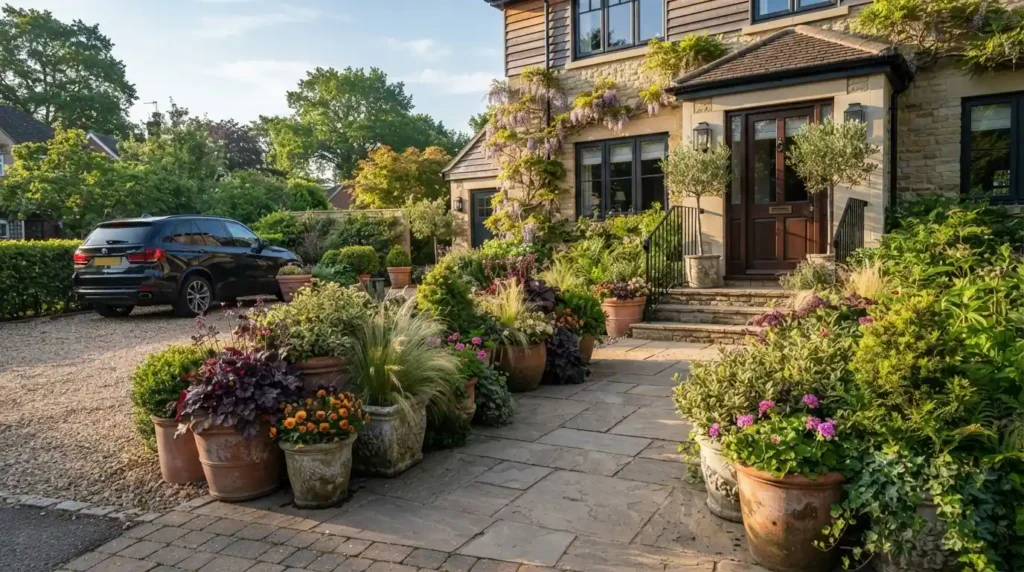
Container planting works as a genuine solution rather than a compromise for front gardens with paved paths, driveways, or very little open border space, since large pots can carry the same seasonal impact as a planted bed without needing to dig anything up.
Terracotta and stone-effect pots both weather well outdoors, though terracotta is more prone to frost cracking in colder climates unless it’s specifically rated frost-resistant, which is worth checking before buying if winters in your area regularly dip below freezing. Expect to pay £20 to £50 for a decent-sized frost-resistant pot, with planting costs on top depending on what you choose to fill it with, and plan to refresh at least the seasonal displays twice a year to keep containers looking intentional rather than tired.
Front Garden Planting Cost and Timeline Comparison
| Planting Idea | Approximate Cost | Time to Established Look |
| Symmetrical entrance plants (pair) | £50–£90 | Immediate, ongoing clipping needed |
| Low hedging (per metre run) | £40–£75 | 1–2 growing seasons |
| Mixed cottage border | Varies by size, £15–£25 per plant | 1–2 growing seasons |
| Evergreen structure planting | £30–£60 per specimen | Immediate structure, slow growth |
| Scented entrance planting | £15–£30 per plant | 1 season for flowering |
| Spring bulbs | £10–£20 per bag of 50–100 | Autumn planting, spring display |
| Climbing plants with support | £15–£30 per plant, plus trellis | 2–3 seasons for full coverage |
| Gravel garden conversion | £40–£70 per m² | 1 season for planting to fill in |
| Ornamental grasses | £10–£20 per plant | 1–2 seasons for full display |
| Container and pot planting | £20–£50 per pot, plus plants | Immediate, refreshed seasonally |
These figures are approximate and vary by country, supplier, and local plant availability, so treat them as a starting point for budgeting rather than a fixed quote.
Common Front Garden Planting Mistakes to Avoid
The most common mistake is choosing plants based purely on how they look in the garden centre display rather than checking their eventual size and the aspect they actually need. A shade-loving plant placed in full afternoon sun, or a shrub that will outgrow a narrow border within three years, causes far more ongoing work than choosing correctly from the start.
The second frequent issue is neglecting the front garden’s maintenance reality when planning it. A border that looks full and impressive in a spring photo often needs regular deadheading, cutting back, and weeding through summer to keep looking that way, and homeowners who don’t have time for that are usually better served by the lower-maintenance approaches on this list, like gravel planting or evergreen structure, rather than a high-effort mixed border.
Conclusion
The best front garden planting ideas combine structure that lasts through winter with seasonal colour and scent that changes through the year, rather than relying on a single planting moment to carry the whole display. Choose hedging and shrub alternatives that suit current disease pressures like box blight, plan bulb planting months ahead of the display you actually want, and match every plant to the light and space it will genuinely have once established. Get those fundamentals right, and a front garden ends up welcoming visitors in every season, not just the one it was photographed in.
FAQs
What plants make a good front garden welcoming?
A mix of structure, colour, and scent works best, combining evergreen shapes for year-round presence with seasonal flowers and at least one fragrant plant positioned close to the entrance.
What flowers should I plant either side of my front door?
Clipped Ilex crenata or Euonymus in matching pots gives year-round structure, while lavender or seasonal bedding plants add colour and scent through the warmer months.
How do I make my front garden look nice on a budget?
Bulbs and container planting offer strong seasonal impact for relatively low cost, and a limited colour palette makes even a modest plant selection look more considered.
What is the best low maintenance front garden planting?
A gravel garden with drought-tolerant plants like lavender, sedum, and ornamental grasses needs considerably less regular upkeep than a traditional mixed border.
Is box hedging still a good choice for a front garden?
Genuine box remains attractive but carries real risk from box blight and box tree moth caterpillar in many areas, so alternatives like Ilex crenata or Euonymus are worth considering for a lower-risk long-term hedge.
What are good scented plants for a front garden entrance?
Sarcococca provides strong winter fragrance, while star jasmine and climbing roses cover spring through summer scent near an entrance.
What is the best front garden planting for a north-facing plot?
Shade-tolerant options like hellebores, ferns, and Sarcococca perform better in a north-facing front garden than sun-loving choices like lavender or Stipa grasses.